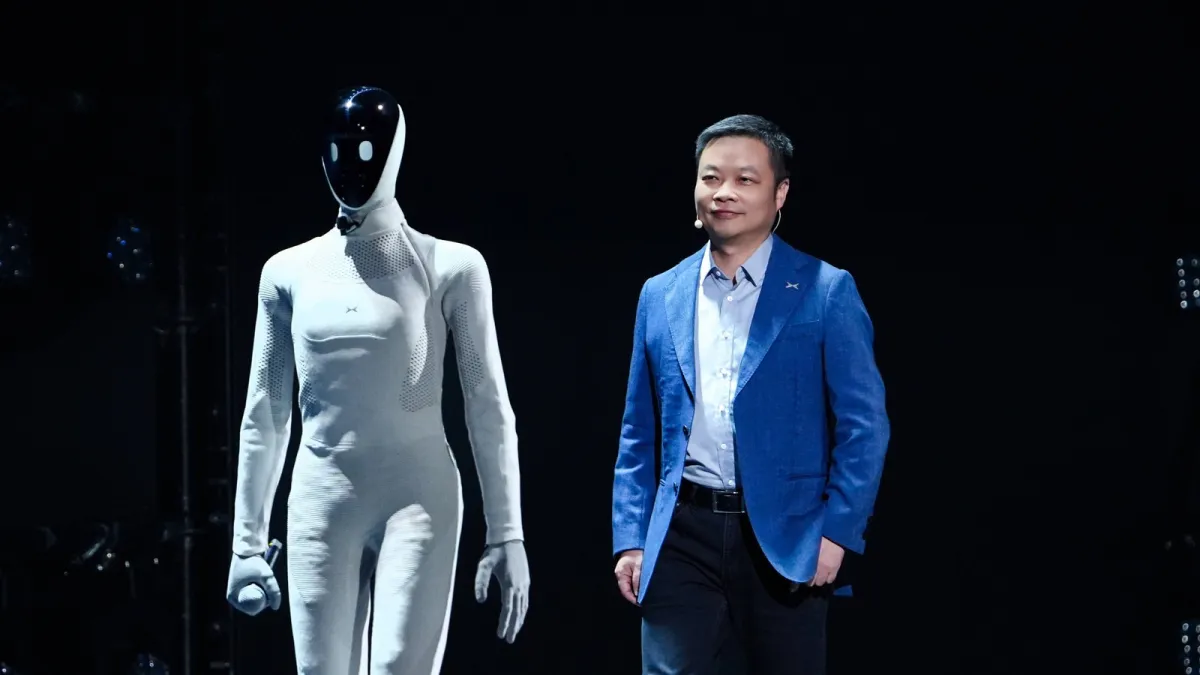
On November 25, 2026, XPeng said at its AI Day in Guangzhou that its IRON humanoid will begin training as a store assistant in the first quarter of 2027, with a public release targeted for the following quarter. The company demonstrated IRON onstage, but it did not name the first stores, publish a price, or say how many robots would take part.
The choice of a store is more revealing than the release date. XPeng owns the environment in which IRON will learn, and the first customers it meets won't be following a stage script.
The showroom is a useful test
XPeng says staff can assign tasks by voice or through an app. It says IRON can navigate to a destination, recharge itself and report abnormal conditions. Those features are less striking than a robot walking onto a stage, but they matter if an employee is supposed to do something else while it works.
A showroom is more predictable than a home: the floor plan is known and staff are nearby. The people aren't predictable. A customer might step between the robot and a car, interrupt a task to ask a question, or give an instruction that conflicts with what a staff member asked it to do. XPeng hasn't said what IRON is allowed to do in those situations or when it calls for help.
The same architecture has to move two different machines
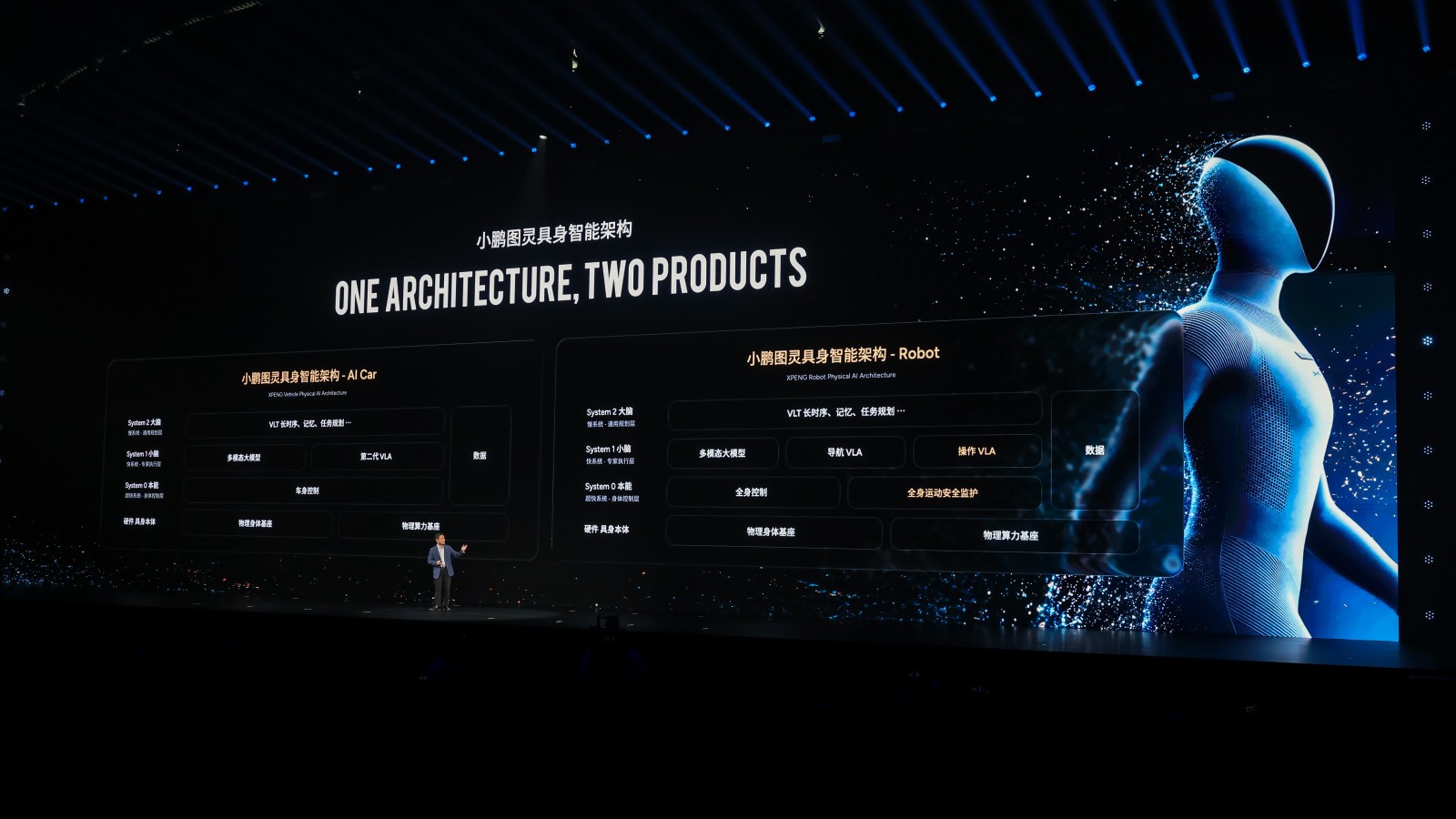
XPeng calls the underlying design Turing Physical AI Architecture, or VLA 3.0. One part plans longer tasks. Another uses the existing VLA 2.0 model for faster responses. A third handles low-level control and feedback from the machine. A slow planning decision isn't the same as a fast adjustment to how a robot moves when someone crosses its path.
The company says it can reuse computing, data tools and parts of its safety work across cars and robots. It says its robot data facility covers more than 250 scenarios in 15 job categories. That's evidence of an effort to build and test many tasks, not evidence that a driving model can run a showroom or that IRON can do those jobs without intervention.
The number worth asking for is interventions per shift
IRON has three XPeng-designed Turing chips and more than 1,500 tactile sensing points, according to XPeng. Those specifications describe what the machine can sense and compute, but don't tell a store manager whether one employee has to stay within arm's reach all day.
The useful first report would tell us which tasks IRON was given, how long it worked at a stretch, and how often staff had to intervene. XPeng has offered dates for training and release. Neither date substitutes for that evidence.
P.S. The company calls the first phase training, not a public launch. Those are two different milestones, even if both happen on the same shop floor.
Frequently Asked Questions (FAQ)
Q: When will XPeng's IRON robot start working in stores?
A: XPeng plans to start training it as a store assistant in the first quarter of 2027. The first stores and number of robots have not been announced.
Q: Is IRON available to buy?
A: No retail availability was announced at AI Day. XPeng is targeting a public release in the second quarter of 2027 and did not publish a price.
Q: What can IRON do without help?
A: XPeng lists navigation, self-charging and abnormal-condition reporting among its capabilities. It has not published a rate of human intervention during store work.
Q: Does IRON run the same system as XPeng's cars?
A: XPeng says its cars and robots share parts of a common architecture, such as computing and data infrastructure. The company still develops device-specific hardware, control and tasks.
Q: Does the AI Day demo prove IRON can handle customers?
A: No. The demo showed the robot onstage. The planned store training is a separate test of how it handles daily work around customers and staff.