On November 20, 2026, Google Research explained how Duplex powers phone calls in Tasks in Gemini. The feature started rolling out in the United States earlier that week. When the agent calls a business, Google says it identifies itself as an automated system at the start. The person who answers can ask it to stop future automated calls.
That's the detail that makes this more than a voice-model update. A booking site can decide whether to accept an agent before a transaction starts. At a repair shop, someone may have to pick up the phone first.
The phone call fills a gap the web never closed
Google introduced Duplex in 2018 for narrow tasks such as restaurant reservations. It later used the technology to verify details for Search and Maps. The Gemini Tasks version takes requests in ordinary language, then uses the same calling system to handle different kinds of errands without building a separate dialogue model for each one.
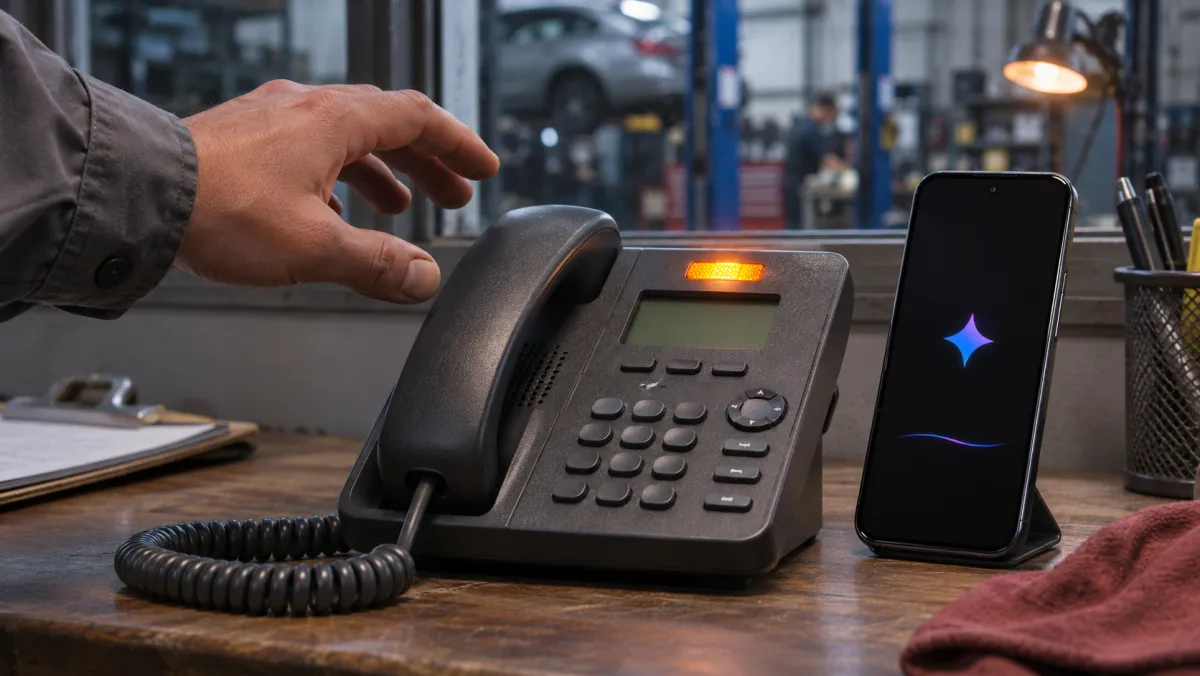
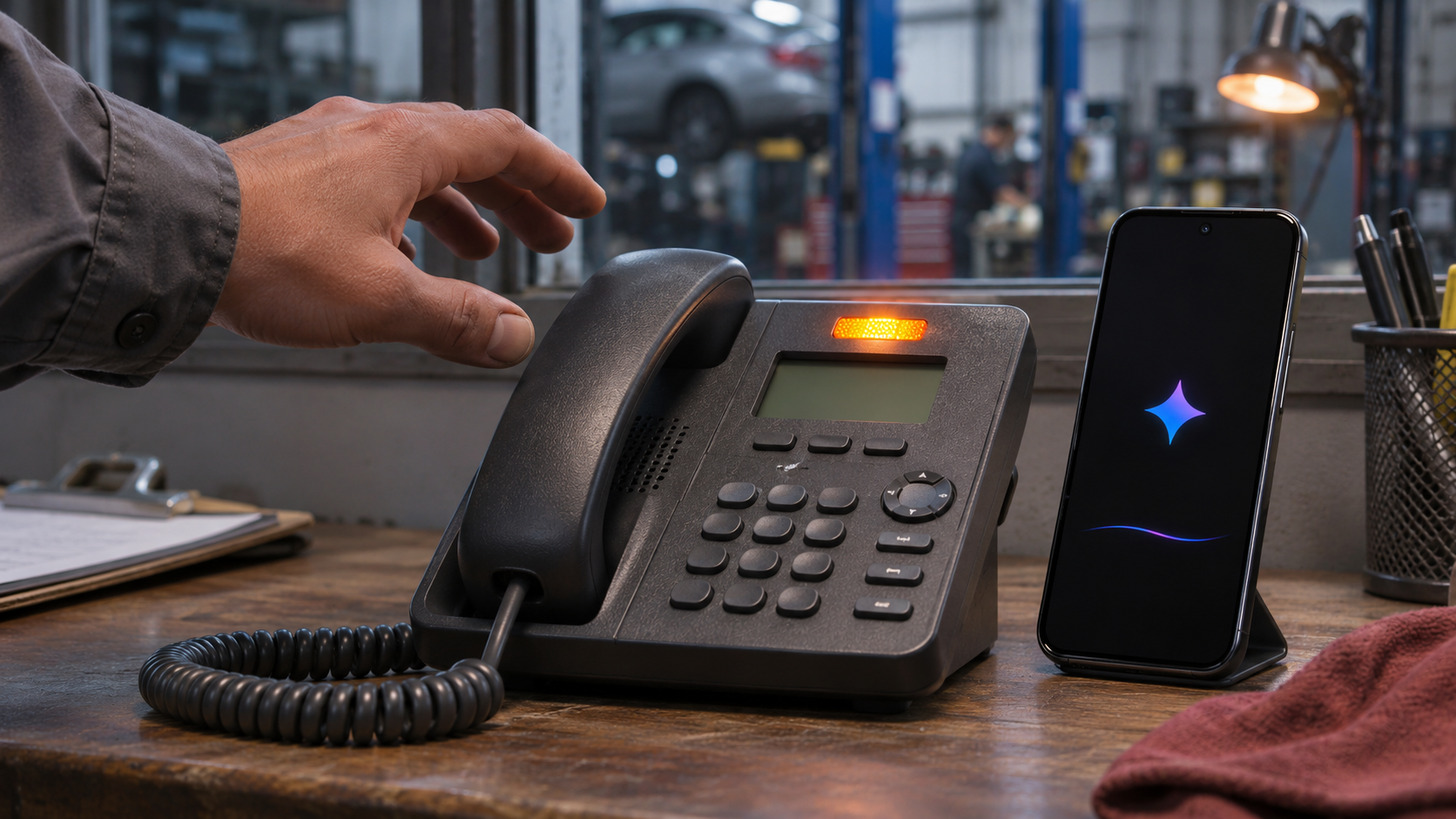
Consider an auto shop that answers the phone but offers no online appointment system. The task is not just to hear whether it has a slot. The agent may need to tell the difference between a reservation and a walk-in, weigh a suggested time against the user's calendar and report what the shop actually agreed to.
In Google's November 17 rollout post, Gemini app lead Josh Woodward describes asking Gemini to call two dealerships about a service appointment. He says Gemini made the calls in parallel and found a Friday slot that fit his calendar in under five minutes. That's one example from Google, not a measured success rate.
The shop can say no without installing anything
Businesses do not need to install Gemini or change how they answer their phone. Google says a merchant can opt out verbally during a call or change its Google Business Profile settings. In those settings, customer bookings and inquiries have their own control, separate from automated outreach to keep a listing up to date.
That separation matters. A restaurant might want Google to verify its holiday hours but not send it automated booking calls during service. It can turn one off without necessarily turning off the other. Google also says its automated systems limit repeated calls for the same information. It does not give a number for that limit in the Gemini research post.
The result that matters is a confirmed booking
A call can sound natural and still leave the user with the wrong result. A receptionist might say that Friday usually works without holding a slot. If the agent presents that as a confirmed appointment, it has made the user's morning harder instead of easier.
Google describes designing for noisy shops, compressed audio and the timing of real conversations. The research post doesn't give a completion rate for Gemini business calls or show how often merchants opt out. Those are better measures of this rollout than how human the voice sounds. A useful update should distinguish three outcomes: the business confirmed a slot, it gave an answer without booking anything, or it couldn't complete the request.
P.S. Google started rolling out free Tasks in six countries, but that does not mean business calling is available in all six. Calling starts in the U.S.; Google lists Indiana, Louisiana, Minnesota, Montana and Nebraska as unavailable.
Frequently Asked Questions
Q: What did Google add to Gemini Tasks?
A: Google added Duplex-powered phone calls so Gemini can contact local businesses on a user's behalf for errands such as checking availability or booking an appointment.
Q: When did the feature roll out?
A: Google announced the Tasks update on November 17, 2026, and published its technical explanation of the calling feature on November 20.
Q: Does Gemini identify itself to the business?
A: Google says the call starts by identifying the caller as an automated system from Google.
Q: Can a business opt out of the calls?
A: Yes. Google says the person answering can ask it to stop calling. A business can also change its automated-call settings in Google Business Profile.
Q: Is Gemini calling available wherever free Tasks is available?
A: No. Calling is starting in the U.S. Google lists Indiana, Louisiana, Minnesota, Montana and Nebraska as unavailable.
Q: Does Google say how often Gemini completes these calls successfully?
A: Not in its November 20 research post. It describes the design and examples but does not publish an overall completion rate for Gemini calls.