A single H100 can render the smaller AURA model faster than it plays. For anyone building a voice assistant with a face, the more useful number is the 1.2 seconds still separating the picture from the speech.
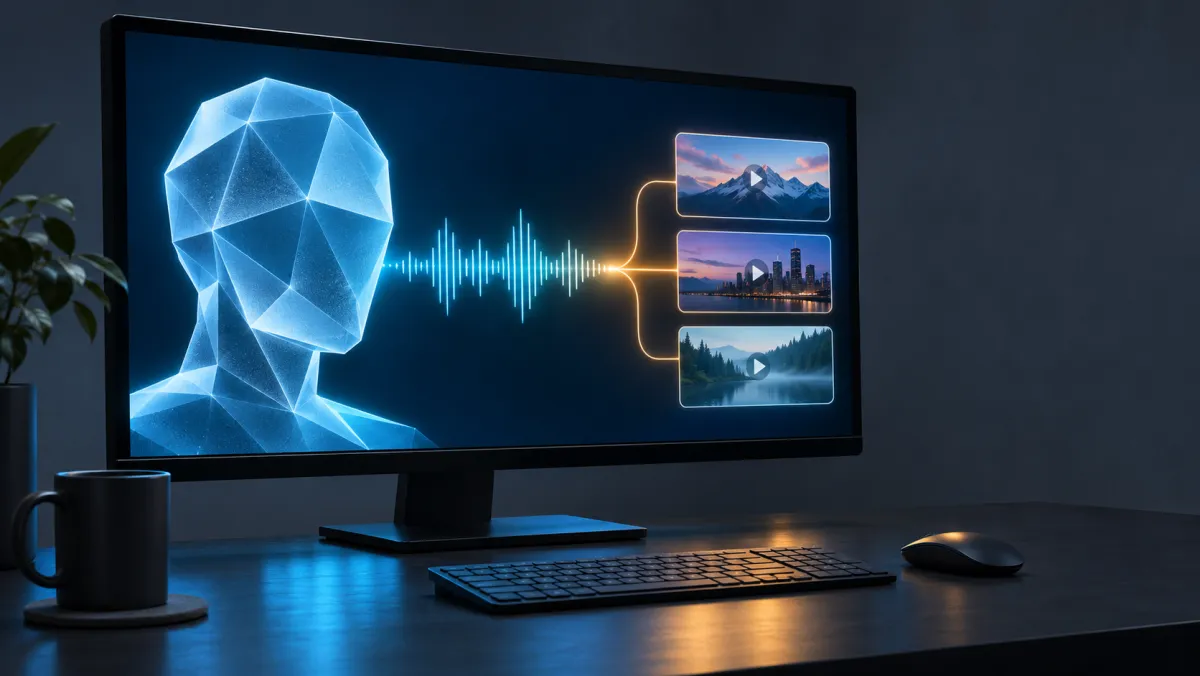
On November 20, 2026, Kyutai released AURA, a pair of downloadable models that turn speech and a reference portrait into a streaming talking head. The Paris research lab published the paper, code, two sets of weights and a dataset of about 30,000 synthetic clips. It also put the smaller model behind its Unmute voice assistant in a browser demo.

The smaller model can keep up
In Kyutai's tests on a single NVIDIA H100, AURA 1.3B generated 576p video at 20.7 frames per second, enough to keep up with the model's 16 fps playback. The 5B model generated higher-resolution 720p output at 9.7 fps on the same hardware. Choosing the bigger model buys more pixels, but it costs the continuous playback that makes the smaller one interesting for live conversation.
The authors report those measurements for video generation on a data-center GPU. They do not establish how many simultaneous sessions one card can handle, what the complete assistant costs to run, or whether the model will perform the same way on a consumer graphics card.
The voice still gets there first
AURA generates clips in chunks rather than waiting for a complete recording. The research model still needs one second of speech to form each chunk, then needs time to render that chunk. Kyutai reports a delay of about two seconds between the voice and picture in its research streaming setup.
For the demo Kyutai retrained the 1.3B model to use half-second chunks. That brought the reported voice-to-picture lag to about 1.2 seconds. This is a different measure from throughput, and neither figure tells you how long the voice assistant takes to answer after the user stops speaking. The 20.7 fps result and the 1.2-second delay describe different tests.
The useful test is an actual conversation
Kyutai built its demo around Unmute to show an avatar speaking as an assistant generates its reply. That makes the release useful for teams deciding whether to add a synthetic guide or narrator to an existing voice product. They can start by testing whether the picture keeps pace closely enough when the assistant gives short answers or changes tone.
The weights and paper give those teams something to test on their own machines. For a prerecorded explainer, the animation can be rendered in advance, so a slower model may be an acceptable trade for 720p. A live assistant has no such buffer. The smaller model gets the frames out fast enough; the remaining question is how much lag a viewer will tolerate before the face starts to feel disconnected from the voice.
P.S. If you're evaluating a live avatar, record a short conversation and measure the gap between sound and picture. A frame counter alone will miss it.
Frequently Asked Questions
Q: What did Kyutai release?
A: Two downloadable AURA models that animate a reference portrait from speech, along with code, a research paper, synthetic training data and a browser demo.
Q: What does real time mean in the benchmark?
A: Kyutai says the 1.3B model produced 20.7 fps at 576p on one H100, faster than its 16 fps playback target. That is sustained generation speed, not the delay between speech and animation.
Q: How much does the demo lag behind the voice?
A: Kyutai reports about 1.2 seconds for its shorter-chunk demo model, down from about two seconds for its research streaming setup.
Q: Can the 5B version keep up at 720p?
A: In Kyutai's single-H100 test it reached 9.7 fps at 720p, below the 16 fps playback target.
Q: Does AURA generate the assistant's speech?
A: AURA makes the video. The browser demo uses Kyutai's Unmute system to generate the speech driving the animation.