On November 22, 2026, OpenAI Chief Scientist Jakub Pachocki published a series of internal model measurements and proposed using a shared version of the metric to help pace frontier AI development. The figures tell us something about progress inside OpenAI. Turning them into a way to compare labs would require agreement on what to measure and how.
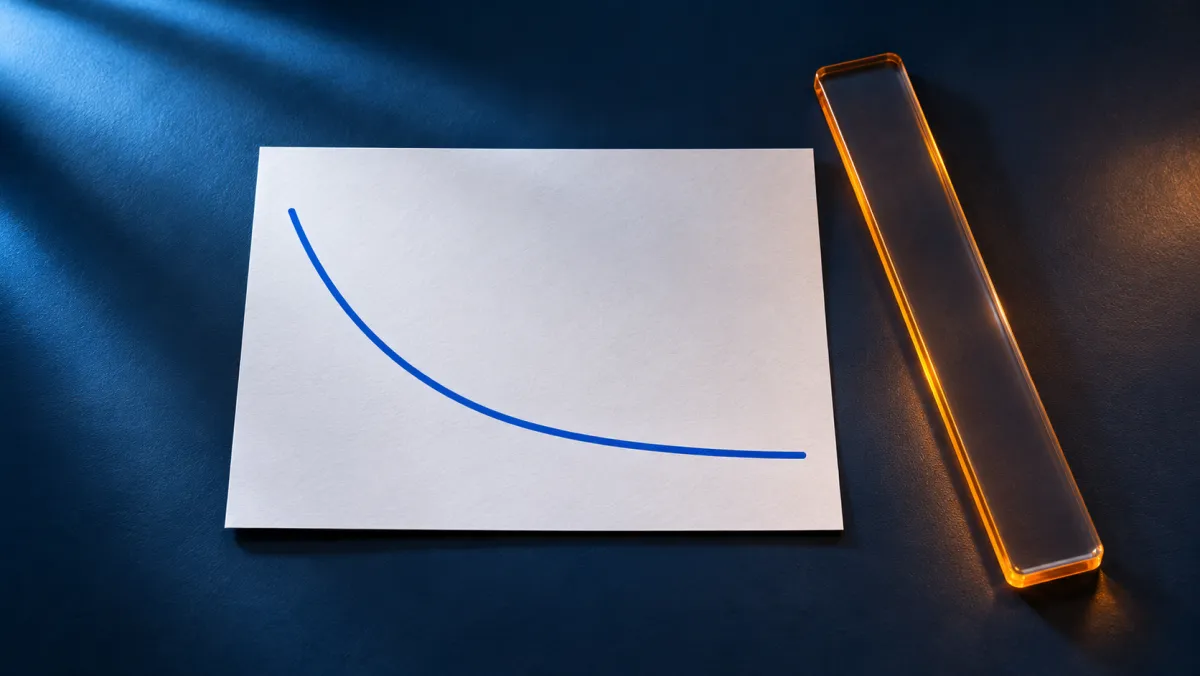
The curve comes from one code snapshot
OpenAI reports log-perplexity of about 0.99 for GPT-3.5 and 0.91 for GPT-4 on a fixed evaluation snapshot from its internal codebase. Log-perplexity, also called cross-entropy loss in the post, measures how surprised the model is by the tokens that actually occur. Lower means less surprise on the same test.
Pachocki also describes an unnamed model at about 0.76 that produced results on open math problems in OpenAI's internal work. That is an account of what happened after a model upgrade, not evidence that a model from any lab will gain the same abilities at 0.76.
The measurement predates the proposal

OpenAI's GPT-4 technical report described using held-out internal code to predict GPT-4's final loss from much smaller training runs, some using up to 10,000 times less compute. It was a way to forecast the result of a larger run inside the same development process.
The November post extends the argument: could a similar measure travel across companies? Two labs can report different losses even if the difference comes from the kind of text they use or how they split it into tokens. A credible comparison would need common held-out material, a comparable scoring unit, and a protocol for keeping the test out of training. The article publishes a curve, not that protocol.
The same loss can hide different abilities
In a November 10 study, OpenAI separately examined reasoning without a written chain of thought. Base-model perplexity predicted performance across architectures on most tests. On some tasks, including multihop planning and serial computation, certain architectures still performed better at the same perplexity. Pachocki also notes that reasoning can improve capabilities without lowering the measured base-model perplexity.
That matters for his proposal to set shared limits using perplexity alongside other measurements, with progress beyond a limit tied to a concrete monitoring milestone. Separately, Pachocki extrapolates that new abilities could emerge around 0.68–0.70 on the reported scale. He does not present this range as an observed result or identify it as a safety cutoff.
P.S. The next useful disclosure would be the rules for running a common test and evidence that it predicts specific changes in behavior. Another decimal on a private curve can help OpenAI track itself, but it cannot settle when a different lab should stop.
Frequently Asked Questions
Q: What did OpenAI publish?
A: OpenAI's chief scientist shared historical log-perplexity measurements and proposed exploring a comparable measure across frontier labs.
Q: What does lower log-perplexity mean?
A: The model was less surprised by the actual next tokens on the same test. The result depends on the evaluation data and the scoring unit.
Q: Which scores did OpenAI disclose?
A: The post reports approximately 0.99 for GPT-3.5, 0.91 for GPT-4, and describes an unnamed model at approximately 0.76.
Q: Is 0.68–0.70 a measured safety threshold?
A: No. Pachocki gives that range as an extrapolation. He separately proposes shared limits using perplexity and other evidence.
Q: Can a lab compare its published score with OpenAI's?
A: Not from the published numbers alone. The dataset and scoring method would need to be comparable, and separate capability and safety tests would still matter.