By 2026, "AI PC" is no longer a marketing buzzword. But when you actually try to run a 70B LLM locally, most laptops with 8GB or 16GB of VRAM simply crash — the model won't even load. A full-size workstation can handle it, but it takes up half your desk and costs a fortune.
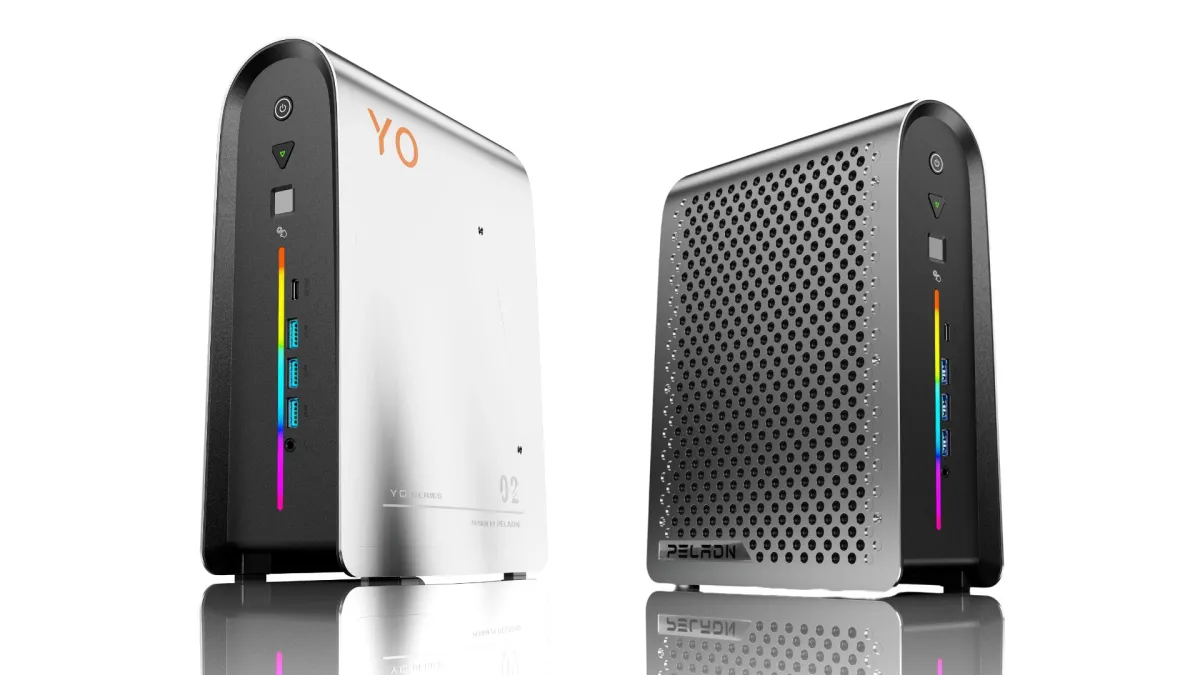
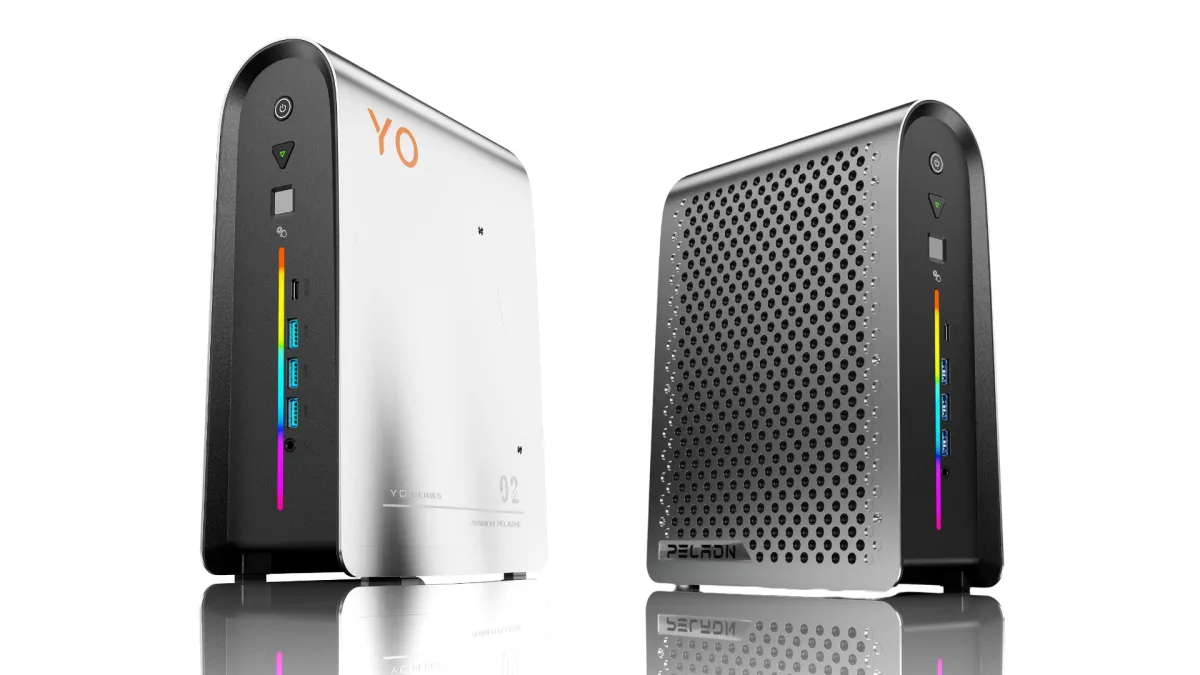
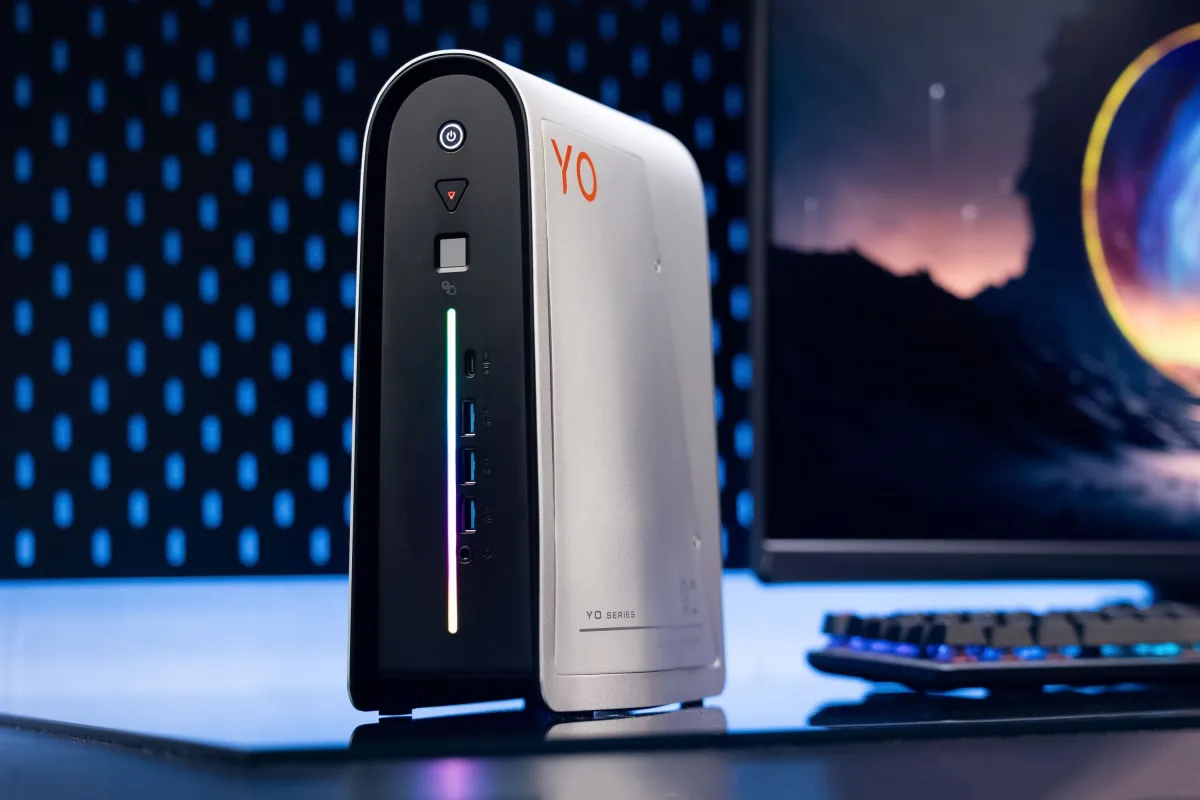
Panlei YO2 is designed to answer one question: can individual AI developers run 100-billion-parameter models locally without choosing between bulk and compromise?
Core Specs and Pricing
The YO2 is powered by AMD's Ryzen AI MAX+ 395 (codename Strix Halo) — 16 Zen 5 cores, 32 threads, up to 5.1GHz. The integrated Radeon 8060S GPU packs 40 RDNA 3.5 compute units, rivaling discrete GPUs. Total system AI compute: 126 TOPS.
The key spec: 128GB LPDDR5x unified memory at 8000MT/s, a 2TB PCIe 4.0 SSD, all packed into a 3.5-liter chassis weighing 1.85kg.
Price: ~$2,900. For context, NVIDIA's DGX Spark (128GB) starts at $3,999. The YO2 undercuts it by roughly 27%.
Unified Memory: The Real Differentiator
Understanding the YO2 starts with understanding unified memory.
In a traditional Windows laptop, system RAM and VRAM are physically separate. An 8GB RTX 4060 cannot load a 40GB 70B model — it simply runs out of memory, even if the system has 64GB of DRAM.
Strix Halo uses memory pooling: all 128GB is shared between CPU and GPU. In the BIOS, you can allocate up to 96GB to the GPU as VRAM. Usable capacity is around 115-120GB.
That effectively gives you a 96GB GPU — enough to load 70B dense models and 200B+ MoE models.
AIDA64 memory read speeds hit 120.77GB/s — roughly double the bandwidth of a standard dual-channel DDR5 laptop. That bandwidth is what keeps the GPU from stalling when it pulls model weights from unified memory during inference.
CPU and GPU Performance
CPU: 16 Zen 5 Cores
Cinebench R23 multi-core: 34,619 (single-core: 1,989). Cinebench 2024 multi-core: 1,846. This puts it ahead of many 16-core gaming laptops, approaching mid-range desktop performance.
Geekbench 6 multi-core: 20,195 (single-core: 2,946).
GPU: Integrated but Not Weak
The Radeon 8060S is not a typical integrated GPU. 3DMark Time Spy graphics score: 11,652 — exceeding the RTX 4060 Laptop (~10,500-11,000) and approaching the RTX 4070 Laptop (~12,000).
Storage
PCIe 4.0 SSD: 7,096 MB/s read, 6,430 MB/s write. Three M.2 2280 slots support up to 24TB total storage.
Thermal and Power
The YO2 supports three TDP modes: 55W, 85W, and 120W (peak 160W). In our 120W stress test, core temperatures stayed around 80°C with the dual-turbofan, three-heatpipe cooling solution.
LLM Inference Performance
I tested five model classes, covering both dense and MoE architectures.
Small Models (15B and under)
Model | Precision | Generation Speed |
|---|---|---|
Phi-3.5 4B | — | 69.56 tokens/s |
Mistral 7B | — | 44.87 tokens/s |
Llama 3.1 8B | — | 38.01 tokens/s |
Llama 2 13B | — | 25.45 tokens/s |
DeepSeek R1 7B | Q4 | 41.94 tokens/s |
Small models run effortlessly — daily use is completely smooth.
Medium Models (22B-32B)
Model | Precision | Generation Speed |
|---|---|---|
Mistral-small 24B | BF16 | 12.37 tokens/s |
Gemma 2 27B | BF16 | 11.62 tokens/s |
DeepSeek R1 32B | Q4 | 9.71 tokens/s |
QWQ 32B | — | 9.79 tokens/s |
Even at high precision, the YO2 keeps medium models above 10 tokens/s — a usable speed for real-time interaction.
Large Models (70B and above)
Model | Type | Generation Speed |
|---|---|---|
DeepSeek R1 Distill Llama 70B | Dense | 5.31 tokens/s |
DeepSeek R1 70B (IQ2_M) | Dense | 4.91 tokens/s |
Qwen3-235B-A22B (IQ2_S) | MoE | 14.72 tokens/s |
GPT-OSS-120B (5.1B active) | MoE | ~40 tokens/s |
Dense 70B models run at around 5 tokens/s — usable for many tasks, though not ideal for real-time chat. MoE models, which activate only a fraction of parameters per token, perform significantly better. The Qwen3-235B-A22B peaked at 63.6GB of memory usage during our test — comfortably within the YO2's 128GB pool.
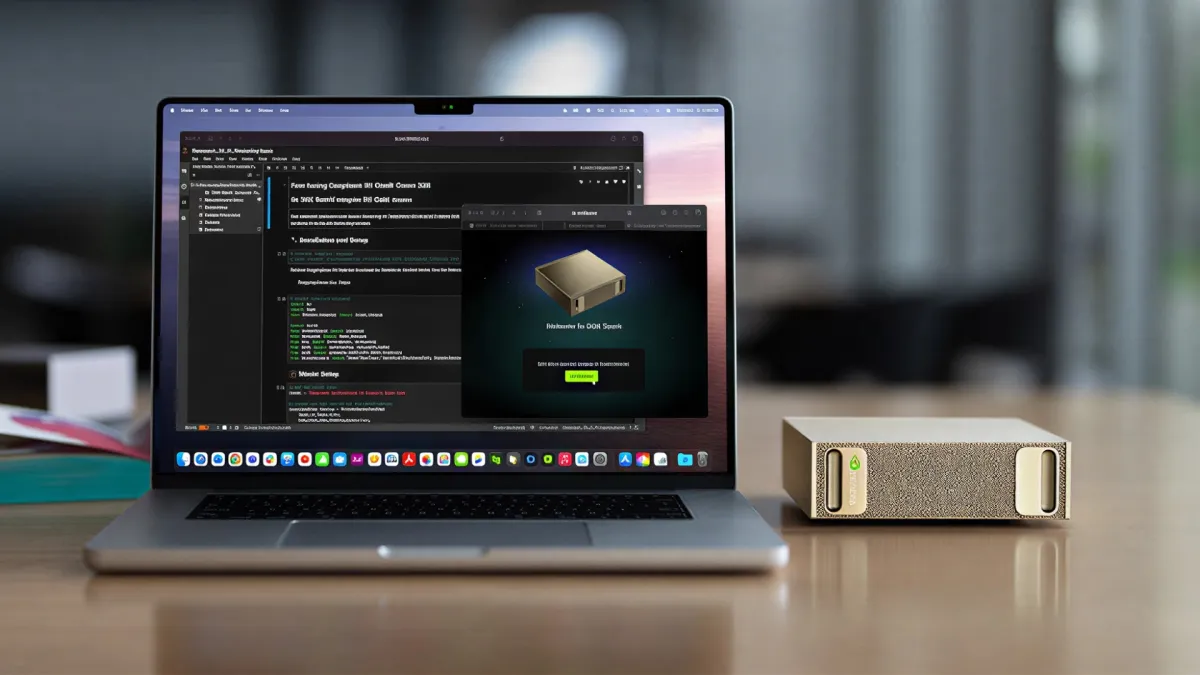
Key observation: in single-user LLM inference, the YO2 and NVIDIA's DGX Spark deliver broadly comparable experiences, as both are bandwidth-bound. The Spark's advantage lies in compute-heavy tasks like image generation, not text generation.
Software Ecosystem: Work in Progress
The hardware benchmarks are impressive. The software is the real variable.
On Linux, ROCm setup for Ollama integration is not plug-and-play. Our test unit required a specific kernel parameter to avoid GPU hangs:
GRUB_CMDLINE_LINUX_DEFAULT="quiet splash amdgpu.cwsr_enable=0 amd_iommu=off amdgpu.gttsize=131072"The YO2 ships with Herdsman (a local AI model manager) and FlowyAIPC (a productivity platform built on OpenClaw) to lower the onboarding barrier. But ROCm's open-source trajectory means community support is growing quickly — it's just not at CUDA's maturity level yet.
Who Is It For?
Good fit
AI developers and researchers debugging 70B models locally
Data-sensitive sectors (finance, healthcare, legal) that cannot upload to the cloud
Startups with limited budgets but local AI requirements
Enthusiasts who want local LLMs without multi-GPU setups
Not a fit
Teams needing high-concurrency multi-user inference (single GPU has limits)
Users dependent on CUDA (many PyTorch extensions require it)
Users needing the absolute fastest inference — DGX Spark is 2-3x faster for image generation and fine-tuning
Competitor Comparison
Panlei YO2 | NVIDIA DGX Spark | HP Z2 Mini G1a | |
|---|---|---|---|
Price | ~$2,900 | $3,999 | ~$2,949 |
Memory bandwidth | ~256 GB/s | ~273 GB/s | ~256 GB/s |
Software ecosystem | ROCm | CUDA | ROCm |
LLM inference speed | Comparable | Comparable | Comparable |
Image generation speed | Slower | 2-3x faster | Slower |
70B model fine-tuning | ~50 minutes | ~20 minutes | ~50 minutes |
Verdict
The Panlei YO2's core value is simple: it solves the "can't run 70B models locally" problem for individual developers, at a price that makes sense.
It is not perfect. The software ecosystem is still catching up. Image generation and fine-tuning lag behind NVIDIA's CUDA-based alternatives. But in the core LLM inference scenario, it matches DGX Spark at a 30% lower price.
For developers and small teams who need to run large models locally, have budget constraints, and are willing to tolerate some setup friction, the YO2 is one of the most cost-effective options available. It does not replace a datacenter. But it marks the moment when local 70B model development becomes accessible.
P.S. If you just need to run Llama 3.1 8B or Qwen3 14B, you don't need this machine. But if you need to run 70B models locally, the YO2 is currently the only Windows-based option that doesn't require a multi-GPU rig. ROCm is still chasing CUDA. For users, "it works" matters more than "it's fastest" — and this one works.