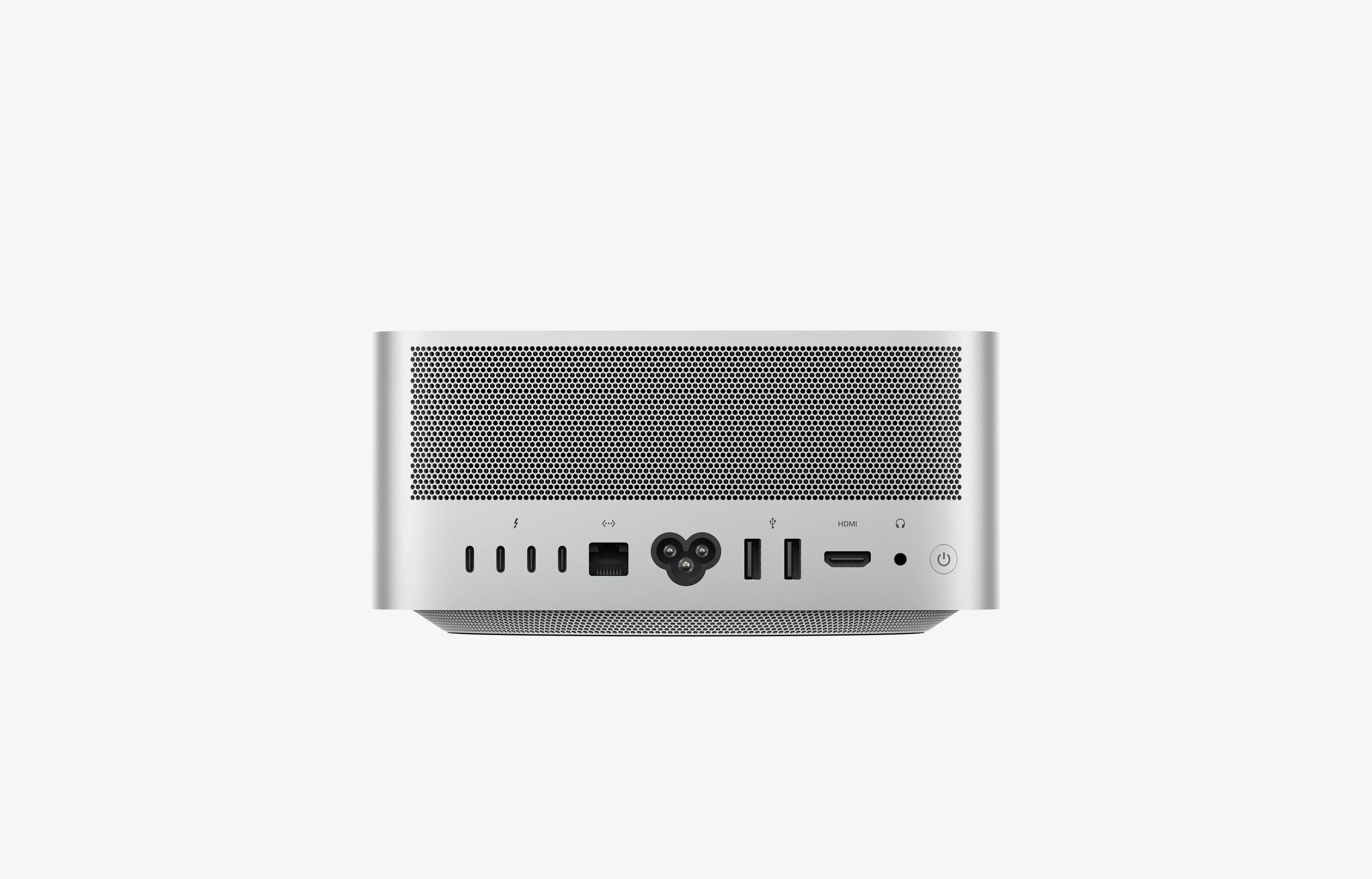
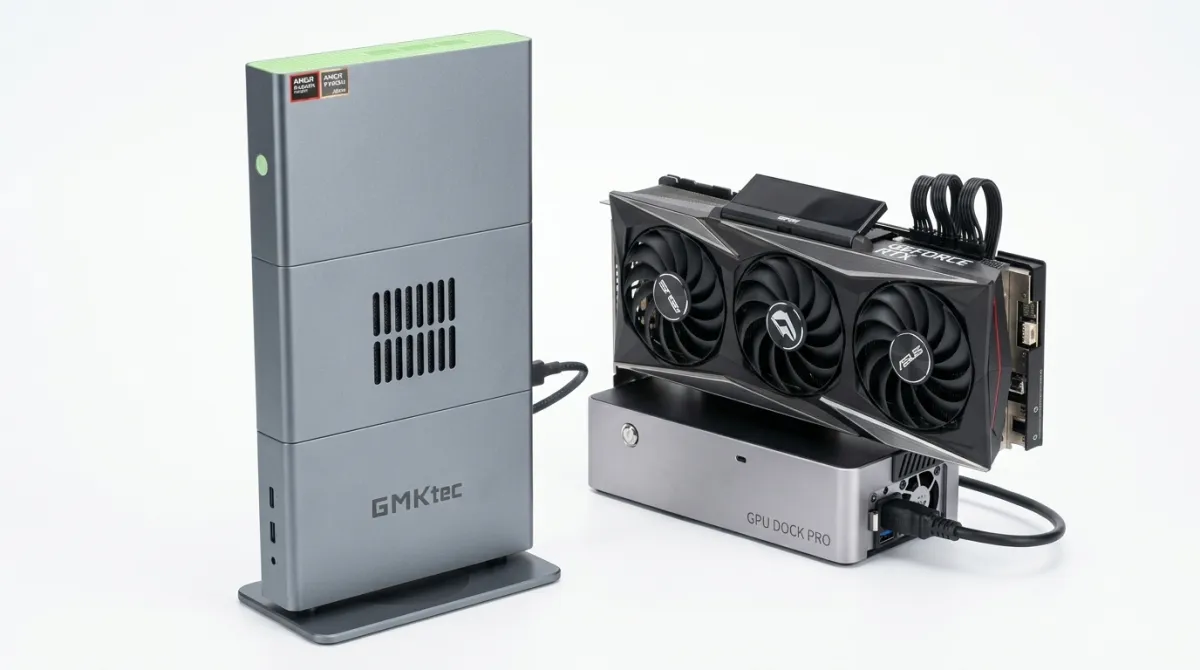
For years, running a 120-billion-parameter model locally meant either buying multiple RTX 4090s (24GB VRAM each) or renting cloud GPUs. AMD's Strix Halo changed the math. Its Ryzen AI Max+ 395 pairs a 16-core CPU with a 40-CU RDNA 3.5 GPU and up to 128GB of LPDDR5X-8000 unified memory — of which up to 96GB can be allocated as VRAM.
The result: a single mini PC that can load models no consumer GPU can hold.
The Numbers That Matter
Third-party testing on the Strix Halo platform has produced consistent benchmarks across vendors. The platform's memory bandwidth sits around 118–120 GB/s, and that number — not CPU wattage — determines token generation speed.
Strix Halo inference benchmarks (Q4 quantized)
Model | Type | Speed | Source |
|---|---|---|---|
Llama-3.1-8B | Dense | 37.4 tok/s | Lenovo lab testing |
Qwen3.8-27B | Dense | 24.5 tok/s | Lenovo lab testing |
Qwen3.6-35B-A3B | MoE | 69.3 tok/s | Lenovo lab testing |
GPT-OSS-120B | MoE | 49.5 tok/s | Lenovo lab testing |
Qwen 3.6 | — | ~60 tok/s | Level1Techs (GMKtec) |
Source: Lenovo lab testing, Level1Techs independent testing
The pattern is counterintuitive: the 120B MoE model runs faster than the 27B dense model. MoE architectures activate only a fraction of parameters per token, so they benefit from bandwidth without paying the full compute cost.
One caveat: long-context performance degrades. Community reports show that in 128K-context conversations, generation speed can drop below 10 tok/s once the context exceeds 80,000 tokens.
Which Version, and Why It Matters
Three vendors sell Strix Halo mini PCs with meaningfully different priorities.
GMKtec EVO-X3 — ~$3,600
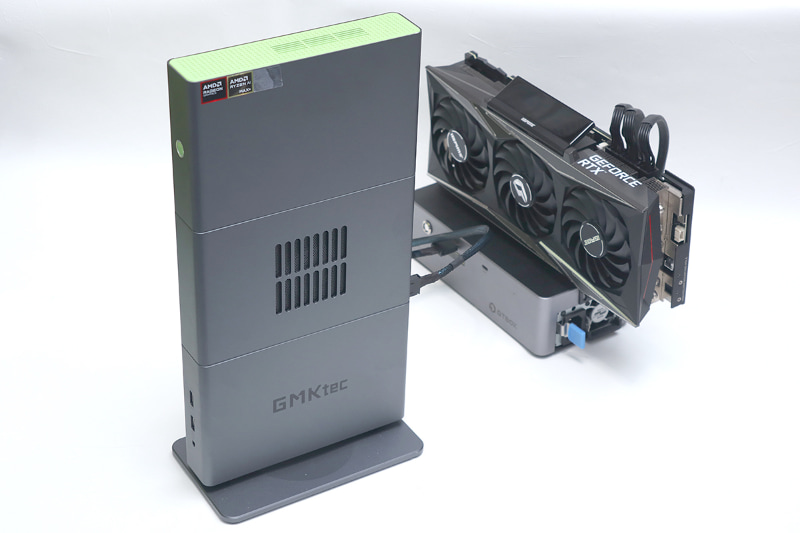
The cheapest entry point. Includes an OCuLink port (PCIe 4.0 x4) for external desktop GPUs and a 140W CPU power limit. TechRadar's review called it “not plug-and-play” — the reviewer spent significant time configuring the environment before models would run.
Wendell at Level1Techs found that the 140W CPU limit doesn't help token generation, because generation is memory-bound, not compute-bound. It helps prompt processing. For buyers who want to add a discrete GPU later, the OCuLink port is the differentiator.
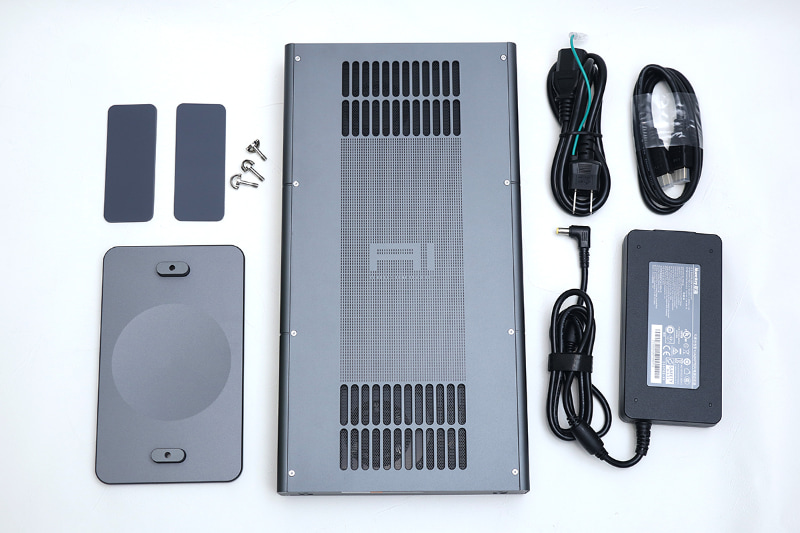
Framework Desktop — ~$1,999 (barebones)
Framework's version is the modular option. It uses standard desktop components, supports upgradeable RAM and storage, and ships as a DIY kit or pre-built. The tradeoff: Framework's design prioritizes repairability and open standards over out-of-box AI software. Buyers are expected to configure their own inference stack.
HP Z2 Mini G1a — enterprise pricing
HP's workstation-class Strix Halo machine targets IT departments. It comes with enterprise support, security features, and validated configurations. It is the most expensive option and the least flexible — but for companies that need procurement, warranty, and compliance documentation, it is the only one that fits.
What None of Them Solve
The software ecosystem is the platform's weak point. Strix Halo's ROCm support is still maturing. Testing on the platform shows that Vulkan can outperform ROCm by roughly 20% on quantized models, while ROCm wins on full-precision workloads. The default configuration a vendor ships may not be the fastest one.
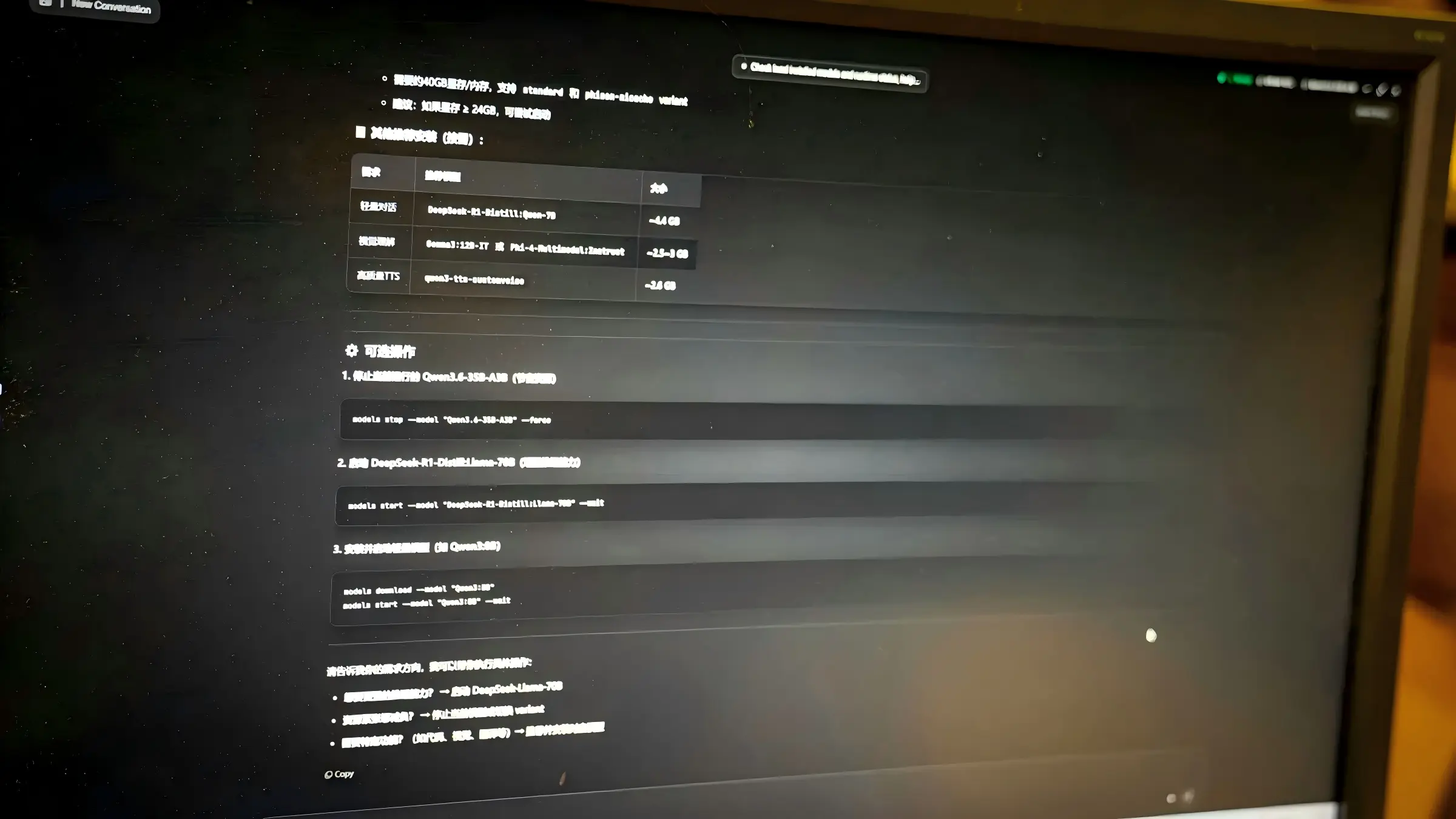
GMKtec's preinstalled Claw software illustrates the gap. Its Herdsman model manager can detect the NPU but reports that the current runtime manifest doesn't support Ryzen AI Max+ 395. Enabling it requires installing Lemonade and the Ryzen AI runtime — contradicting GMKtec's claim of “local AI without coding or setup”.
The Verdict
If you want the cheapest path to running 120B models locally, and you're willing to configure the software stack yourself, the GMKtec EVO-X3 is the answer. The OCuLink port gives you a future upgrade path no other version offers.
If you want a machine you can repair and upgrade for years, the Framework Desktop is the better long-term buy. You'll pay in setup time.
If you're buying for a company that needs procurement paperwork and support contracts, HP's Z2 Mini G1a is the only one that checks those boxes.
None of them are finished products. Strix Halo is a platform in progress — the hardware is ahead of the software, and the gap is measured in hours of configuration, not dollars.
P.S. The 128GB unified memory configuration is the one to buy. The 64GB version cannot load GPT-OSS-120B at usable quantization levels. If you're spending $3,000+ on a local AI machine, the extra memory is the entire point.
Frequently Asked Questions
Q: What is Strix Halo?
A: Strix Halo is AMD's platform name for the Ryzen AI Max+ 395 processor, which pairs a 16-core CPU with a 40-CU RDNA 3.5 GPU and up to 128GB of LPDDR5X-8000 unified memory. Up to 96GB can be allocated as VRAM.
Q: Why does unified memory matter for AI?
A: Running large language models locally requires enough memory to hold the model weights. Consumer GPUs max out at 24GB (RTX 4090) or 32GB (RTX 5090). Strix Halo's 96GB VRAM allocation lets a single mini PC load models that would otherwise require multiple GPUs.
Q: How fast does Strix Halo run large models?
A: Third-party benchmarks show Llama-3.1-8B at 37.4 tok/s, Qwen3.8-27B at 24.5 tok/s, Qwen3.6-35B-A3B at 69.3 tok/s, and GPT-OSS-120B at 49.5 tok/s. MoE models run faster than dense models because they activate fewer parameters per token.
Q: Why does the 120B model run faster than the 27B model?
A: MoE (Mixture of Experts) architectures activate only a fraction of parameters per token. They benefit from memory bandwidth without paying the full compute cost of a dense model. The 120B MoE has more total parameters but fewer active ones per token.
Q: What is the memory bandwidth, and why does it matter?
A: Strix Halo's memory bandwidth is around 118-120 GB/s. Token generation speed is memory-bound, not compute-bound, so this number determines how fast models run. CPU wattage limits help prompt processing, not generation.
Q: Which version should I buy?
A: GMKtec EVO-X3 (~$3,600) is the cheapest and includes an OCuLink port for external GPUs, but requires significant configuration. Framework Desktop (~$1,999 barebones) is the modular, repairable option. HP Z2 Mini G1a is the enterprise choice with support and compliance documentation.
Q: Are any of them plug-and-play?
A: No. TechRadar called the GMKtec EVO-X3 “not plug-and-play.” GMKtec's preinstalled Claw software detects the NPU but reports the runtime manifest doesn't support Ryzen AI Max+ 395. Enabling it requires installing Lemonade and the Ryzen AI runtime.
Q: What is the software problem?
A: Strix Halo's ROCm support is still maturing. Testing shows Vulkan can outperform ROCm by roughly 20% on quantized models, while ROCm wins on full-precision workloads. The configuration a vendor ships may not be the fastest one.
Q: Does long context affect performance?
A: Yes. Community reports show that in 128K-context conversations, generation speed can drop below 10 tok/s once context exceeds 80,000 tokens.
Q: Should I buy the 64GB or 128GB version?
A: The 128GB version. The 64GB configuration cannot load GPT-OSS-120B at usable quantization levels. If you're spending $3,000+ on a local AI machine, the extra memory is the entire point.