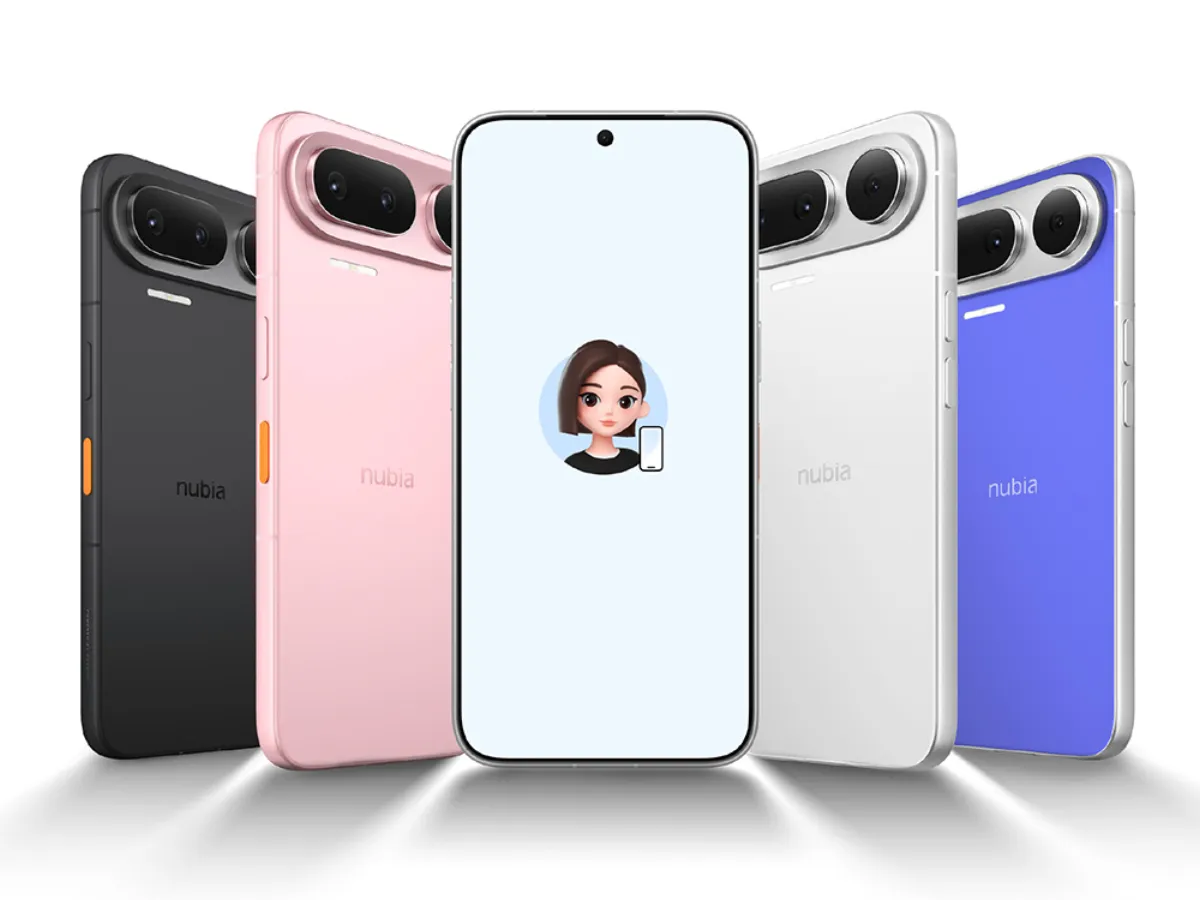
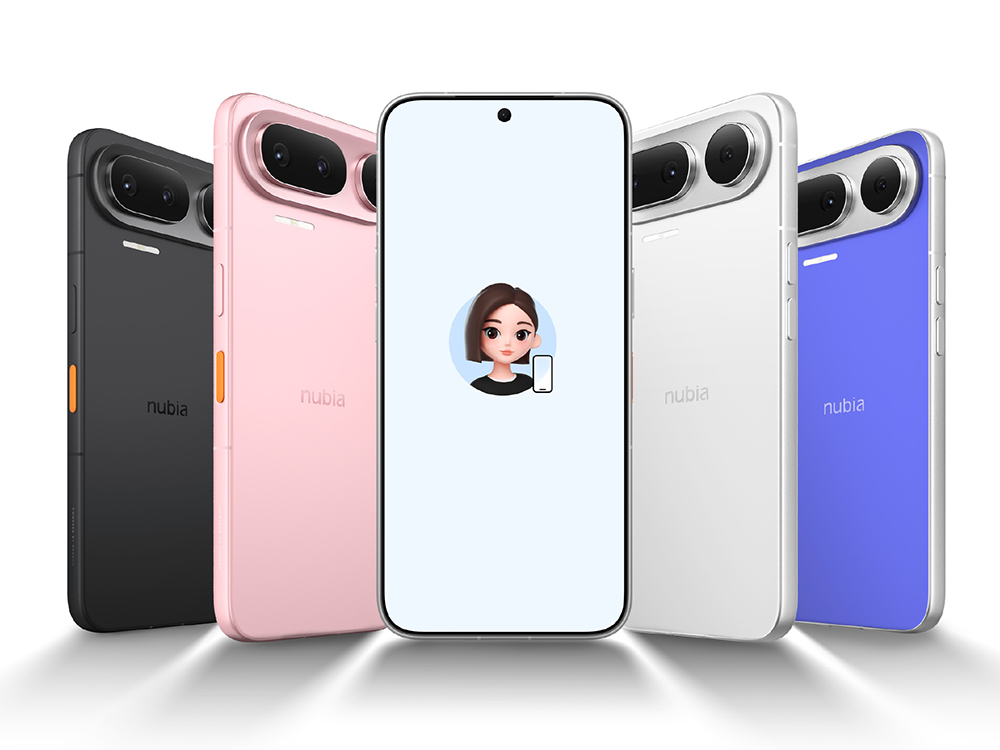
On September 16, ZTE's Nubia brand will launch the NaviX Ultra in China, a phone it calls the world's first mass-produced AI-agent smartphone. It runs ByteDance's Doubao assistant at the system level, not as an app. You talk to it, or press an orange physical button. It opens apps, fills forms, compares prices, and queues tasks without you touching the screen.
The hardware is flagship-grade. ZTE is currently under an FCC ban in the United States. The NaviX Ultra will not be sold in America. It will not be sold in Europe.
That matters more than any spec sheet.
From “God's Fingertips” to Asking Permission
The first-generation Doubao phone, the Nubia M153, launched in December 2025. It used a technique called INJECT_EVENTS to simulate human touch — essentially forcing its way into WeChat, Taobao, and Alipay. Critics described it as having “god's fingertips”. Major platforms blocked it.
The NaviX Ultra is the retreat. ZTE and ByteDance abandoned screen-scraping and adopted Model Context Protocol (MCP) and A2A protocols. Instead of reading your screen and tapping buttons, it asks apps to open their doors through standardized interfaces.
Task execution, measured against manual operation
Task | AI agent | Manual | Speedup |
|---|---|---|---|
Book high-speed rail ticket (multi-condition) | 28 seconds | 3 min 15 sec | ~7x |
Compare same product across 3 e-commerce apps | ~30 seconds | ~2 min | ~4x |
Cross-app travel planning (transport + hotel + dining) | ~45 seconds | ~5 min | ~6.7x |
Payment confirmation (bank/payment app) | Not supported | Manual only | — |
Source: WAIC on-site demonstrations and official Nubia test data, September 2026.
The Apps That Said No
The list of capabilities is also a list of what's missing. The NaviX Ultra can handle ride-hailing, e-commerce browsing, travel booking, and food delivery. It cannot handle payments, transfers, or banking.
Capability matrix, as of launch
Capability | Status |
|---|---|
Ride-hailing | ✅ Supported |
E-commerce browsing & price comparison | ✅ Supported |
Travel booking (flights, hotels, trains) | ✅ Supported |
Food delivery | ✅ Supported |
Messaging (non-payment) | ⚠️ Partial |
Payments & transfers | ❌ Not supported |
Banking | ❌ Not supported |
The specific example matters: WeChat works for voice messages and calls, but not payment transfers. Taobao, Alipay, and all major banking apps are absent from the confirmed partner list entirely.
The reason is structural, not technical. ByteDance owns Douyin and competes directly with Tencent, Alibaba, and Meituan in e-commerce, local services, and payments. Asking an AI built by ByteDance to complete a transaction inside Taobao means handing the top of the funnel to a competitor. No platform wants that.
MCP is a technical standard. It does not solve the commercial problem of competitors controlling each other's distribution.
Hardware Is Flagship. The Interaction Has a Cost.
NaviX Ultra specifications
Component | Spec |
|---|---|
Chipset | Snapdragon 8 Elite Gen 5 |
Display | 6.78″ 1.5K, 144Hz flat |
Battery | 7,100mAh silicon-carbon, 7.62mm body |
Charging | 90W / 100W wired |
Rear cameras | 50MP main + 50MP ultrawide + 50MP periscope telephoto |
Memory | LPDDR5X 10,667Mbps (CXMT), 512GB base storage |
AI button | Orange physical key, 0.03s wake, works when locked |
Weight | ~205g |
Source: Nubia official specifications and MIIT certification data, September 2026.
The orange AI button has a documented cost: when gaming in landscape mode, the right palm can accidentally trigger it, interrupting the session. If misfires are frequent, users may disable the button — and the core interaction entry point of the “agent phone” disappears.
On-device AI also has a price. Running large models locally increases power draw and heat. Smaller-memory variants struggle with background agent processes.
What Western Readers Should Actually Watch
The NaviX Ultra is not a product Western consumers can evaluate. It is a signal about where the agent phone category is going.
Apple is building the same thing from the opposite direction. At WWDC26, Apple introduced App Schemas, App Intents, and Siri's on-screen awareness. Apple's approach is “developer opts in.” Nubia's approach is “app partners opt in.” The mechanism differs. The fight is the same.
Samsung is already in the agent phone business. Galaxy AI supports a multi-agent ecosystem — Bixby, Google Gemini, and Perplexity — with Gemini handling cross-app actions and the side button triggering whichever agent you choose. Samsung's phones are sold everywhere. Nubia's is sold in China.
The pricing is a test. The NaviX Ultra is estimated at around 5,000 yuan, roughly $700, with an initial production run of about 200,000 units. That's a premium experiment, not a mass-market launch.
The AI-agent phone is coming. The only question is which company gets to define it for the global market. Right now, the answer is not Nubia. It's whoever ships it first outside China.
P.S. ZTE's FCC ban means the NaviX Ultra will never be sold in the US. But the MCP protocol it uses was originally created by Anthropic and is now governed by the Linux Foundation. The technical standard is open. The phone is not.
Frequently Asked Questions
Q: What is the Nubia NaviX Ultra?
A: It is the world's first mass-produced AI-agent smartphone, developed by ZTE's Nubia brand with ByteDance's Doubao assistant built into the system. It launches in China on September 16, 2026.
Q: Will it be available in the US or Europe?
A: No. ZTE is under an FCC ban in the United States, and the NaviX Ultra is not planned for Western markets. It is a China-only product.
Q: How is it different from a regular smartphone with AI features?
A: The NaviX Ultra runs an AI agent at the system level that can operate apps autonomously — booking tickets, comparing prices, and filling forms across multiple apps from a single voice command. Standard AI features like Siri or Google Assistant typically handle single-app tasks or require manual confirmation at each step.
Q: What can the NaviX Ultra actually do?
A: It supports ride-hailing, e-commerce browsing and price comparison, travel booking (flights, hotels, trains), and food delivery. It can also handle non-payment messaging.
Q: What can't it do?
A: It cannot complete payments, transfers, or banking operations. Payment confirmation always requires manual user action. Taobao, Alipay, and all major banking apps are absent from the confirmed partner list.
Q: Why can't it handle payments?
A: The reason is structural, not technical. ByteDance owns Douyin and competes directly with Tencent, Alibaba, and Meituan in e-commerce, local services, and payments. Asking an AI built by ByteDance to complete a transaction inside Taobao means handing the top of the funnel to a competitor.
Q: What is MCP, and why does it matter?
A: MCP (Model Context Protocol) is an open standard originally created by Anthropic in late 2024 and now governed by the Linux Foundation. It lets AI models connect to external tools and data sources through standardized interfaces. Nubia adopted MCP and A2A protocols after its first-generation Doubao phone was blocked for using screen-scraping techniques.
Q: How fast is the AI agent compared to manual operation?
A: Official test data shows booking a multi-condition high-speed rail ticket takes 28 seconds with the AI agent, versus an average of 3 minutes 15 seconds manually — roughly 7x faster. Cross-app travel planning takes about 45 seconds versus 5 minutes manually.
Q: What are the hardware specifications?
A: Snapdragon 8 Elite Gen 5, 6.78″ 1.5K 144Hz flat display, 7,100mAh silicon-carbon battery, 90W/100W wired charging, triple 50MP rear cameras, LPDDR5X 10,667Mbps memory (CXMT), 512GB base storage, and an orange physical AI button with 0.03s wake.
Q: What are the known drawbacks?
A: The orange AI button can misfire during landscape gaming, interrupting sessions. On-device AI increases power draw and heat, and smaller-memory variants struggle with background agent processes. The phone weighs approximately 205g.
Q: How much does it cost?
A: Estimated at around 5,000 yuan, roughly $700, with an initial production run of about 200,000 units. That positions it as a premium experiment rather than a mass-market launch.
Q: Why does this matter for Western readers?
A: Apple is building the same capability from the opposite direction with App Schemas and App Intents, while Samsung's Galaxy AI already supports a multi-agent ecosystem. The AI-agent phone category is coming to Western markets — just not from Nubia. The question is which company ships it first outside China.