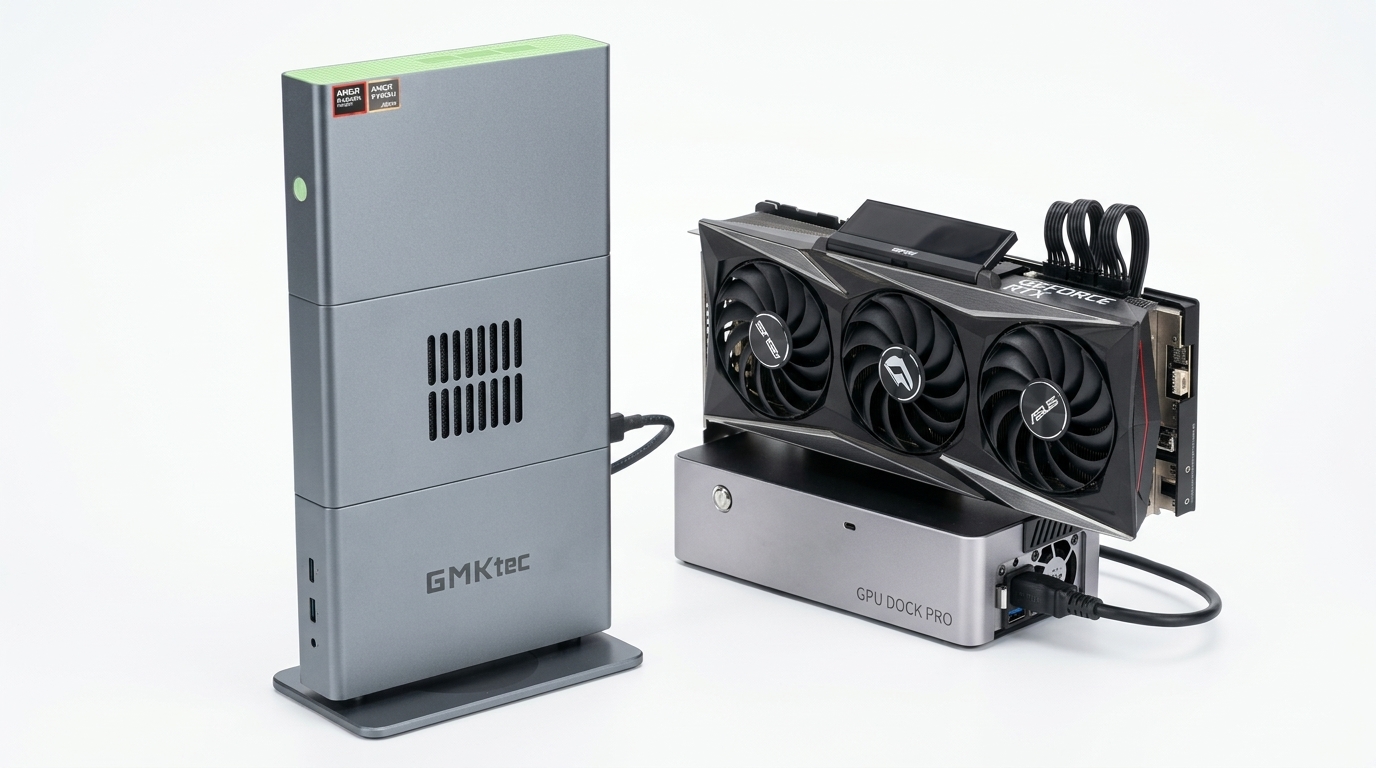
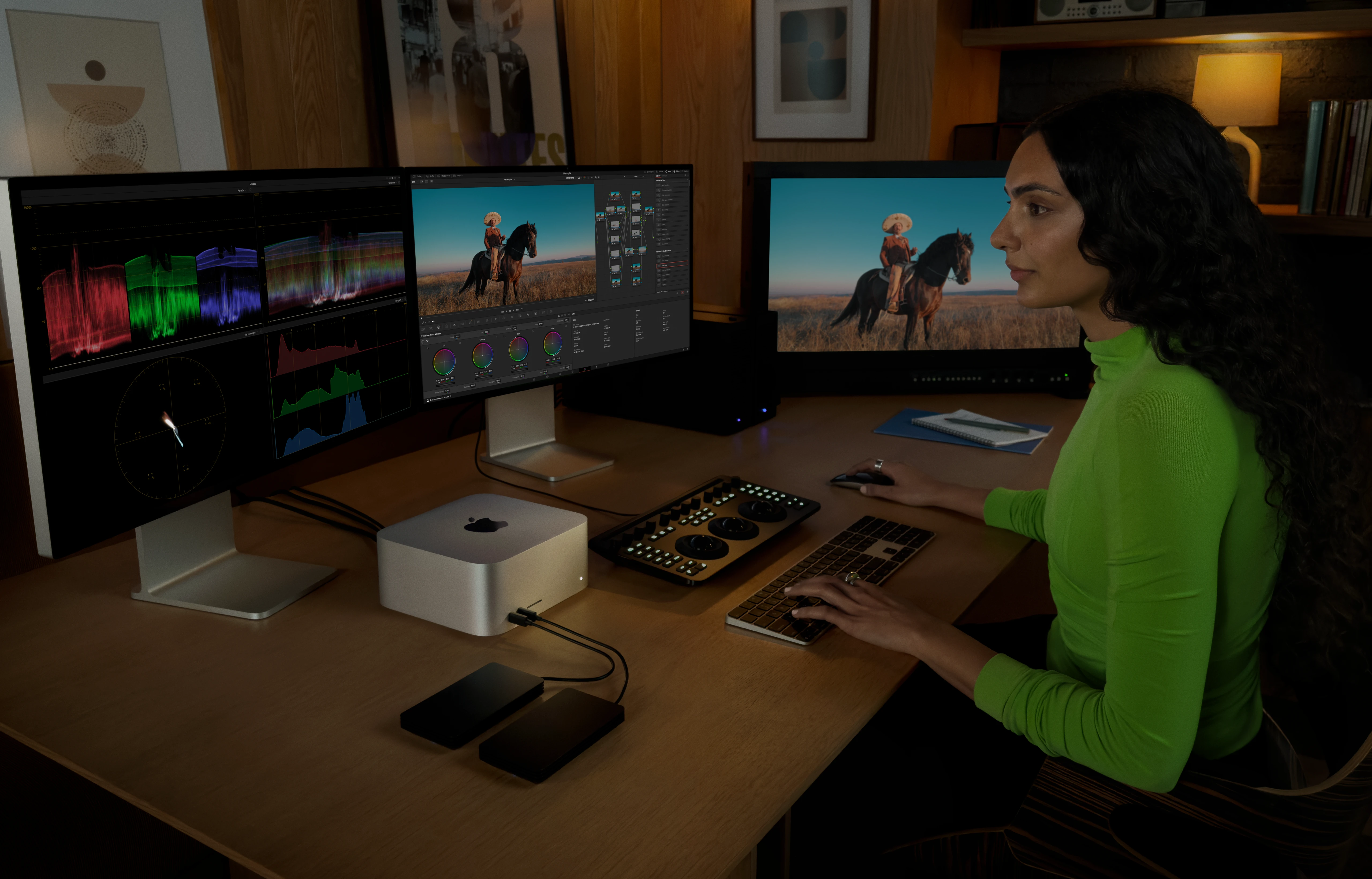
On August 25, Apple introduced the new Mac Studio with M5 Max and M5 Ultra chips, expanding the Mac lineup for local AI inference and heavy professional workloads. Pre-orders opened the same day, with shipments beginning September 22; the top-tier 512GB configuration won't arrive until late October.
The M5 Ultra is Apple's most powerful chip ever—a quad-die architecture combining two dual-die M5 Max chips via Apple's UltraFusion interconnect, achieving 4.4TB/s inter-die bandwidth. The chip supports up to 36 CPU cores (12 super + 24 performance) and 80 GPU cores, with a 32-core Neural Engine delivering up to 4.3x the peak AI compute performance of the M3 Ultra.
1.2TB/s Bandwidth: 4.4x Faster Than DGX Spark
For local LLM inference, memory bandwidth is the bottleneck. During token generation, the model must pass the entire weight set through memory for every token—a process that's almost entirely bandwidth-bound.
The M5 Ultra's 1.2TB/s bandwidth is roughly 4.4x faster than the NVIDIA DGX Spark's 273GB/s. That advantage translates directly into tokens per second on large models. Community benchmarks on the M3 Ultra (819GB/s) already show strong sustained token generation on 70B-class models, and the M5 Ultra's 50% bandwidth bump raises that ceiling further.
512GB Fits 400B Models. No Desktop Has Done That Before.
Memory capacity determines what models fit at all. The 512GB configuration can run:
Model | Weight Size | Fits in 512GB? |
|---|---|---|
Llama 3.3 70B (Q4) | ~42GB | Yes, huge headroom |
Qwen3.6 35B-A3B (Q4) | ~22GB | Yes |
GPT-OSS 120B (MXFP4) | ~65GB | Yes |
Llama 4 Maverick 400B (Q4) | ~220GB | Yes |
DeepSeek-class 670B+ (Q4) | ~370GB+ | Possible, tight |
A 256GB config already runs 120B MoE models comfortably. The 512GB tier moves 400B-class MoE models from "cloud only" to "on my desk"—models that score near frontier proprietary systems on coding benchmarks.
The 512GB configuration can also handle an entire 1M-token context window for a 70B model, a workload that would require multi-GPU cloud instances costing thousands per month.
2TB Memory Pool: Four Mac Studios, One Shared System
Apple also introduced a capability that shifts the economics of AI infrastructure. Using Thunderbolt 5 and RDMA, multiple Mac Studio systems can cluster into a shared memory pool. A four-system cluster delivers up to 3x the AI inference performance of a single system. For teams that need to run the largest open-weight models, this clusters desktops into shared-memory supercomputers—without cloud fees, token counting, or data leaving the premises.
Price: $5,500 to $15,000—and 512GB Is TBD
The pricing picture is still incomplete. The base M5 Ultra Mac Studio starts at $5,499 with 96GB memory and 1TB storage. The 36-core/80-GPU version starts at $6,799. Upgrading to 256GB memory costs an additional $4,000. The 512GB configuration has not yet been priced, but estimates suggest it will land north of $9,500, potentially exceeding $15,000 with storage and display upgrades.
Configuration | Price |
|---|---|
M5 Ultra, 96GB, 1TB | $5,499 |
M5 Ultra, 36-core CPU/80-core GPU | $6,799 |
M5 Ultra, 256GB (upgrade) | +$4,000 |
M5 Ultra, 512GB | TBD (~$9,500+) |
For context, the DGX Spark at $4,699 delivers 128GB at 273GB/s with the NVIDIA ecosystem and CUDA compatibility. The Mac Studio is not a replacement—it's a different class of machine: the first desktop that can run 400B-class models at usable speed.
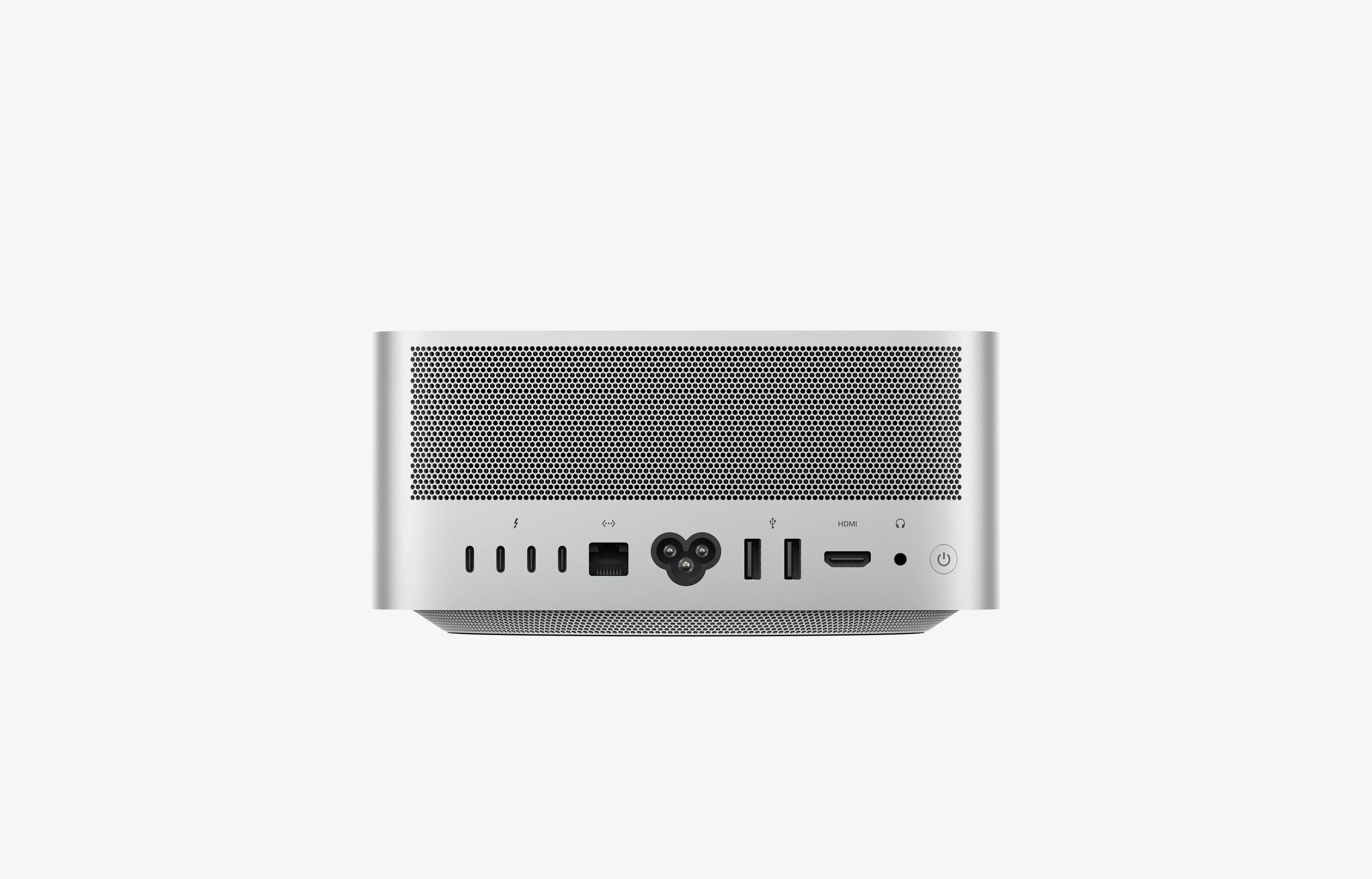
The M5 Ultra Mac Studio is the first desktop machine that can run 400B-parameter models entirely on device. The 512GB configuration, when it arrives in late October, will be the only single-machine option for workloads that currently require cloud GPU clusters or multi-GPU workstations.
The price is high. The software ecosystem is still Apple-only. But for the researcher, data scientist, or team that needs to run the largest open-weight models without cloud costs, token limits, or data leaving the premises, the M5 Ultra is the first machine that can do that.
P.S. All performance figures cited so far come from Apple's own testing. Independent benchmarks have not yet appeared, as review units won't ship until September 22. That's the gap between promise and reality. The 512GB configuration arrives in late October—a full month after the rest of the line. If you need 512GB, you're waiting—and you're paying whatever Apple decides to charge.
Frequently Asked Questions
Q: What is the Apple M5 Ultra Mac Studio?
A: The M5 Ultra Mac Studio is Apple's new desktop workstation, announced on August 25, 2026. It features up to 512GB of unified memory and 1.2TB/s memory bandwidth, capable of running 400B-parameter AI models entirely on device.
Q: How much memory bandwidth does the M5 Ultra have?
A: 1.2TB/s, which is roughly 4.4x faster than the NVIDIA DGX Spark's 273GB/s and 50% faster than the M3 Ultra's 819GB/s.
Q: What models can the M5 Ultra run?
A: The 512GB configuration can run 400B-class models like Llama 4 Maverick (220GB), and potentially DeepSeek-class 670B+ models (370GB+) in Q4. A 256GB config already runs 120B MoE models comfortably.
Q: How much does the M5 Ultra Mac Studio cost?
A: Base price starts at $5,499 for 96GB/1TB. The 36-core/80-GPU version starts at $6,799. Upgrading to 256GB costs an additional $4,000. The 512GB configuration has not been priced yet but is estimated at $9,500+.
Q: When will the 512GB configuration ship?
A: Late October 2026, about a month after the rest of the lineup (which ships September 22).
Q: Can multiple Mac Studios be clustered?
A: Yes. Using Thunderbolt 5 and RDMA, up to four Mac Studios can cluster into a shared memory pool, delivering up to 3x the inference performance of a single system.
Q: How does the Mac Studio compare to the DGX Spark?
A: The DGX Spark costs $4,699 and offers 128GB at 273GB/s with the NVIDIA/CUDA ecosystem. The Mac Studio is a higher-tier machine—more memory, more bandwidth, different software ecosystem, and a much higher price.
Q: What is the inter-die bandwidth of the M5 Ultra?
A: 4.4TB/s via Apple's UltraFusion interconnect. For comparison, AMD's 32-core Threadripper CCD interconnect is just 256GB/s—17x slower.
Q: Is this machine for everyone?
A: No. The Mac Studio is a specialized AI workstation for researchers and teams running the largest open-weight models locally. The price and Apple-only ecosystem limit its appeal.
Q: Should I buy the 512GB version?
A: If you need to run 400B-class models locally, the 512GB version is the only desktop option. If you're running 70B or 120B models, the 256GB version may be sufficient and significantly cheaper.