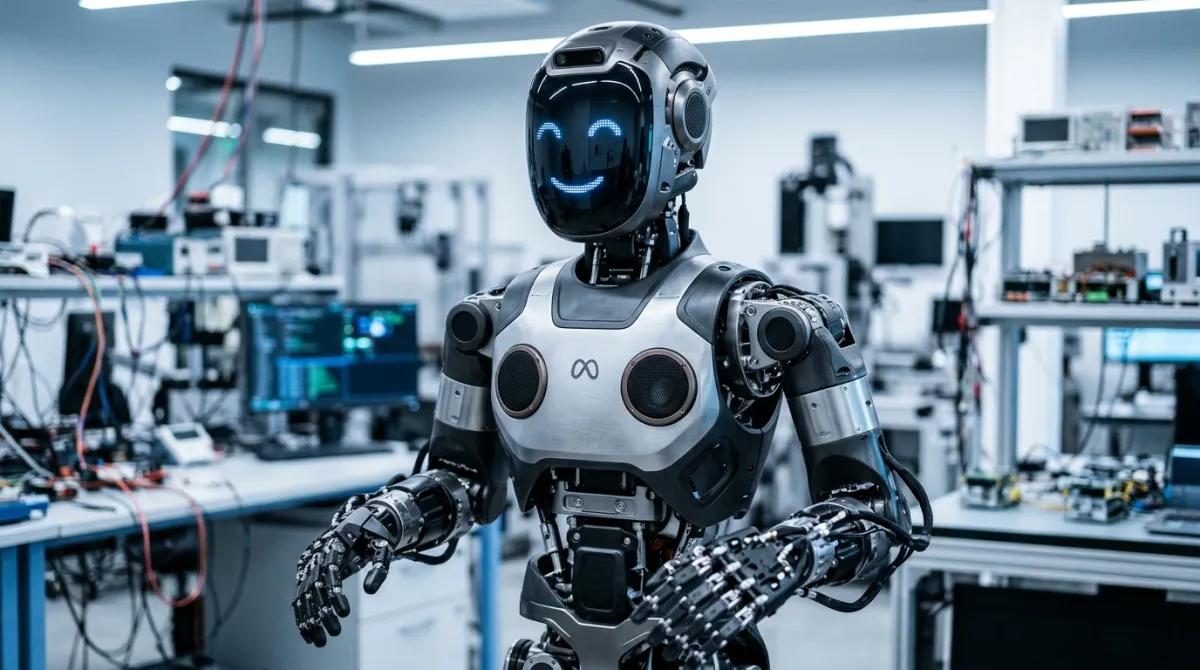
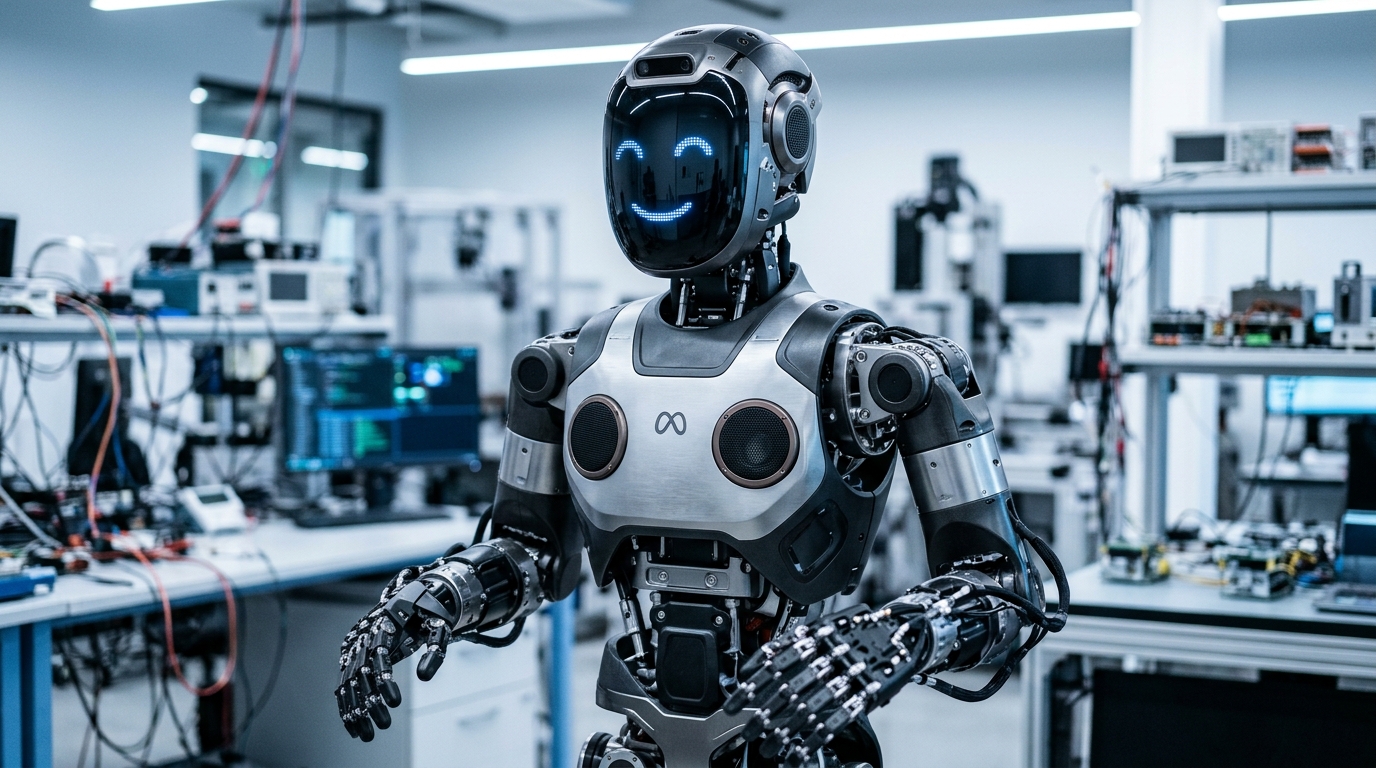
On October 31, 2026, The Information reported that Meta had built a humanoid robot prototype with Chinese robotics company Fourier Intelligence in about three months. The robot, internally called Max, stands roughly 1.5 meters tall and weighs about 48 kilograms. It runs on Nvidia's Jetson Thor chip, has a screen face that mimics expressions, and five-fingered hands that can pick up small bottles and toys.
Meta's spokesperson said the collaboration is for internal research and experimentation, with no plans to sell the units. Work on a second version, Max 2, began in September. It will get a redesigned torso, better hands, a projector and sensors for stairs.
The three-month figure is real. What it measures is not Meta's development speed.
Three months is customization, not creation
Max is not a robot Meta built from zero. It is a customized version of Fourier's existing platform.
Fourier, founded in 2015 and headquartered in Shanghai's Zhangjiang district, has shipped three generations of humanoid robots: GR-1, GR-2 and GR-3. Meta used the hardware and engineering experience from those generations as the base, then adjusted the height, body proportions, head design, display and cameras, and added the manipulator and shoe structures.
Li-Chen Miller, Meta's vice president of product for robotics, spent nearly two months at Fourier's Shanghai factory working with the local team. The Meta team traveled to China for the development. Max was shown to some employees at an internal robotics summit in late August.
The pattern is not an American tech giant entering robotics. It is an American AI company adding an interaction layer to a Chinese hardware platform. Meta did not need to solve joint actuation or motion control. It needed a body it could iterate on quickly, and Fourier already had one.
Muse in a body is not the same agent
Meta CTO Andrew Bosworth described the humanoid internally as Muse's physical form. The framing is appealing. The gap between a digital agent and a physical one is not intelligence. It is the cost of failure.
Muse on a phone handles digital tasks: drafting replies, managing calendars, comparing prices, placing orders. These are API-to-API operations. If Muse orders the wrong item, the user cancels it. If it sends the wrong email, the user follows up. The cost of a mistake is recoverable.
Max in a living room faces a different environment. A task like tidying the table requires identifying objects, judging which ones need moving, planning a grasp and placement, adjusting grip force based on weight and shape, and re-planning if an object slips or a path is blocked. The failure modes are physical. A dropped bottle breaks. A misjudged grasp damages something that cannot be undone with a cancel button.
This is why Meta's stated requirements for Max are specific about perception, not about chores. The robot needs to recognize voices from five meters away, read hand gestures from three meters, maintain eye contact, and signal states like listening, thinking, speaking and uncertainty. These are not intelligence benchmarks. They are the physical constraints of a home environment, where the robot has to hear over a television, distinguish a wave from a swat, and tell a human what it is doing without a screen to display it on.
Meta is testing whether Muse's understanding can survive contact with a world where errors have weight. The prototype is not a product. It is a failure-rate measurement device.
The body is a data collection strategy
Max's five-fingered hands, expression screen and chest speakers are not there to make the robot charming. They are there to make the interaction legible.
A home robot that only moves objects is a tool. A home robot that looks at you, gestures and signals uncertainty is a participant. Meta's requirements list is a specification for a participant, not a picker-and-placer. The reason is data. Muse on a phone sees what is on the screen. Muse in a body sees what is in the room: the layout, the objects, the humans, the ways they move and speak and react. That is training data for physical behavior that no simulated environment fully replicates.
The Max 2 roadmap confirms the direction. A projector to display visual content, sensors for stairs, a redesigned torso and hands. Each addition extends the range of physical situations the robot can encounter and record. Meta is not optimizing a product. It is expanding the surface area of its data collection.
What Meta is actually testing
The company says the prototypes are for internal research. That is accurate and also incomplete. Meta is testing two things at once.
The first is whether Muse's planning and reasoning can translate into physical action sequences that succeed often enough to be useful. The second is whether the hardware platform from Fourier can be adapted fast enough to keep up with the software team's iteration speed. The three-month prototype answers the second question. It does not answer the first.
A robot that can pick up a bottle in a demo is not a robot that can tidy a room. The gap between those two is the gap between a prototype and a product. Meta has not published task success rates, failure modes, or a timeline for when Max might do anything useful in a home that is not carefully staged.
P.S. The robot's face is a screen designed to signal listening, thinking and uncertainty. The last one is the most honest — a robot built to admit it might be wrong is a better safety feature than any sensor on the Max 2 roadmap.
Frequently Asked Questions
Q: Did Meta actually build this robot from scratch?
A: No. Max is a customized version of Fourier Intelligence's existing humanoid platform. Meta used the hardware and engineering experience from Fourier's GR-1, GR-2 and GR-3 robots, then adjusted height, proportions, head design, display and cameras, and added the manipulator and shoe structures.
Q: Why did it only take three months?
A: Because Meta did not develop the robot's joints, actuators or motion control. Those came from Fourier's existing platform. The three months covered customization, interaction-layer design and integration, with Meta's VP of robotics spending nearly two months at Fourier's Shanghai factory.
Q: What is Max supposed to do?
A: Meta describes it as Muse's physical form, intended for household tasks. Its stated requirements include recognizing voices from five meters, reading gestures from three meters, maintaining eye contact, and signaling listening, thinking, speaking and uncertainty states.
Q: Is Muse on a robot the same as Muse on a phone?
A: No. Digital tasks have recoverable failures: a wrong order can be canceled. Physical tasks do not. Max must identify objects, judge what to move, plan grasps, adjust grip force and re-plan when something slips. The cost of an error is physical and often irreversible.
Q: Will Meta sell Max?
A: Not currently. Meta's spokesperson said the collaboration is for internal research and there are no plans to sell the prototypes. The company has not set a launch date for a consumer product.
Q: What is in Max 2?
A: A redesigned torso and improved hands for better manipulation, a projector for displaying visual content, and additional sensors to help the robot handle stairs. Development began in September 2026.