On November 28, Robots’ Last Exam opened a workplace simulation benchmark with a question that sounds easier than it is: can an AI model take one order and deliver the finished product? The project’s first release features 10 workplace scenes, including a coffee shop, a convenience store and a warehouse. Its preliminary evaluation covered 16 complete workflows across eight workplaces. In the version of the test that imposed the constraints of a simulated mobile robot, none of the nine models finished any of those workflows.
This was not nine physical robots failing shifts in actual stores. It was a controlled simulation built around jobs that people already do. The distinction matters, because the project tested two different ways of controlling the same kind of workspace, and the results were substantially different.
The same job looks different with a robot body
In the benchmark’s agent mode, a model can move two floating grippers and a camera independently. In embodied mode, it controls a simulated Astribot S1, a two-armed robot with a mobile base. Where its tools can reach depends on how it positions the base and arms. That changes what the model can physically do next, even if it knows what the job requires.
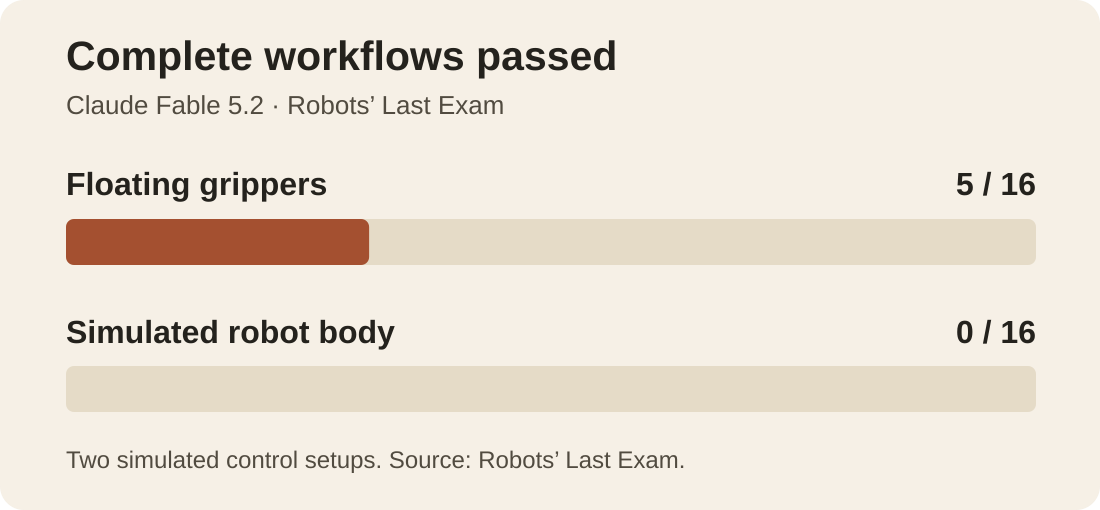
Claude Fable 5.2 finished five of the 16 workflows with the floating grippers. Claude Opus 5.5 finished two, and GPT-6.2 Astra finished one. The other six finished none in that mode. Under the simulated Astribot constraints, none of the nine registered a complete workflow. These are results for the project’s preliminary setup, not a ranking of commercial robots or a claim that a different controller would get the same scores.
The evaluation protocol gave models instructions, available manuals and sensor observations, but withheld the verifier’s feedback while they worked. Each model, task and mode combination began from one fresh initialization. An independent verifier checked the output when the model submitted it or ran out of budget. It was looking at more than whether the right objects ended up near each other: relevant processing history and whether the result remained stable could also matter.
One cup of tea shows where the chain breaks
Consider the project’s boba tea rollout. The order involves seven stages, from picking up an empty cup to delivering it upright in the correct lane. Between those points the model has to add ingredients, fill the cup to the required level and seal it. An error in one action can make the next action look reasonable while putting the finished order further out of reach.
The project shows Fable completing the order with floating grippers. It backed out of its first sealing attempt, topped up the tea and eventually handed off the cup. With the simulated Astribot body, the same model’s run broke down after it picked up the empty cup. There is no need to imagine that the robot forgot the recipe. The rollout shows a more immediate failure: it could not carry the job past a stage it had successfully started.
Isolated tests tell a different story. Fable passed 46 of 80 independently tested subtasks in agent mode, or 57.5%, compared with 31.25% on complete workflows. That does not mean the same actions became worse when re-tested. The independent trials start from prepared states. If another system has already put the cup where it needs to be, pouring correctly says little about whether the same controller can find, grasp and position that cup from scratch.
The score worth watching is the finished job
This test is useful as a way of asking where to invest next. When a subtask works on its own but the overall job breaks, improving the isolated skill may not fix the handoff. A developer might instead need better sensing when the previous stage ends, a controller that can recover a slightly misplaced object, or a way to verify that a sealed drink is actually ready to deliver.
The results cannot tell us which of those fixes would matter most. The embodied setup changes what the controller can reach and how it moves, and the published runs are an initial evaluation rather than a repeated reliability study. The team also shows separate paired demonstrations of simulated and physical jobs, including pouring liquid and wiping a board. Those demonstrations are not the nine-model workflow comparison and should not be used to turn a simulated zero into a real-world failure rate.
For a lab or a buyer, the next question is less cinematic than whether a robot can pour tea. Ask whether it can deliver the same order repeatedly after the cups are moved, a grip slips, or a fill level comes up short. A single successful action is worth seeing. A finished job, with a record of how it recovered, is worth measuring.
P.S. The project’s public leaderboard separates complete jobs from independently tested steps. Toggle between them before drawing conclusions from a model’s rank.
Frequently Asked Questions
Q: What is Robots’ Last Exam?
A: It is a simulation benchmark that tests whether AI models can complete workplace jobs from request to independently verified result.
Q: Did nine physical robots fail these jobs?
A: No. Nine models were evaluated under simulated Astribot S1 constraints. The team’s separate physical demonstrations are not those leaderboard runs.
Q: What could the best model do with floating grippers?
A: Claude Fable 5.2 passed five of 16 complete workflows in agent mode and 46 of 80 independently tested subtasks in that mode.
Q: Why test subtasks separately?
A: They show what a model can do in a prepared state. Whole workflows also test whether the model can reach that state and recover after an earlier mistake.
Q: Do these results prove that a different robot would also fail?
A: No. The initial results apply to the tested models, tasks, controller interfaces and robot simulation. Additional hardware, policies and repeat trials would answer other questions.
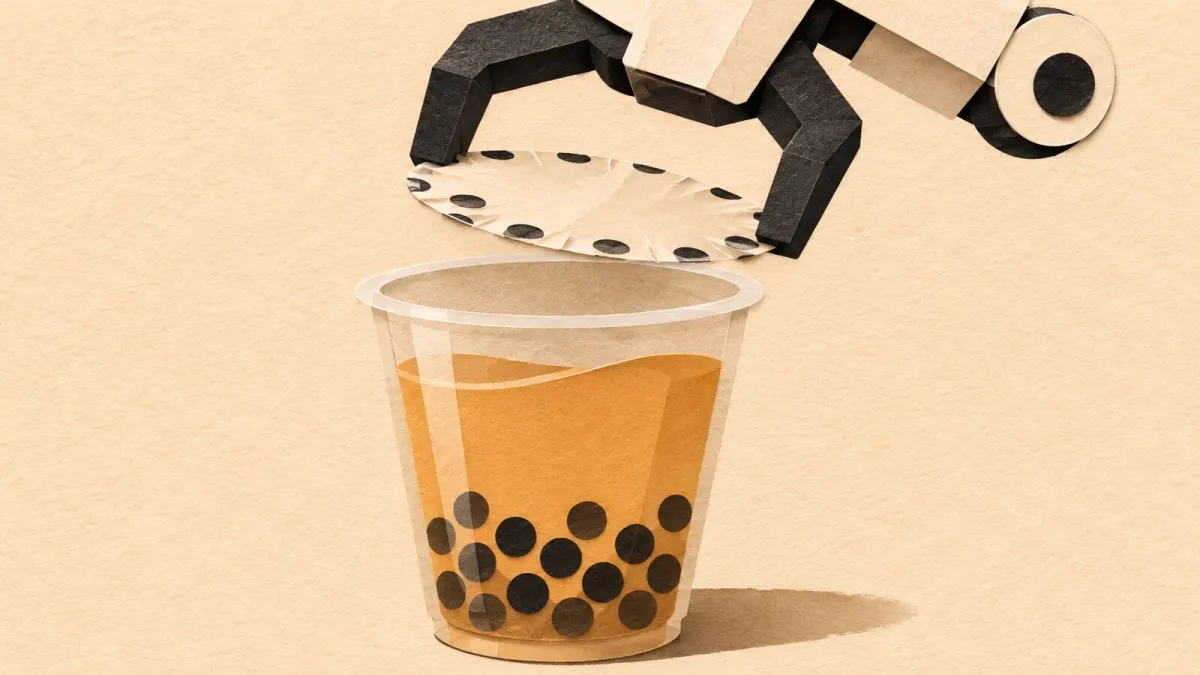
Cover: AI-generated SUPERCRZY editorial illustration. The gripper is conceptual, not test footage.