On November 24, 2026, Nuro, Lucid and Uber said they had begun testing driverless Lucid Gravity SUVs on public roads in the San Francisco Bay Area. The initial operations are in Palo Alto, Mountain View, Los Altos and Sunnyvale. The companies plan to add cities next year and are targeting the first quarter of 2027 for a public launch through Uber.
The test loses its in-car fallback
The program had been testing on public roads with safety operators since December 2025, according to Nuro. Removing the person behind the wheel changes what the test is meant to establish: whether the vehicle can carry out its road test without the immediate fallback of an onboard driver. The announcement does not establish how often the fleet needs help or how the system performs in conditions outside the initial test area.
Lucid says it has delivered more than 100 vehicles to support the program. That is a delivery count, not the number of driverless vehicles on the road. The announcement did not give a count for the initial driverless test fleet. It is also the test geography that includes four named cities, not a public service map, and the list does not include San Francisco proper.
One state, two different permissions
California’s DMV lists Nuro among companies authorized for driverless testing. Its own listing distinguishes vehicle platforms and where they may be tested; permission to test is not the same thing as authority to operate a service for passengers. Separately, the California Public Utilities Commission’s public passenger program list identifies Nuro’s permit as a Drivered Pilot. The commission describes testing and passenger authorizations as related but distinct.
That is the useful distinction behind the milestone. What changed is the road test: no safety driver in the vehicle for this phase. What has not changed is what a member of the public can do in the Uber app. The companies did not announce a booking date, a rider eligibility list, fares or a service zone. The first-quarter target was already in Uber’s November update; it is not a fresh launch promise created by this test.
The next thing to watch is the ride
The responsibilities are split. Lucid supplies the vehicle, Nuro supplies the automated driving system, and Uber runs the rider-facing platform. An unstaffed drive tests one part of that combination. A service also needs to show where people can get picked up, when rides run and what happens if something interrupts a trip. Those are the signs that a test is turning into transport.
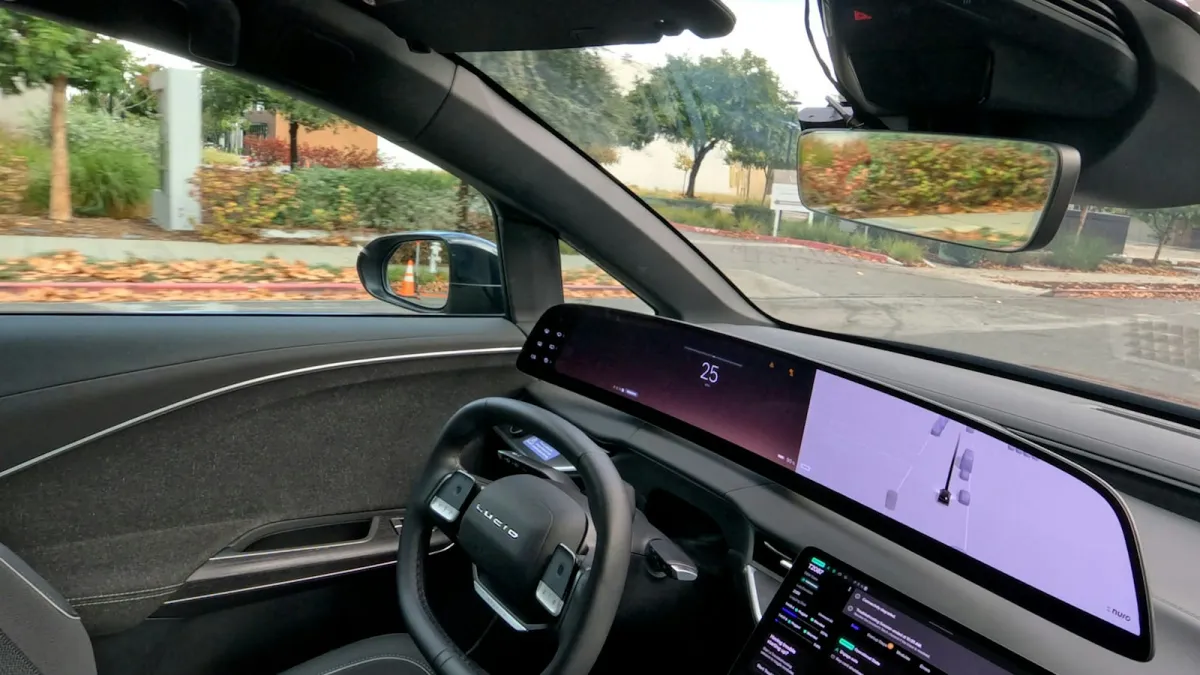
P.S. The photo shows the driverless configuration as presented by Nuro. It is not a SUPERCRZY road test. Photo: Nuro.
Frequently Asked Questions
Q: Where are driverless tests taking place?
A: Nuro named Palo Alto, Mountain View, Los Altos and Sunnyvale in its initial announcement.
Q: Can the public book a ride now?
A: This announcement is about testing, not bookings. The partners target the first quarter of 2027 for a public Bay Area launch.
Q: Are all delivered cars testing without drivers?
A: The companies did not give the size of the initial driverless fleet. The more than 100 delivered vehicles support the overall program.
Q: Which company provides the driving system?
A: Nuro supplies the autonomous driving system, Lucid builds the Gravity vehicles, and Uber provides the ride-hailing platform.
Q: Is a California driverless test permit a passenger service permit?
A: No. The DMV regulates vehicle testing; the CPUC has separate passenger service programs.