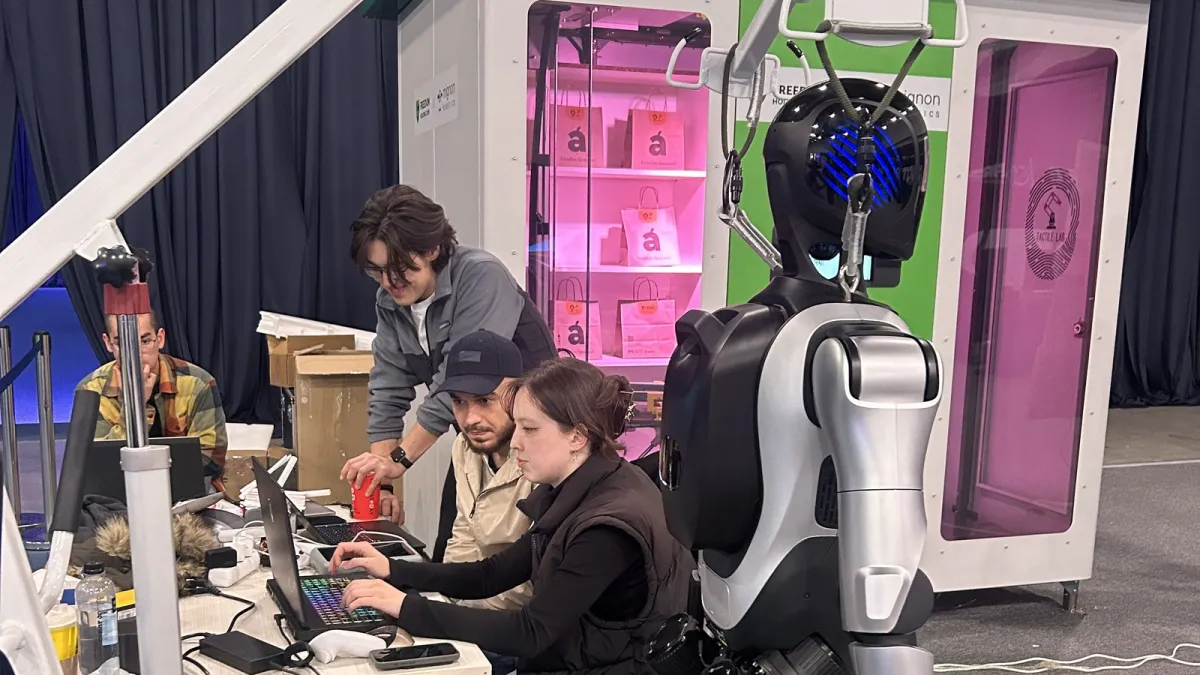
On November 26, 2026, GEMS Education and Dubai robotics company MANGOBOT announced a humanoid robotics pilot at GEMS School of Research and Innovation. The program is due to start at that one school in January 2027, with teachers or trained adults supervising student-facing activities. Expansion across the school network is not part of the initial rollout.
MANGOBOT had already demonstrated a humanoid at the same campus in 2026. The new step is to let students write and test the instructions themselves under supervision.
The First Lesson Is Finding What Went Wrong
In one planned exercise, students will program a controlled movement, watch what the robot actually does and revise the instructions. The point is not just to make the robot move. It is to see which parts of a seemingly clear instruction are missing when a machine has to carry it out.
Students will also test controlled language interactions and identify where a response is wrong, uncertain or needs an adult’s judgment. That combines two failure modes in one lab: a language model can misunderstand an instruction, and an action can still turn out differently from what the student expected.
The School Sets the Boundaries
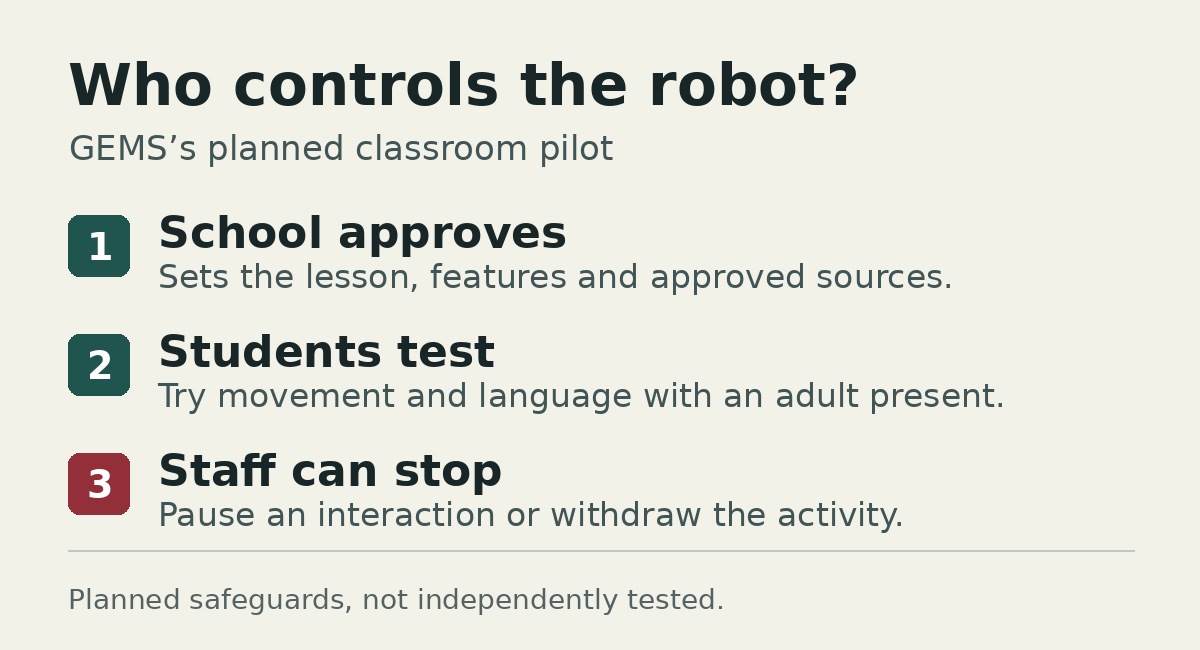
GEMS says it will approve each activity’s educational purpose, permitted functionality, knowledge sources and interaction limits before students can use it. MANGOBOT will configure the technology to operate within those limits. Teachers and authorized staff can pause or stop an interaction or withdraw the activity, according to the announcement.
Physical limits matter differently here than in a chatbot. An inappropriate answer can be corrected after it appears, but a robot can move while a student is standing near it. The school says it will use designated learning areas, age-appropriate access rules and adult supervision. The release describes those controls, but it does not say how they will be enforced at the hardware level or report results from the pilot.
One Campus Before a Wider Rollout
The partners name the X2, D1 Max and A3 among the hardware platforms they are considering. They have not finalized the models or the features students will be able to use. The participation and evaluation plan also includes creative activities, such as translating choreography into a sequence of motions.
GEMS says student work, teacher observations and industry evaluation will inform decisions about which activities to keep, change or consider taking to other schools. That makes the most useful outcome a good record of what worked and what adults had to stop. Planned training and certification programs would come later, not with the first classroom sessions.
P.S. A class that can explain why it stopped a robot has learned something a flawless demo cannot show.
Frequently Asked Questions
Q: When and where is the pilot due to start?
A: January 2027 at GEMS School of Research and Innovation in Dubai.
Q: What will students do with the robots?
A: Planned activities include programming a controlled movement, comparing the result with their intent and testing restricted language interactions.
Q: Can teachers stop a session?
A: GEMS says teachers and authorized staff can pause or stop a robot interaction or withdraw an activity.
Q: Which robot models will students use?
A: The announcement mentions X2, D1 Max and A3 as possibilities. Final selection and enabled features depend on school safety approval and program needs.
Q: Is it rolling out across all GEMS schools?
A: No. The program starts at one campus, and the partners will evaluate the results before considering wider use.