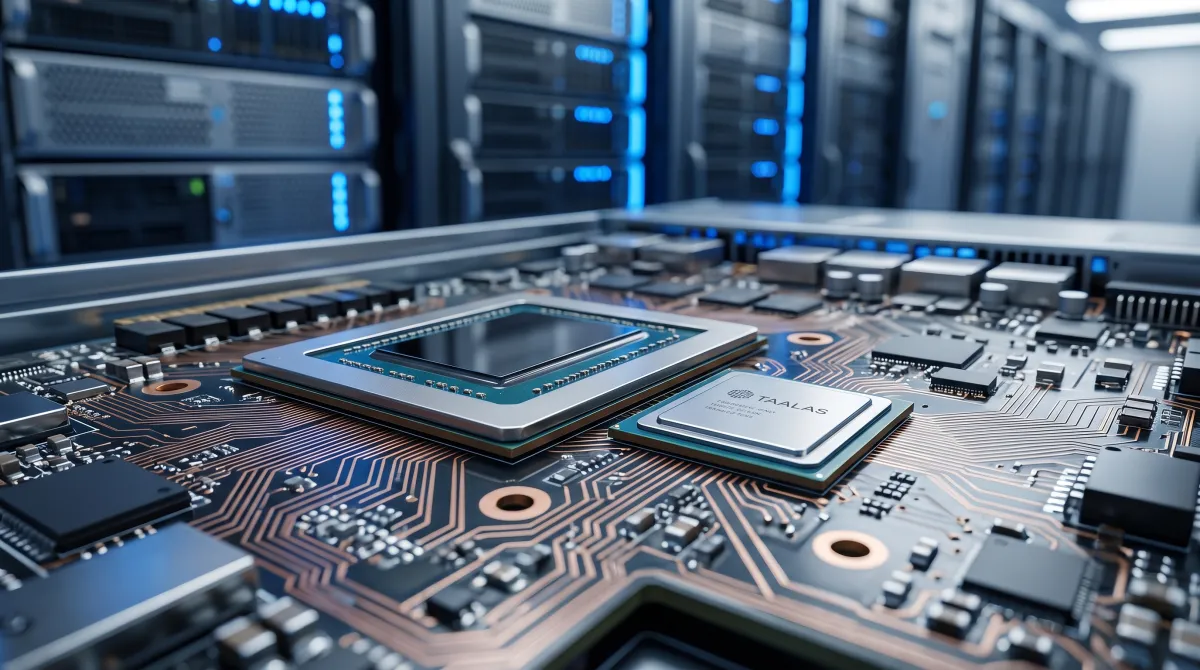
AMD is counting on its GPUs to drive data center growth. But nearly four years into the generative AI boom, it's become clear that GPUs don't do everything. The company's acquisition of Taalas is the latest signal that the AI chip industry is moving toward heterogeneous computing — and AMD is trying to catch up fast.
Look at the acquisition trail. This wasn't a standalone chip purchase. It was the third piece of a three-act strategy: Silo AI in 2024 ($665 million) for model development capability, ZT Systems ($4.9 billion) for rack-scale system design and manufacturing, and now Taalas for specialized inference silicon.
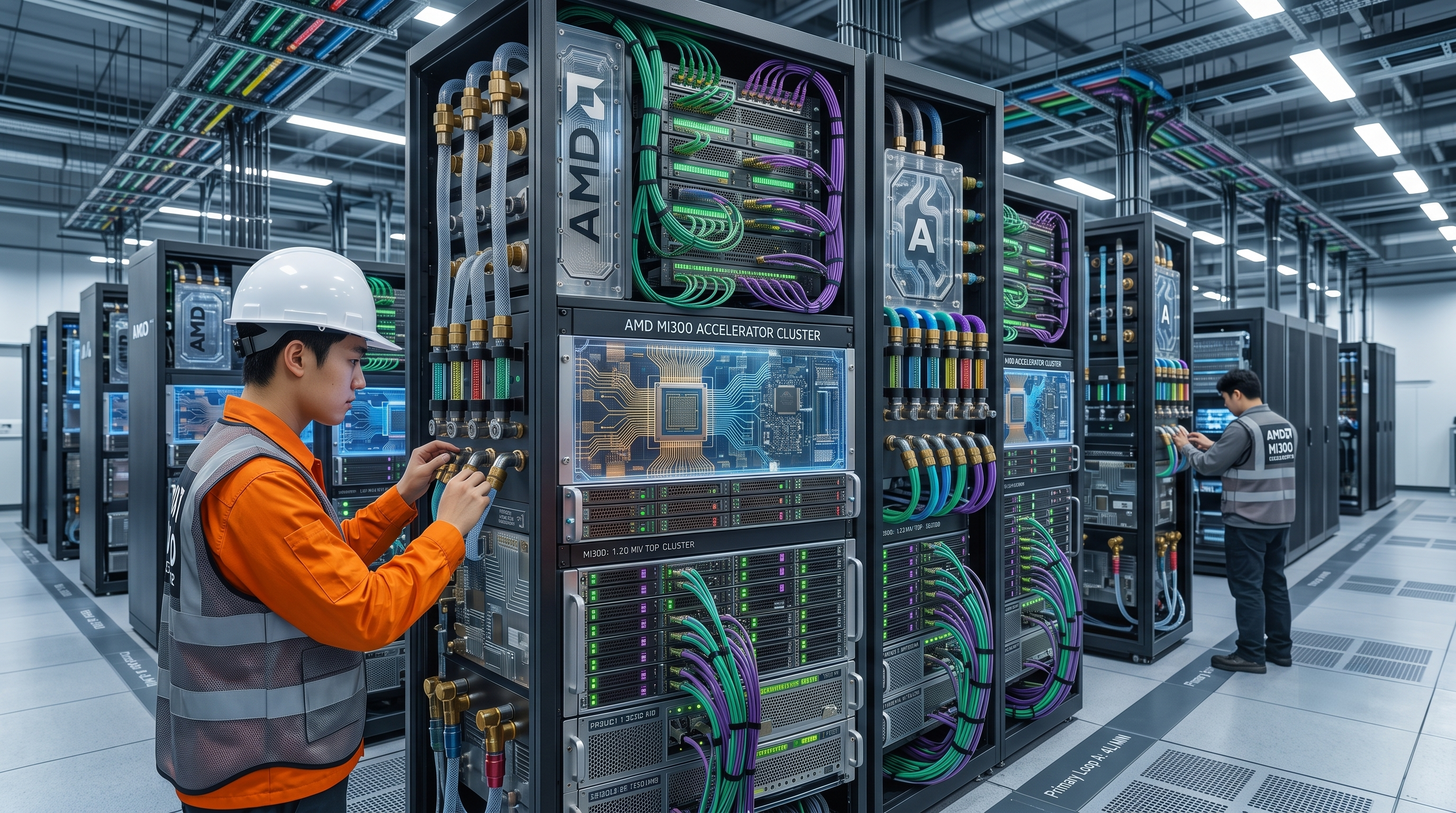
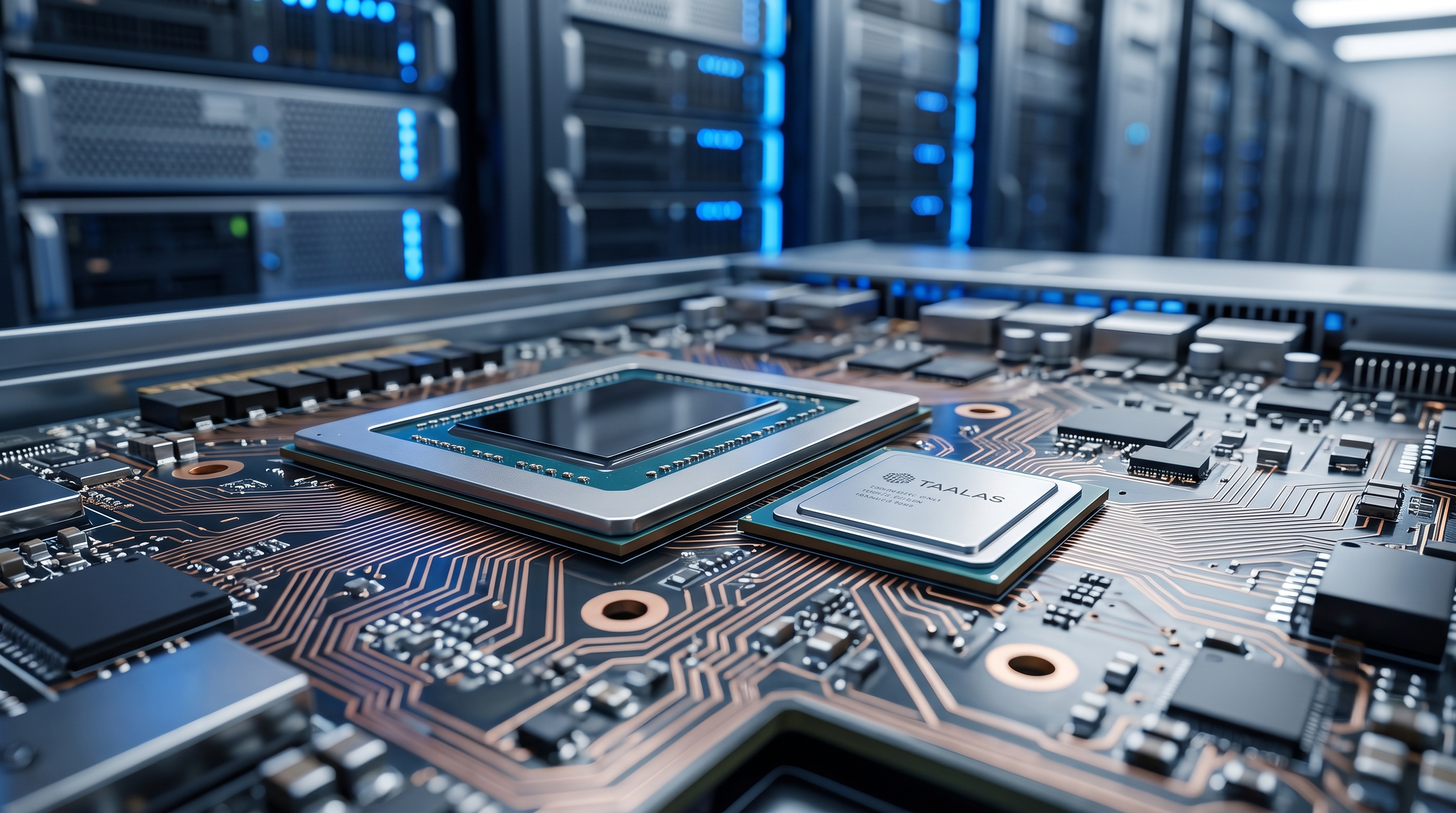
The pattern is clear. AMD isn't just selling GPUs anymore. It's selling racks. Helios, AMD's first rack-scale system, is already shipping to Meta and Microsoft. Taalas chips are expected to pair directly with Instinct-based Helios racks in a disaggregated architecture: GPUs handle compute-heavy prompt processing, Taalas accelerators handle token generation.
Nvidia's playbook was integration: GPU → DGX rack → full-stack system. AMD is now mirroring it, but with an "acquire to integrate" strategy instead of "build from scratch."
Taalas' numbers are real. Its HC1 test chip, fabbed on TSMC's 6nm process, ran Llama 3.1 8B at 16,960 tokens per second — roughly 48x faster than Nvidia GPUs and 8.5x faster than Cerebras accelerators. Power consumption was one-tenth of the competition.
But there's a catch: once the chip is deployed, you're stuck with that model. Any change beyond a LoRA adapter requires a silicon re-spin. Taalas claims it can turn any new model into custom silicon in two months, and only two layers of metal need to change per iteration — not a full redesign. But in an industry where new models roll out almost monthly, two months is an eternity. And the models AMD's customers care about — OpenAI's GPT, Anthropic's Claude, Meta's Llama — are evolving faster than any silicon re-spin cycle.
Taalas' counterargument: the cost of etching a model into silicon is 1/100th the cost of training a frontier model. For clients running inference at massive scale, the math might still work — provided they're confident about which model will win.
This isn't just about AMD. AMD CEO Lisa Su put it plainly in July: "There's no one-size-fits-all when it comes to chips." She added that GPUs will still make up the majority of the AI chip market because they're flexible enough to support newly developed models. But she also acknowledged that ASICs will have a place — optimized for specific workloads that don't require general-purpose compute.
The industry is moving in the same direction. Seven months before AMD's Taalas deal, Nvidia spent $20 billion acquiring Groq assets. Groq's LPU architecture, like Taalas, uses SRAM instead of HBM and targets low-latency inference. Both companies are betting that inference — not training — is the next massive market.
AMD also partnered with Cerebras in July, planning to integrate its wafer-scale chips into Helios systems later this year. Cerebras' approach reduces communication latency in training and inference, while Taalas' approach eliminates memory bottlenecks entirely.
The trend is accelerating: the biggest GPU companies are no longer selling just processors. They're selling integrated systems with multiple chip types — GPUs for training, ASICs for inference, specialized accelerators for specific workloads. Nvidia's Vera Rubin platform, shipping later this year, includes Groq 3 LPX racks for agentic AI systems. AMD's Helios, shipping now, will pair Instinct GPUs with Taalas accelerators for inference offload. Two competing visions, one shared direction.
P.S. The irony isn't lost: AMD's acquisition comes just over seven months after Nvidia's $20B Groq deal. Both companies are racing toward the same conclusion — that the future of AI compute isn't a single chip, but a rack full of them. The question isn't who makes the fastest processor. It's who can integrate the most complete system.
Frequently Asked Questions
Q: Why is AMD buying Taalas, and what makes its chips different from Nvidia GPUs?
A: Taalas eliminates the "memory wall" by etching AI model weights directly into silicon, rather than storing them in separate HBM memory. Its HC1 test chip runs Llama 3.1 8B at 16,960 tokens/second — roughly 48x faster than Nvidia GPUs and 8.5x faster than Cerebras accelerators, at one-tenth the power consumption . AMD plans to pair Taalas chips with Instinct GPUs in Helios racks: GPUs handle prompt processing, Taalas handles token generation.
Q: What's the catch with Taalas's technology?
A: Once the chip is deployed, you're locked into that specific model. Any change beyond a LoRA adapter requires a silicon re-spin . Taalas claims it can turn a new model into hardware in just two months — but new models roll out almost monthly in the current AI landscape, creating a potential timeline mismatch.
Q: How does this compare to Nvidia's Groq deal?
A: AMD's Taalas acquisition comes just over seven months after Nvidia spent $20 billion acquiring Groq assets . Both deals reflect the same industry shift: inference — not training — is the next massive market, and the biggest GPU companies are moving toward integrated systems with multiple chip types.
Q: Is Taalas's 48x speed claim reliable?
A: The number is based on Taalas's own tests against Nvidia H200/B200, cross-referenced with third-party benchmark data from Artificial Analysis — not a unified testing framework . Early demos observed over 15,000 tokens/second, so the speed is real, but the "48x" figure is more marketing ceiling than reproducible benchmark.
Q: Will this technology make sense for enterprise AI deployments?
A: For customers running high-volume inference on stable, mature models (like code assistants, customer service bots, or industrial control), the math could work — Taalas says etching a model into silicon costs 1/100th of training a frontier model . But for organizations that need flexibility to switch models frequently, Taalas is a non-starter.
Q: When will AMD actually ship Taalas-based products?
A: The deal is expected to close in Q4 2026, subject to regulatory approval . AMD hasn't disclosed a product roadmap timeline beyond integrating Taalas into its accelerator roadmap. The next milestone to watch is Taalas's HC2 chip — targeting 20 billion parameters per chip, up from the current 8B — due later this year.