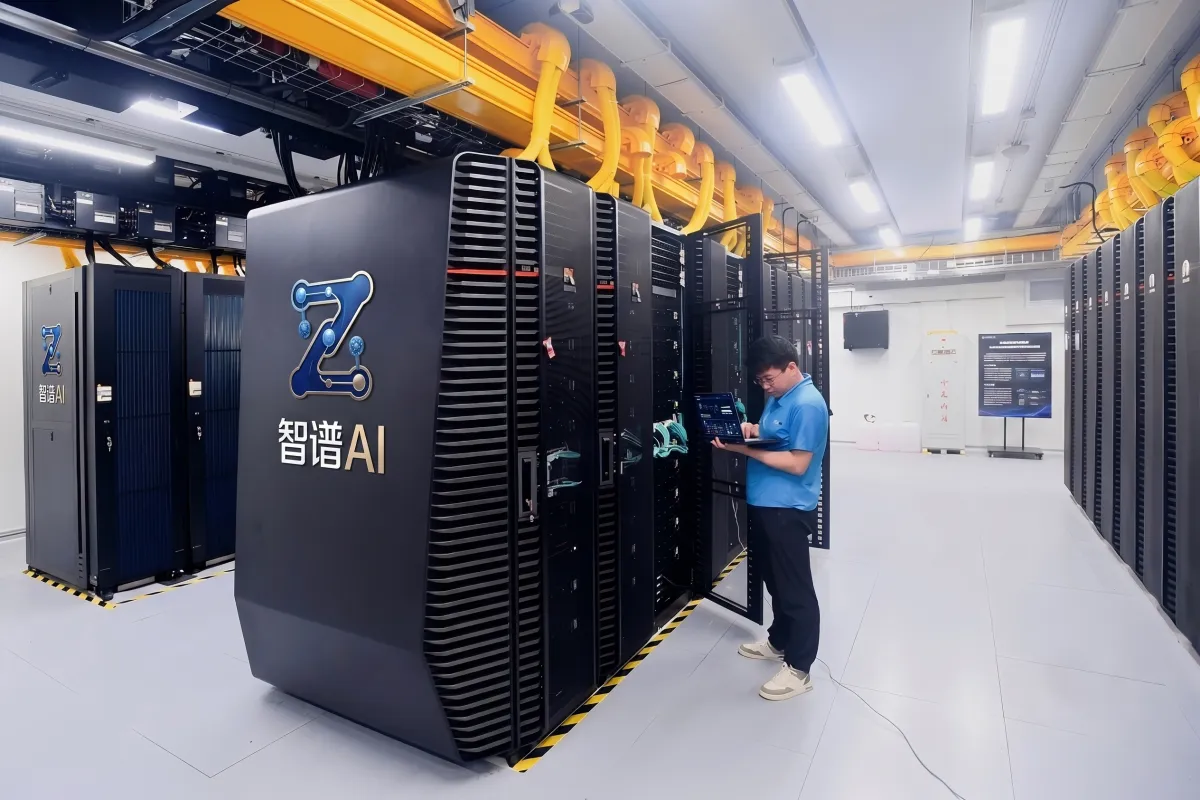
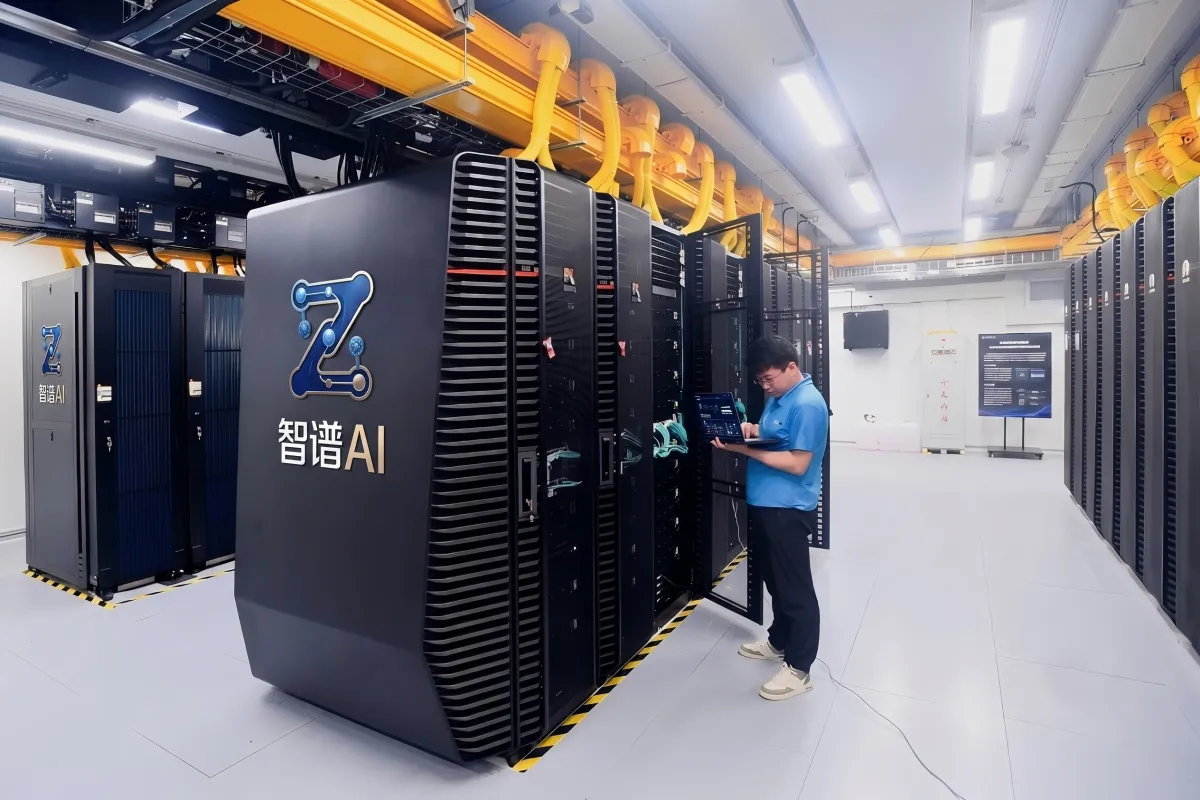
Zhipu just finished building a 1-gigawatt AI data center. It runs entirely on Chinese-made chips. No Nvidia. No AMD.
The scale is real. One gigawatt can power roughly 750,000 homes at any given moment. Multiple compute clusters are already operational, each with more than 10,000 chips. This is one of the largest server hubs built by a Chinese AI company.
The same day, Zhipu acquired XCore Sigma, a domestic AI infrastructure software team spun out of the Chinese Academy of Sciences' computing lab. The team builds compilers, runtimes, and inference engines — the software that makes heterogeneous chips actually usable.
Two moves. One strategy. Together, they solve the two hardest problems in building a domestic AI stack: supplying compute and making it run efficiently.
The $80 Billion Ban That Did the Opposite
US export controls were meant to choke off China's AI ambitions. Instead, they triggered a state-backed self-sufficiency drive that is moving faster than most of the world expected.
China's AI chip self-sufficiency ratio has risen from roughly 10% in 2021 to 41% in 2026 — more than four times in just five years. Morgan Stanley projects it will reach 86% by 2030.
The market data is even starker. Nvidia's share of China's AI accelerator market has collapsed from roughly 95% at its peak to just 8%. Huawei now holds about 50% of the market, with annual AI chip revenue of $12.1 billion. AMD is at 12%, Cambricon at 8%, Hygon at 7%, and Alibaba and Baidu have also become significant suppliers.
China's combined domestic AI chip suppliers now hold roughly 56% of the AI server market, up from 46% last year. Nvidia's remaining 8% consists of low-end compliant chips and a trickle of products approved through special US government licenses.
For context, Nvidia's China revenue as a percentage of global revenue fell from 26.4% in fiscal 2022 to about 9% in fiscal 2026. As a share of Nvidia's global AI chip sales, that figure is even lower.
The irony is sharp. US restrictions on Nvidia's H20 chip forced Chinese firms to treat domestic alternatives as primary options rather than backups. The policy did not stop the buildout. It accelerated the replacement.
HBM Is the Next Bottleneck — And China Is Still Catching Up
The data center is proof of scale. But scale comes with a catch.
HBM — high-bandwidth memory — is the critical component that makes AI chips work. Without it, GPU compute power stalls because data cannot be fed fast enough. And HBM is still dominated by SK Hynix, Samsung, and Micron.
China's HBM supply gap is estimated at 1.6 million units this year. Total demand for domestic AI chips is roughly 4.2 million units, while supply sits at only 2.6 million — the gap is driven almost entirely by HBM shortages, not chip design capacity.
CXMT, China's leading memory maker, currently has HBM production capacity of only about 5,000 wafers per month. Its HBM3 samples are just being delivered, with small-scale production expected by late 2026. HBM4 development is still in early stages.
The data center is a milestone. But it is also a reminder that the stack is not yet complete.
Zhipu Is No Longer Just a Model Company
The acquisition of XCore Sigma is the less visible but equally important half of the strategy. A data center provides compute. Infrastructure software makes that compute usable.
The team builds compilers, runtimes, and inference engines that optimize performance across heterogeneous chip architectures — the kind of software that determines whether a cluster of 10,000 chips actually runs at 10,000-chip efficiency or much lower.
Industry analysts now describe the competitive frontier as a "system competition" — not just model quality, but compute, infrastructure, and ecosystem combined. Zhipu is not competing model-to-model. It is building the full stack.
The company is on track to reach $1 billion in annual recurring revenue by year-end, having already hit its 2026 sales targets in July. It raised billions through its Hong Kong IPO and subsequent placements. The data center is where that money is going.
The Two Chinas of AI
Zhipu's strategy is often compared to Anthropic's — enterprise-focused, infrastructure-heavy, building for customers who pay.
But the competitive landscape is not one company. Moonshot AI just launched Kimi K3 at 2.8 trillion parameters, stunning global observers. It topped Arena's front-end coding leaderboard. It drew a rare "Impressive" from Elon Musk. And it is now open-weight.
Zhipu is building the infrastructure to compete at the same scale — without the chips that power Anthropic and OpenAI.
That is the actual story. Not that China has a workaround. But that the workaround is now measurable in gigawatts.
P.S. If you are an Nvidia product planner, the number to remember is not 8%. It is 56%. That is the share of China's AI server market now held by domestic suppliers. The trajectory suggests it will be higher next year. A 95% monopoly is gone, and it is not coming back.