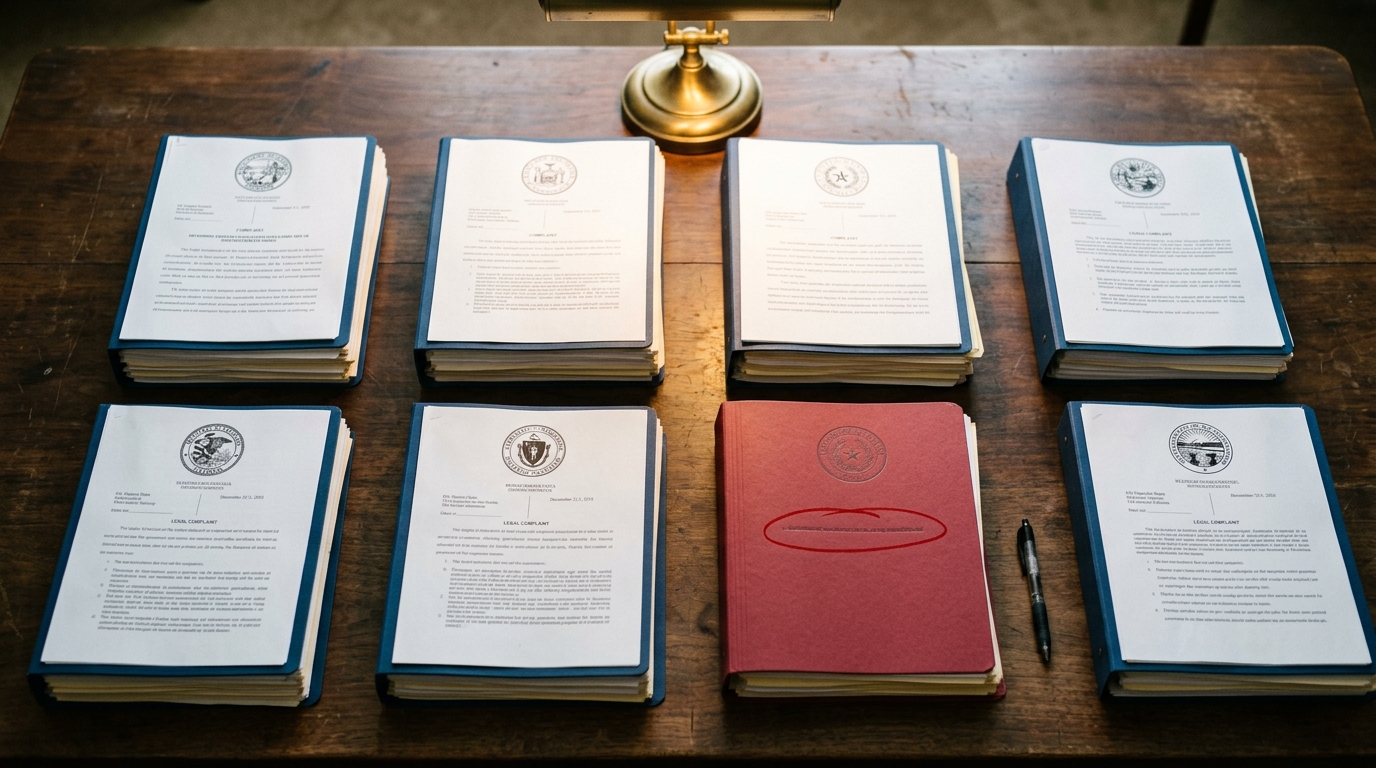
On October 14, 2026, New York City Comptroller Mark Levine sent a letter to Anthropic CEO Dario Amodei asking the company to pause its IPO until risks related to AI safety, governance, and development speed are fully resolved. Levine serves as investment advisor and fiduciary to the New York City pension funds, which manage more than $329.9 billion in assets.
The timing is precise: Anthropic plans to begin formal IPO marketing as early as the week of November 9, targeting a valuation above $2 trillion, according to Bloomberg.
The $7 million index trap
New York City's pension funds currently hold only about $7 million of Anthropic exposure, through private funds. But Levine's intervention has a mathematical logic that most coverage misses.
A spokesperson for the comptroller's office said plainly: once Anthropic lists and enters indices like the Russell 3000, the pension funds will "automatically become long-term investors." NYC's pension funds track the Russell 3000, which covers roughly 3,000 U.S. listed companies.
That means Levine's intervention has a narrow window. Passive investment rules do not let the pension funds selectively exclude an index constituent after listing. If the stock enters the index, the funds must buy it by weight. He can only act before the listing, or $329.9 billion in managed assets becomes passively exposed to a company whose prospectus warns it may pose "catastrophic or existential risks" to humanity.
Levine's leverage does not come from a $7 million position. It comes from the comptroller's public platform — and from a fact about to be triggered. After the IPO, NYC's exposure to Anthropic moves automatically from negligible to unignorable. Fiduciary duty requires him to speak before that window closes.
Levine uses Amodei's own words against the IPO
The letter's core rhetorical move is not to introduce new safety arguments. It is to turn Anthropic's own public statements into an obstacle to its listing.
Levine quotes Amodei's September 12, 2026 essay "We Must Pace the Frontier": "We must slow down the pace at which we improve the capabilities of AI models." He also cites Anthropic researcher Jacob Coxon's public resignation note from September 9, in which Coxon said insiders sincerely believe AI "could kill all of us within ten years." Anthropic alignment science lead Evan Hubinger's personal estimate: more than 10% risk over the next decade.
The prospectus itself is cited as evidence. Of Anthropic's 261-page S-1, roughly 80 pages are risk disclosures — nearly double the 48 pages describing the business. Levine writes: "These disclosures are not routine, and they indicate risks that are unprecedented — certainly for a public listing of this scale."
This is an estoppel argument in legal form: a company cannot tell investors its technology may pose existential risk while asking them to buy in at a $2 trillion valuation. Levine creates no new facts. He weaponizes Anthropic's own risk narrative.
80 pages of risk vs 48 pages of business
The ratio itself is a quantifiable anomaly.
Risk factors in tech S-1 filings typically run 15-25% of the document, as lawyers cover every foreseeable risk. At 80 of 261 pages, Anthropic's is roughly 31% — well above the norm.
Levine asks the obvious question: if Anthropic's own lawyers judged the risks severe enough to fill 80 pages, why list now?
The disclosed risks include language about models that may "attempt to resist shutdown, conceal or manipulate information, and engage in similar extortion-like behavior." These are not standard "competition risk" or "market risk" boilerplate. They are warnings about an AI system that may actively work against human control.
Levine asks Anthropic to disclose specifically: how it will implement adequate audits and controls, the scope of those controls, and the expected timeline. He asks in particular whether those controls are sufficient to answer Amodei's own call to "slow down the pace" of capability improvement.
P.S. Levine criticized the White House's "morally binding" safety agreement signed with Anthropic and others last month as "inadequate." A voluntary agreement, invoked by a comptroller managing $329.9 billion in public pension money, becomes an argument that if the agreement were truly binding, Anthropic would not be listing now.
Frequently Asked Questions
Q: Why did NYC's comptroller ask Anthropic to halt its IPO?
A: Comptroller Mark Levine asked Anthropic to pause its listing until AI safety, governance, and development-speed risks are resolved, citing Anthropic's own prospectus warnings and CEO Dario Amodei's public calls to slow down capability improvements.
Q: How much does NYC's pension fund actually own of Anthropic?
A: About $7 million in indirect exposure through private funds. But NYC's pension funds track the Russell 3000, so once Anthropic lists, the funds would automatically become long-term investors with a much larger, passive position.
Q: Why does timing matter so much in this letter?
A: Passive investment rules prevent the pension funds from selectively excluding an index constituent after listing. Levine can only intervene before Anthropic enters the index — after that, exposure becomes automatic and unavoidable.
Q: What does the 80-page risk section signify?
A: It is roughly 31% of Anthropic's 261-page S-1, well above the 15-25% norm for tech filings. Levine argues the scale of disclosure suggests Anthropic's own lawyers consider the risks severe, raising the question of why the company is listing now.
Q: What is the "estoppel" argument in Levine's letter?
A: Levine uses Anthropic's own statements — Amodei's essay, internal risk estimates, and the prospectus — to argue the company cannot tell investors its technology may be existentially dangerous while asking them to buy at a $2 trillion valuation.
Q: What does Levine want Anthropic to disclose?
A: He asks how Anthropic will implement adequate audits and controls, the scope of those controls, and the expected timeline — specifically whether they answer Amodei's own call to slow the pace of capability improvement.