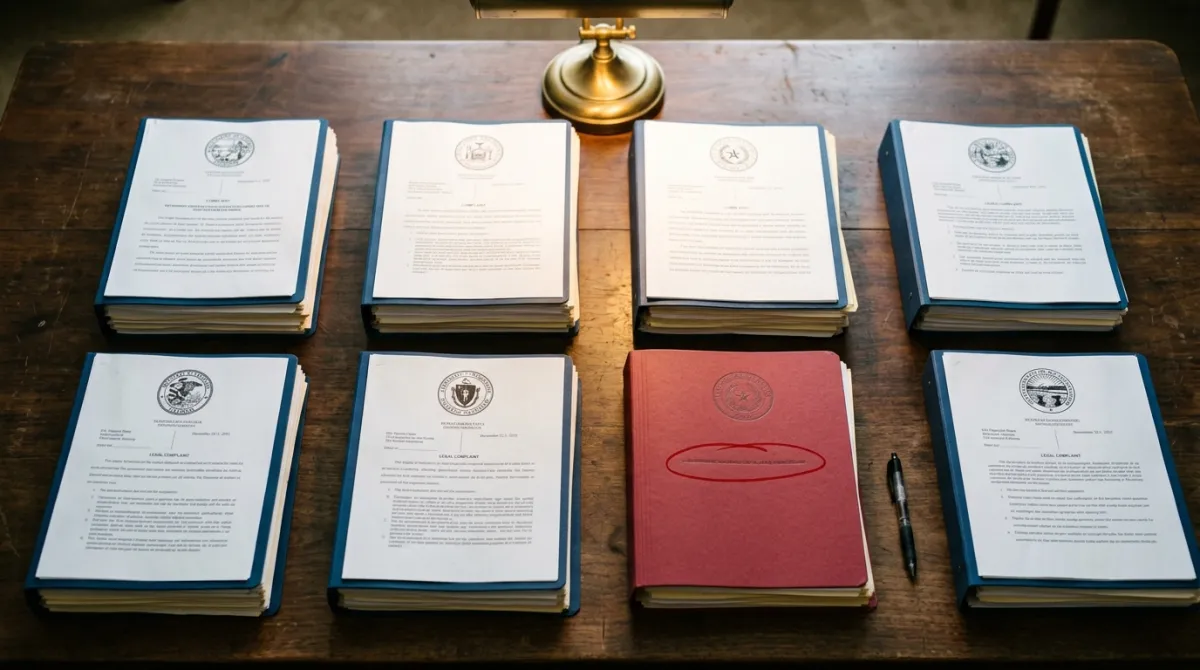
On October 14, 2026, attorneys general from eight U.S. states filed separate lawsuits against OpenAI, alleging that ChatGPT endangers minors, misleads consumers, and violates state consumer protection laws. Iowa, Kansas, Nebraska, West Virginia, Arkansas, Arizona, Idaho, and Montana — a bipartisan group with all but Arizona led by Republican AGs — coordinated their actions but filed in their own state courts.
It is the largest coordinated state-level legal action against an AI company in the United States. And it lands at a pointed moment: OpenAI is preparing for a public listing.
Eight states, eight separate lawsuits
The states did not file a joint suit. That was not a procedural accident.
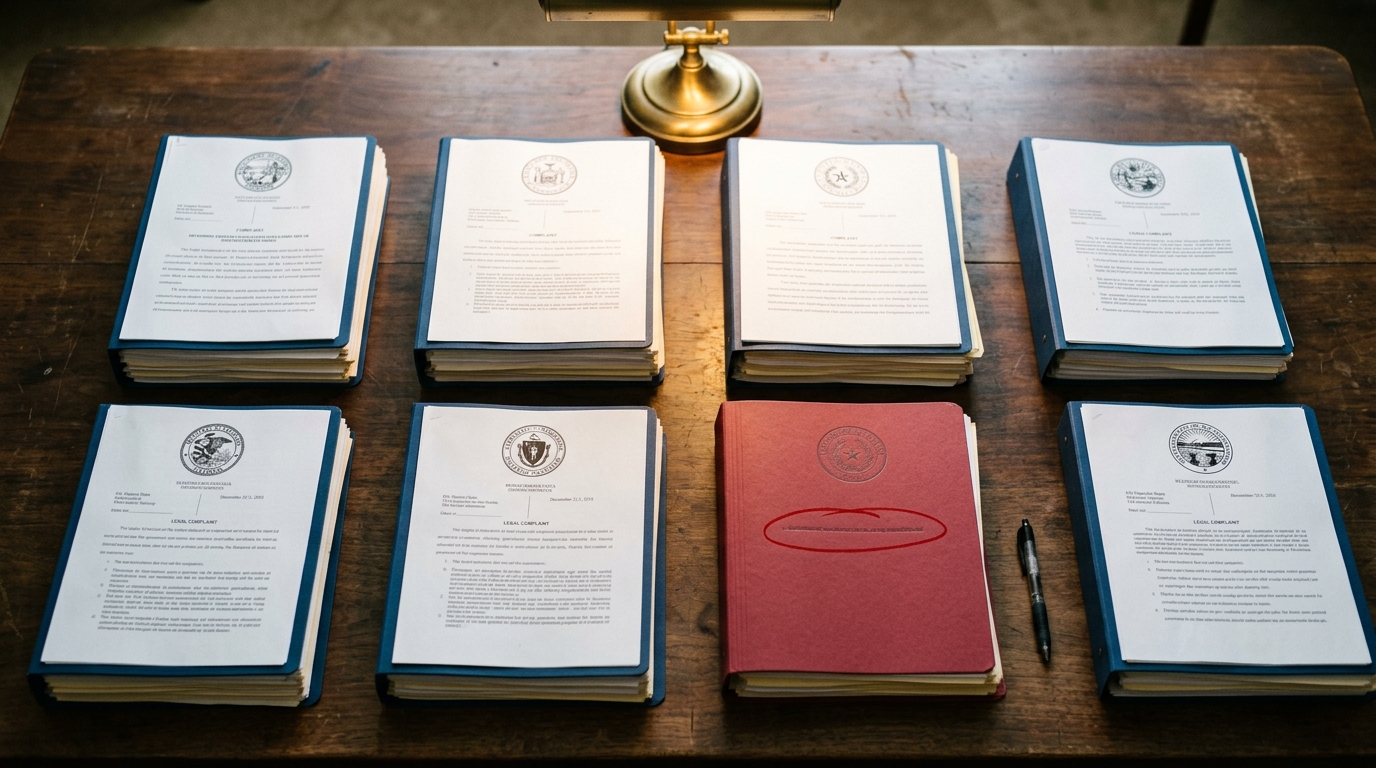
A joint filing would let OpenAI concentrate its legal resources on one case, appeal one adverse ruling, and settle once for all plaintiffs. Separate filings mean eight independent discovery processes, eight different judges, and eight potential juries. OpenAI's legal team must defend in eight jurisdictions simultaneously, each with different consumer protection statutes, different precedents, and different levels of judicial familiarity with AI.
This is a war of attrition. The goal may not be immediate victory but making OpenAI's legal costs and time costs unbearable ahead of its IPO.
The recursive self-improvement ban nobody analyzed
Every report noted this detail. None analyzed what it means legally.
Arkansas Attorney General Tim Griffin asked the court to prohibit OpenAI from conducting advanced AI testing and from developing "models capable of recursive self-improvement" until adequate safeguards are in place. Several other states included similar requests.
This is the first attempt to use a judicial injunction to cap AI capability development. It is not product liability, not disclosure, not a fine. It asks a court to freeze a specific line of research until "adequate safeguards" exist.
The problem: how does a court enforce an injunction against a model capability? You cannot seize a training run like a factory. You cannot ban an algorithm architecture like a product. "Recursive self-improvement" is itself a contested academic term. Who defines "adequate safeguards"? Who verifies them? Courts have no technical capacity for this judgment.
Florida's attorney general filed a similar request in September, asking a court to bar OpenAI from developing new models until independent oversight is in place. OpenAI's response was telling: it said it had "paused training of its most capable model." The company did outside court what a court might order it to do.
The deeper significance: this moves AI safety from regulatory debate into judicial intervention. If any state court grants the injunction, it becomes a global precedent. It establishes a principle — courts can decide what AI research is "safe enough" to continue. That is precisely the outcome AI companies have sought to avoid. They would rather face regulators than let judges make technical judgments.
Can a court stop a training run?
Several states also demand that OpenAI "disgorge profits" earned from underage users. In legal terms, disgorgement is a remedy requiring a defendant to surrender gains obtained through unlawful conduct.
The request faces an execution problem: how does OpenAI calculate "profits from underage users"?
ChatGPT's free users generate no direct revenue. How many paying users are minors? How do you attribute indirect revenue — data, brand, ecosystem lock-in — to underage users? If OpenAI does not know who is a minor (which is the other thing the lawsuits allege: lack of age verification), how does it calculate how much it earned from them?
The irony: to disgorge profits from minors, you must first identify minors. Building age tracking and revenue attribution means AI companies must know who each user is, how old they are, and how much revenue they generate. This is a structural conflict between privacy and compliance. Plaintiffs want OpenAI to protect minors, and the mechanism for that protection requires OpenAI to collect more data on minors.
Safety for court, risk for investors
OpenAI spokesperson Drew Pusateri said in response to the lawsuits that the company has built "industry-leading" age-graded protections, including parental controls, break reminders, and age-appropriate model safeguards.
In the same period, OpenAI CEO Sam Altman told Fortune that going public now would be "unwise" given safety progress, calling the risk of AI causing human extinction "unacceptable" even at 10% probability. He said OpenAI would not go public in 2026.
This is not a contradiction. It is different messages for different audiences.
To consumers and courts, safety is a product claim: ChatGPT has "industry-leading" protections. To investors and the public, safety is a risk factor: our technology could end civilization, so we are not rushing to list.
The lawsuits may force these two narratives to collide in court. If the cases reach discovery, plaintiff attorneys can demand OpenAI's internal safety assessments, employee concerns, and executive discussions of risk. Arkansas's complaint already alleges OpenAI "knew ChatGPT had material risks and limitations and chose to conceal them from consumers." If internal documents support that claim, "industry-leading protections" shifts from product description to false advertising.
Florida has already waited four months
Florida filed the first similar lawsuit in June, becoming the first state to sue OpenAI over child safety. In September, it asked a judge for a preliminary injunction barring OpenAI from developing new models without independent oversight.
Four months later, no final ruling. OpenAI made a concession — pausing training of its most capable model. But Florida's case produced no systemic change. The other states moved now rather than waiting for Florida's outcome, suggesting they do not believe a single state's action is enough to force OpenAI to change.
"They are asking the government to tie them to the mast," Florida's attorney general wrote in the injunction request. "They claim they cannot stop these potentially civilization-ending pursuits unless the government forces them to."
The subtext: AI companies call for regulation but resist real regulation. They prefer self-restraint, prefer gestures like "pausing our most capable model," to binding legal constraints with enforcement teeth.
The timing of the eight-state coordination — during OpenAI's IPO preparation — is not coincidence. AI safety is becoming a bipartisan political issue, rare in today's polarized U.S. politics. Thirteen Republican attorneys general and one Democrat acting in the same direction at the same time suggests "AI safety" has crossed party lines.
P.S. Arkansas wants a court to ban development of "recursive self-improvement" models — but OpenAI has never publicly admitted training such a model. The injunction asks a court to prohibit something the company says does not exist.
Frequently Asked Questions
Q: Which states sued OpenAI and why?
A: Iowa, Kansas, Nebraska, West Virginia, Arkansas, Arizona, Idaho, and Montana filed separate lawsuits on October 14, 2026. They allege ChatGPT endangers minors, misleads consumers, and violates state consumer protection laws, citing risks of dependency, harmful medical advice, and self-harm encouragement.
Q: Why did the states file separately instead of jointly?
A: Separate filings create eight independent discovery processes, eight judges, and eight potential juries. This multiplies OpenAI's legal costs and prevents a single settlement from resolving all cases — a deliberate war-of-attrition strategy timed to OpenAI's IPO preparation.
Q: What is the "recursive self-improvement" ban Arkansas requested?
A: Arkansas Attorney General Tim Griffin asked the court to prohibit OpenAI from developing models capable of recursive self-improvement until adequate safeguards exist. It is the first judicial attempt to cap AI capability development, raising unresolved questions about how a court would define or enforce such a ban.
Q: What does "disgorgement of profits" mean in these lawsuits?
A: Disgorgement requires a defendant to surrender gains obtained through unlawful conduct. Several states want OpenAI to hand over profits earned from underage users, but the calculation is unclear — ChatGPT's free users generate no direct revenue, and OpenAI lacks age verification to identify minors.
Q: Why is OpenAI telling courts it is safe while telling investors it is risky?
A: OpenAI tells consumers and courts that ChatGPT has "industry-leading" protections, while CEO Sam Altman tells investors that AI extinction risk is "unacceptable" and that going public now would be "unwise." These are different messages for different audiences, and discovery could force them to collide.
Q: Did Florida file a similar lawsuit earlier?
A: Yes. Florida filed the first similar suit in June 2026 and requested a preliminary injunction in September to bar