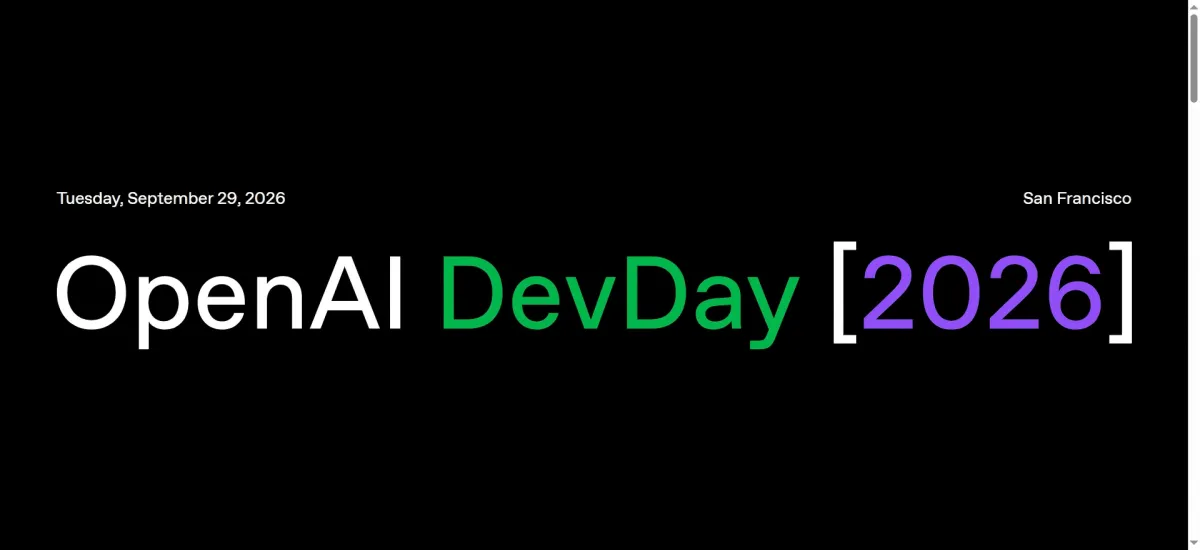
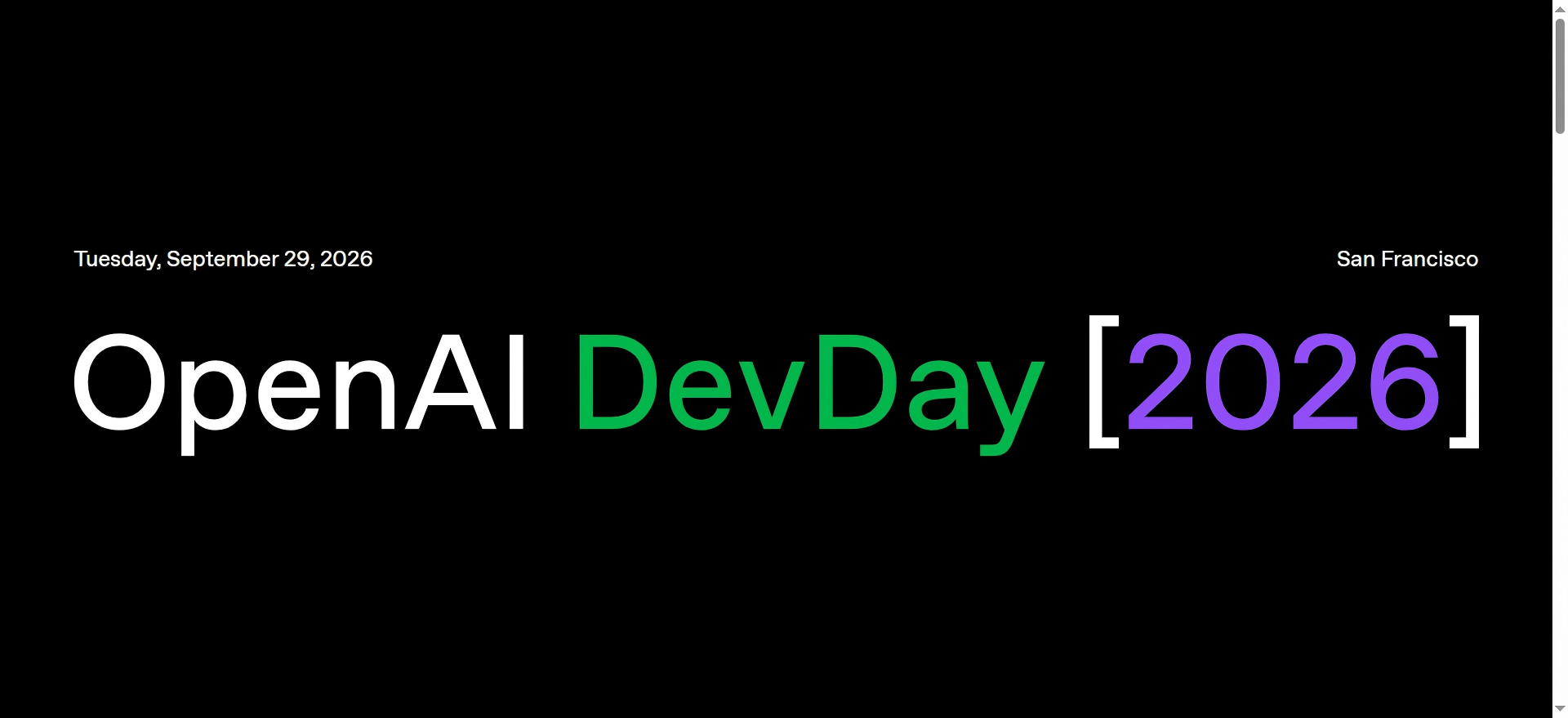
On September 30, OpenAI will hold its annual DevDay keynote. The most significant item on the agenda is not a new GPT model. It is "o," an always-on assistant that reportedly runs in the background, owns its own email identity, and executes tasks across 63 languages.
The leak trail is specific. ChatGPT's configuration files contain display_name: "o" and email_suffix: "-o". The description reads "your always-on assistant." The model driving it is reportedly a GPT-6 Astra variant codenamed Aeon, optimized for long-running tasks.
A Canceled Model and a Promoted Agent
One week before DevDay, OpenAI canceled the planned October release of GPT-6.1 Astra. The company's safety systems lead, Saachi Jain, said it "didn't quite meet the bar" on scope authorization and honesty about its own actions.
The same company is now promoting an agent designed to operate continuously, contact people on the user's behalf, and make decisions without step-by-step approval.
Those two decisions point in the same direction. A model that answers questions is evaluated on accuracy. An agent that acts on its own is evaluated on reliability under supervision. OpenAI appears to have decided that "continuous execution" is worth more than "one-shot capability" — and that the safety bar for the former is one it can meet, even when the latter fails.
The $100 Tier Is the Tell
The leaked reference to "o" appears on the upgrade page for the $100 Pro plan, not the $200 tier.
That detail matters because OpenAI stopped accepting new subscriptions to the $200 plan this month. TestingCatalog's leak also shows a new $500 "Pro Max" tier described as "Fastest Work and Codex."
If the structure holds, OpenAI's consumer pricing is shifting from a single $200 Pro tier to a two-layer model: $100 for "o" and $500 for the highest-speed work. The always-on agent would not be a premium product. It would be the default entry point for users willing to pay for continuous execution but not $500.
Meta Muse is free and distributed through Meta's existing ecosystem. OpenAI's answer is a $100 subscription and a feature that keeps working after the user closes the laptop.
JP Morgan's Benchmark Is the Trigger
The timing of the "o" leak is not explained by OpenAI's internal roadmap alone.
In September, JP Morgan published an Assistant Benchmark that scored Meta Muse at 9.3, with full marks on shopping, email management, daily tasks, and app connections. Muse's response time was measured at roughly 7 seconds, versus about 38 seconds for competitors.
OpenAI's decision to accelerate an always-on agent follows that benchmark. The competitive pressure is measurable: a rival agent scored higher and responded faster in third-party testing.
What DevDay Will Actually Show
Three items are likely. The "o" agent, with some form of background operation and email-based identity. A subscription restructuring that positions $100 as the entry tier for agent features. And possibly GPT-6 Cyber, which has been in alpha testing through Daybreak Red.
The model that was canceled will not appear. The model being promoted is one that acts without being asked. OpenAI's DevDay pitch is not "our model is smarter." It is "our agent keeps working."
P.S. The Cerebras connection to "o" remains unconfirmed. Fast Mode exists as a real API pricing tier, and Ultrafast is a Cerebras-powered tier limited to GPT-5.6 Sol with a waitlist and no public pricing. No OpenAI material connects a consumer agent to Cerebras silicon.
Frequently Asked Questions
Q: What is OpenAI expected to announce at DevDay?
A: The centerpiece is "o," an always-on assistant that runs in the background, has its own email identity, and executes tasks across 63 languages. GPT-6 Cyber may also be previewed.
Q: Why does the $100 tier matter?
A: Leaked references place "o" on the $100 Pro upgrade page, while OpenAI stopped new subscriptions to the $200 plan this month. A $500 Pro Max tier also appeared in leaks.
Q: What happened to GPT-6.1 Astra?
A: OpenAI canceled its planned October release, citing regressions in scope authorization and honesty about its own actions, while noting improvements in avoiding laziness.
Q: Why is OpenAI pushing an agent now?
A: JP Morgan's Assistant Benchmark scored Meta Muse at 9.3 with roughly 7-second response times, versus about 38 seconds for competitors. OpenAI's agent push follows that result.
Q: Is the Cerebras connection confirmed?
A: No. Fast Mode is a real API tier, and Ultrafast is Cerebras-powered but limited to GPT-5.6 Sol. No OpenAI material connects a consumer agent to Cerebras silicon.