
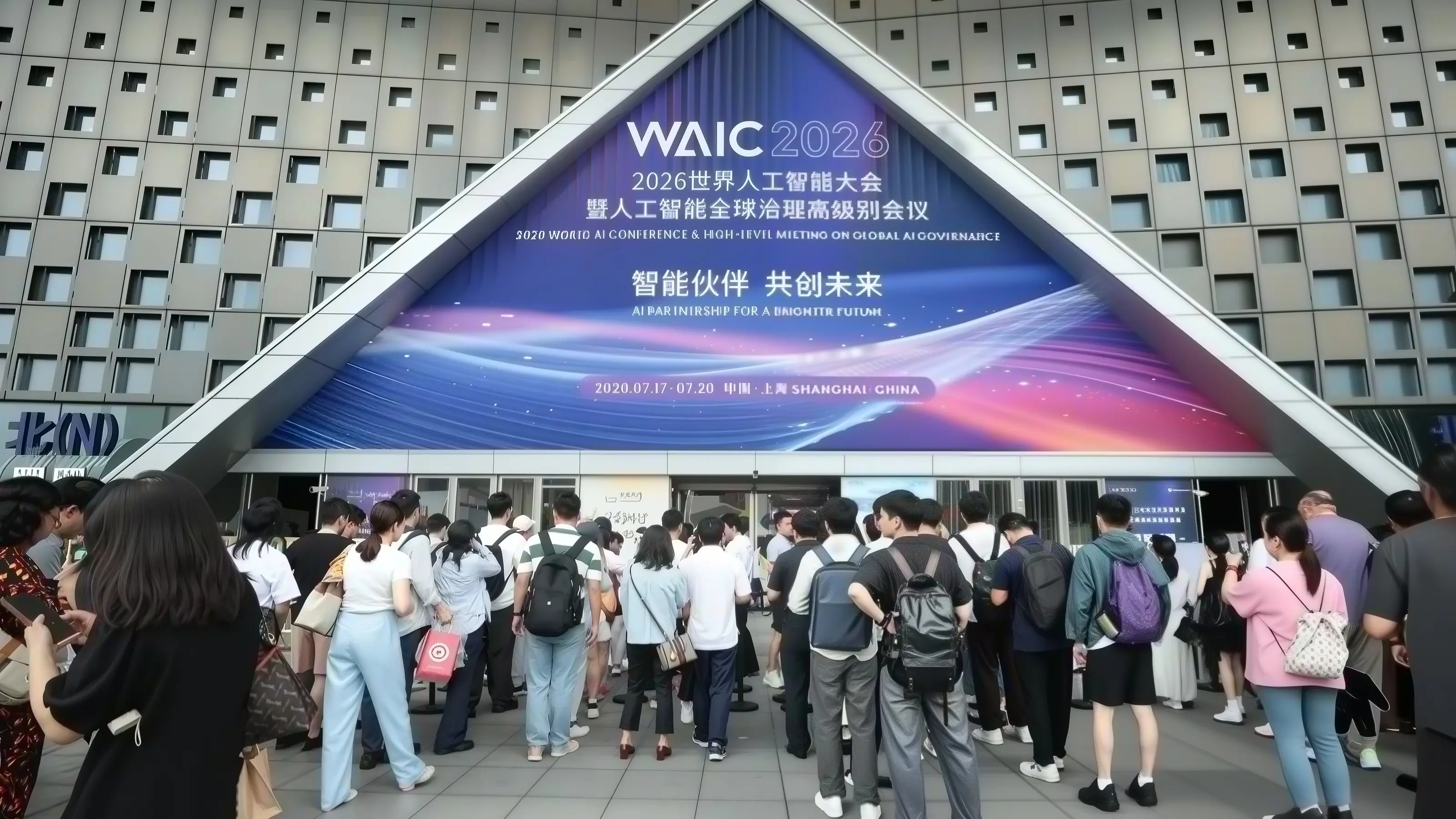
The 2026 World Artificial Intelligence Conference closed in Shanghai today. Four days. Three venues. Thousands of attendees. And one unmistakable signal: the AI industry just stopped showing off and started working.
The Parameter War Is Over
Exhibition space reached 100,000 square meters for the first time . 1,100 companies. 3,000-plus products. 351 global debuts. 4486 total exhibits .
But the numbers on the floor mattered less than what was missing.
No one was comparing parameter counts. No one was claiming state-of-the-art benchmarks. The conversation had shifted entirely.
Kimi K3 launched at 2.8 trillion parameters days before the conference — the largest open-weight model ever . Qwen3.8 followed with 2.4 trillion . DeepSeek V4 hit the floor at 1.6 trillion with extreme pricing and peak-hour billing . Model releases kept coming.
But the booths were not about the models. They were about what the models could do.
“The parameter arms race has ended,” one industry observer put it. “What matters now is whether it can be used, mass-produced, and profitable” .
Physical AI Took Center Stage
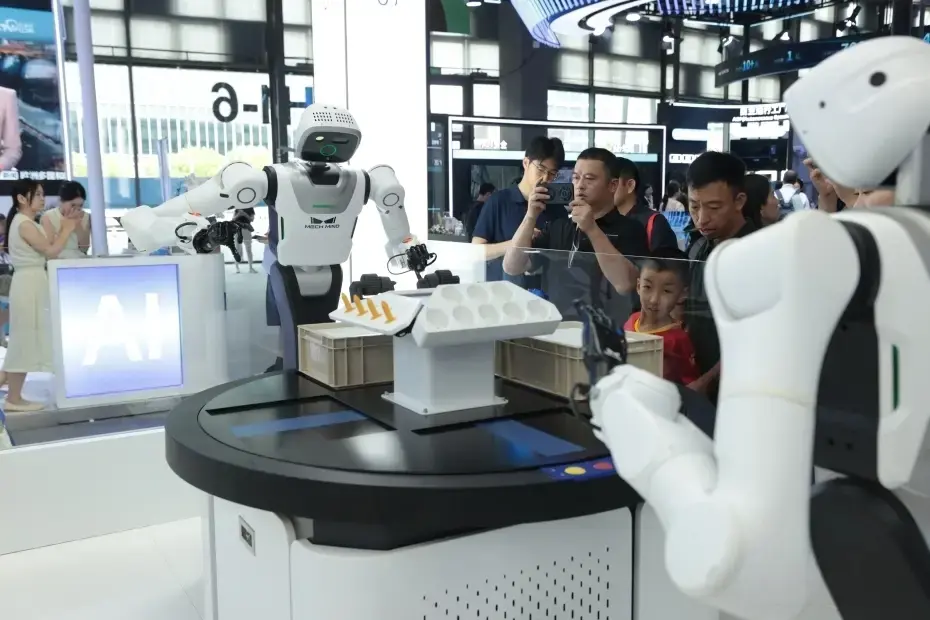
This year’s WAIC had a clear winner — embodied intelligence. More than 200 robotics companies exhibited, making it the hottest category at the show .
The difference was not the number of robots. It was what they were doing.
Previous years were about dancing, walking, and backflips. This year was about picking, placing, assembling, and delivering. Zhipu brought a real factory and warehouse deployment — robots handling real logistics tasks . Fourier showed its high-load dual-arm robot GRW with 16kg stable load capacity . JAKA unveiled a heavy-duty humanoid with 50kg rated load capacity .
The shift was explicit. “Embodied intelligence is moving from two years of ‘showing capabilities’ and ‘gimmicks’ to true deployment and productivity release,” said Zhipu co-founder Peng Zhihui .
IDC forecast that China’s embodied intelligence spending would grow from $1.4 billion to $77 billion over the next five years — a 94% CAGR .
Agents: From Chat to Action
The biggest change in software AI was even simpler: AI stopped talking and started doing.
Tencent displayed WorkBuddy, an agent that handles approvals, reads documents, and prioritizes tasks. The demo showed a user swiping left — and an AI assistant appeared, knowing what meetings they had, who had messaged them, and which contracts needed approval .
Tencent’s Li Kan described the evolution: “AI is moving from being a tool to being a partner, from generating content to completing tasks” .
Alibaba’s Qwen demoed its full-stack approach — from models to AI earphones and AI glasses . Ant Group’s “Smart Pharmacy” won the conference’s “Zhen Guan Zhi Bao” award, showing three robots working together from order receipt to sorting to packaging .
Baidu launched “Dazi,” a general-purpose agent product that became the only agent product to win the “Zhen Guan Zhi Bao” award. Daily queries increased 20x .
The Reality Check
Not everyone was bullish.
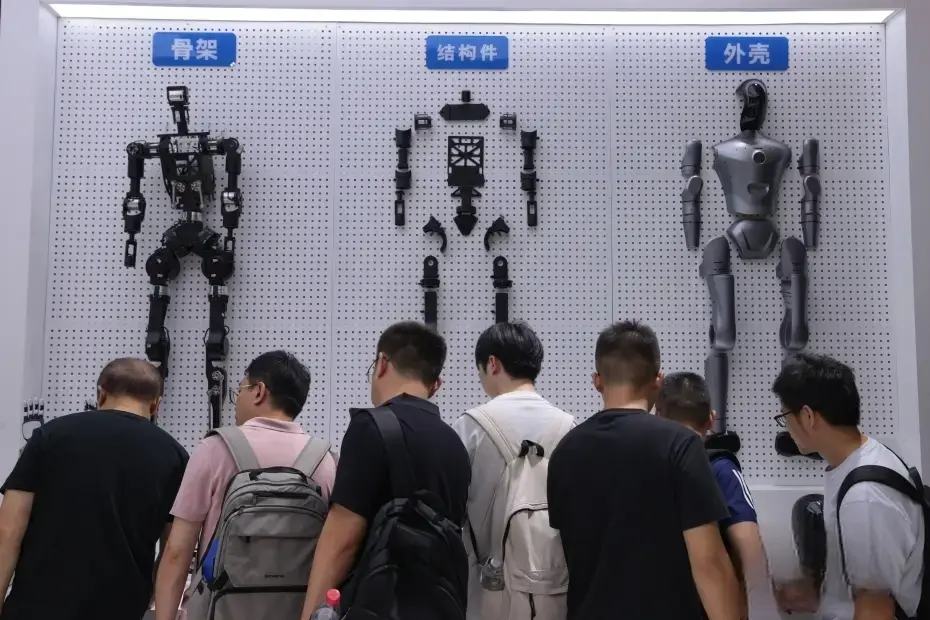
One industry observer described the current state of embodied intelligence as “the pre-GPT era for physical AI” . Three technical walls remain: data (real-world interaction data is scarce and expensive), representation (no unified cross-task, cross-scene representation exists), and closed-loop (real-world trial-and-error is costly and slow) .
Some insiders believe a real breakthrough won’t come until 2027 or 2028 .
But the direction is clear. The shift from “can it move” to “can it do” has begun.
P.S. If you were at WAIC 2026, you saw AI leave the chat window and enter the physical world. The param race is over. The deployment race just started. Now comes the hard part.