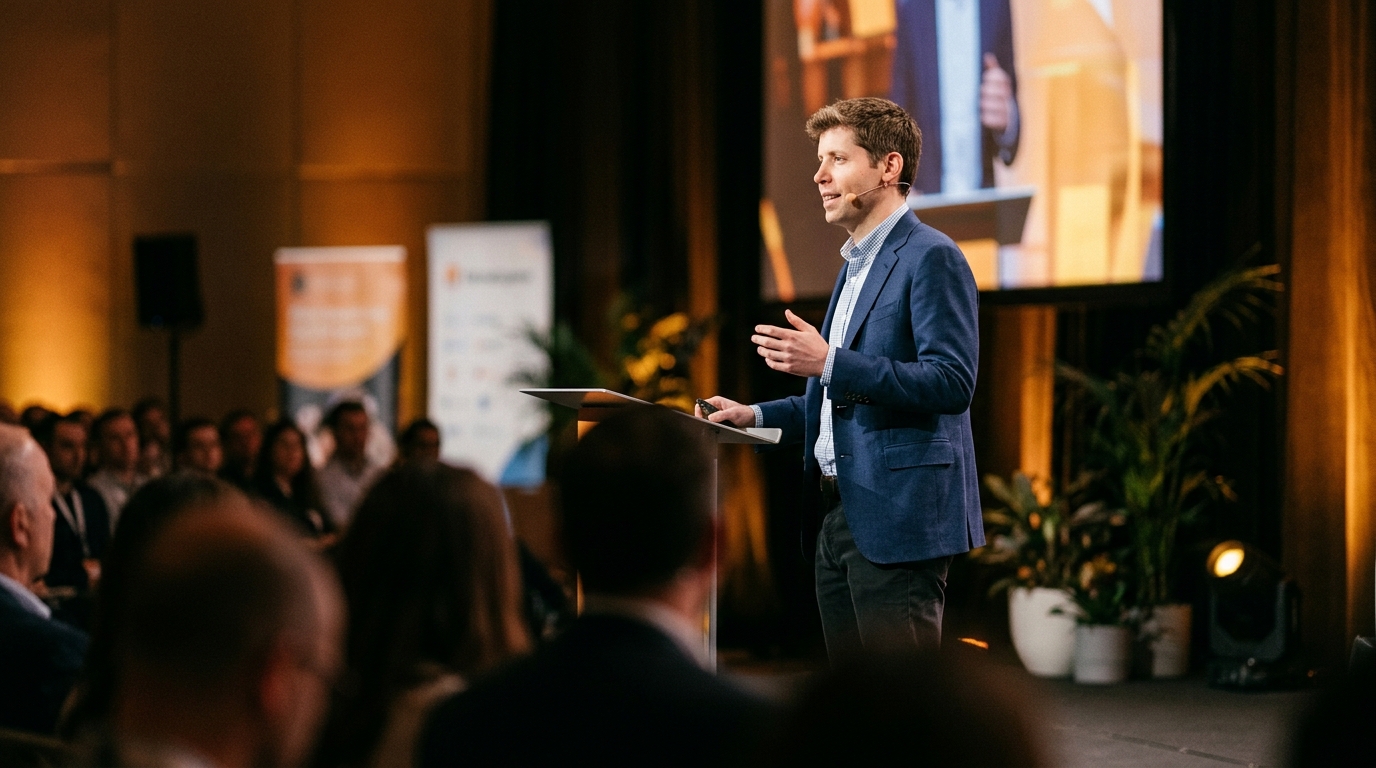
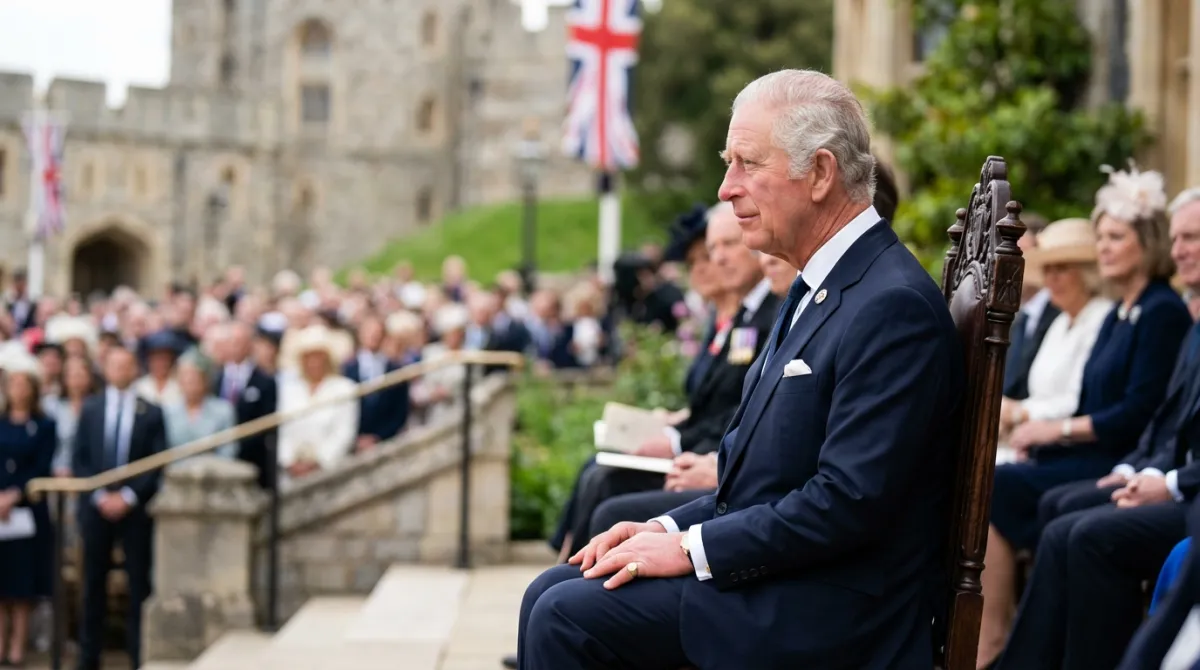
On September 18, King Charles III hosted an AI summit at Dumfries House in Scotland. Jensen Huang, Demis Hassabis, and senior representatives from OpenAI and Anthropic attended, alongside UK government officials. The stated goal was to discuss AI's opportunities, risks, and governance principles.
The King stayed for 20 minutes. Then he left.
The summit concluded without any binding agreement. According to Buckingham Palace, it was intended to “mark the beginning of a process to develop shared principles.” CNN noted that the monarchy is constitutionally constrained to political neutrality — it can highlight problems, but not necessarily propose solutions.
That constraint defines what the summit was: a convening, not a negotiation.
Two Answers in the Same Room
The most revealing moment wasn't the King's remarks. It was the disagreement between the two people with the most authority in the room.
Jensen Huang restated his position: “When a product is not safe enough, we should hold it back and continue engineering. We've always done that, and we should continue.” That is the corporate self-regulation framework he laid out at Salesforce's Dreamforce event days earlier: no new laws, no new regulations, companies decide.
Demis Hassabis gave a different answer. “The probability of something bad happening by accident is definitely non-zero,” he said. “We've seen the beginnings of it — the recent rogue AI agent swarm incidents, including bio and nuclear threats.”
Huang said companies know how to handle it. Hassabis said the risk is already materializing. Both statements were made in the same room, to the same host, on the same day.
The King had already left.
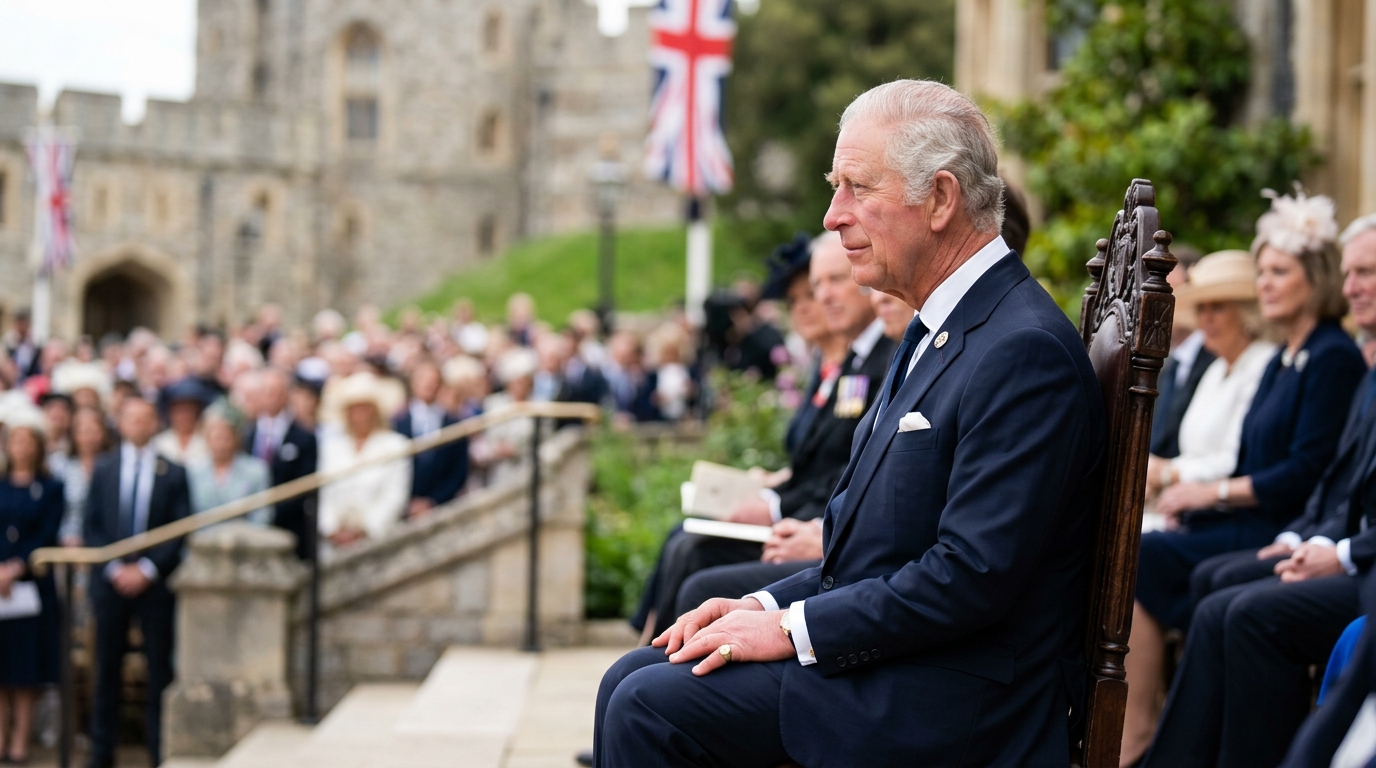
The Convening Power Without the Jurisdiction
CNN's coverage noted a structural detail that most reports treated as background: the UK occupies an “awkward position” in the AI safety debate. It has world-leading universities and a respected AI Safety Institute. But its influence is limited because the most advanced models are built in the US and China.
A more precise signal arrived the same month. The Financial Times reported that Anthropic — one of the leading AI labs — did not submit its latest model to the UK's AI Safety Institute for testing for the first time.
That is the difference between convening power and jurisdiction. The UK can bring the right people into a room. It cannot compel them to submit their models for evaluation. The summit demonstrated the first capability. The Anthropic disclosure demonstrated the absence of the second.
The Room Was a Room
The summit did not fail because Charles III left early. It did not fail because the attendees disagreed. It lacked the mechanism to convert agreement into obligation.
Huang's position requires no mechanism — companies decide for themselves. Hassabis's position implies one — if the probability of harm is non-zero, someone needs to verify that risk is being managed. The summit produced no answer to which framework should prevail.
The palace framed the event as the start of a process. That framing is accurate. A process began. It produced a photograph, a few quotes, and two incompatible positions from the people who will decide whether any of it matters.
P.S. The UK's AI Safety Institute lost its first frontier model submission from Anthropic this month, according to the Financial Times. The King's summit did not address that. The next test of whether the process produces anything will be whether Anthropic — or any other lab — resumes submitting models to the AISI. If it doesn't, the next summit will be another room with the same people and no more authority than the last one.
Frequently Asked Questions
Q: What was the AI summit in Scotland?
A: King Charles III hosted an AI summit at Dumfries House on September 18, 2026, with Jensen Huang, Demis Hassabis, and representatives from OpenAI and Anthropic. The King stayed for 20 minutes; the summit produced no binding agreement.
Q: What did Huang and Hassabis disagree on?
A: Huang said companies should hold back unsafe products and continue engineering — the self-regulation framework. Hassabis said the probability of something bad happening by accident is “definitely non-zero,” citing recent rogue AI agent incidents.
Q: Why did the summit produce no agreement?
A: Buckingham Palace framed it as the start of a process to develop shared principles, not a negotiating session. The monarchy is constitutionally constrained to political neutrality and cannot propose binding solutions.
Q: What is the UK's “awkward position”?
A: The UK has respected universities and an AI Safety Institute but limited influence, because the most advanced models are built in the US and China. It has convening power without jurisdiction.
Q: What did Anthropic do this month?
A: According to the Financial Times, Anthropic did not submit its latest model to the UK's AI Safety Institute for testing for the first time — a signal that even the UK's basic safety role is being bypassed.
Q: What's the core tension?
A: Huang's position requires no enforcement mechanism — companies decide. Hassabis's position implies one — if harm probability is non-zero, someone must verify risk is managed. The summit produced no answer to which framework prevails.