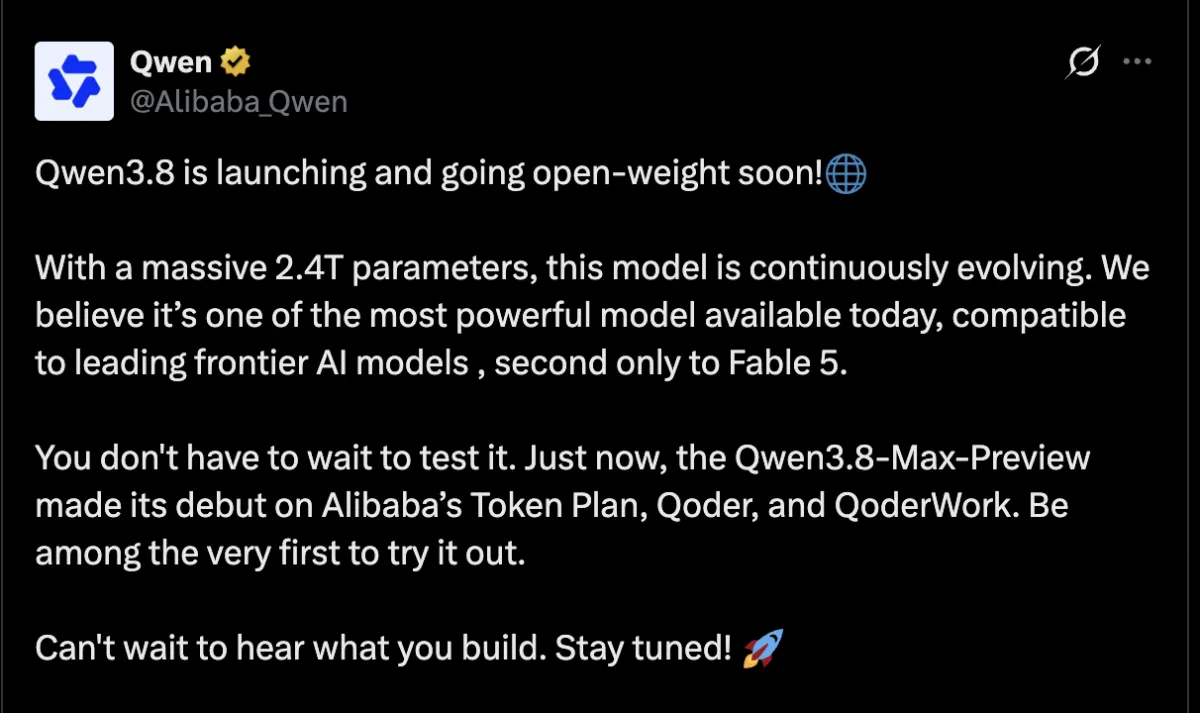
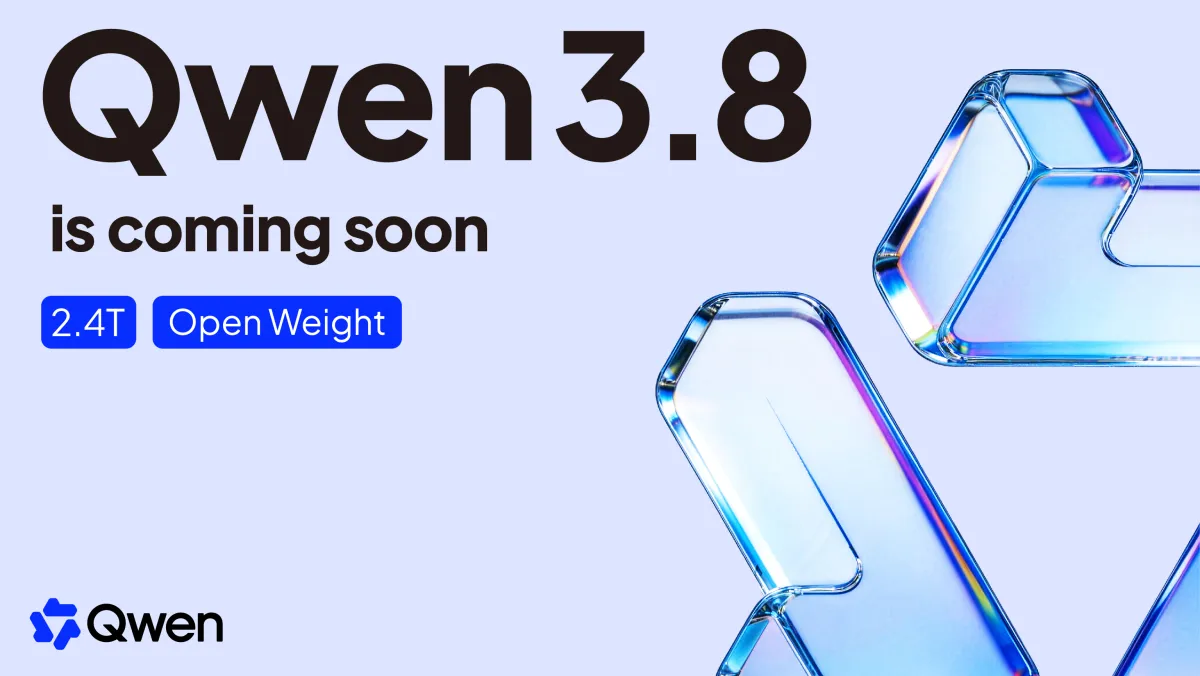
The Chinese AI industry has a new member of the trillion-parameter club. Qwen3.8-Max-Preview is here. 2.4 trillion parameters. Open weights coming soon.
Alibaba says it is "second only to Fable 5." The company is charging ahead with the same strategy that has defined this month's AI releases: big numbers, low prices, open weights.
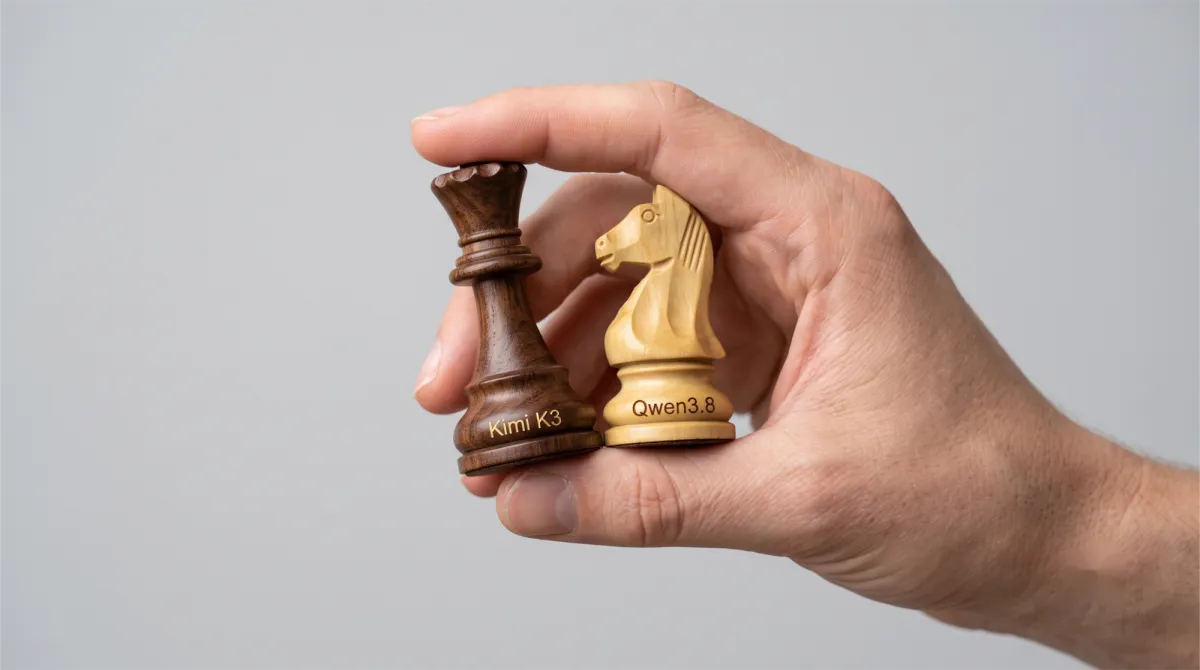
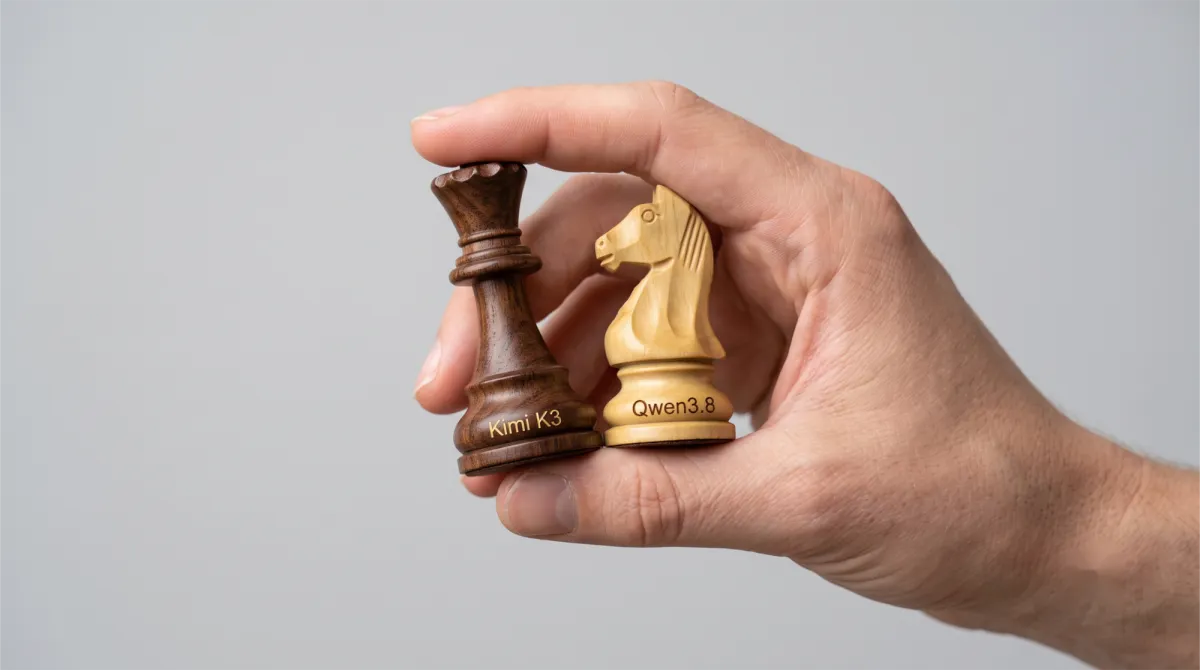
But there is a twist in this story that nobody is talking about. Alibaba owns roughly 36% of Moonshot AI — the company behind Kimi K3. Two days before Qwen3.8's preview, Kimi K3 launched at 2.8 trillion parameters, briefly holding the title of the largest open-weight model ever. Two models. One investor. Two different teams. Two different strategies.
Alibaba is not choosing sides. It is buying all the chairs at the table.
The logic is brutal and simple. If AI is the next platform, you do not need to pick a winner. You need to own a piece of every credible contender. Alibaba does exactly that. It has its own model family — Qwen, now at 2.4T. It has a 36% stake in Moonshot AI, the hottest Chinese AI startup. It is also a major investor in Zhipu AI and other AI labs through its venture arms. If Kimi K3 wins, Alibaba wins. If Qwen wins, Alibaba wins. If someone else wins and Alibaba has a stake, it still wins. This is not a company hedging its bets. This is a company building a portfolio.
The sequence is too deliberate to be random. Here is what the last three weeks look like:
Date | Event |
|---|---|
June 30 | Zhipu GLM-5.2 launches (744B params) |
July 17 | Kimi K3 launches (2.8T params), tops Arena |
July 19 | Qwen3.8-Max-Preview drops (2.4T params) |
July 27 | Kimi K3 open weights due |
Alibaba chose this moment for a reason. It waited until Kimi K3's buzz peaked, then launched its own model to capture the overflow attention. It is not trying to compete with Moonshot. It is trying to own the conversation.
The phrasing is careful: "may be the most powerful model available today, second only to Fable 5." That leaves room for interpretation. Second to Fable 5 could mean second overall. It could also mean second among open-weight models. The company did not release independent third-party benchmarks to back the claim. Either way, the message is clear: Alibaba wants to be seen as part of the top tier, not a follower.
Pricing is where the strategy gets specific. Token Plan Personal Edition offers three tiers:
Plan | Price | Day/Night Discount |
|---|---|---|
Lite | 39 yuan/mo (~$5.40) | Day: 10% credits |
Standard | 139 yuan/mo (~$19) | Night: 2% credits |
Pro | 499 yuan/mo (~$69) |
The model is already available through Alibaba's Qoder, QoderWork, and Qwen PC client. There is a day/night discount: daytime credits at 10% of normal consumption, and for personal plan users, at night they drop to 2%.
For comparison, here is where the trillion-parameter models stand right now:
Model | Params | API Pricing | Open Weights | Arena Front-End Rank |
|---|---|---|---|---|
Kimi K3 | 2.8T | $15/mo output | July 27 | #1 (beat Fable 5) |
Qwen3.8 | 2.4T | Token Plan | Coming soon | TBD |
GLM-5.2 | 744B | $1.40/$4.40 | MIT License | #4 |
DeepSeek V4 Pro | 1.6T | $0.44/$0.88 | Available | Top 10 |
This is not an enterprise play. This is a developer play. Alibaba is not trying to sell to CIOs. It is trying to hook the people who actually build things. The Token Plan structure is deliberately designed to remove friction for individual developers.
Three Chinese models in three weeks. GLM-5.2, Kimi K3, Qwen3.8. Each claims a spot at or near the top of global leaderboards. Each is either already open-weight or headed there. Alibaba is not just participating in this trend. It is funding both sides of it. The company is investing in the competitors and building its own model. The logic is simple: AI is too big to pick a single winner.
P.S. If you are a developer, Token Plan makes Qwen3.8 cheap enough to treat like a disposable resource. If you are an investor, Alibaba is not trying to pick the winner — it is trying to own the table — and the question is whether that works in a winner-take-all market.