
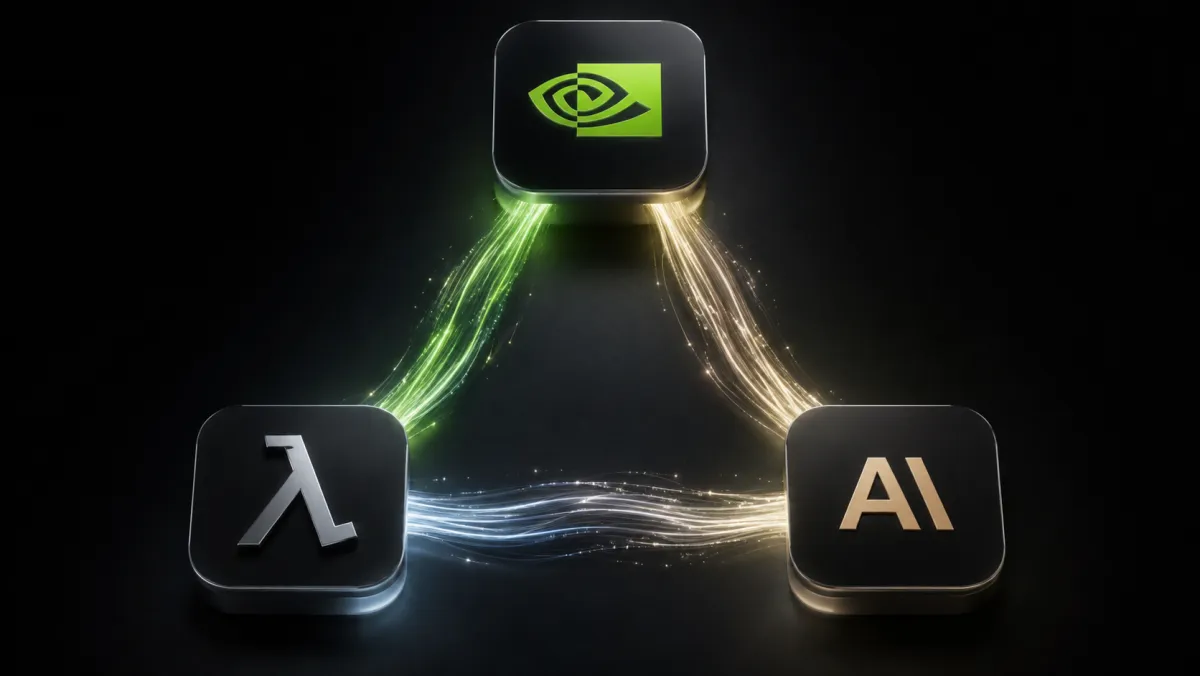
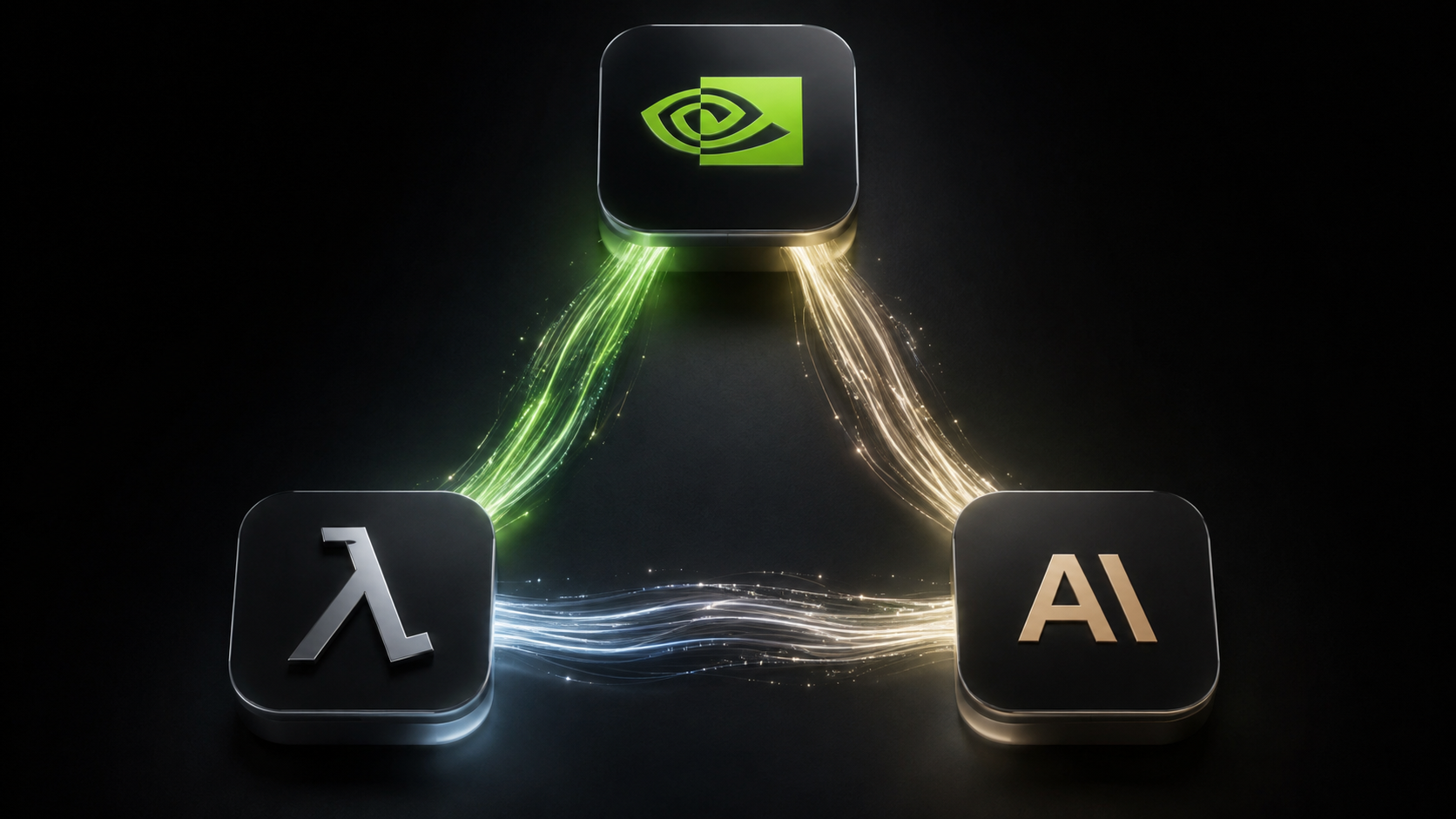
On August 31, The Wall Street Journal reported that Anthropic had signed a $35 billion cloud agreement with Lambda, an Nvidia-backed cloud provider. The data center is being developed by Hut 8 in Texas. Nvidia secured the lease weeks earlier. Lambda operates the hardware. Anthropic pays for the compute.
Nvidia appears at every level of the transaction—landlord, chip supplier, and matchmaker.
The Deal Structure—and What It Reveals
The transaction is complex. Hut 8 is building the data center. Nvidia signed a $50 billion lease for the site. Lambda, an Nvidia-backed "neocloud" provider, will deploy chips purchased from Nvidia inside the facility. Anthropic will pay Lambda $35 billion for access.
This structure solves three problems at once. Anthropic, which is not investment-grade rated, cannot easily secure large-scale data center leases on its own. Nvidia's lease provides the credit backstop. Lambda, a smaller cloud provider, doesn't need to raise capital for data center construction. And Nvidia locks in demand for its chips across the entire stack.
It's not clear whether Lambda pays Nvidia for the data center space or shares revenue from the Anthropic contract. But the structure itself is the signal: Nvidia is no longer just a chip vendor. It is an infrastructure broker.
Anthropic's Compute Hunger—and the $80 Billion Month
The Lambda deal is Anthropic's second major compute commitment this month. Earlier in August, the company signed a $45 billion agreement with Nscale, another Nvidia-backed neocloud provider. Combined, the two deals total nearly $80 billion in committed spending.
The urgency is real. Anthropic hit a compute supply bottleneck earlier this year, just as its products were gaining traction. The company is reportedly preparing for a potential $2 trillion IPO, and its annualized revenue has exceeded $65 billion. But compute costs remain a structural challenge—inference gross margins improved from 38% to over 70%, but the company needs to reach 77% to satisfy IPO investors.
In that context, $35 billion over the life of a contract is not a cost—it's a hedge. Anthropic is locking in capacity now to avoid being supply-constrained when it needs to scale post-IPO.
Hut 8: The One Company Serving Both Sides of the Chip War
The most revealing detail in the deal is about Hut 8. The same company is building the Texas site for Nvidia—and separately developing other data centers for Anthropic that will run on Google's TPU chips.
Hut 8 is not choosing sides. It is benefiting from both. The company is building infrastructure for the Nvidia-Lambda-Anthropic pipeline and, at the same time, developing TPU-powered facilities with Google's financial backing. This is not vendor loyalty—it's capacity arbitrage. AI compute demand is so large that one developer can serve competing chip architectures without conflict.
The Bigger Signal: Nvidia's Role Is Changing
Nvidia has moved beyond selling chips. It now helps structure the deals that use them—holding real estate leases, directing customers to cloud providers, and connecting supply to demand across the infrastructure stack.
This is the latest example of Nvidia's expanding infrastructure footprint. In July, the company announced a plan to provide credit support to neocloud providers in exchange for cloud revenue share—though the WSJ reports that some of those transactions have been paused due to antitrust concerns. The Lambda-Anthropic deal may or may not involve revenue sharing, but the pattern is clear.
For Anthropic, the deal secures capacity. For Lambda, it provides a marquee customer without the capital expense of building data centers. For Nvidia, it locks in chip demand and strengthens its role as the central organizing force in AI infrastructure.
P.S. The quiet detail in the deal is the new entrance of Microsoft and Google as cloud provider competition. In the past 18 months, Anthropic has built capacity relationships with Google, Amazon, and now Nvidia-backed neoclouds. This is not vendor diversification for cost savings—it's supply chain resilience. If one hyperscaler hits capacity constraints, Anthropic can shift inference load. That flexibility is now part of its IPO narrative—and it's a capability OpenAI, locked into Azure, does not have.
Frequently Asked Questions
Q: What did Nvidia, Lambda, and Anthropic announce?
A: On August 31, it was reported that Anthropic signed a $35 billion cloud agreement with Lambda, an Nvidia-backed cloud provider. The data center is being developed by Hut 8 in Texas, with Nvidia having secured a $50 billion lease weeks earlier. Lambda will deploy Nvidia chips in the facility, and Anthropic will pay for access.
Q: Why is Nvidia involved in a data center lease?
A: Nvidia is no longer just selling chips—it is becoming an infrastructure matchmaker. By securing the data center lease, Nvidia locks in demand for its chips and reduces the capital burden for both Lambda and Anthropic. Anthropic is not investment-grade rated and cannot easily secure large-scale data center leases on its own.
Q: How much has Anthropic committed to compute this month?
A: Anthropic has committed nearly $80 billion in compute spending this month: $45 billion with Nscale earlier in August and $35 billion with Lambda. This reflects the company's urgent need to secure capacity ahead of its planned IPO.
Q: What is Lambda?
A: Lambda is a "neocloud" provider that offers GPU-based cloud compute services. It is backed by Nvidia and serves as an intermediary between Nvidia's hardware and customers like Anthropic.
Q: What is Hut 8's role in the deal?
A: Hut 8 is developing the data center in Texas. Notably, the same company is separately building other data centers for Anthropic that will run on Google's TPU chips—showing that Hut 8 is serving both Nvidia and Google sides of the chip war.
Q: What is the financial structure of the deal?
A: Nvidia signed a $50 billion lease with Hut 8. Lambda will deploy chips inside the facility and charge Anthropic $35 billion for access. It is unclear whether Lambda pays Nvidia for the space or shares revenue from the Anthropic contract.
Q: Why is Anthropic locking in compute capacity now?
A: Anthropic hit a compute supply bottleneck earlier this year just as its products were gaining traction. The company is preparing for a potential $2 trillion IPO and needs to ensure it can scale without being supply-constrained post-IPO.
Q: What does this deal say about Nvidia's strategy?
A: Nvidia is moving beyond chip sales to become an infrastructure broker—holding real estate leases, directing customers to cloud providers, and connecting supply to demand across the AI infrastructure stack.
Q: How does Anthropic's compute strategy compare to OpenAI's?
A: Anthropic has built compute capacity relationships with Google, Amazon, and now Nvidia-backed neoclouds like Lambda and Nscale. This gives Anthropic flexibility to shift inference load if one hyperscaler hits capacity constraints—a capability OpenAI, which is locked into Azure, does not have.
Q: What are the antitrust concerns?
A: Nvidia paused some of its "compute-for-revenue-share" transactions with neocloud providers due to antitrust concerns, according to The Wall Street Journal. The Lambda-Anthropic deal may or may not involve revenue sharing, but the pattern of Nvidia's expanding infrastructure footprint is clear.