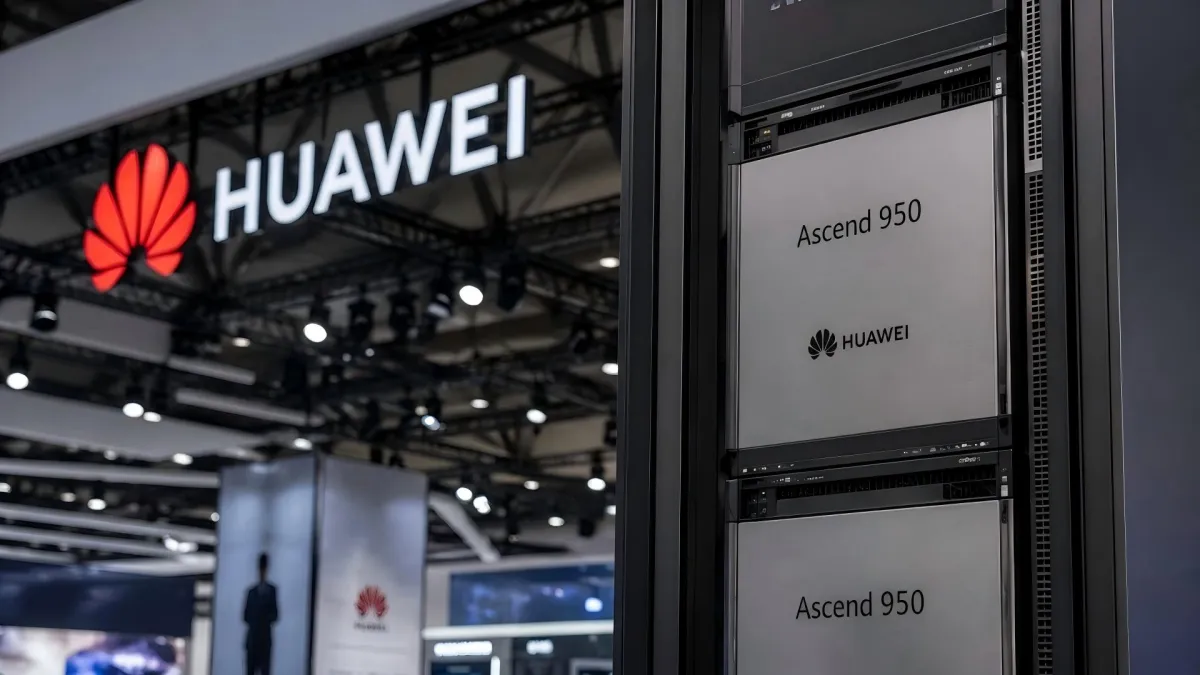
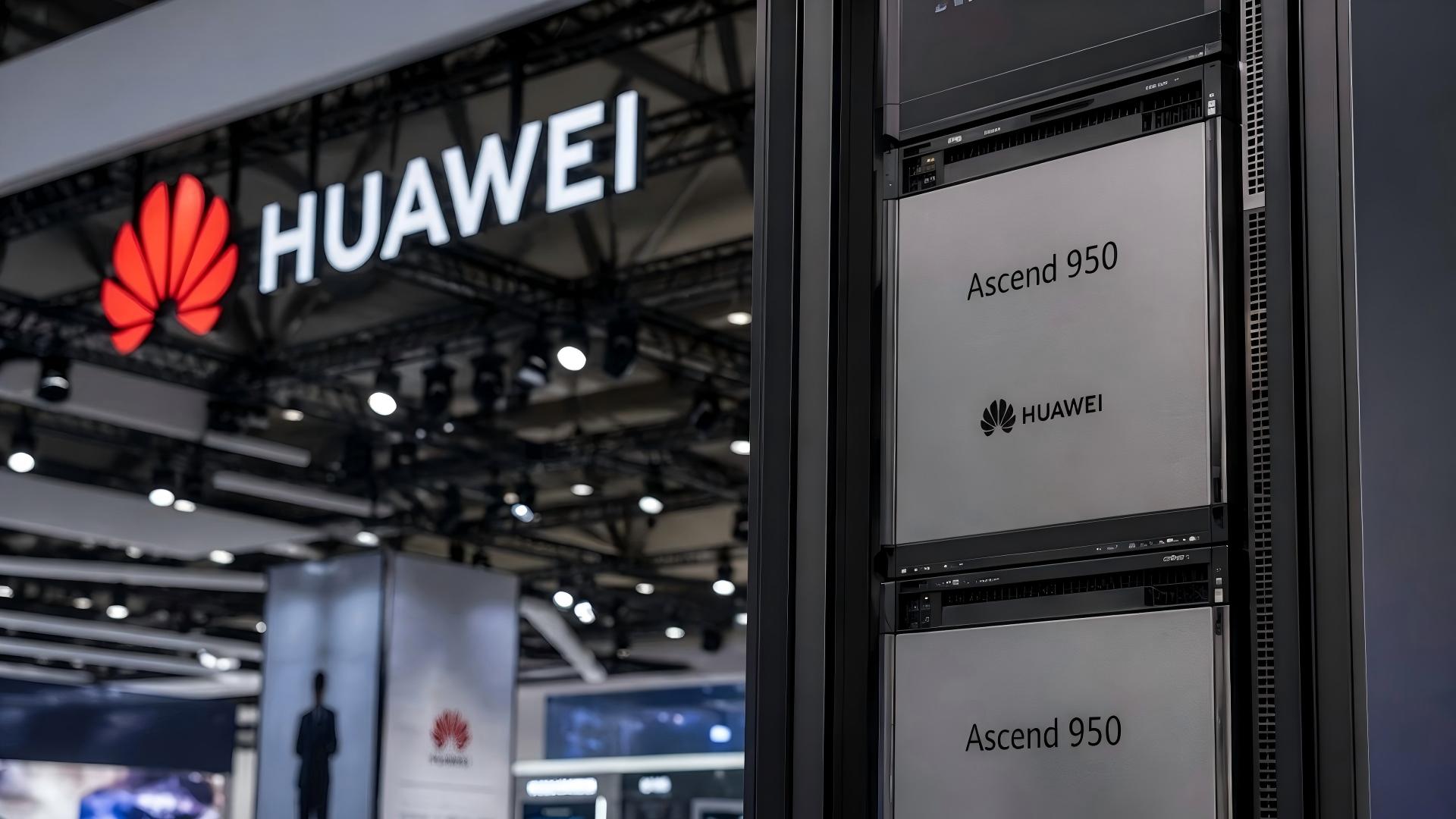
On September 30, 2026, Huawei Cloud begins commercial operations of its Lingqu Ascend 950 AI cluster service in China. The service expands to global markets on November 30.
The cluster is built on Huawei's UnifiedBus interconnect and supports 1,024 Ascend NPUs in a single supernode, delivering 1 EFLOPS of FP8 compute and 2 EFLOPS of FP4 compute, with 256TB of globally addressable memory. Huawei says the system can support end-to-end training of large-scale models without additional cluster-level adaptation. The company also claims 40-day stable training runs, 10-minute fault recovery, and a 20% improvement in token throughput over the previous generation.
Huawei rotating chairman Wang Tao said more than 1,000 Ascend supernodes have already been deployed, and that Ascend 950 supernodes have entered commercial use.
A Containment Policy That Built Its Rival
The timing matters for Western readers because the U.S. export control regime has already shaped the market the Ascend 950 will serve.
Since 2022, the Bureau of Industry and Security has expanded controls on advanced AI chips to China, with a particular focus on restricting access to advanced integrated circuits. Nvidia's most advanced processors — including the Blackwell series — remain barred from the Chinese market. In January 2026, the U.S. allowed limited sales of the H200, a generation behind Blackwell, under strict conditions: third-party lab testing, a cap of 50% of U.S. customer volume, and a 25% revenue share to the U.S. government.
The policy was designed to slow China's access to frontier compute. It also removed Nvidia's most competitive products from the Chinese market entirely.
Huawei's Ascend 950 is not competing against Blackwell in China. Blackwell is not for sale there. The cluster is competing against whatever domestic alternatives exist — and against the possibility that Chinese buyers might wait for H200 allocations to clear.
Nvidia itself acknowledges the structural problem. In its SEC filings, the company notes that the Chinese government “has encouraged customers to purchase from our China-based competitors and discouraged customers from purchasing, importing, or using our data center products”. Nvidia describes itself as “effectively foreclosed from the China market by U.S. export controls”.
The controls didn't just restrict Nvidia's sales. They transferred the addressable market to Huawei.
What the Cluster Actually Competes Against
The Ascend 950's global launch on November 30 is the more consequential date for overseas readers.
Huawei is not positioning the cluster as a cheaper Nvidia alternative. It is positioning it as an Agentic AI infrastructure base — the compute layer for agents that run continuously, execute tasks, and manage tool calls. That is the same market segment Meta, OpenAI, and Microsoft are targeting with their agent products.
The competitive question is not “can Huawei's cluster match Nvidia's performance.” It is whether the export controls have created a durable structural advantage for Huawei in markets where U.S. and Chinese vendors both sell.
Huawei says the cluster will be available globally on November 30. The countries that buy it will not be the ones that can already access Blackwell. The export controls have already sorted the market.
November 30 Is the Real Test
The Ascend 950 launch is not a story about Chinese technological self-sufficiency. It is a story about how a containment policy can create the conditions for the thing it was meant to prevent.
Nvidia cannot sell its best chips in China. Huawei can sell its best cluster there. The controls were designed to keep China dependent on inferior compute. They also made Huawei the only supplier of frontier-adjacent AI infrastructure in the Chinese market.
The November 30 global launch will test whether the same logic holds outside China. Countries that cannot buy Blackwell have a new option. Whether they take it depends on whether Huawei's software stack, model support, and reliability meet the bar — and whether the export controls that created this market remain in place.
P.S. Huawei has not published pricing for the Ascend 950 cluster service or disclosed which models it supports out of the box. The company's claim of a 20% token throughput improvement is measured against its own previous generation, not against Nvidia's current hardware.
Frequently Asked Questions
Q: What is the Ascend 950 cluster?
A: A Huawei Cloud AI cluster service built on the UnifiedBus interconnect, supporting 1,024 Ascend NPUs per supernode with 1 EFLOPS FP8 and 2 EFLOPS FP4 compute, and 256TB of globally addressable memory.
Q: When does it launch?
A: Commercial operations in China begin September 30, 2026. Global availability follows on November 30, 2026.
Q: Why does U.S. export policy matter here?
A: U.S. controls have barred Nvidia's most advanced chips, including Blackwell, from the Chinese market. That removed Nvidia's most competitive products and left Huawei as the primary supplier of frontier-adjacent AI infrastructure in China.
Q: What does Nvidia say about the China market?
A: In SEC filings, Nvidia says the Chinese government encourages customers to buy from domestic competitors and describes itself as “effectively foreclosed from the China market by U.S. export controls”.
Q: What is the real test for overseas readers?
A: The November 30 global launch. Countries that cannot access Blackwell will have a new option, and whether they take it depends on Huawei's software stack, model support, and reliability.