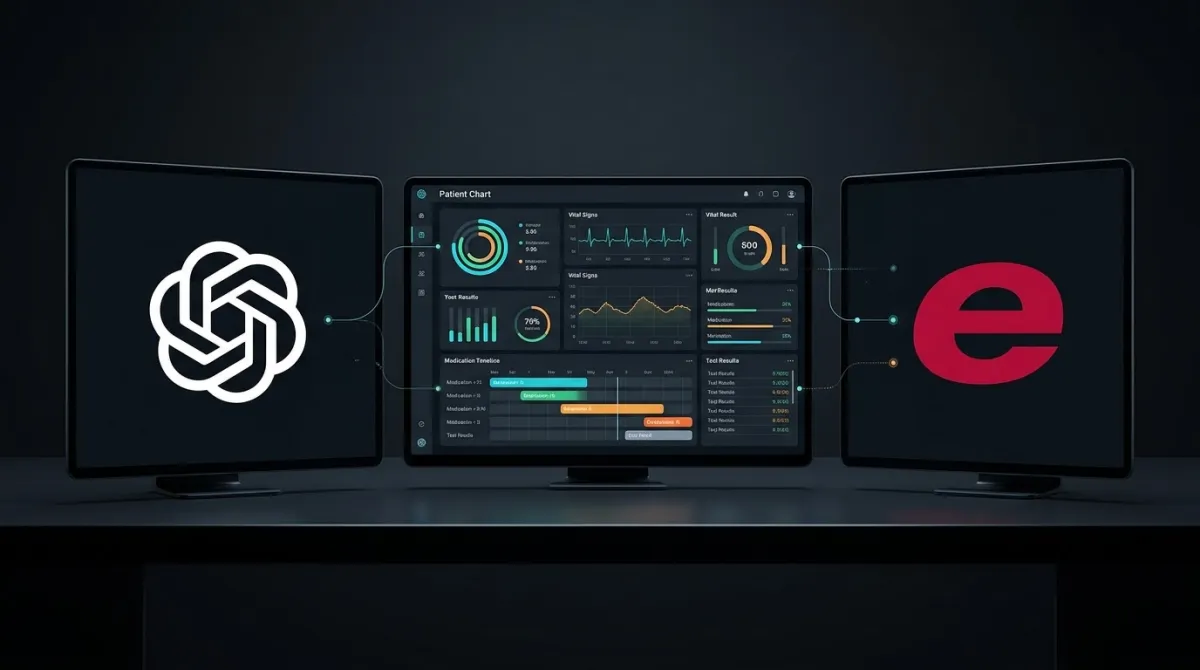
On September 1, OpenAI announced the integration of ChatGPT with Epic's electronic health record system, giving clinicians with proper authorization read-only access to patient data from over 325 million individuals. UCSF Health is the first pilot partner.
The system summarizes appointment notes, lab results, medications, and specialist documentation—without writing anything back to the chart. Two deployment models are available: pulling authorized patient data into ChatGPT or embedding ChatGPT directly into Epic's workflow.
300 Million Weekly Queries. 0.9% Error. The Math Matters.
Across 4,363 physician ratings across 27 clinical use cases, 99.1% of ChatGPT responses were rated safe. In a separate evaluation, more than 93% of responses across five healthcare data sources were rated "good" or better. OpenAI trained the system with input from hundreds of physicians across 26 medical specialties, who reviewed more than 700,000 model responses.
But OpenAI previously disclosed that ChatGPT processes roughly 300 million health-related queries per week. A 0.9% error rate at that scale is not a rounding error—it becomes a patient-safety variable. In a hospital with 1,000 daily queries, that's 9 responses per day that may not be safe. In a health system the size of Epic's network, the number grows quickly.
The Guardrail: It Can Read. It Can't Write.
The integration is read-only. ChatGPT cannot write back to the record, issue orders, or send messages to patients. Two deployment models are available: pulling authorized patient data into ChatGPT for chart review, or embedding ChatGPT directly into Epic's layout so clinicians never leave the patient chart.
Administrators control which integrations are enabled, and existing user permissions determine what each clinician can access. Organizations with a Business Associate Agreement can also use ChatGPT Work and Codex in the same workspace for HIPAA-compliant workflows.
The design is a deliberate guardrail. A hallucinated summary doesn't need to write back to the chart to influence a clinical decision—but the read-only constraint at least prevents the model from making changes that would need to be audited later.
UCSF Is the First Test Case
UCSF Health is OpenAI's featured pilot customer. CEO Suresh Gunasekaran framed the technology's potential: "By bringing relevant information together more quickly and comprehensively, the technology has the potential to reduce time spent synthesizing data and give clinicians more time with patients."
He also acknowledged the need to validate the technology: "We're also engaging frontline teams to validate these capabilities in practice and help shape where they can add the most value."
Other health systems are also exploring the tool. AdventHealth's Chief AI Officer noted that putting tools like ChatGPT Work in the hands of team members can "reduce routine work and help practical innovations move more quickly into action." OpenAI says the integration is available to all healthcare organizations with appropriate agreements.
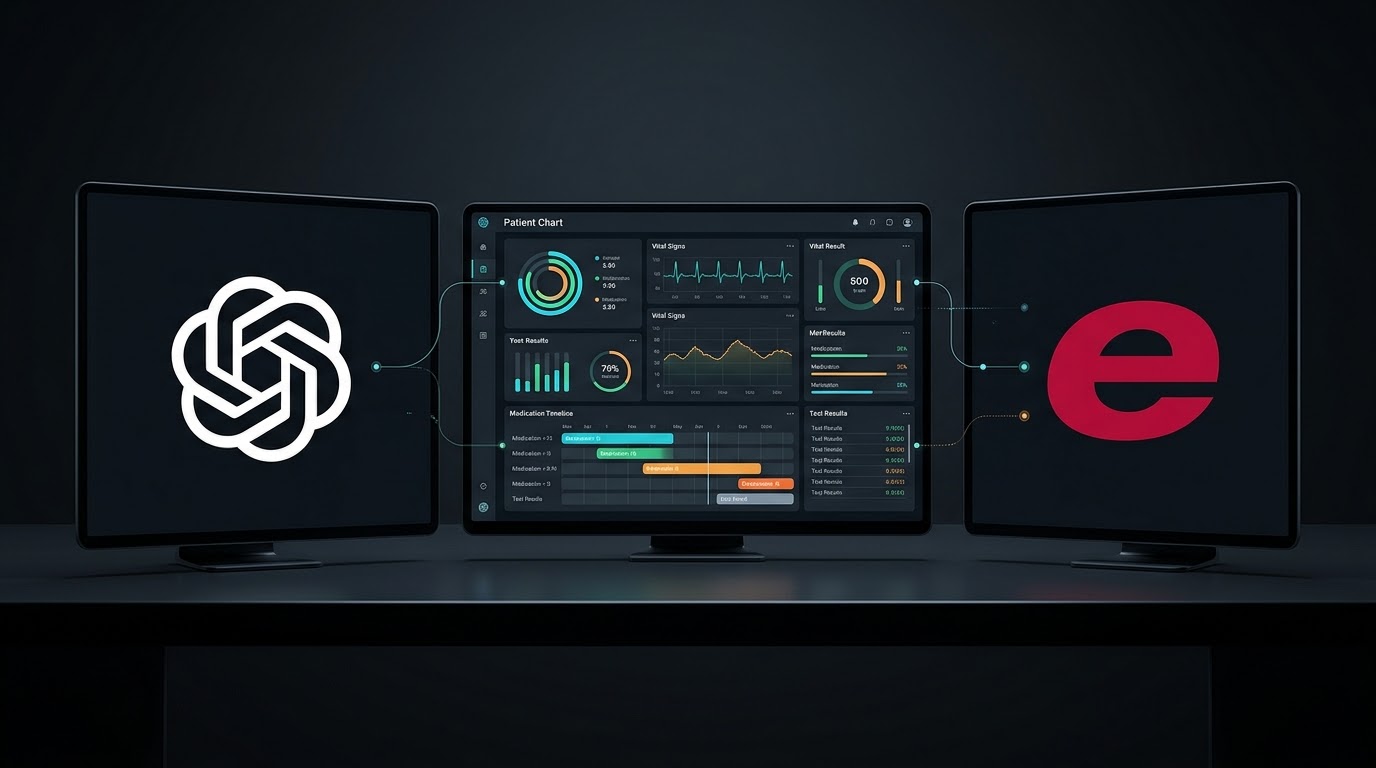
OpenAI just connected the world's most popular AI assistant to the world's largest electronic health record system. The technology works. The safety numbers look strong. But the scale of deployment and the real-world consequences of error make this more than a product announcement—it's a test case for whether AI can be trusted with clinical data at scale.
The read-only guardrail is real, and it's important. But a hallucinated summary doesn't need to write back to the chart to influence a clinical decision. The next phase of this rollout isn't about what ChatGPT can read. It's about how clinicians learn to trust—and verify—what it says.
P.S. The quietest detail in the announcement is the gap between the safety evaluation and the real-world deployment. The safety numbers come from controlled physician evaluations—not live clinical workflows. The real test will be how the system performs when thousands of clinicians are asking unscripted questions about complex patient records. UCSF will find out first.
Frequently Asked Questions
Q: What did OpenAI announce on September 1?
A: OpenAI announced the integration of ChatGPT with Epic's electronic health record system, giving clinicians with proper authorization read-only access to patient data from over 325 million patients. UCSF Health is the first pilot partner.
Q: What can ChatGPT do with Epic data?
A: ChatGPT can summarize appointment notes, lab results, medications, and specialist documentation. It can answer questions like "What has changed since this patient's last visit?" or "Have there been medication changes or new specialist recommendations?" It cannot write back to the record, issue orders, or send messages to patients.
Q: Is ChatGPT's access to patient data read-only?
A: Yes. The system is read-only by design. ChatGPT cannot write back to the record, issue orders, or send messages to patients. This is a deliberate safety guardrail.
Q: How safe is ChatGPT's clinical use?
A: Across 4,363 physician ratings across 27 clinical use cases, 99.1% of ChatGPT responses were rated safe. More than 93% of responses across five healthcare data sources were rated "good" or better in accuracy.
Q: What is the concern about the 0.9% error rate?
A: OpenAI disclosed that ChatGPT processes roughly 300 million health-related queries per week. At a 99.1% safety rate, that would leave roughly 2.7 million responses per week that were not rated as safe in evaluations. In real-world deployment, where queries are unscripted, the actual error rate is an open question.
Q: Which hospital is the first pilot partner?
A: UCSF Health is OpenAI's featured pilot customer. CEO Suresh Gunasekaran said the technology has "the potential to reduce time spent synthesizing data and give clinicians more time with patients."
Q: How does the integration work technically?
A: Two deployment models are available: pulling authorized patient data into ChatGPT for chart review, or embedding ChatGPT directly into Epic's layout so clinicians never leave the patient chart. Administrators control which integrations are enabled.
Q: Is the integration HIPAA-compliant?
A: Yes. Organizations with a Business Associate Agreement can use ChatGPT Work and Codex in the same workspace for HIPAA-compliant workflows. The system honors existing user permissions.
Q: What are the legal risks?
A: Last week, a Florida pastor sued OpenAI after ChatGPT allegedly gave him a near-fatal recommendation. In May, a family sued after ChatGPT reportedly gave incorrect dosage advice. OpenAI's disclaimer—that ChatGPT is "not intended for diagnosis or treatment"—does not prevent a hallucinated summary from influencing clinical decisions.
Q: What is the significance of this integration?
A: OpenAI just connected the world's most popular AI assistant to the world's largest electronic health record system. The read-only guardrail is important, but the real test will be how the system performs when thousands of clinicians ask unscripted questions about complex patient records. UCSF will find out first.