On November 27, Xiaomi Auto vice president Li Xiaoshuang said at the Guangzhou Auto Show that the company was starting a full rollout of HyperOS 1.20 to its SkyNomad family. The N70 and N90 are first in line for the wider distribution. Eligible SU7 and YU7 models are due to follow, but Xiaomi did not give those owners a firm date.
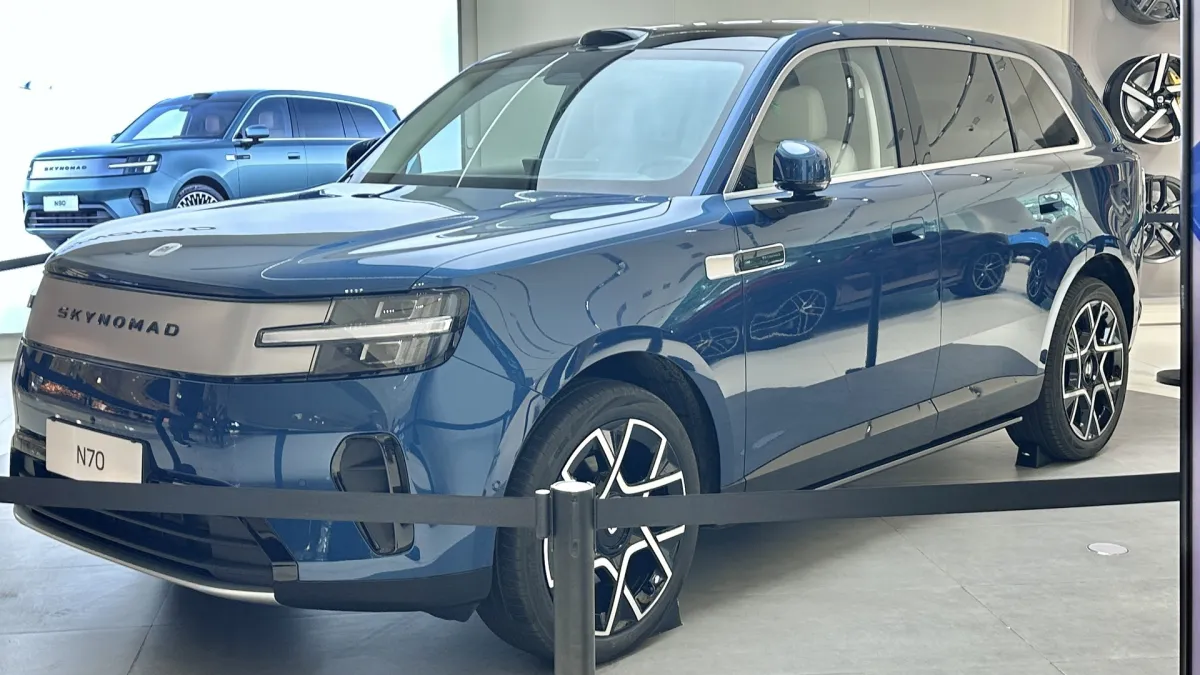
The July showroom cover shows the SkyNomad N70, not the Guangzhou presentation. The distinction matters: November 27 marks the expansion, not the first installation. Some SkyNomad owners had already reported receiving HyperOS 1.20.0 on November 17. Their release notes mentioned updates to city and highway driving assistance, as well as an iPhone digital key. Friday’s news is which group Xiaomi says can now start getting the software more broadly.
The Update Has Two Queues
IT Home’s report from the event lists the first-generation SU7 Pro and Max, the SU7 Ultra, the second-generation SU7 lineup, and the YU7 lineup in the later rollout. The first-generation base SU7 was not named. That omission is not a permanent exclusion, but it also is not confirmation of support.
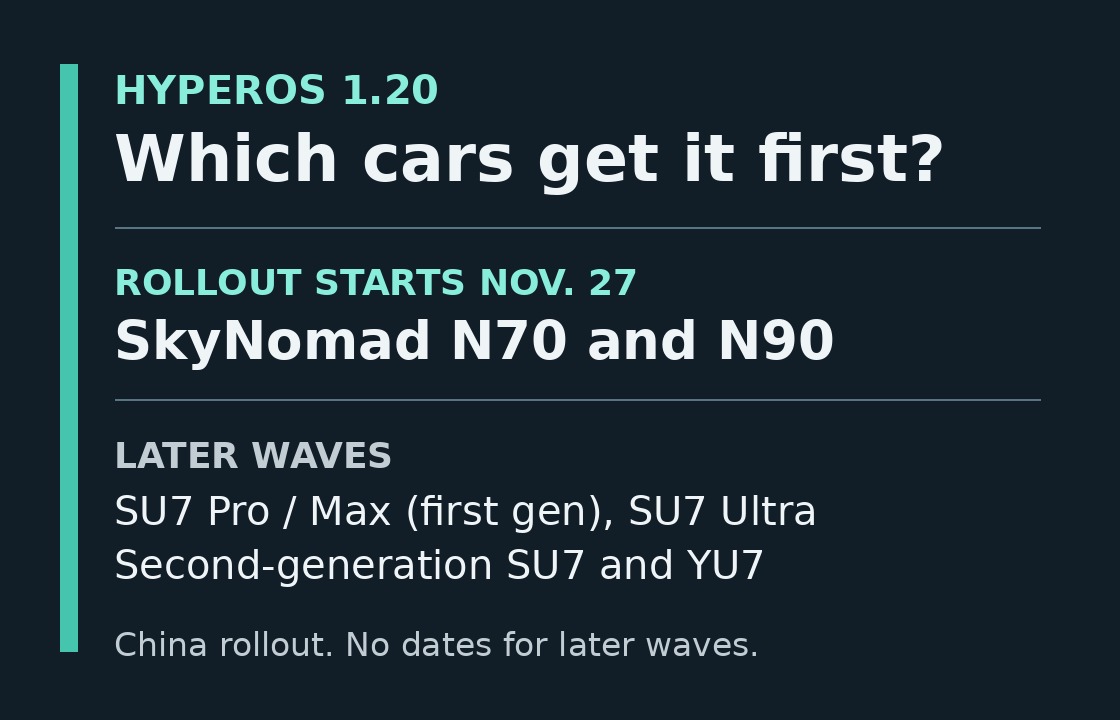
A rollout starting today is not the same as every eligible car having the update today. If you own a SkyNomad, check the car’s update notice and its software version. For the other cars, the list tells you what Xiaomi plans to support, not what you can install this morning.
The World Model Moves Into the Car
At the show, Xiaomi described HyperOS 1.20’s driving system as adding an on-vehicle world model and causal reasoning. That is a different claim from using a world model to train a system in simulation, something Xiaomi previously described for its enhanced driver assistance.
The practical question is how the new software behaves when traffic is hard to read, such as when a parked van hides part of an intersection. The show announcement did not provide independently verified intervention data or a comparable before-and-after road test. The new description does not establish how often the software gets those judgments right.
Driver Assistance Still Means Supervision
HAD stands for Xiaomi Hyper Assisted Driving. The rollout does not make a SkyNomad driverless or change the driver’s responsibility to supervise. The software version is useful when comparing owner reports; a claim that one car handled a route better means little if the two runs used different versions or road conditions.
P.S. The useful follow-up is not another stage demo. It is an owner test that records the build, route, and every time the driver had to intervene.
Frequently Asked Questions
Q: Which cars get Xiaomi HyperOS 1.20 first?
A: Xiaomi said the full rollout starts with the SkyNomad N70 and N90 family in China.
Q: When do the SU7 and YU7 get it?
A: Xiaomi named eligible SU7 models and the YU7 lineup for later waves, without giving dates at the show.
Q: Was November 27 the first day owners could install it?
A: No. Some SkyNomad owners reported receiving version 1.20.0 on November 17. November 27 is the announced move to broader rollout.
Q: Does the update make the car autonomous?
A: No. This remains supervised driver assistance.
Q: Did Xiaomi demonstrate a measured safety improvement?
A: The event coverage explains Xiaomi’s model claims, but does not establish a measured safety improvement in comparable, independently verified road tests.