Axios reported on July 20 that the Trump administration is reviving plans to restrict US access to Chinese AI models. Kimi K3's rapid rise is the catalyst.
The internal debate has been running for months. Last summer, the Commerce Department circulated draft rules targeting Chinese open-source models. The NSA and White House cyber office considered issuing security alerts. Officials weighed an executive order requiring companies to guarantee security before using Chinese models.
None of these proposals passed. Administration officials who feared stifling innovation blocked them.
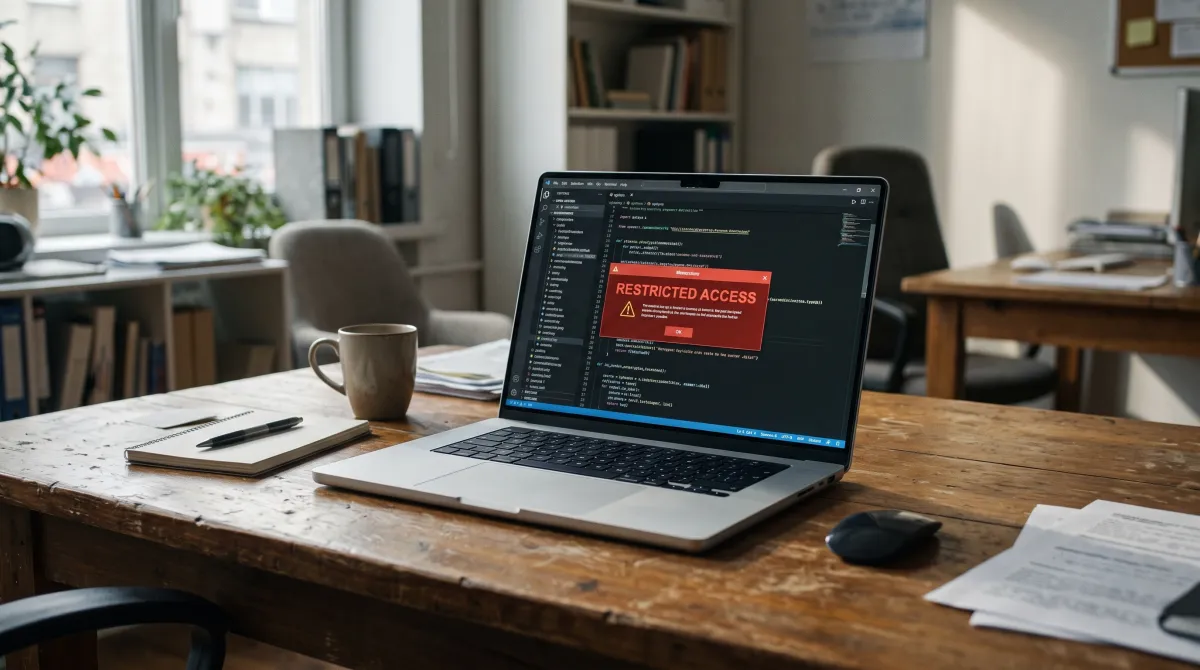
Now the push is back. National security hawks have gained influence inside the administration. Kimi K3's strong performance in a number of programming and knowledge work benchmarks has made it harder to dismiss Chinese models as mere copycats.
One source close to the administration told Axios that the strategy has shifted from outright bans to "something slower and more durable": procurement restrictions, Entity List threats, and public pressure campaigns targeting US companies that adopt Chinese models.
The irony is that this is a debate about banning software that can be downloaded for free.
The push is being cheered by OpenAI and Anthropic. According to Axios, sources close to the administration said major AI labs—or their supporters—propose new restrictions every three to five months.
David Sacks, the venture capitalist who chairs the President's Council of Advisors on Science and Technology, has been unusually vocal. He called the effort "regulatory capture" and said the closed labs—already a "duopoly in terms of AI model revenue"—want the government to "eliminate their open source competition."
"They have laid their cards on the table," Sacks wrote on X. "It's time for the rest of Silicon Valley—which still values open competition—to speak up."
Sacks has a point. OpenAI's strategic futures chief Dean Ball wrote that the US "doesn't need to ban open source," just "create large amounts of regulatory risk" around Chinese models through "soft regulations" that generate fear, uncertainty, and doubt.
"The most important thing for the administration to do is to create regulatory risk around Chinese open-weight models—you don't need formal bans," Ball wrote. "An advisory from the Fed discovering that Chinese AI models might have backdoors. You don't even need good evidence."
OpenAI's plan, in other words, is to make it so expensive for companies to use Chinese models that they stop.
The economic reality is awkward. Chinese models are vastly cheaper than their US counterparts. Kimi K3 costs $15 per million output tokens. Fable 5 costs $50. DeepSeek V4 costs $0.87. That is not a competitive disadvantage. That is a pricing disaster.
Chinese models are also increasingly capable. Kimi K3 scored 1,679 on Arena's front-end coding benchmark, surpassing Fable 5's 1,631 and GPT-5.6 Sol's 1,618. Artificial Analysis ranked it third globally, ahead of Google's best.
Axios acknowledged the core problem: the US currently lacks mature, low-cost, open-source alternatives to Chinese models. Restricting Chinese AI would make American companies worse at AI.
One source put it bluntly: US companies keep buying Chinese models because they're cheaper and, as seen with Kimi, "about as good" as US technology.
The administration's debate is ultimately about whether to protect US AI dominance through regulation or competition. The risk of the regulatory path is that it protects incumbents—not the country. OpenAI and Anthropic are not asking for a level playing field. They are asking for the government to tilt it in their favor.
P.S. If you are a US AI company, the question is: can you compete on price? So far, the answer is no. And no amount of regulation can change that.