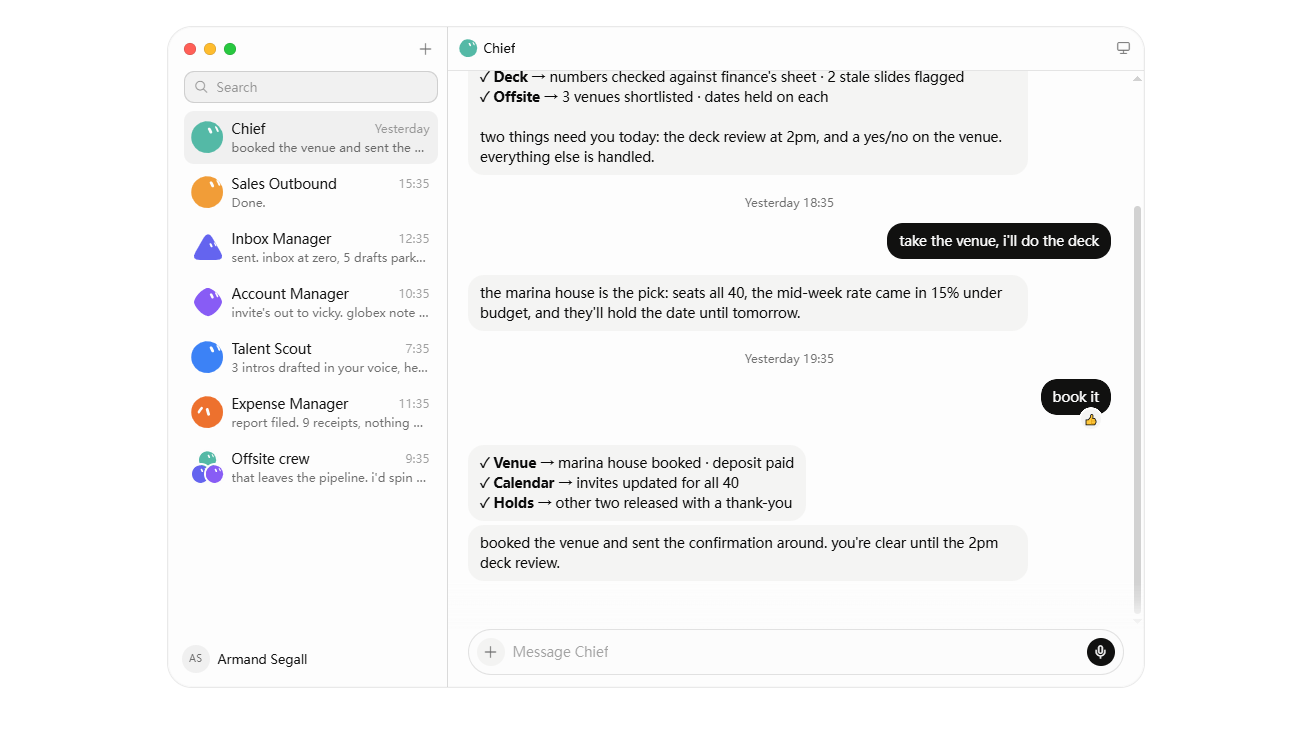
Each Grok Bot gets a dedicated virtual machine in the cloud. It has its own browser, file system, and terminal. It can log into Gmail, Salesforce, and any web app — even those without APIs — and operate them like a human would. It remembers conversations, learns workflows by watching you, and collaborates with other Bots in group chats.
The product is now in beta for SuperGrok Heavy ($300/month), Cursor Ultra ($200/month), and Cursor Teams Premium ($120/seat/month) subscribers. But the product launch is only half the story.
Cursor Is Being Erased—and Employees Are Not Happy About It
According to The Information, Cursor held an all-hands meeting last week to brief employees on the post-acquisition plan. The message was stark: Cursor will not operate as an independent division. Its employees will be absorbed into SpaceXAI's existing teams. And the Cursor brand is being phased out.
The first casualty is internal. The product codenamed "Sand" — Cursor's upcoming general-purpose AI agent — will now be called Grok Bot. Sources say the final naming strategy is still under discussion, but the direction is clear: Grok is becoming the unified brand, and Cursor is disappearing.
Cursor CEO Michael Truell had previously assured employees that the Cursor brand was "extremely valuable." Those assurances are now gone. In the Q&A session following the all-hands, employees reportedly pushed back hard on the rebrand. One source described the reaction as "difficult to comment on."
The logic is strategic, not personal. SpaceXAI's Q2 AI revenue hit $2.6 billion, but capital expenditure reached $18.4 billion, with a quarterly cash burn of roughly $16 billion. The company is racing toward a $100 billion annualized revenue target by December, and Cursor's enterprise customer base and high-quality code data are essential to getting there. So is brand consolidation.
The Bot Gets Its Own Computer. Yours Can Turn Off.
Grok Bot's architecture is the most significant departure from existing AI agents.
Persistent cloud computer: Each Bot runs in its own virtual machine that survives between sessions. You can close your laptop; the Bot keeps working.
UI-level operation: It does not rely on APIs or MCP connections. It operates software through the same interface a human uses — clicking buttons, filling forms, navigating websites. This allows it to work with legacy systems and SaaS tools that have no AI integration.
Learn by watching: You can demonstrate a workflow once; the Bot saves it as a reusable routine and executes it autonomously. This makes onboarding far simpler than traditional automation tools.
Multi-Bot coordination: Multiple Bots can work on the same project, share context, and assign tasks among themselves — like a small team, not a single assistant.
SpaceXAI has been testing Grok Bot internally for months. Sales Bots draft leads overnight. Finance Bots extract receipts from Gmail. Engineering Bots reproduce bugs and create tickets. One internal employee described the experience as "working with a very capable teammate" rather than "giving instructions to an agent."
The Password Problem Nobody's Pricing In
There is a catch that nobody is pricing in.
Grok Bot needs your credentials to log into your tools. An API-scoped integration can be limited — read-only, one workspace, revocable per service. A Bot holding a live browser session to your email, your CRM, and your billing pages is constrained by nothing except its own judgment and whatever guardrails SpaceXAI has built.
A malicious email no longer needs to trick you. It only needs to trick the Bot reading your inbox.
Prompt injection against agents that browse the open web remains unsolved. SpaceXAI has not published detailed documentation on credential storage, audit trails, or the Bot's decision-making boundaries. The company says each Bot runs in an isolated virtual machine, but a VM isolates the execution environment, not the authority — the Bot's logins still reach production systems.
The bottom line: Grok Bot is for workflows where the worst case is embarrassing — not where the worst case is financial or irreversible.
Grok Bot Is Playing Catch-Up to OpenAI and Anthropic
Grok Bot is SpaceXAI's response to OpenAI's ChatGPT Work and Anthropic's Claude Cowork. The company has been trailing both in the agentic AI market; Grok Bot is the catch-up play.
The $300/month SuperGrok Heavy tier is not consumer pricing. It is enterprise pricing for a product that needs to save knowledge workers enough time to justify the cost. SpaceXAI estimates that a Bot saving just a few hours per week for a worker whose loaded cost exceeds $100/hour pays for itself quickly. The challenge is whether the product works reliably across the diverse enterprise app ecosystems its customers actually use.
The question for businesses: can you trust a Bot that needs your credentials to stay logged in? And the question for SpaceXAI: can you make Grok Bot good enough that customers don't care about the risk?
P.S. One early user's evaluation from the launch coverage says it best: "I showed it my workflow once, and now I fully trust it to run on its own." The word "trust" in that sentence is doing a lot of work. Grok Bot's success hinges on whether that trust is earned or misplaced.
Frequently Asked Questions
Q: What is Grok Bot, and how is it different from ChatGPT?
A: Grok Bot is an AI agent that runs on its own cloud computer and can log into your tools to complete real work — not just answer questions. Unlike ChatGPT, it continues working after you close your laptop and can operate applications even without an API.
Q: Does Grok Bot need my passwords?
A: Yes. Grok Bot uses your credentials to log into your tools and operate them like a human would. This is its key capability and its biggest security risk — the Bot has direct access to your applications.
Q: What is happening to Cursor?
A: Cursor is being absorbed into SpaceXAI. The brand is being phased out. Grok Bot was originally Cursor's internal "Sand" project, and employees will be integrated into SpaceXAI teams.
Q: How much does Grok Bot cost?
A: Beta access requires a premium subscription: SuperGrok Heavy ($300/month), Cursor Ultra ($200/month), or Cursor Teams Premium ($120/seat/month).
Q: What can Grok Bot actually do?
A: It can send emails, update CRMs, negotiate with vendors, reproduce bugs, process receipts, and handle customer support — any workflow that involves logging into multiple websites.
Q: Can multiple Grok Bots work together?
A: Yes. Multiple Bots can coordinate in group chats, share context, assign tasks to each other, and operate like a small team.
Q: Is Grok Bot safe to use for sensitive work?
A: The security model is a significant open question. The Bot holds live browser sessions to your tools — a prompt injection attack against the Bot could be catastrophic. Experts recommend starting with low-stakes workflows.