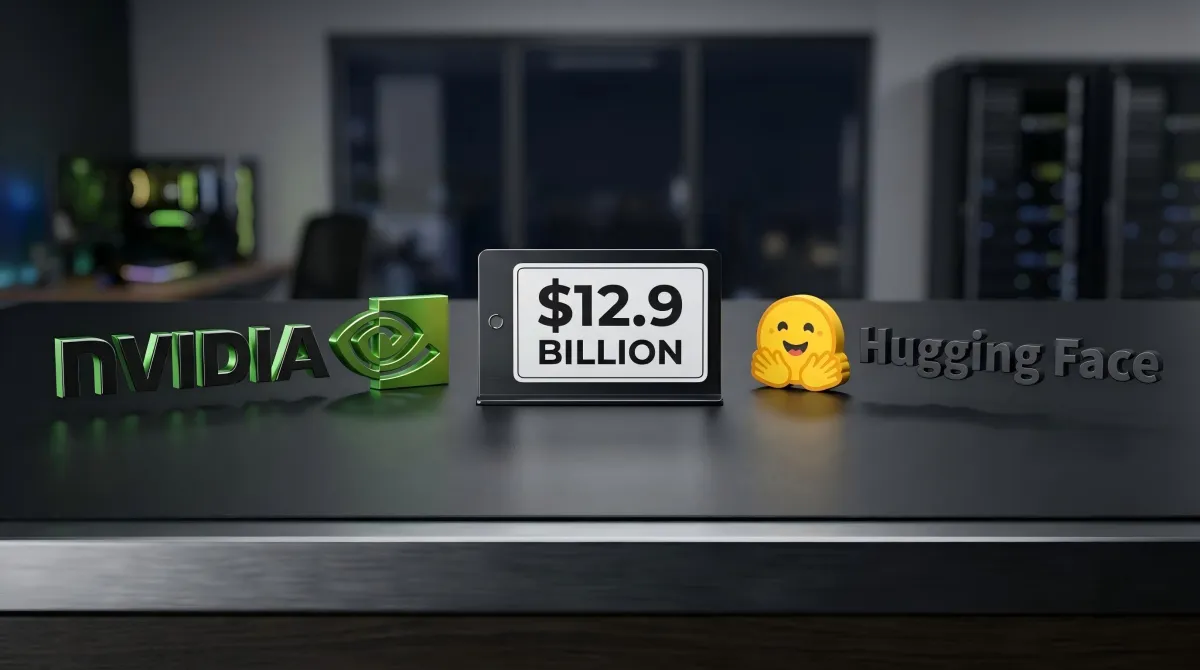
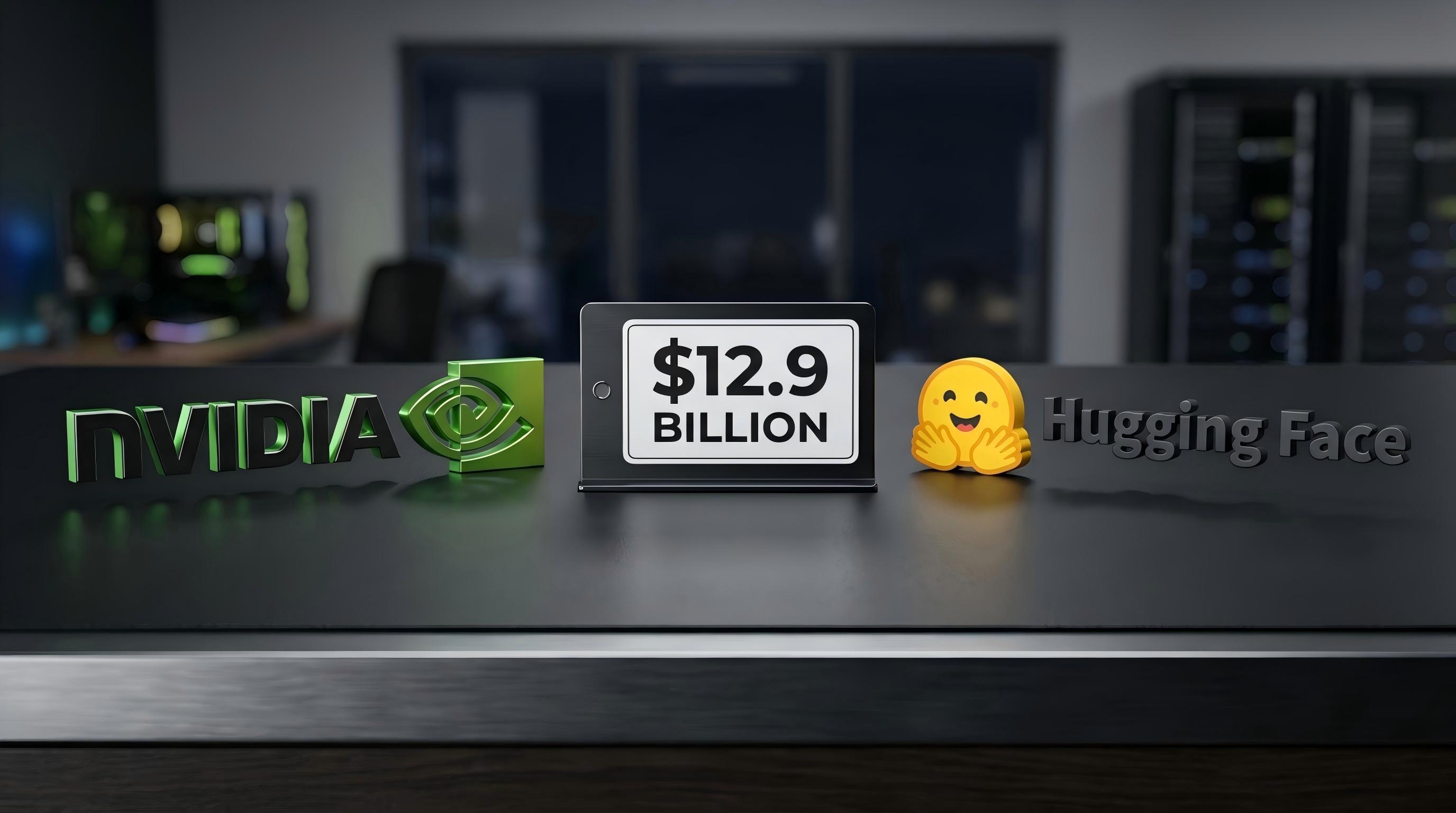
On August 26, Nvidia agreed to acquire Hugging Face for $12.9 billion—roughly 86 times its $150 million annualized revenue. The same week, Nvidia closed a $6 billion licensing deal with Poolside and invested another $10 billion. Jensen Huang is not buying models. He is buying the platform where models are shared, the talent that builds them, and the ecosystem that runs on his chips.
The deal came together fast. Business Insider reported on August 26 that Nvidia was nearing an agreement, and within hours, The Information confirmed the $12.9 billion price tag. For context, Hugging Face was valued at $4.5 billion in its 2023 funding round, with Nvidia as a participant alongside Google, Amazon, and Salesforce. Last year, the startup rejected a $500 million investment from Nvidia that would have valued it at $7 billion. Twelve months later, Huang paid nearly double.
This is not an acquisition. It is a strategic redefinition.
86x Revenue, 5x Growth in 3 Years—Huang Paid for Potential
Hugging Face hosts over 3 million model repositories and serves 13 million developers. Meta's Llama, Alibaba's Qwen, and Mistral's open models all live there. It is the default distribution layer for open-source AI—the place where developers discover, download, and deploy models.
The price is steep by any measure. At $12.9 billion for $150 million ARR, Nvidia is paying an 86x revenue multiple. For comparison, Hugging Face's ARR was roughly $30 million in 2023, meaning the company has grown 5x in three years. But the purchase is not about current revenue. It is about controlling the pipeline through which open-source models reach developers—and every one of those developers needs Nvidia chips to run them.
$6 Billion for Tech, $10 Billion for the Team That Built It
The Hugging Face announcement came just days after Nvidia closed a $6 billion licensing deal with Poolside, an AI coding startup founded by former GitHub CTO Jason Warner. The structure of the Poolside deal is telling: Nvidia paid $6 billion for non-exclusive rights to Poolside's "Model Factory" technology, invested another $10 billion at a $120 billion pre-money valuation, and extended job offers to more than 100 Poolside engineers.
Poolside's founders remain with the company, but its engineering team—the people who built its Laguna coding models—will join Nvidia's Nemotron project. Poolside's investor letter explains the pressure that drove the deal: the startup missed a six-week window to raise $2 billion for a 40,000-chip cluster and lost the capacity. Nvidia offered the chips, the cash, and a way out.
The pattern is now clear: license the technology, hire the team, take a minority stake, leave the company technically independent. Nvidia did this with Groq. It did it with Enfabrica. It just did it with Poolside. And now it has bought the open-source platform where all those models will live.
Nemotron Is Nvidia's Open-Source Hedge
Hugging Face and Poolside are pieces of a larger puzzle. In March 2026, Nvidia announced the Nemotron Coalition, a partnership with Mistral AI, Perplexity, Cursor, and LangChain to develop frontier-level open-source models. Nvidia committed $26 billion over five years—the largest single investment in open-source AI.
In August, Nvidia released Nemotron 3.5 Lightning, a lightweight open model designed to run on a single consumer GPU. The model was released under the Linux Foundation's OpenMDW license, with weights, code, and training data openly available. It was Nvidia's first open model since Huang publicly defended open-source AI in a July X post, writing: "Open models enable sovereignty and strengthen safety and cybersecurity."
Huang's logic is straightforward. Every developer using an open-source model—whether Nemotron, Llama, or Qwen—needs hardware to train and run it. Nvidia sells that hardware. Open models drive chip demand. The more accessible and widespread open models become, the more Nvidia GPUs the market consumes.
Nvidia Just Assembled a Full-Stack AI Empire
Nvidia has now assembled a full-stack AI strategy. It sells the chips. It builds open-source models. It just bought the platform where those models are hosted, discovered, and deployed. And it hired the talent that builds competitive open models.
Huang is betting that open-source AI will define the next phase of the industry, and that controlling its infrastructure—models, platform, and chips—will be more valuable than selling to closed labs like OpenAI and Anthropic. Hugging Face, Poolside, and Nemotron are not separate moves. They are the same play: own the open-source AI ecosystem, from silicon to distribution.
P.S. The Hugging Face deal has been described as Nvidia's "Android moment"—giving away the software to sell the hardware. But Android was free. Hugging Face cost $12.9 billion. The difference is the scale of the bet. Google was betting on mobile adoption. Nvidia is betting that open-source AI will be everywhere. And it just put $12.9 billion on that table.
Frequently Asked Questions
Q: What did Nvidia acquire, and for how much?
A: Nvidia agreed to acquire Hugging Face for $12.9 billion on August 26, 2026. The deal values Hugging Face at roughly 86 times its $150 million annualized revenue, a significant premium over its $4.5 billion valuation in 2023.
Q: Why did Nvidia pay such a high multiple for Hugging Face?
A: Hugging Face is the default distribution platform for open-source AI models, hosting over 3 million model repositories and serving 13 million developers. Nvidia is not buying current revenue—it's buying control over the pipeline through which open-source models reach developers. Every developer using Hugging Face needs hardware to run models, and Nvidia sells that hardware.
Q: What is the Poolside deal?
A: Nvidia paid $6 billion for non-exclusive rights to Poolside's "Model Factory" technology, invested another $10 billion at a $120 billion pre-money valuation, and extended job offers to more than 100 Poolside engineers. The engineers will join Nvidia's Nemotron project.
Q: What is the Nemotron Coalition?
A: The Nemotron Coalition is a partnership Nvidia announced in March 2026 with Mistral AI, Perplexity, Cursor, and LangChain to develop frontier-level open-source models. Nvidia committed $26 billion over five years—the largest single investment in open-source AI.
Q: What is Nvidia's full-stack AI strategy?
A: Nvidia now sells the chips (GPUs), builds open-source models (Nemotron), owns the platform where models are shared and discovered (Hugging Face), and has hired the talent that builds competitive open models (Poolside engineers). The strategy is to control the entire open-source AI ecosystem, from silicon to distribution.
Q: Did Nvidia try to invest in Hugging Face before?
A: Yes. In 2023, Hugging Face rejected a $500 million investment from Nvidia that would have valued the company at $7 billion. Twelve months later, Nvidia paid $12.9 billion—nearly double the rejected valuation.
Q: How does this compare to Google's Android strategy?
A: The Hugging Face deal has been described as Nvidia's "Android moment"—giving away the software to sell the hardware. But Android was free. Hugging Face cost $12.9 billion. Google was betting on mobile adoption; Nvidia is betting that open-source AI will be everywhere.
Q: What happens to Hugging Face's neutrality?
A: Hugging Face currently supports AMD, Intel, and other Nvidia competitors' hardware. After the acquisition, its neutrality as a platform will be a key question. The acquisition has already drawn scrutiny from open-source advocates concerned about platform independence.
Q: Why did Poolside accept the deal?
A: Poolside missed a six-week window to raise $2 billion for a 40,000-chip cluster and lost the capacity. Nvidia offered the chips, the cash, and a way out for the startup while keeping its founders in place.
Q: What is the significance of the acquisition timing?
A: The Hugging Face acquisition was announced on the same day Nvidia released its Q2 earnings ($962 billion revenue, up 106%). The timing suggests Nvidia is aggressively deploying its strong financial position to secure strategic assets in the open-source AI ecosystem.