The Gemini 3.5 Pro story is a case study in how not to manage product expectations. At Google I/O in May, Sundar Pichai told a room of developers the model would arrive "next month." The crowd responded with audible groans — an early warning sign that the company's credibility on AI was already fraying.
June came. Nothing. July came. Google released Gemini 3.6 Flash, 3.5 Flash-Lite, and a cybersecurity-focused Flash Cyber model. Not Pro. Just more Flash. Google's developers updated the training data to improve coding performance, but the results still missed internal targets.
August 10 — a date floated by early rumors — passed without a release. The "coming soon" badge on Google's own website has become a running joke in the AI community.
The delay wasn't a minor tweak. According to Bloomberg and Semafor, Gemini 3.5 Pro's coding capabilities fell short of internal goals by a significant margin, and Google's AI programming ability was roughly "six months behind the frontier." For a company that built its reputation on AI research, that's not a setback. It's an existential signal.
Google's stock has fallen more than 10% since the end of April. In a July earnings call, analysts pressed Pichai directly on whether Google could still compete at the cutting edge of AI. His defensive response: "We've acknowledged we need to improve — coding and agentic coding is an example of that."
The product delay is one symptom. The organizational collapse is another.
On August 5, Google DeepMind chief scientist Jeff Dean and three core researchers left to start a new venture. Demis Hassabis stepped down as CEO of DeepMind, moving to an advisory role. Alphabet's market cap dropped over 4% in a single day.
These departures are not unrelated to the product gaps. If the flagship model is delayed indefinitely and the team building it is leaving, the structural problem is deeper than "we need more training data."
Google's response to the Pro crisis has been to lean harder into Flash — cheaper, faster, "workhorse" models that are supposed to fill the gap while the flagship is, in theory, still being polished.
There is a problem: Flash was never meant to carry the company's AI reputation. Gemini 3.6 Flash ranks eighth on the Artificial Analysis Intelligence Index, behind Muse Spark 1.2, Grok 4.5, and models from Chinese labs. SemiAnalysis reported that the model's intelligence score was effectively unchanged from Gemini 3.5 Flash — a lateral move, not an upgrade.
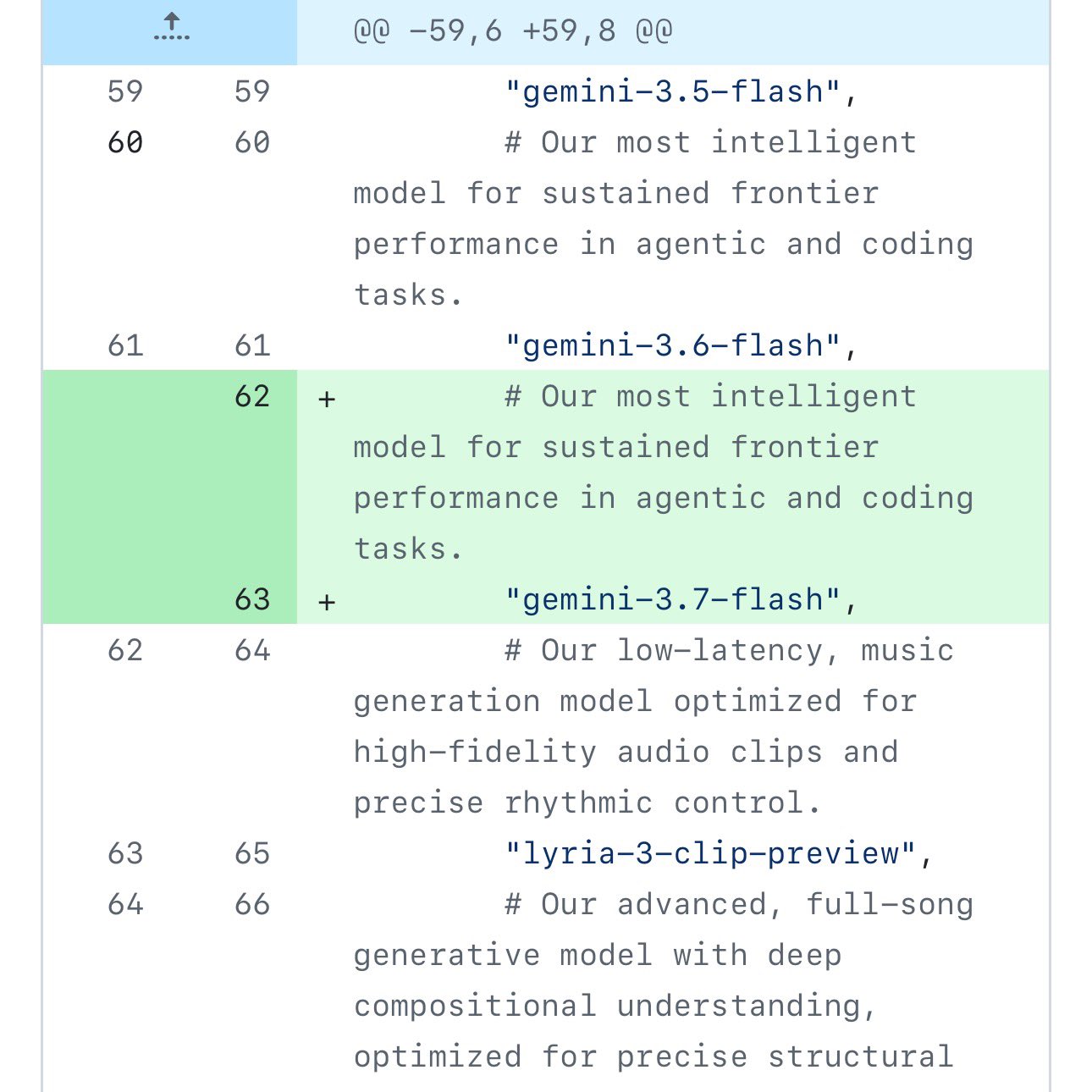
And now Gemini 3.7 Flash is already appearing in Google's SDK. The company is releasing Flash models faster than it can fix Pro.
Meanwhile, competitors are running laps. OpenAI and Meta employees publicly mocked Google on X within hours of the Gemini 3.6 Flash announcement. Anthropic's Fable 5 and Meta's Muse Spark 1.2 are consistently outperforming everything Google has available.
Google's current strategy is to skip past the failure. The company is already talking up Gemini 4, which Pichai described as a "very ambitious effort" with a "monthly cadence" of releases.
But SemiAnalysis is skeptical. The report argues that the structural issues holding back Gemini 3.5 Pro — coding and agentic reliability — will not be automatically fixed by a larger pre-training run. Google has formed a dedicated DeepMind programming team to close the coding gap, but that improvement needs to materialize in actual models.
Pre-training for Gemini 4 has already begun, which raises an uncomfortable question: Why was Google already running pre-training for Gemini 4 while Gemini 3.5 Pro was supposedly weeks from release?
The answer is obvious to anyone outside the company: the team had already moved on.
P.S. The most revealing detail: Gemini 3.5 Pro briefly appeared in Arena's blind test pool multiple times over the past few weeks, only to be pulled each time — one appearance lasted less than an hour. Testers described the output as "incremental, not the generational leap Google has been teasing since May" — and now, reportedly, it's canceled. That's not a product delay. That's a funeral.
Frequently Asked Questions
Q: Is Gemini 3.5 Pro officially canceled?
A: Google has not issued an official statement confirming cancellation. SemiAnalysis has reported the model is effectively canceled, and the complete absence of any release — despite repeated promises — strongly supports this. Google's own website still lists it as "coming soon."
Q: What happened to the June release date Sundar Pichai promised?
A: At Google I/O in May, Pichai told developers the model would arrive "next month." That was June. The model never materialized. Google has offered no public explanation for the delay, though internal reports point to coding capabilities falling short of performance targets.
Q: Why did Jeff Dean and Demis Hassabis leave Google DeepMind?
A: Jeff Dean and three core researchers left to start a new venture on August 5. Demis Hassabis stepped down as CEO of DeepMind to take an advisory role. Neither departure was directly explained, but they occurred amid ongoing Gemini product delays and organizational restructuring.
Q: What is Gemini 3.7 Flash, and why does it matter?
A: Gemini 3.7 Flash is a new model that has appeared in Google's Python GenAI SDK. It hasn't been officially announced yet, but its existence suggests Google is continuing to iterate on the Flash line — the smaller, faster models that were never meant to be the flagship. The company is now using Flash models to fill gaps in its AI product lineup.
Q: How does Gemini 3.6 Flash compare to competitors?
A: Gemini 3.6 Flash ranks eighth on the Artificial Analysis Intelligence Index — behind Muse Spark 1.2, Grok 4.5, and models from Chinese labs. SemiAnalysis reported its intelligence score was effectively unchanged from Gemini 3.5 Flash, meaning it was a lateral move, not a meaningful upgrade.
Q: What is the "six months behind" claim about?
A: Semafor and Bloomberg reported that Google's AI coding capabilities are roughly "six months behind the frontier" — meaning behind OpenAI, Anthropic, and Meta's best models. This is the specific internal metric that reportedly held up Gemini 3.5 Pro.
Q: What is Google's plan now?
A: Google is reportedly shifting focus to Gemini 4, which Pichai described as a "very ambitious effort" with a "monthly cadence." However, SemiAnalysis is skeptical that a larger model will fix the structural issues — particularly coding and agentic reliability — that plagued Gemini 3.5 Pro.
Q: Did Gemini 3.5 Pro ever appear in any testing?
A: According to SemiAnalysis, Gemini 3.5 Pro briefly appeared in Arena's blind test pool multiple times over the past few weeks, only to be pulled each time — one appearance lasted less than an hour. Testers who saw it described the output as "incremental, not the generational leap Google had been teasing."
Q: What happened to Google's stock after these events?
A: Google's stock has fallen more than 10% since the end of April. On the day Jeff Dean's departure and Hassabis's step-down were announced (August 5), Alphabet's market cap dropped over 4% — roughly $180 billion. The market is clearly pricing in the company's AI gap.