On November 4, 2026, Apple researchers submitted a paper to arXiv titled Perceptive Humanoid Motion from Simulation, disclosing HALO, an autonomous control system for humanoid robots. The system was deployed on Unitree's G1 humanoid and tested in real rooms that had not been pre-scanned or mapped. Apple also released the data generation, training and deployment code.
The headline number is 91%. The number that matters more is 50%.
91% is a single-task score
The test design separates two kinds of tasks. The first is single tasks: one instruction, one skill, one evaluation. Across six unfamiliar real environments and 360 trials, HALO averaged a 91% success rate.
The second is composite tasks: multiple skills chained in sequence. In a single real environment, Apple ran ten trials for each of three composite tasks. The average was 70%. The hardest one, bend under an obstacle, walk to the target, push the box, succeeded 5 out of 10 times. 50%.
The gap between 91% and 50% is not a rounding error. It is the difference between a system that can execute a trained skill and a system that can plan and execute a sequence without a human correcting it between steps. A robot that can push a box 91% of the time is useful in a demo. A robot that can bend, navigate and push in one continuous run is useful in a home. HALO is closer to the first than the second.
The stack is three layers, and each layer has a different failure mode
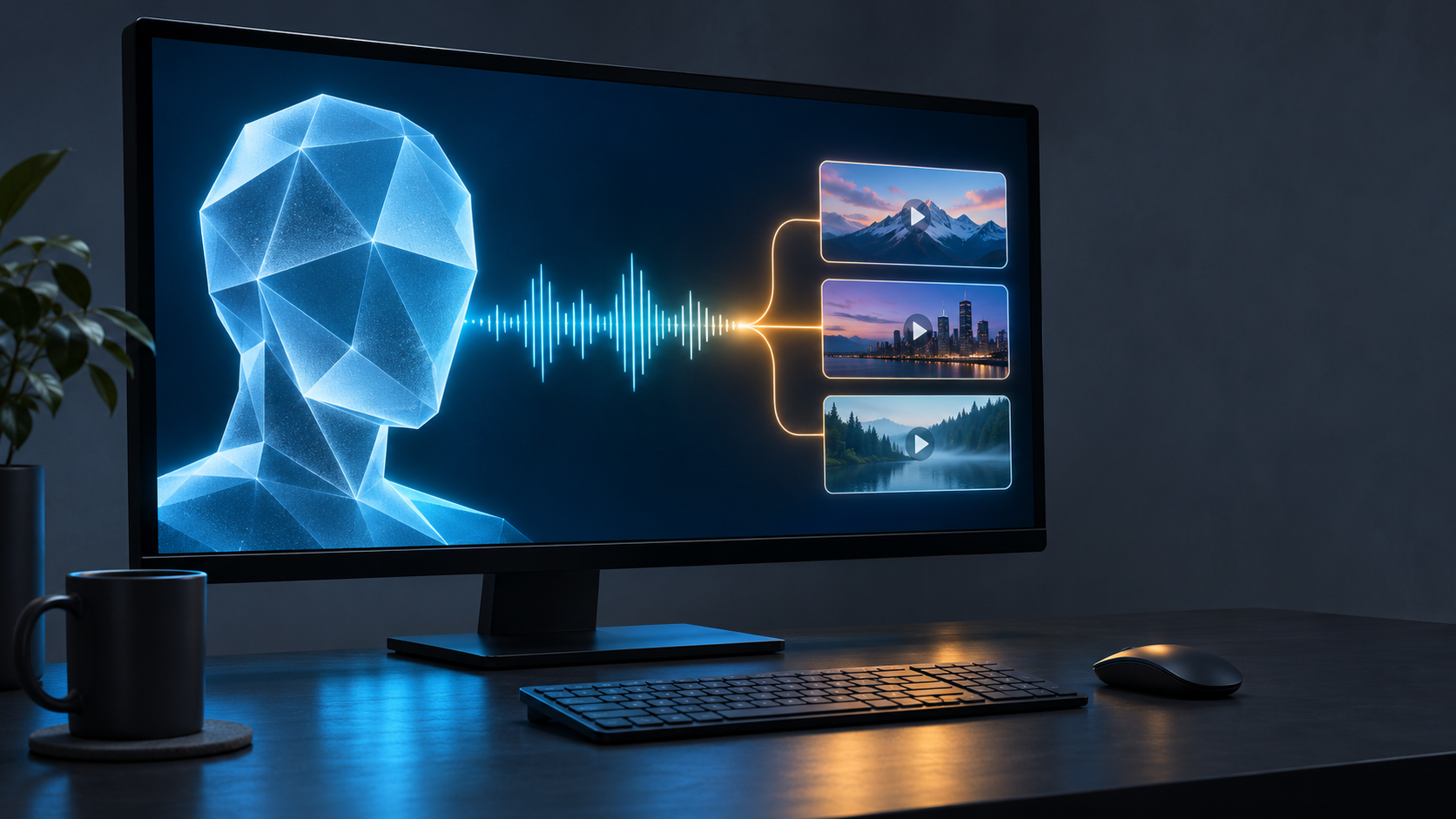
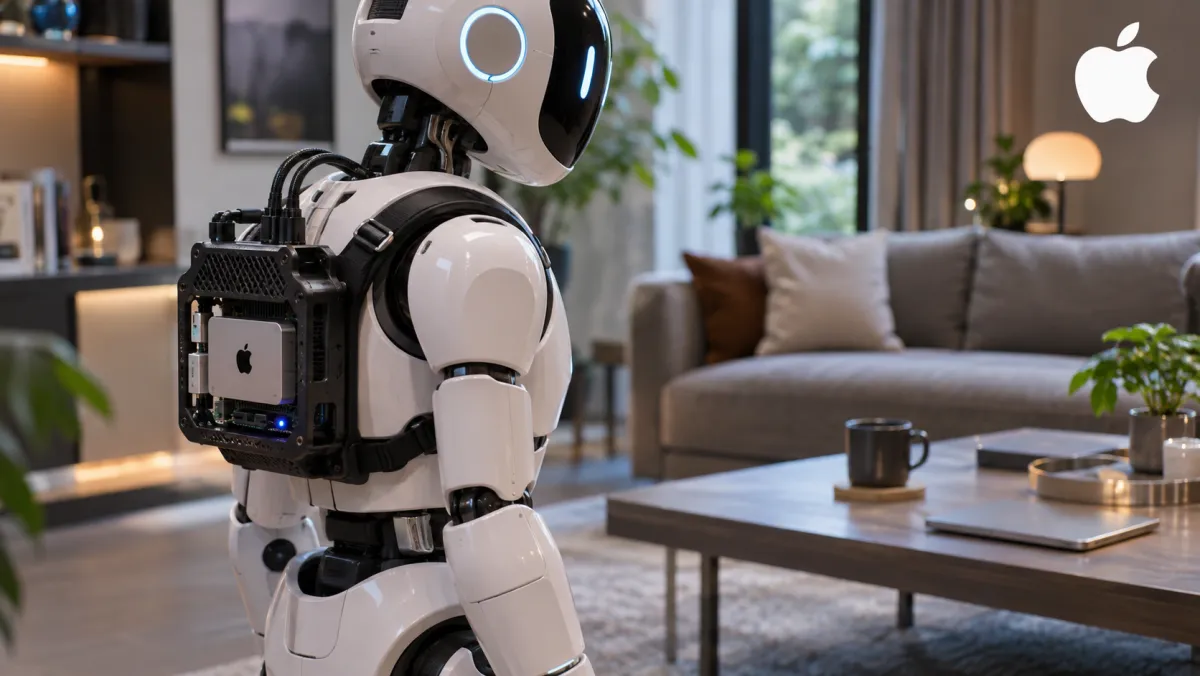
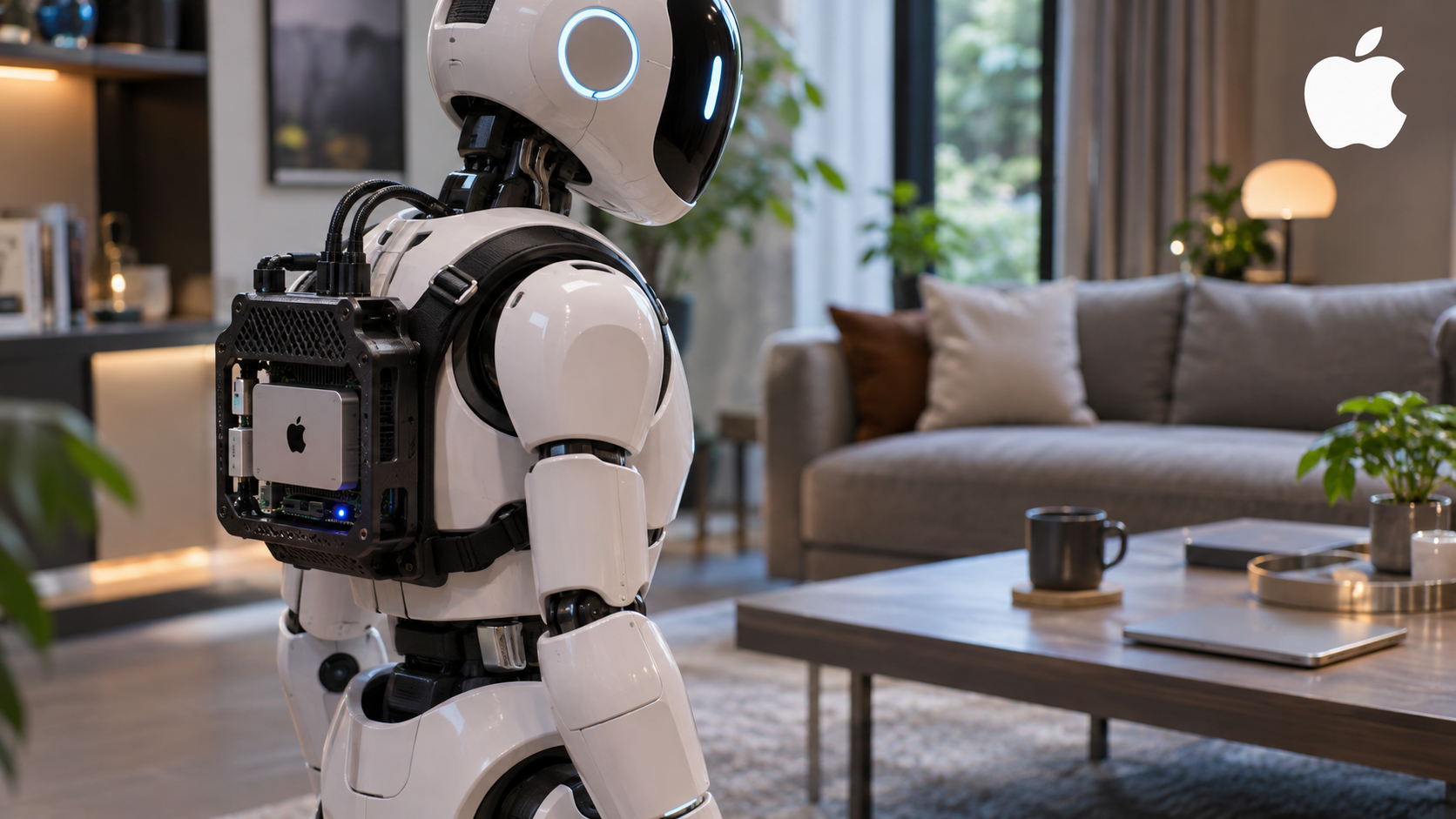
HALO splits control into three levels. The top layer is a vision-language model that interprets the instruction and decides what to do. Apple uses Qwen3.6-35B-A3B by default, running locally on a Mac mini M4 Pro with 64GB of unified memory, mounted in a 3D-printed enclosure on the robot's back. The system can also call a cloud model via API.
The middle layer is the motion generator, Qwen3.5-2B paired with a DiT decoder. It plans whole-body motion about five seconds ahead and replans roughly three times per second.
The bottom layer is the tracker, a reinforcement-learning policy distilled for deployment, running at 50 Hz on the G1's onboard chip.
The composite task failure can originate at any of these layers. If the top layer misjudges the environment, the plan is wrong. If the middle layer generates a motion that does not account for the obstacle's height, the sequence fails. If the tracker cannot execute the transition between bending and walking, the chain breaks. Apple's paper does not publish a per-layer failure breakdown. The 50% figure is the aggregate.
The robot cannot feel what it touches
Apple's own limitations section names a constraint that explains part of the composite gap. The robot relies primarily on visual perception. It cannot directly sense contact. When an object leaves the camera's field of view or becomes occluded, tasks involving contact degrade.
This matters for chained tasks. Pushing a box is a contact task. Bending under a table is a visual task. Walking to a target is a navigation task. When they are strung together, the contact portion can fail silently because the camera loses sight of the box during the bend. The robot has no tactile feedback to confirm the push is still aligned.
The 50% success rate on the hardest composite task is consistent with this limitation. The system can see the box before the bend and after the walk, but the middle segment is where vision alone is insufficient.
Apple used Unitree hardware and Qwen models, and that is the pattern
The G1 is a platform from Unitree, a Chinese robotics company, listed from $13,500 internationally for the base version. The VLM and motion generator are Qwen models from Alibaba. The inference runs on a Mac mini M4 Pro. The tracker runs on the G1's onboard chip.
This is the same structure as Meta's Max robot: an American AI company's software running on Chinese hardware. Apple did not build a robot. It built a control stack and validated it on a platform that already exists. The research contribution is the stack, not the body.
That pattern is worth naming because it recurs. The hardware layer is consolidating around a few platforms. The differentiation is moving to the software that makes the hardware useful. Apple's HALO is a software contribution. The G1 is the testbed.
What HALO actually proves
It proves that simulation-generated training data can transfer to real rooms the robot has never seen. The 91% single-task rate is a real result, and the code release makes it verifiable.
It does not prove that the system can be left alone to complete a multi-step chore. The 50% composite rate, the lack of contact sensing, and the reliance on a single camera view all point to the same conclusion: HALO is a strong single-skill system with a documented ceiling on chained tasks.
The headline will be 91%. The number to remember is 50%. That is the distance between a robot that can do something and a robot that can be trusted to do it without someone watching.
P.S. Apple ran 360 single-task trials across six rooms and 10 trials each for three composite tasks. The single-task sample is large enough to be confident. The composite sample is small. The 50% figure is a signal, not a settled measurement. But it is the only number in the paper that describes the task a home robot would actually need to perform.
Frequently Asked Questions
Q: What is Apple's HALO system?
A: An autonomous control system for humanoid robots, disclosed in an arXiv paper on November 4, 2026. It uses a vision-language model for task planning, a motion generator for whole-body trajectories, and a reinforcement-learning tracker for joint control.
Q: What hardware does it run on?
A: A Unitree G1 humanoid, with a Mac mini M4 Pro with 64GB of unified memory in a 3D-printed enclosure on its back for onboard inference. The VLM and motion generator run on the Mac mini; the tracker runs on the G1's onboard chip.
Q: Which models does HALO use?
A: Qwen3.6-35B-A3B for task orchestration and Qwen3.5-2B for motion generation, both from Alibaba. The system can also call cloud models via API.
Q: What were the test results?
A: 91% average success across 360 single-task trials in six unfamiliar real rooms. For composite tasks, 70% average across three sequences, and 50% on the hardest bend-walk-push chain.
Q: What limits the composite task performance?
A: The robot relies mainly on vision and cannot directly sense contact. When an object leaves the camera's view during a bend or occlusion, contact tasks degrade. Adding tactile sensing is listed as a future direction.
Q: Is the code available?
A: Yes. Apple released data generation, model training and deployment code on GitHub, covering motion generation, tracking, task orchestration and simulation-to-real execution.