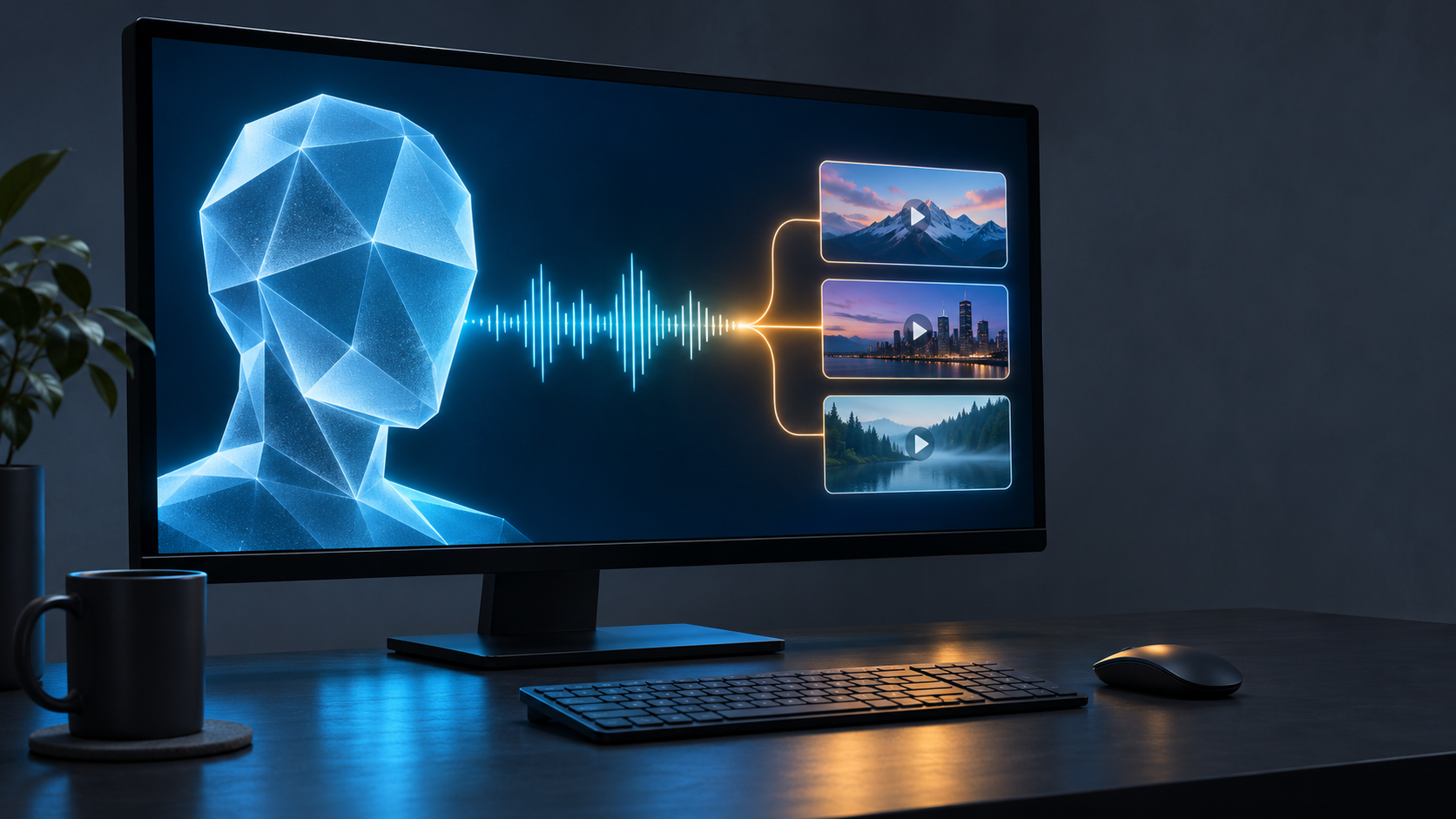
On October 31, 2026, Apple and Alibaba announced that Qwen will be integrated into Apple Intelligence for users in China. The feature enters developer beta on November 4 and ships with iOS 27.3 in December. Chinese users will be able to call Qwen through Siri, Writing Tools, and Visual Intelligence for text and image understanding and content generation.
The announcement closes a two-year gap. Apple Intelligence was unveiled at WWDC 2024. China's cyberspace authority filed Apple Intelligence in July 2026, clearing the regulatory path. What the announcement does not say is why Alibaba, and what the choice reveals about how Apple thinks about AI in different markets.
Eight candidates, one winner, one criterion
Apple approached eight Chinese AI companies over three years: Baidu, Alibaba, ByteDance, Tencent, DeepSeek, Baichuan, Moonshot, and Zhipu. Baidu was the early favorite but fell short on development progress and disagreed with Apple over data boundaries. ByteDance and Tencent were ruled out for a structural reason: Douyin and WeChat are super-apps that compete with the system-level AI Apple wanted to build. DeepSeek and Zhipu had strong models but lacked the delivery capacity and infrastructure to handle Apple's scale.
Alibaba won because it is the one candidate that does not compete with Apple's hardware business. It does not make phones. It does not run a short-video platform. It does not depend on search advertising. There is no structural conflict between Alibaba's core e-commerce business and Apple's hardware ecosystem.
The criterion was not model quality. It was non-threat.
This matters for how Apple Intelligence works outside China. In the US, Apple partners with OpenAI. OpenAI does not make phones. It is a model supplier. In China, Apple needed a partner that could pass regulatory filing, handle nationwide peak concurrency, and commit to not training on user data. Alibaba had all three. But the deciding factor was that Alibaba could be trusted not to use Siri as a funnel back into its own consumer apps.
Qwen is a plugin, not the core
Apple's own description of the integration is precise. Apple Intelligence is driven by Apple's self-built generative models and deeply integrated into the system. Qwen is an extension. It appears in Siri, Writing Tools, and Visual Intelligence as an opt-in feature.
The architecture has a cost. When a request goes to Qwen, Apple's on-device model first interprets the instruction, translates it, and routes it. The response returns through another layer of adaptation. That extra hop is where Chinese-language nuance and implicit context get lost. Early hands-on reports noted that Qwen inside Apple Intelligence felt weaker on long-text synthesis and complex reasoning than the standalone Qwen app.
The best Qwen experience is not in the iPhone. It is in the Qwen app. Apple's design makes that structurally true. When a platform positions an external model as an optional extension rather than a driver, the model's ceiling is set by the platform's interface, not by the model's capability.
The features Chinese users get are from 2024
Apple confirmed that the first wave does not include Siri AI or the other next-generation Apple Intelligence features announced at WWDC 2026. What ships in December is the set of features Apple rolled out in the US between October 2024 and September 2025: real-time translation, writing tools, Visual Intelligence, photo object removal, notification summaries, and Genmoji.
Apple has been running Apple Intelligence overseas for over two years. The China version arrives with the same branding and a different stack: Apple's own models plus Qwen instead of Apple's models plus OpenAI. The delay is regulatory. The feature gap is generational.
That gap matters because the Chinese market Apple is entering is not the market it left. Huawei, Xiaomi, and Honor have been shipping system-level AI agents and cross-app task execution while Apple was waiting for filing approval. QuestMobile data from June 2026 showed Xiaomi's AI assistant at 74.4% penetration among its own users and 29 uses per month per user, while Apple's Siri trailed significantly on both measures. Apple is not arriving with a superior product. It is arriving with a compliant one.
P.S. Apple chose Alibaba because it was the safest partner, not the strongest one. The safety is real, and so is the cost: Qwen runs as an extension, and the extension's ceiling is Apple's interface.
Frequently Asked Questions
Q: What exactly did Apple and Alibaba announce?
A: Qwen will be integrated into Apple Intelligence for users in China through Siri, Writing Tools, and Visual Intelligence. The feature enters developer beta on November 4, 2026, and ships with iOS 27.3 in December.
Q: Why did Apple choose Alibaba over other Chinese AI companies?
A: Apple evaluated eight candidates. Alibaba won because it does not compete with Apple's hardware business, unlike ByteDance and Tencent, and because it had the regulatory filing, cloud infrastructure, and data privacy commitments Apple required.
Q: Is Qwen the main AI model inside Apple Intelligence?
A: No. Apple Intelligence is driven by Apple's own generative models. Qwen is an opt-in extension that users can enable for specific tasks in Siri, Writing Tools, and Visual Intelligence.
Q: What features does the China version include?
A: Real-time translation, writing tools, Visual Intelligence, photo object removal, notification summaries, smart replies, and Genmoji. It does not include Siri AI or other next-generation features announced at WWDC 2026.
Q: Why is the feature set behind the US version?
A: Apple has been shipping Apple Intelligence in the US since October 2024. The China launch was delayed by regulatory filing, and the December release covers the features Apple rolled out in the US between 2024 and 2025, not the newer ones.
Q: What does Alibaba get from the deal?
A: Distribution. Qwen moves from an app users must open to a system-level capability reached through Siri, Writing Tools, and Visual Intelligence. For Alibaba Cloud, every query is inference revenue and a zero-cost touchpoint on hundreds of millions of iPhones.