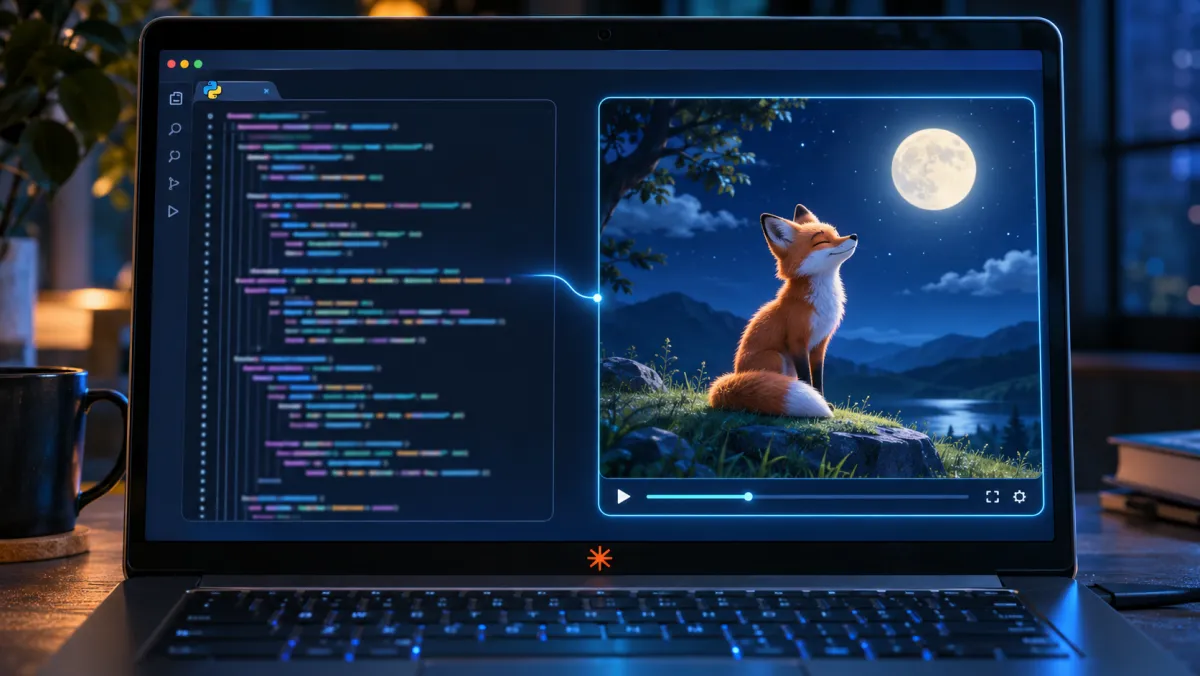
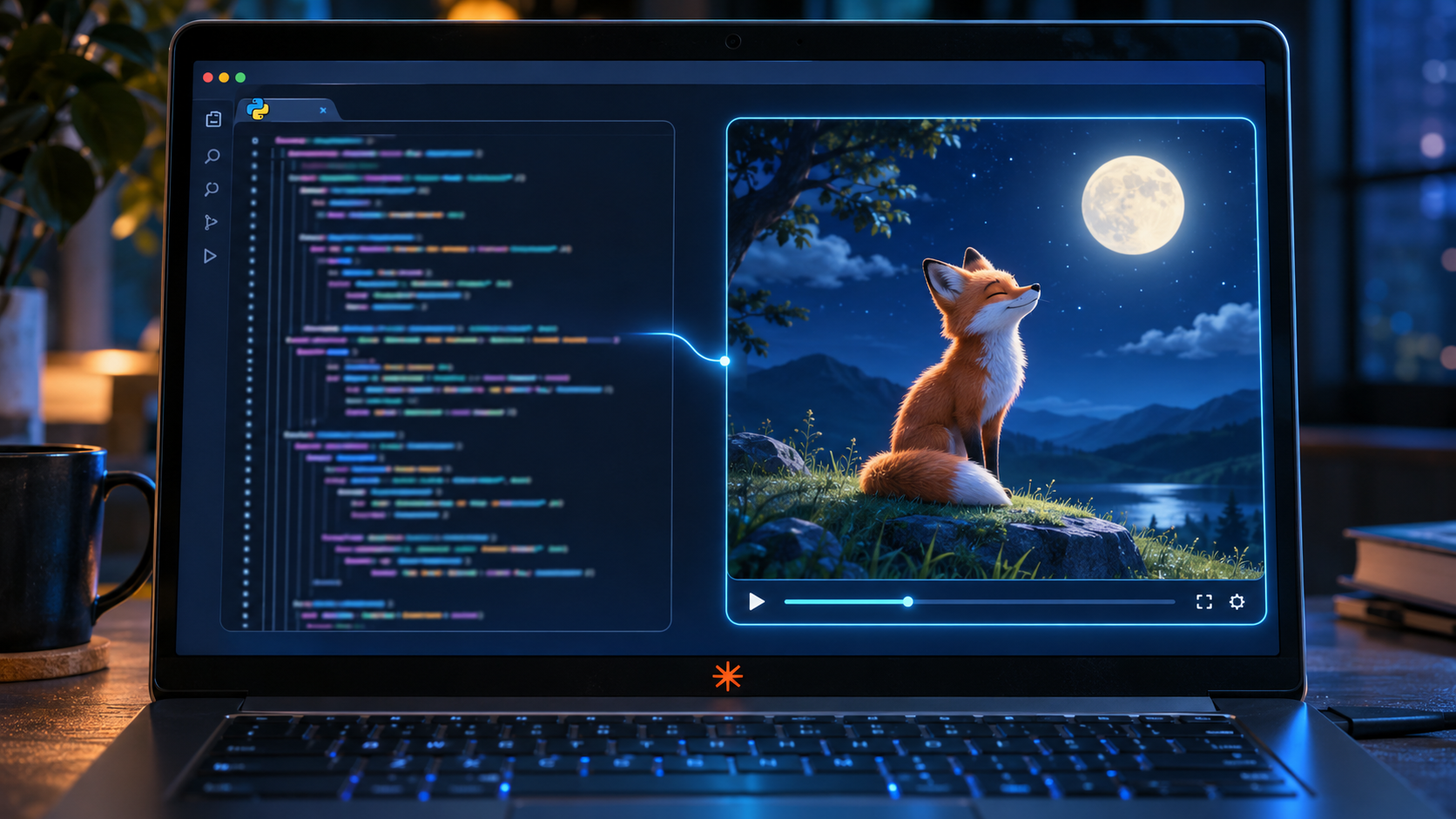
On November 2, 2026, an AI developer posting as Chetaslua published a 66-second animated short on X and said it was made by Claude Fable 5.5. The short is 1920×804 at 24fps, contains a fox, paper birds, clouds and lettering, and includes score and sound effects. According to the post, every frame and every sound was generated by Python code the model wrote itself, with no image model, no stock assets, no audio samples and no font files. The output was a single HTML file. The model worked autonomously for about 2 hours and 40 minutes.
Other developers posted interactive 3D scenes attributed to the same model, including sailing ships, waves and sports cars, built with Three.js and controllable through simple prompts. In comparison tests, some existing Claude models reportedly produced incomplete code or animations that failed to run, while the attributed Fable 5.5 output completed within about an hour.
Anthropic has not confirmed any of it. The official model catalog lists Fable 5.1, not 5.5. There is no published model card, no API identifier, no benchmark entry. The release evidence consists of a transient claude-fable-5-5 string in a third-party Azure directory in mid-October and a Claude Mythos 5.5 reference in page source code.
So the first question is not what Fable 5.5 can do. It is how anyone knows the model behind these demos is Fable 5.5.
The attribution is a claim, not a fact
The demos are real in the sense that files exist and can be opened. The attribution is not verified.
Developers may have accessed a pre-release model through a private channel. They may also have produced stronger-than-usual results on Fable 5.1 and labeled them Fable 5.5. From outside Anthropic, neither possibility can be excluded. The only public signals are a temporary directory string and an unannounced source-code reference, neither of which establishes that a functioning model is available to the people posting demos.
That gap matters because the demo's value does not depend on the model name. The technique on display is what makes it interesting. If the same output came from Fable 5.1, the technical point would be identical.
Code is the medium, not pixels
The contrast with Sora and Runway is the part most coverage states and then moves past.
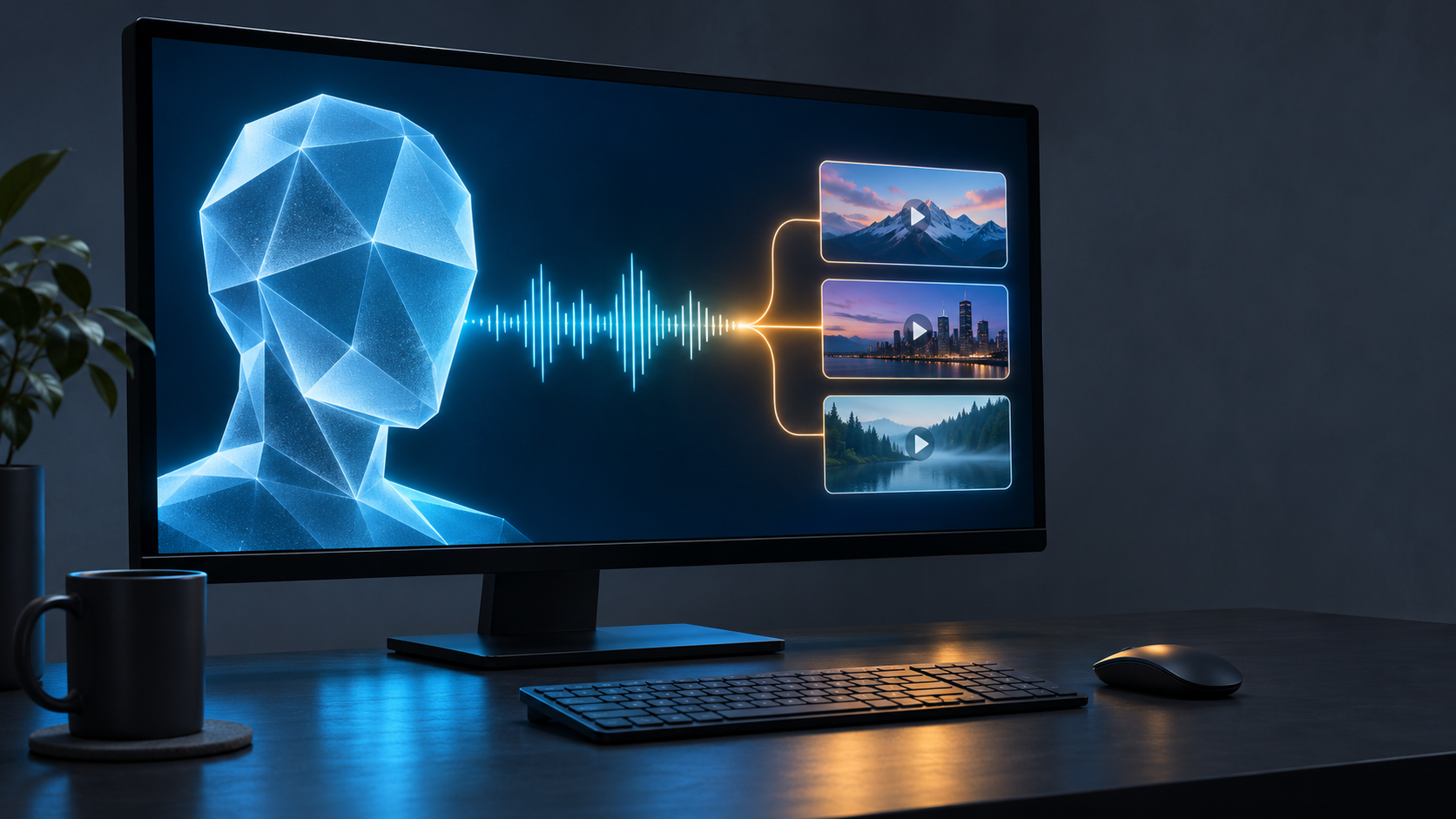
Sora generates pixels. The output is a video file. You can watch it. You cannot inspect how each frame was computed, because there is no intermediate representation to inspect.
The demo attributed to Fable 5.5 generates a program. The output is an HTML file with Python-generated frames, sound and timing. Every visual decision exists as code. You can open it, read the parameters, change the frame rate, swap a color, rerun it and see a different result. The artifact is inspectable in a way that generated pixels are not.
That distinction changes what AI-generated content means for anyone who needs to trust it. A generated video is an assertion: this is what the output looks like. A generated program is a mechanism: this is how the output is produced. The first can only be judged by watching. The second can be judged by reading.
The demos are not a claim that Fable 5.5 is better than Sora at making animation. They are a demonstration that a language model can build the system that makes the animation. The model is not the renderer. It is the author of the renderer.
2 hours 40 minutes measures endurance, not speed
The duration is the second number most coverage highlights and least explains.
It is not generation speed. 66 seconds of animation took 2 hours and 40 minutes of work, which is slower per second of output than a video model. It measures how long the model can keep working without a human stepping in: writing code, running it, seeing an error, fixing it, running it again, until the animation is complete.
That is a different capability from single-turn answer quality. It is the ability to sustain a task across many failure cycles. OpenAI's GPT-6.2 Astra is being built in the same direction, with reporting describing a rebuild that lets the model spawn subprocesses and work for hours. Both are chasing the same threshold: an agent that can be left alone long enough to finish something non-trivial.
The demo does not prove the threshold has been crossed. It shows one task, one developer, one output. But it shows the shape of the test. Endurance is measured in hours of unsupervised iteration, and nobody has a standardized way to measure it yet.
What the demo is actually evidence for
The most defensible claim is not that Fable 5.5 exists or that Anthropic has a new flagship. It is that a model behind these demos can write a working animation system from scratch, run it for hours, and produce an output that a human can inspect, modify and rerun.
That is a more useful capability than a prettier video. It is also harder to demo in a headline. A 66-second animation is a product. An auditable HTML file is a foundation. The headline went to the animation, but the foundation is what matters.
P.S. Anthropic has not confirmed Fable 5.5, and the demos may not be what they claim. But the files are real, and they are code. That is the part worth keeping: a model that builds a system you can read is more useful than a model that builds a video you can only watch.
Frequently Asked Questions
Q: Is Fable 5.5 officially released?
A: No. Anthropic has not confirmed the model. Its public catalog lists Fable 5.1, and there is no published model card, API identifier or benchmark entry. The only signals are a temporary third-party directory string and an unannounced source-code reference.
Q: How do we know the demos were made by Fable 5.5?
A: We do not. The developers who posted the demos say the model was Fable 5.5, but Anthropic has not confirmed it. The demos could come from a private pre-release model or from Fable 5.1. The files are real; the attribution is not verified.
Q: What makes these demos different from Sora or Runway?
A: Sora generates pixels. The demos attributed to Fable 5.5 generated a program: an HTML file with Python code that renders every frame and sound. The output is inspectable and modifiable, not just watchable.
Q: What does 2 hours 40 minutes measure?
A: It measures how long the model worked without a human stepping in, not generation speed. It wrote code, ran it, saw errors, fixed them and continued until the animation was complete. It is a measure of autonomous endurance, not throughput.
Q: Is this evidence that Anthropic has a new flagship?
A: It is evidence that a model behind the demos can build a working animation system from code and sustain the task for hours. Whether that model is Fable 5.5, and whether it ships, is unconfirmed.
Q: Why does the code-based approach matter?
A: Because a generated program can be read, audited, modified and rerun. A generated video can only be watched. For anyone who needs to trust AI output, an inspectable mechanism is more useful than a polished artifact.