
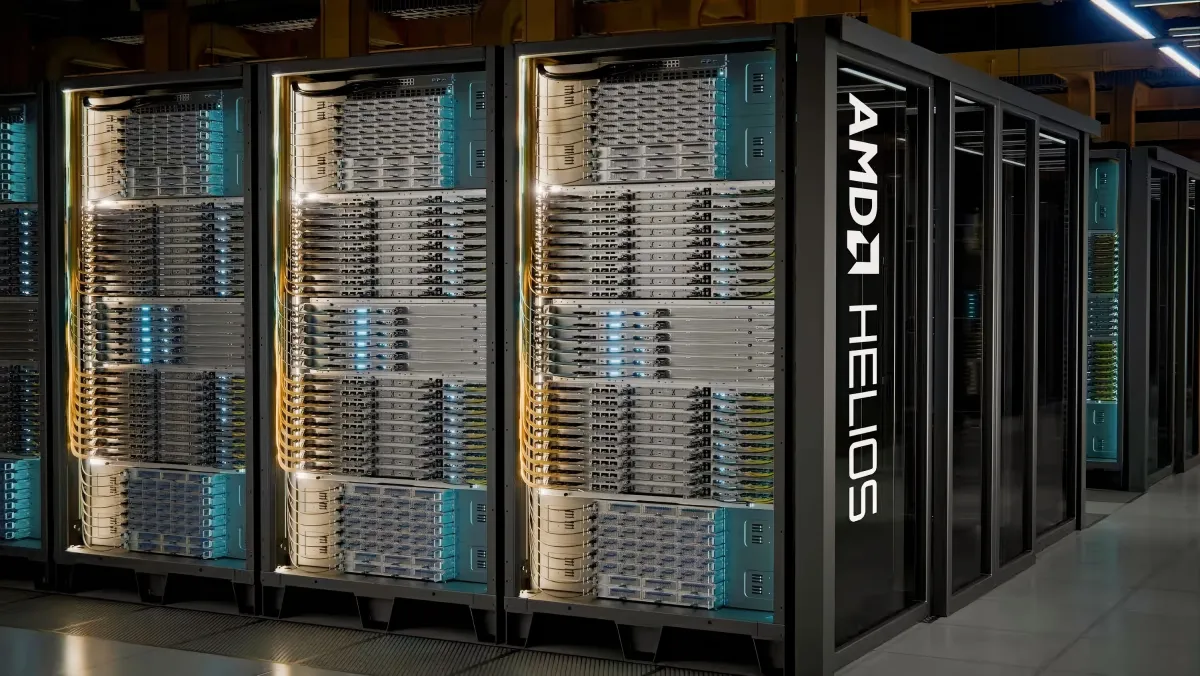
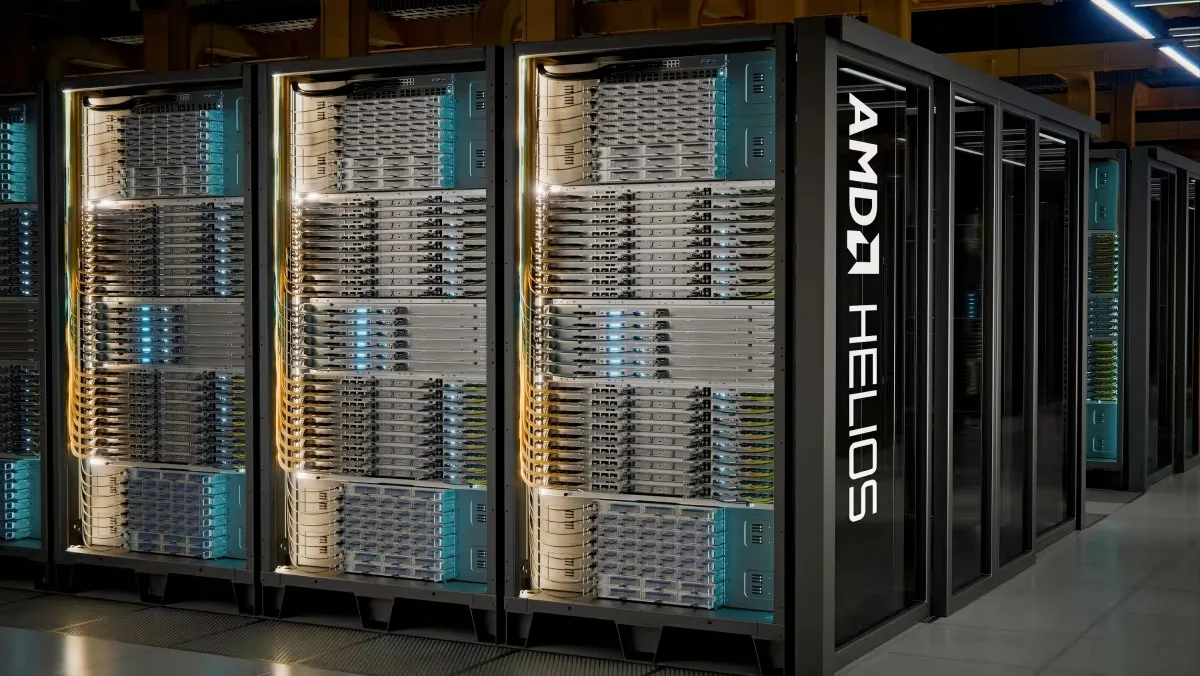
On July 23, two things happened.
AMD held its Advancing AI 2026 conference in San Francisco and launched Helios, its first rack-scale AI system . 72 Instinct MI455X GPUs, 18 Venice CPUs, Pensando networking, ROCm software. 2.9 EFLOPS of FP4 compute — 15% more than Nvidia's Vera Rubin NVL72 . 31TB of HBM4 memory — 50% more than the competition . AMD claims Helios delivers up to 30% more tokens per dollar in certain inference workloads .
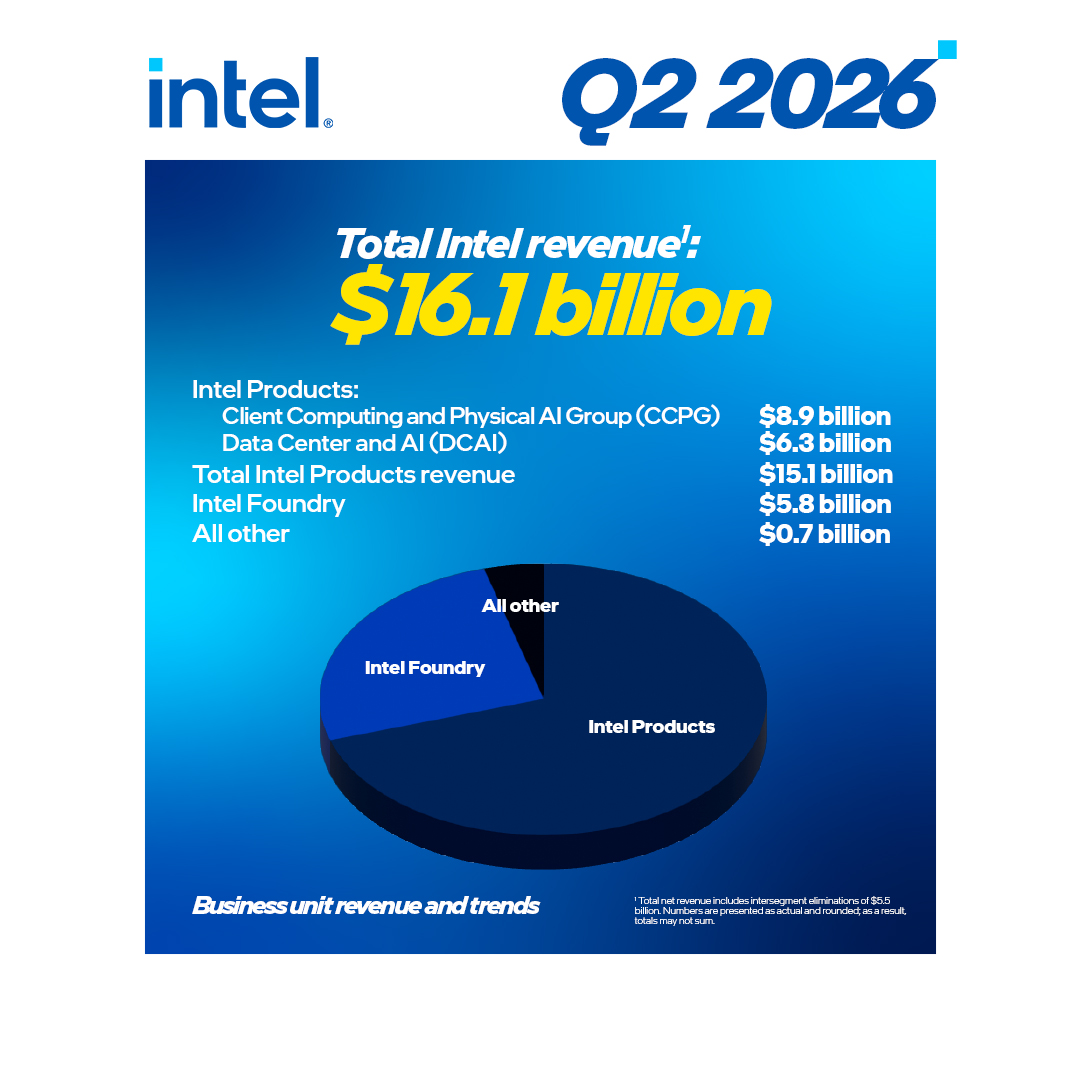
The same day, Intel reported its best quarter in 15 years. Revenue of $16.13 billion, up 25%. Data center and AI revenue: $6.3 billion, up 59% . CEO Lip-Bu Tan said: "In the data center, CPU is taking off" .
These two events are connected by a single trend: the AI chip market is no longer a one-company story.
Helios: AMD's Full-Stack Response to Nvidia
Helios is not just a GPU. It is a complete system. 72 GPUs, 18 CPUs, network fabric, software. AMD is now selling a rack, not a chip .
The MI455X is the centerpiece. 432GB of HBM4 memory — 50% more than Nvidia's Rubin — and 23.3TB/s of memory bandwidth . In high-concurrency inference, AMD claims MI455X token throughput is up to 34x higher than the previous generation MI355X .
The customers are already lined up: OpenAI, Anthropic, Meta, Microsoft, and Oracle have all committed to Helios . OpenAI expects to bring Helios online in Q4 2026, with deployments accelerating through 2027 . Anthropic signed a deal to deploy up to 2 gigawatts of AMD MI450 GPUs starting in early 2027 .
The open architecture is a deliberate choice. Helios uses UALink (UAL over Ethernet) for scale-up networking and Ultra Ethernet for scale-out — both open standards, not proprietary . This contrasts with Nvidia's NVLink, which is proprietary and vendor-locked.
But the software gap remains. Nvidia's CUDA ecosystem has a 15-20 year head start . AMD's ROCm is improving — and the partnership with Anthropic to use Claude to accelerate ROCm development is a direct response — but the gap is still real .
Intel: The CPU Rebound
Intel's earnings showed a shift the market has been waiting for. As AI workloads move from training to inference to agents, CPU demand is surging .
Agentic AI requires both GPUs for compute and CPUs for orchestration. The second quarter saw server CPU revenue grow at a record rate. Intel is signing long-term supply agreements — 10 deals locked in .
CEO Lip-Bu Tan described it as a "sweet problem": demand is exceeding supply .
The New Shape of the AI Chip Market
The chip market is no longer binary — Nvidia vs. everyone else. AMD is now a credible system competitor. Intel is proving CPU demand is real. Both are seeing orders from the same customers who used to buy only Nvidia.
The competition has moved up the stack. It's no longer just about GPU performance. It's about rack throughput, token economics, and open standards . The AI infrastructure market is large enough for more than one winner.
P.S. If you're an enterprise AI buyer, the math just changed. AMD Helios offers 30% more tokens per dollar than Nvidia Vera Rubin — if ROCm works for your workloads. Intel is now a serious data center option again. The market is moving toward real competition, and that's good for everyone who buys chips.