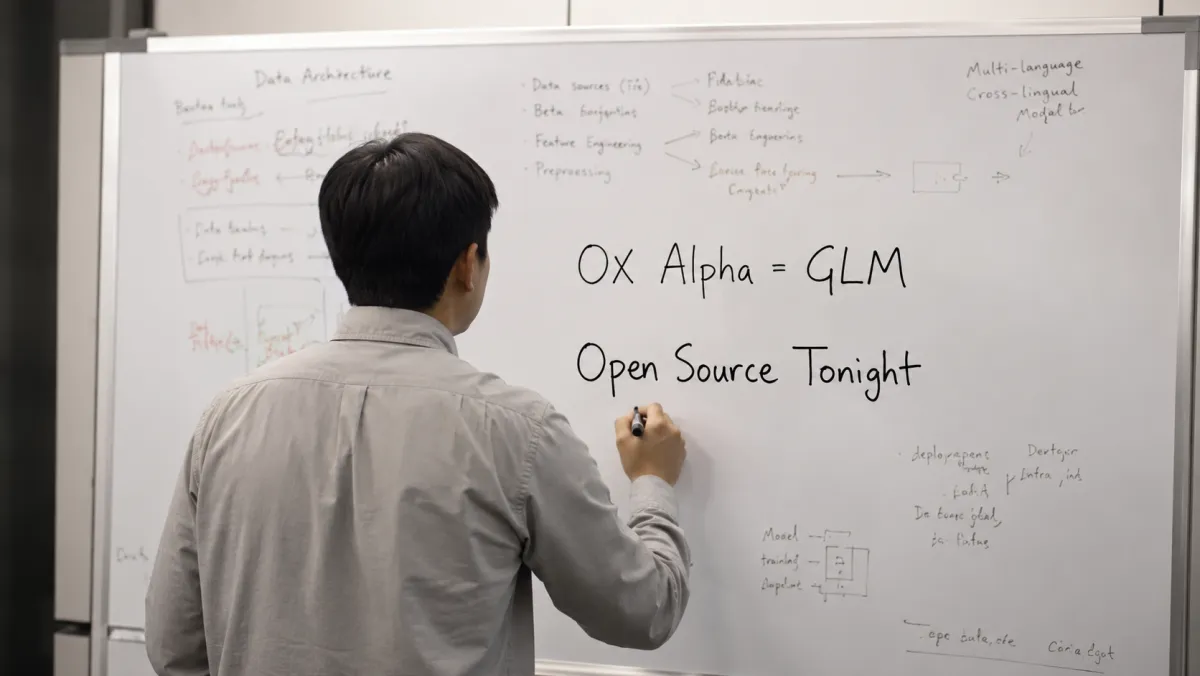
On August 26, Zhipu confirmed that Ox Alpha is its GLM series and announced it will release the model weights tonight. The model appeared on OpenRouter on August 20 as an anonymous "stealth model"—no provider, no name, no price tag. By August 24, OpenCode reported 327,000 unique users processed 26 trillion tokens through the model. OpenRouter separately counted 11.6 trillion tokens in its first three days—the largest model launch in the platform's history. Stripe CEO Patrick Collison called it "very impressive."
The speculation was intense. Tokenizer analysis pointed to Zhipu's GLM-5 family. Video encoding patterns matched GLM-5V-Turbo. Error codes matched Zhipu's API. But Zhipu stayed silent—until now.
The confirmation is not the real news. The open release is.
260,000 Developers Tried It. Then They Asked: "Who Made This?"
Ox Alpha's performance was what turned anonymity into hype. Developer Ben Davis ran 10 DeepSWE coding tasks—Ox Alpha passed eight. Claude Fable 5 scored 65%; GPT-5.6 Sol scored 52%.
The sample was small, but the margin was large. A larger 113-task run settled around 63%—closer to Claude Opus 4.8 than to a decisive victory over Fable 5. But even the lower number was competitive with models that cost real money.
The free price was the other driver. OpenCode prepared 100 trillion tokens of daily capacity. Actual usage averaged 6.5 trillion per day—still enough to make Ox Alpha the second most-used model on OpenCode behind DeepSeek V4 Flash.
Zhipu Has Run This Play Before
This is not Zhipu's first anonymous launch. In February, the company released "Pony Alpha" on OpenRouter, later confirmed as GLM-5. In its technical report, Zhipu called this a "blind test"—a deliberate attempt to let the model be judged on capability alone, without brand bias.
The pattern is now repeated. An anonymous model appears. Developers test it. The community debates who built it. The mystery itself becomes the marketing engine.
Alibaba, Xiaomi, and ByteDance have all used similar stealth releases this year. A branded launch relies on press releases and benchmark claims. A stealth launch generates organic buzz by being discovered. The speculation phase extends the news cycle far longer than a traditional announcement.
Free for a Week. Open Forever.
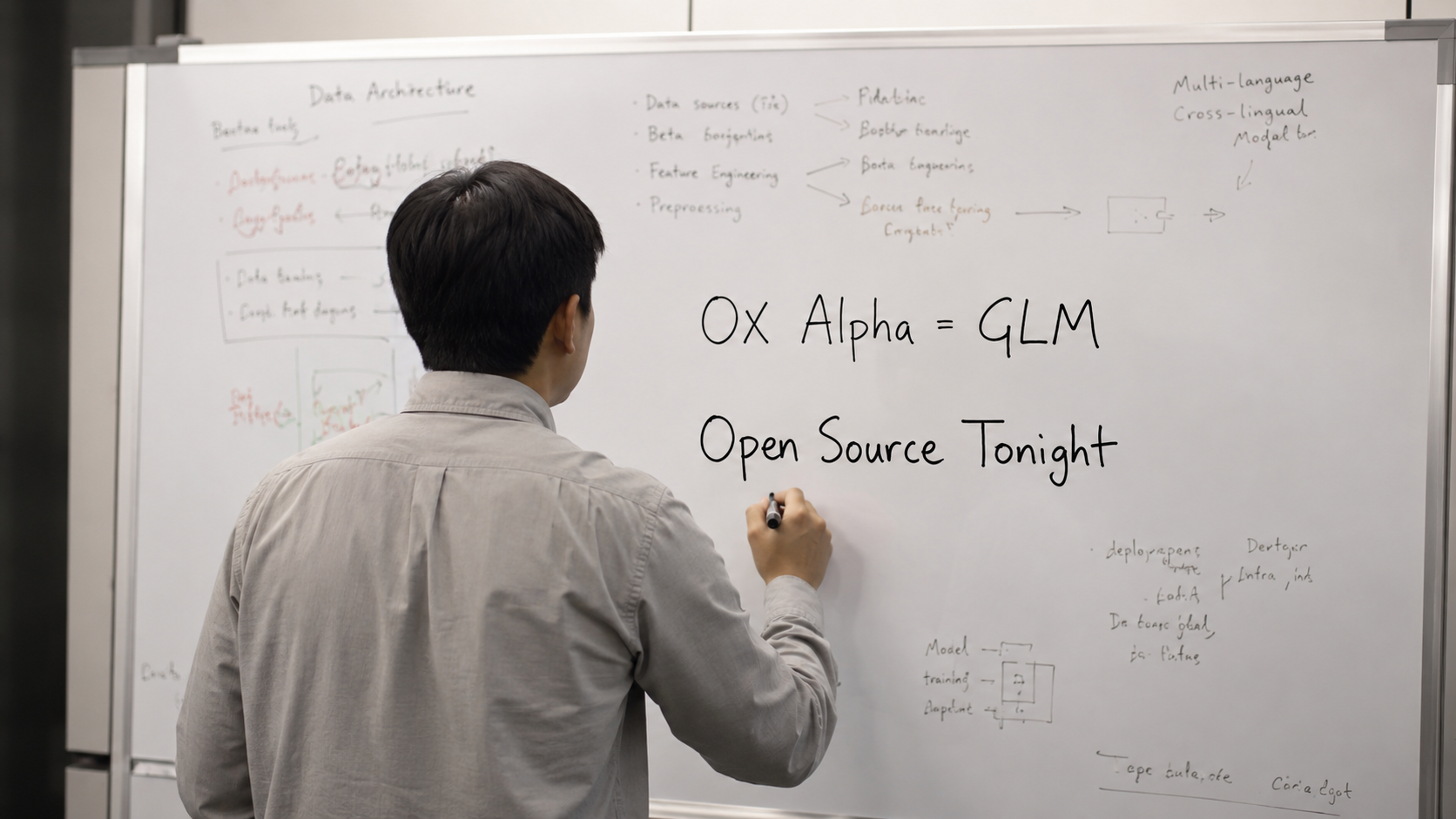
The confirmation is important. The open release is more important. Tonight, the model weights become available for any developer to download, modify, and deploy.
This is the difference between "try this model for free for a week" and "build your business on this model forever." Zhipu is not just proving a capability—it is building an ecosystem.
The competitive positioning is clear. DeepSeek has Harness as its open agent framework. Alibaba has Qwen's 151,000+ derivative models on Hugging Face. Zhipu now has Ox Alpha—a model that was already battle-tested by 300,000 developers before it even had a name.
The open release also completes the narrative arc. The anonymity was a marketing stunt, but the open weights are a commitment. Zhipu is betting that developers who tried Ox Alpha for free will build on it when it's open.
What It Means
Ox Alpha's journey—anonymous launch, community discovery, identity confirmation, open release—is a new product playbook for the AI industry. It compresses the entire life cycle of a model launch into one week: test, validate, confirm, release.
The anonymity was never about hiding. It was about letting the model speak for itself. And the model spoke loudly enough that the only thing left to say was "this is ours."
P.S. The free preview window is expected to end August 26—coinciding with the open release. The developers who used Ox Alpha for free this week now have a choice: build on the open weights, or wait for the next anonymous model to appear. Zhipu just bet they'll choose the former.
Frequently Asked Questions
Q: What is Ox Alpha?
A: Ox Alpha is a large language model that appeared anonymously on OpenRouter on August 20, 2026. On August 26, Zhipu confirmed it is the latest iteration of its GLM series and announced it would release the model weights that night.
Q: Why was Ox Alpha released anonymously?
A: Zhipu used the anonymous release as a marketing tactic—similar to its earlier "Pony Alpha" release. The anonymity generated organic buzz as developers tested the model, shared results, and debated its origin. The speculation phase extended the news cycle far longer than a traditional launch.
Q: How well did Ox Alpha perform?
A: Developer Ben Davis ran 10 DeepSWE coding tasks—Ox Alpha passed eight (80%). Claude Fable 5 scored 65%; GPT-5.6 Sol scored 52%. Larger sample sizes in the community settled around 63%—closer to Claude Opus 4.8 than to a decisive victory over Fable 5.
Q: How many developers tried Ox Alpha?
A: OpenCode reported 327,000 unique users processed 26 trillion tokens through the model. OpenRouter separately counted 11.6 trillion tokens in its first three days—the largest model launch in the platform's history.
Q: Why is open-sourcing Ox Alpha significant?
A: The open release means developers can download, modify, and deploy the model for free—not just try it for a week. Zhipu is building an ecosystem around a model that was already battle-tested by over 300,000 developers.
Q: What is the "stealth model" playbook?
A: The pattern is: anonymous release, community discovery, identity confirmation, and open-source release. Zhipu used this playbook earlier with "Pony Alpha" (which became GLM-5). Alibaba, Xiaomi, and ByteDance have also used similar stealth releases this year.
Q: How did the community identify Ox Alpha?
A: Tokenizer analysis pointed to Zhipu's GLM-5 family. Video encoding patterns matched GLM-5V-Turbo. Error codes matched Zhipu's API. Developer fingerprints across 95 test prompts all matched Zhipu's GLM vocabulary.
Q: Was Ox Alpha's performance consistent?
A: Performance varied by benchmark. Early numbers showed an 80% pass rate on 10 tasks. Larger runs settled around 63%—still competitive with paid models. On reasoning benchmarks, it lagged behind some competitors.
Q: What does this mean for the AI industry?
A: Ox Alpha's journey—anonymous launch, community discovery, identity confirmation, open release—is a new product playbook. It compresses the entire model launch life cycle into one week: test, validate, confirm, release. The mystery was the marketing; the open weights are the strategy.
Q: What happens after the open release?
A: The free preview window ended on August 26, coinciding with the open-source release. Developers can now build on the open weights. Zhipu is betting that developers who tried Ox Alpha for free will build on it when it's open.