
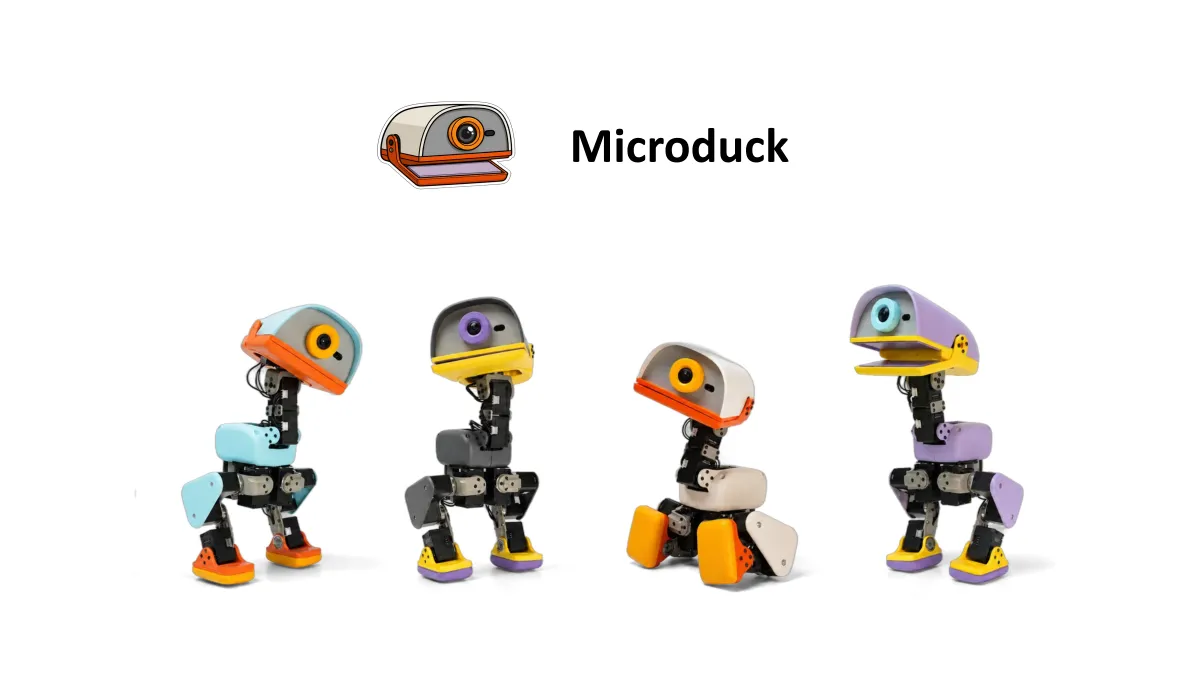
On August 27, Hugging Face released the Microduck—a $399 duck-shaped robot developed with Pollen Robotics. Pre-orders hit the e-commerce backend limit within hours. Within three days, over 10,000 units were sold, generating more than $4 million in revenue. First shipments were planned for Christmas 2026, but the backlog now means 4–6 month delays.
The robot walks, skates, picks up objects, and recovers from falls. Developers can train new behaviors in simulation and deploy them to the physical robot. But the detail that matters most is the one inside: the Microduck runs on a Rockchip RK3566 with an integrated AI accelerator.
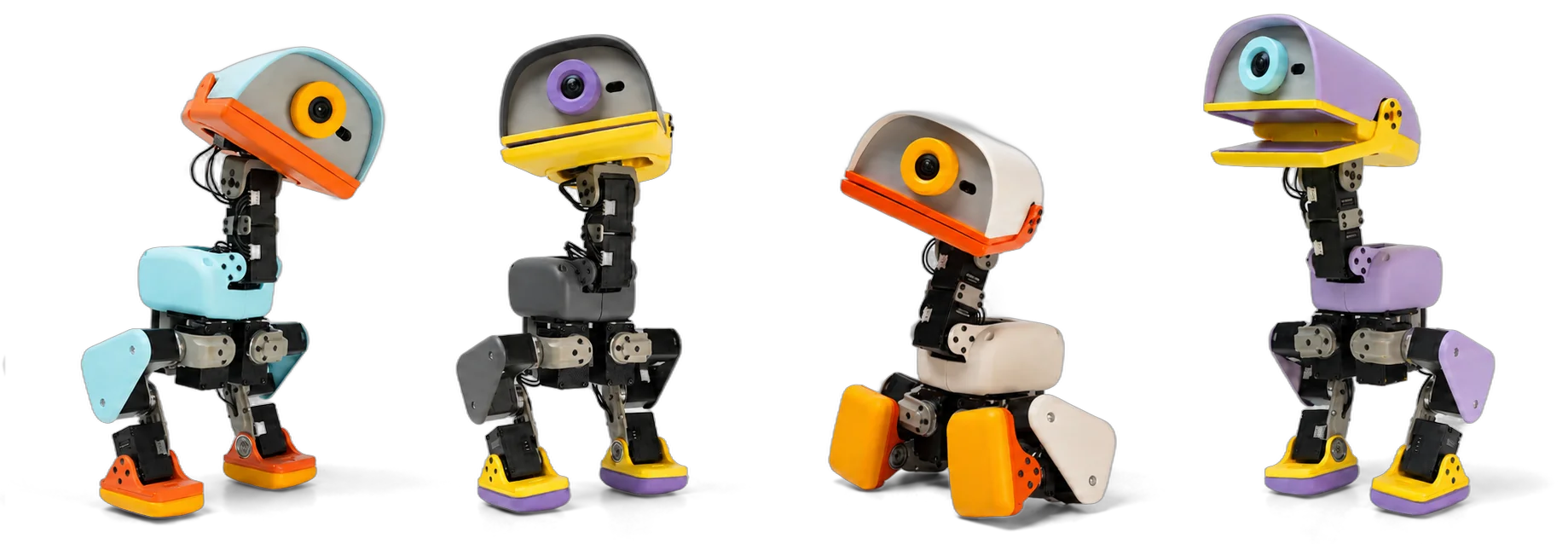
10,000 Units. $4 Million. In Three Days.
Microduck is not a niche developer toy. It's a signal. AI is moving from chatbots to physical hardware—and consumers are ready to buy.
The sales velocity is what matters. Pre-orders surpassed $2.6 million in value within 24 hours. Hugging Face co-founder Thomas Wolf posted that the surge was so strong it hit the e-commerce backend limit. The demand isn't speculation. It's real orders.
For comparison, the Microduck launch exceeded the sales trajectory of the Raspberry Pi 5's initial pre-order surge—a benchmark for open-source developer hardware. This suggests the robotics developer market has reached the same inflection point.
Train in Simulation. Deploy to the Duck.
Microduck is not a toy. It's a robotics development platform packaged as a consumer product. The robot ships with pre-trained behaviors—walking, skating, self-recovery. The full software stack is open-source on GitHub.
The key feature is the sim-to-real pipeline. Developers can train new behaviors in simulation using MuJoCo and reinforcement learning, then deploy the trained neural policies directly to the physical robot. The hardest problem in robotics is now accessible for $399.
Hugging Face CEO Clément Delangue summed it up: the platform allows developers to train new behaviors in simulation and deploy them to the robot. The entire robotics stack—simulation, training, deployment—fits in a single workflow.
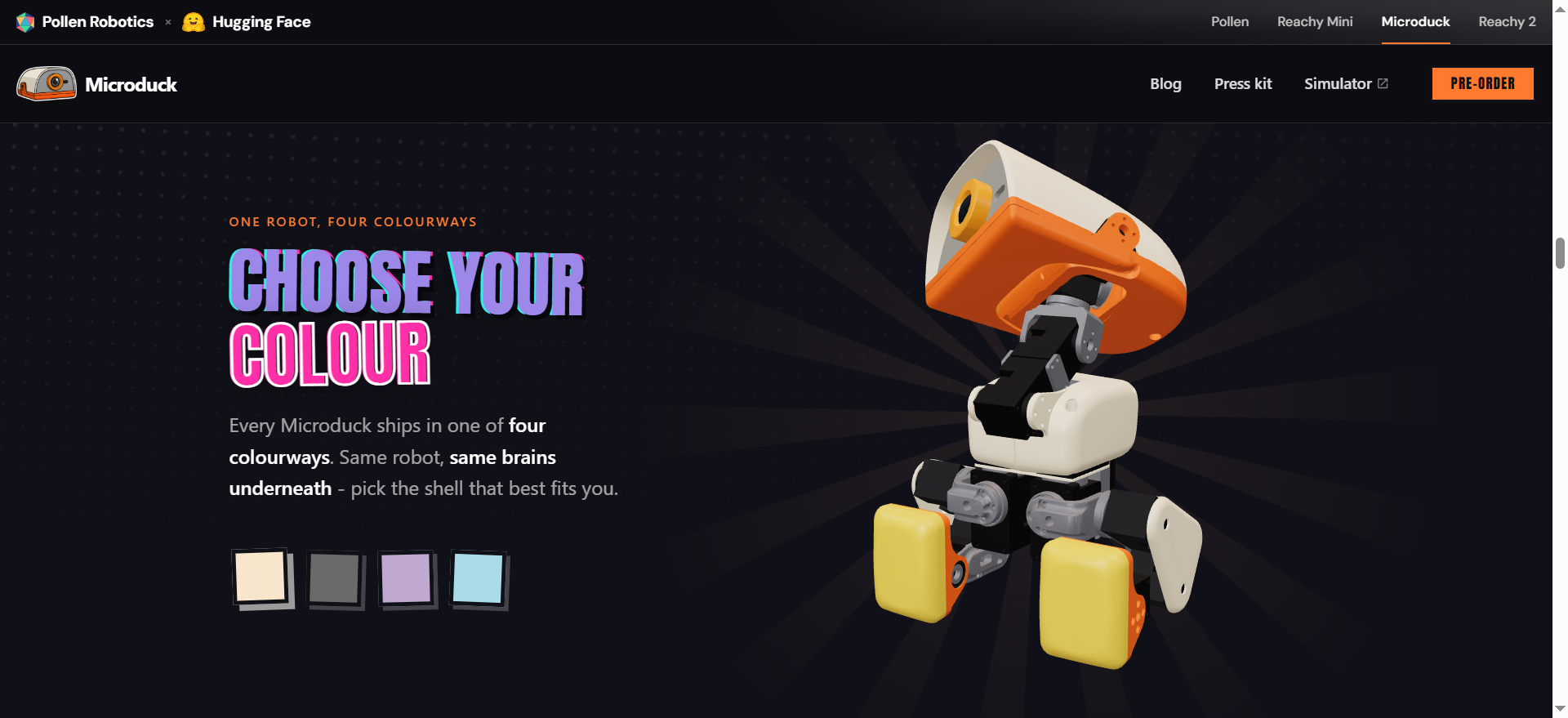
The $399 Robot Has a Chinese Chip Inside
The Microduck's processor is a Rockchip RK3566, a 22nm chip manufactured in China with an integrated AI accelerator. The processor is supported by 1GB of RAM and 32GB of flash storage. The device includes 15 motors, a camera, a LiDAR sensor, two IMUs, microphones, speakers, and a gripper beak.
The Rockchip RK3566 uses ARM architecture—a British design. The chip is manufactured in China. The robot is designed by a French company. The platform is distributed by a company being acquired by Nvidia, which has its own chip ambitions in China.
This is not a new story. But it's a reminder that the AI hardware supply chain is already global—and Chinese chip companies are competing on integration, power efficiency, and time-to-market, not just cost.
Hugging Face Isn't Selling Ducks—It's Selling the Platform
Microduck is Pollen Robotics' second consumer robot. The first, Reachy Mini, also sold more than 10,000 units. Pollen was acquired by Hugging Face in 2025. This is not a side project. It's a deliberate strategy.
Hugging Face is building a robot platform that developers can actually afford, with an open software stack, simulation tools, and reinforcement learning infrastructure. Microduck is the physical analog of what Hugging Face did with models: aggregate, standardize, and open-source.
The timing with the Nvidia acquisition is not accidental. In the same week Nvidia agreed to buy Hugging Face, the company launched a physical product that demonstrates exactly why Nvidia wanted it. Not for the revenue. For the ecosystem.
P.S. Microduck's success is not about the hardware. It's about the platform. The robot is cute, but the skate mode is a gimmick. The real signal is that 10,000 developers and hobbyists are willing to spend $399 on a robotics dev kit. The demand for accessible, open-source physical AI is real. And the only way to build that market is to make it cheap enough to break and try again.
Frequently Asked Questions
Q: What is the Hugging Face Microduck?
A: The Microduck is a $399 duck-shaped robot developed by Hugging Face and Pollen Robotics. It can walk, skate, pick up objects, and recover from falls. It's designed as an open-source robotics development platform for developers and hobbyists to train new behaviors in simulation and deploy them to the physical robot.
Q: How many units sold, and how fast?
A: Over 10,000 units were sold within three days of the August 27 launch. Pre-orders hit the e-commerce backend limit within hours. The initial $2.6 million order volume in the first 24 hours surpassed the benchmark for open-source developer hardware, exceeding the Raspberry Pi 5's initial pre-order trajectory.
Q: What is the price?
A: $399 per unit.
Q: When will shipments begin?
A: First shipments were planned for Christmas 2026. Due to the backlog, new orders now face 4–6 month delays.
Q: What processor does the Microduck use?
A: The Microduck uses a Rockchip RK3566, a 22nm chip manufactured in China with an integrated AI accelerator. It uses ARM architecture and is supported by 1GB of RAM and 32GB of flash storage.
Q: What sensors and actuators does it have?
A: The device includes 15 motors, a camera, a LiDAR sensor, two IMUs, microphones, speakers, and a gripper beak for picking up objects.
Q: What can developers do with it?
A: Developers can train new behaviors using simulation (MuJoCo) and reinforcement learning, then deploy the trained neural policies to the physical robot. The full software stack is open-source on GitHub. It comes with pre-trained behaviors including walking, skating, and self-recovery.
Q: What is the sim-to-real pipeline?
A: The sim-to-real pipeline is the process of training an AI model in a simulated environment and then deploying it to a physical robot. This is one of the hardest problems in robotics—packaged and accessible for $399 with the Microduck.
Q: How does this relate to the Nvidia acquisition?
A: Hugging Face is being acquired by Nvidia for $12.9 billion. The Microduck launch in the same week demonstrates exactly why Nvidia wanted Hugging Face: not for the revenue, but for the open-source physical AI ecosystem. The robot is a proof of concept for the platform.
Q: Is Microduck Pollen Robotics' first robot?
A: No. Pollen Robotics previously released Reachy Mini, which also sold over 10,000 units. Pollen was acquired by Hugging Face in 2025. Microduck is the second consumer robot from the combined platform.