
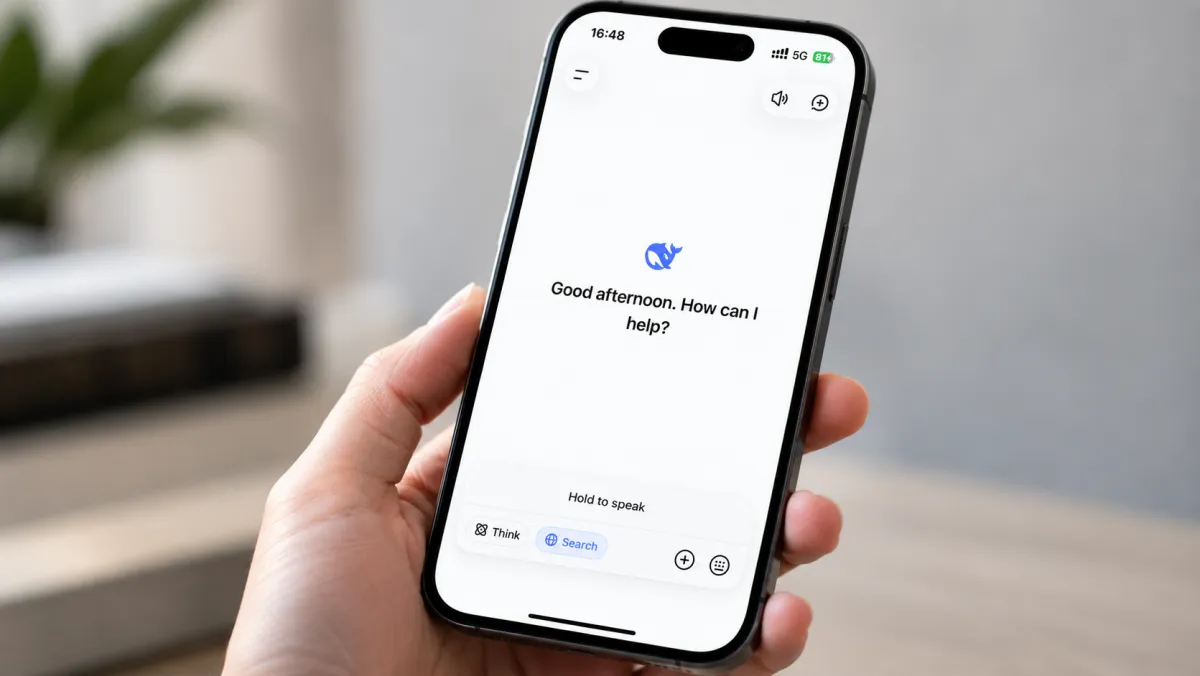
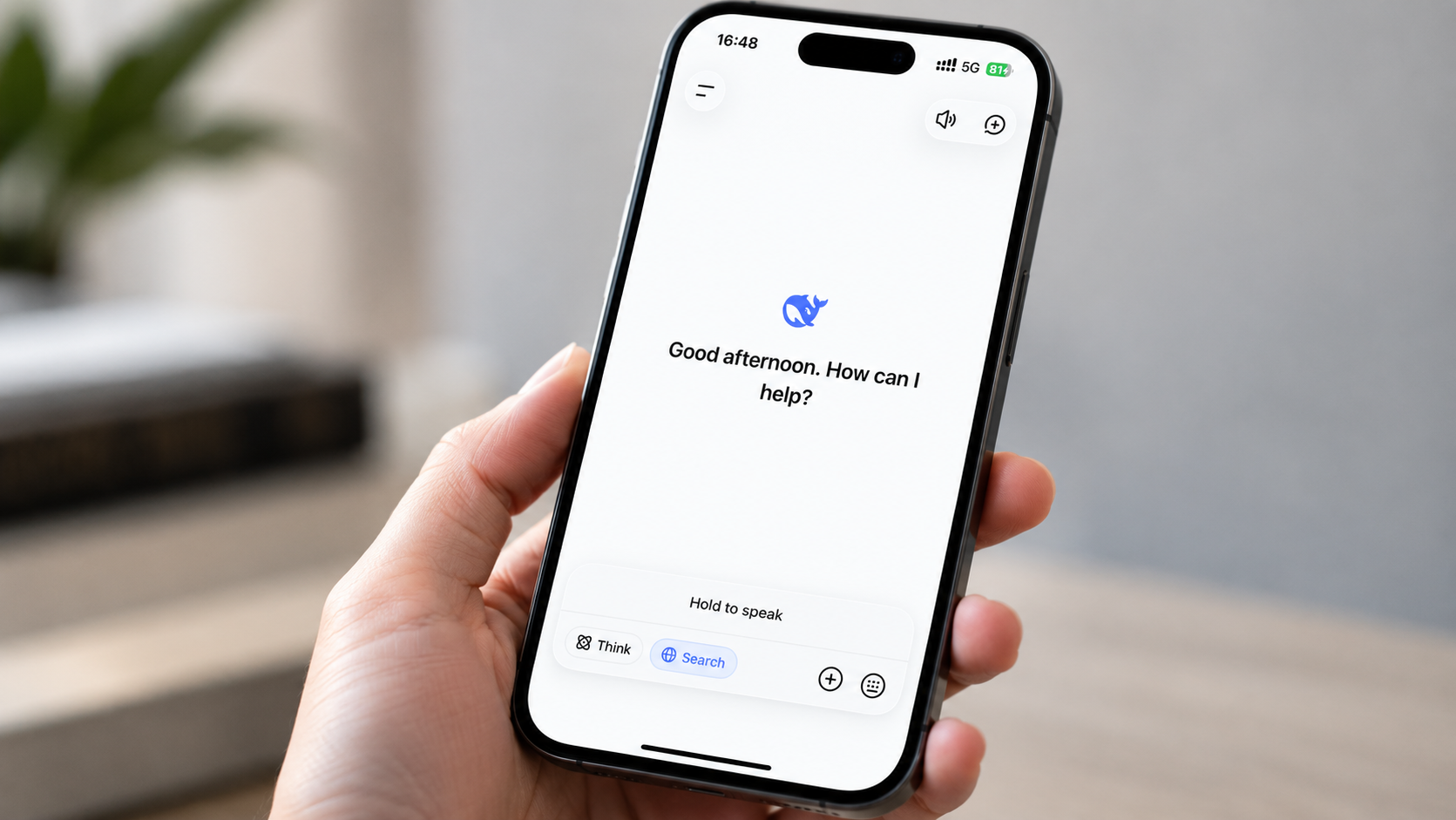
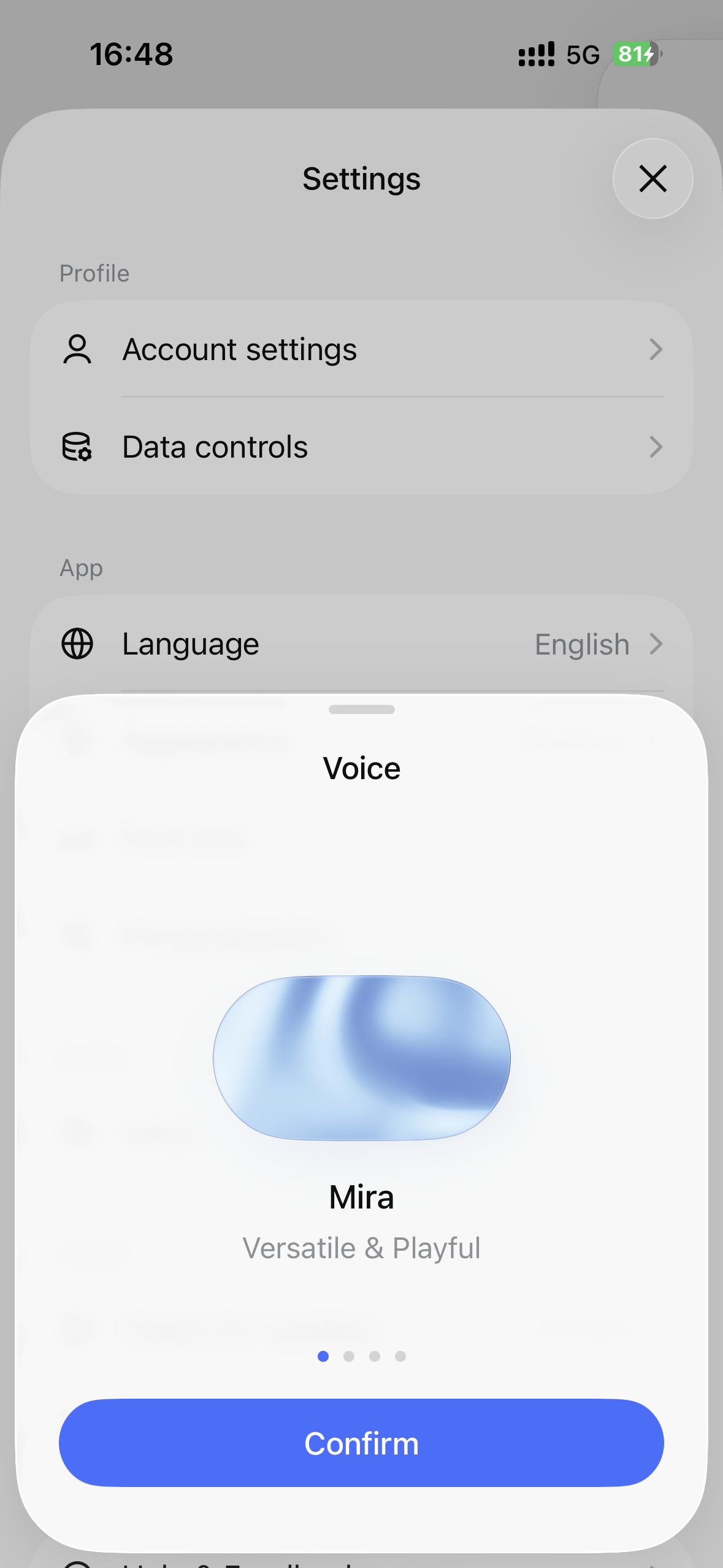
On September 12, DeepSeek began a gray-scale test of voice output in its mobile app. Users selected for the test see a small speaker icon in the top-right corner. The settings page gained a “Read Aloud Voices” option with four Chinese voice profiles: Shell (playful), White Wave (firm), Starfish (sweet), and Dark Tide (deep).
The feature completes a loop. DeepSeek already supported “hold to talk” voice input that transcribed speech into text. The model responded in text. Now it can respond in audio as well.
Multiple outlets described this as “voice conversation” testing. DeepSeek's own UI calls it reading aloud. The difference matters.
Full-Duplex Is a Different Feature
Real-time voice conversation requires a different architecture. OpenAI's GPT-Live, launched in July, is built on a full-duplex model that can listen and speak simultaneously, making decisions multiple times per second about whether to talk, pause, interrupt, or call a tool. It uses acknowledgment phrases like “mm-hm” to signal it is still listening. It can translate in real time while a conversation continues.
ByteDance's SeedRealtime, released in August, does the same for audio and video. It handles background noise, distinguishes between speakers, and judges when to interject without being triggered by nearby chatter. It is already deployed across the Doubao app.
DeepSeek's gray-scale feature does not do any of that. It reads text responses aloud. The user still types or speaks into a transcription layer. There is no simultaneous listening, no interruption handling, no barge-in support. The official description offered no mention of full-duplex capability, and DeepSeek has not said whether it is in development.
The Thinking Latency Problem
There is a structural reason DeepSeek may be moving slowly on real-time voice.
DeepSeek's model line is optimized for deep reasoning and long chains of thought. That is the source of its strength on complex coding, analysis, and multi-step problems. It is also the source of its latency. A locally deployed DeepSeek-R1 model showed median response times of 26.54 seconds on complex diagnostic queries in one peer-reviewed evaluation — far beyond what conversational speech can tolerate.
OpenAI's GPT-Live solves this by splitting the work. The voice model handles conversation flow and delegates heavy reasoning to a separate frontier model in the background, keeping the talk going while the computation happens.
DeepSeek has not announced a comparable architecture. Its V4.1 Flash, released September 10, emphasizes faster inference and higher throughput. That could be a foundation for lower-latency voice. But speed improvements in text generation do not automatically translate into the sub-second decision loops that full-duplex conversation requires.
Four Voices, One Signal
The voice naming is a product signal, not a gimmick. The four profiles map to distinct use cases: Shell for casual chat, White Wave for reading news, Starfish for emotional content, Dark Tide for long documents. They are deliberately limited in number. DeepSeek is not shipping dozens of celebrity voices or emotional modulation features. It is shipping four voices that can be switched, disabled, and controlled.
Testers reported the voices sound “fairly natural” but carry “a slight AI flavor.” Long sentences have uneven pacing. One tester noted that when the model reads lyrics, it tries to sing, and the results are audibly off-key.
That detail is small but revealing. DeepSeek is building toward expression, not just pronunciation. It just is not there yet.
What the Gap Actually Measures
The distance between “read aloud” and “talk” is not a feature toggle. It is an architectural difference. Full-duplex conversation requires a model that can process input and generate output in parallel, decide in real time when to yield the floor, and manage latency budgets measured in hundreds of milliseconds.
OpenAI and ByteDance have shipped that. DeepSeek has shipped the output half of the older pipeline.
That does not make the feature useless. For users who want to listen to long answers hands-free, voice output is a real improvement. It just is not the thing the headlines are calling it.
P.S. DeepSeek has not published a timeline for full-duplex support. The gray-scale test remains limited, and the company has made no public statement about interruption handling or real-time turn-taking. If voice conversation is the goal, the next milestone to watch is not a new voice profile — it is whether the speaker icon lets you interrupt.
Frequently Asked Questions
Q: What did DeepSeek actually release?
A: On September 12, DeepSeek began a gray-scale test of voice output in its mobile app. Selected users see a speaker icon in the top-right corner and a “Read Aloud Voices” setting with four voice profiles: Shell, White Wave, Starfish, and Dark Tide.
Q: Is this real-time voice conversation?
A: No. The feature reads AI text responses aloud. It does not support simultaneous listening, interruption handling, or real-time turn-taking. DeepSeek's own UI calls it “read aloud,” not “conversation.”
Q: What is full-duplex, and why does it matter?
A: Full-duplex means the system can listen and speak at the same time, deciding multiple times per second whether to talk, pause, interrupt, or call a tool. OpenAI's GPT-Live and ByteDance's SeedRealtime both support it. DeepSeek's feature does not.
Q: Why hasn't DeepSeek shipped real-time voice?
A: Its models are optimized for deep reasoning and long chains of thought, which creates latency. One evaluation showed a locally deployed DeepSeek-R1 taking a median of 26.54 seconds on complex queries — far beyond what conversational speech can tolerate.
Q: How does OpenAI solve the latency problem?
A: OpenAI's GPT-Live splits the work. A voice model handles conversation flow and delegates heavy reasoning to a separate frontier model in the background, keeping the conversation going while computation happens.
Q: What are the four voice profiles?
A: Shell (playful), White Wave (firm), Starfish (sweet), and Dark Tide (deep). They cover casual chat, news reading, emotional content, and long documents. The naming echoes DeepSeek's blue whale brand identity.
Q: How do the voices sound?
A: Testers reported they sound “fairly natural” but carry “a slight AI flavor.” Long sentences have uneven pacing. When reading lyrics, the model tries to sing, and the results are audibly off-key.
Q: Is the feature available to everyone?
A: No. It is a gray-scale test, not a full rollout. Eligibility is controlled server-side. Web access is not supported; users need the updated mobile app.
Q: What should we watch next?
A: Whether the speaker icon lets you interrupt. Interruption handling is the defining feature of full-duplex conversation. DeepSeek has not published a timeline for it.