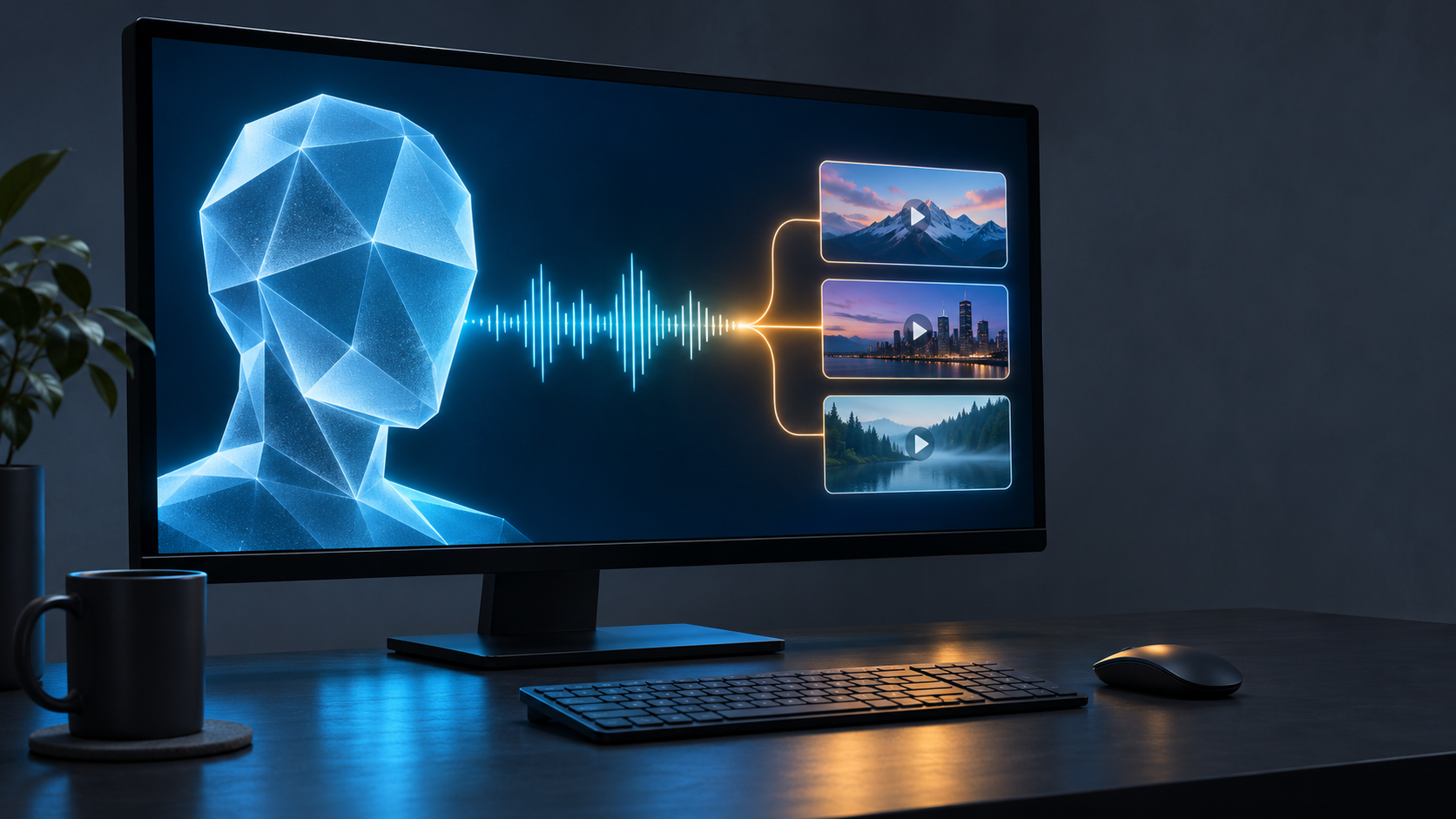
On November 20, 2026, OpenAI began rolling out ChatGPT Space globally to Plus subscribers aged 18 and older. Previously available to eligible Pro, Business and Enterprise customers, Space replaces Library with a persistent environment for documents, presentations, files and AI-powered collaboration.
Nearly two months after its DevDay debut, Space is reaching OpenAI's mainstream paid audience.
The announcement introduces no new frontier model. Instead, it changes what happens after the model finishes working. Three developments deserve attention: a privacy boundary that users may overlook, documents that maintain themselves, and a competitive strategy that extends beyond the chatbot.
Your training settings do not control your collaborators
The most consequential detail in the Space rollout is found in OpenAI's sharing and data controls documentation, not its feature announcement.
Individual ChatGPT users can disable the use of their interactions for model improvement. In a shared Space, however, each collaborator's AI interactions are governed by their own training preferences.
OpenAI states this explicitly: "Your own training setting does not control theirs."
Consider two Plus subscribers working on a confidential product roadmap. One has disabled model training. The other has not. When the second subscriber's ChatGPT processes the shared roadmap, information contributed by the first subscriber may become eligible for training through that interaction.
The original contributor's privacy preference does not follow the content.
This does not establish that any particular document has been used for training. It does not mean OpenAI disregards a user's personal settings or grants collaborators access to private conversations. It means those settings have a narrower scope than users might assume.
Memory introduces a similar distinction. Information from a shared page may be retained by a collaborator's ChatGPT according to that person's Memory settings.
For a startup founder sharing an unreleased product strategy, or a developer collaborating on proprietary technical documentation, this matters considerably more than another model benchmark.
OpenAI excludes Business and Enterprise data from training by default. The $20 Plus subscription does not automatically provide the same organizational protections.
Traditional collaboration requires knowing who can read a document. AI collaboration requires knowing what their agents can do with the information afterward.
Source: OpenAI — ChatGPT Space Sharing, Data and Controls
Documents that continue working after you leave
Space's strongest productivity argument is not document generation. ChatGPT could already do that.
It is document maintenance.
Pages and presentations can receive automatic updates based on connected applications and tools. A project tracker can incorporate developments from connected services, while interactive charts and reports can reflect changing information.
A conventional weekly report begins losing relevance the moment it is finished. Seven days later, someone needs to collect new information, revise the numbers and redistribute the document.
Space introduces an alternative: maintain the existing document instead of repeatedly creating a replacement.
For a competitive intelligence team monitoring 10 AI companies, that could mean maintaining one research page rather than generating 52 separate weekly reports each year.
For developers building AI agents, the implications extend further. An agent's output no longer needs to terminate in a chat message. It can become a persistent artifact that other users and agents continue working with.
The document begins to resemble a lightweight application.
But there is an important distinction between automatic updates and reliable updates. A static report becomes outdated when nobody touches it. An AI-maintained report can become inaccurate precisely because something touches it.
Incorrect source information, conflicting instructions and unsupported interpretations can all affect subsequent revisions.
OpenAI has introduced the mechanism for maintaining documents. It has not established that autonomous maintenance is consistently accurate enough to replace human review.
Source: OpenAI — ChatGPT Release Notes
Microsoft puts AI inside Office. OpenAI puts Office inside AI.
For most of ChatGPT's existence, its role in professional workflows has been intermediate.
A user generates a report in ChatGPT, copies it into Word, creates slides in PowerPoint and stores supporting material in Google Drive or Notion.
OpenAI provides the intelligence. Someone else owns the finished work.
Space challenges that arrangement by bringing content generation, editing, storage and collaboration into the same environment.
Microsoft and Google have approached AI productivity through their existing software ecosystems. OpenAI starts with intelligence and builds the surrounding applications.
The difference is visible in the workflow.
Traditional productivity: Research → AI generation → External editing → Distribution.
AI-native productivity: Research → Generation → Editing → Collaboration → Continuous maintenance.
Removing the transfer between applications could make ChatGPT more valuable for research-intensive workflows, particularly those requiring frequent revisions.
It could also give OpenAI a different competitive advantage. Users can switch between chatbots when another model performs better. Moving months of documents, interactive dashboards and collaborative workflows is a more involved decision.
Space is not yet a complete office suite. Sheets remains forthcoming, and established competitors retain significant advantages in spreadsheet functionality, compatibility, organizational administration and integrations.
The immediate opportunity is not replacing every office application. It is capturing the category of work that already begins inside ChatGPT.
A $20 subscription that could become harder to leave
Space introduces a commercial dimension beyond document creation.
Free ChatGPT users cannot currently access shared Space pages or presentations. Opening shared content requires an eligible paid account, and public sharing links are unavailable.
That creates a potential subscription incentive. When a Plus subscriber invites a colleague into a workspace, the colleague needs an eligible account to participate.
But the same restriction could limit adoption. A consultant cannot assume that every client has a compatible subscription. A small business accustomed to distributing documents through public links may find the access requirements inconvenient.
OpenAI faces a tension between subscription exclusivity and collaboration accessibility.
There is no publicly disclosed Space-specific retention data establishing whether persistent workspaces make subscribers less likely to leave. The commercial argument remains a hypothesis.
But the product direction is visible. ChatGPT is expanding from a service where users ask questions into an environment where their work accumulates.
Model performance can attract users. Persistent work assets could give them a reason to stay.
A benchmark measures what an AI can produce in a single session. Space faces a different test: whether the work it produced 30 days ago remains accurate, useful and accessible today.
P.S. Sharing a Space page does not automatically grant access to its original connected files. But information copied or summarized from those files into the page becomes visible to authorized readers, even when they cannot access the source.
Frequently Asked Questions
Q: When did ChatGPT Space launch for Plus users?
A: OpenAI began rolling out ChatGPT Space globally on November 20, 2026, to Plus subscribers aged 18 and older. The feature was previously available to eligible Pro, Business and Enterprise customers. Availability may vary during the rollout.
Q: Can shared content be used for training if I have opted out?
A: Potentially. When a collaborator whose model training is enabled processes your contributions through their ChatGPT, that interaction may be eligible for training. Your individual training preference does not control theirs.
Q: What makes ChatGPT Space different from conventional document editors?
A: Space combines document creation, interactive components, AI-assisted collaboration and automatic updates from connected applications. Documents can remain active resources rather than static files that require manual recreation.
Q: Can free ChatGPT users access shared Space documents?
A: No. Opening shared pages and presentations currently requires an eligible paid account with Space access and appropriate permissions. Public sharing links are unavailable.
Q: Does ChatGPT Space replace Microsoft Office?
A: Not entirely. Space supports document creation, presentations and collaborative workflows, but lacks the full application coverage, compatibility and organizational integrations of established office platforms. Sheets remains forthcoming.
Q: Is ChatGPT Plus suitable for confidential business documents?
A: Teams should evaluate their confidentiality requirements and collaborators' data settings before sharing sensitive information. Business and Enterprise plans exclude organizational data from model training by default, while Plus users must manage individual training preferences.