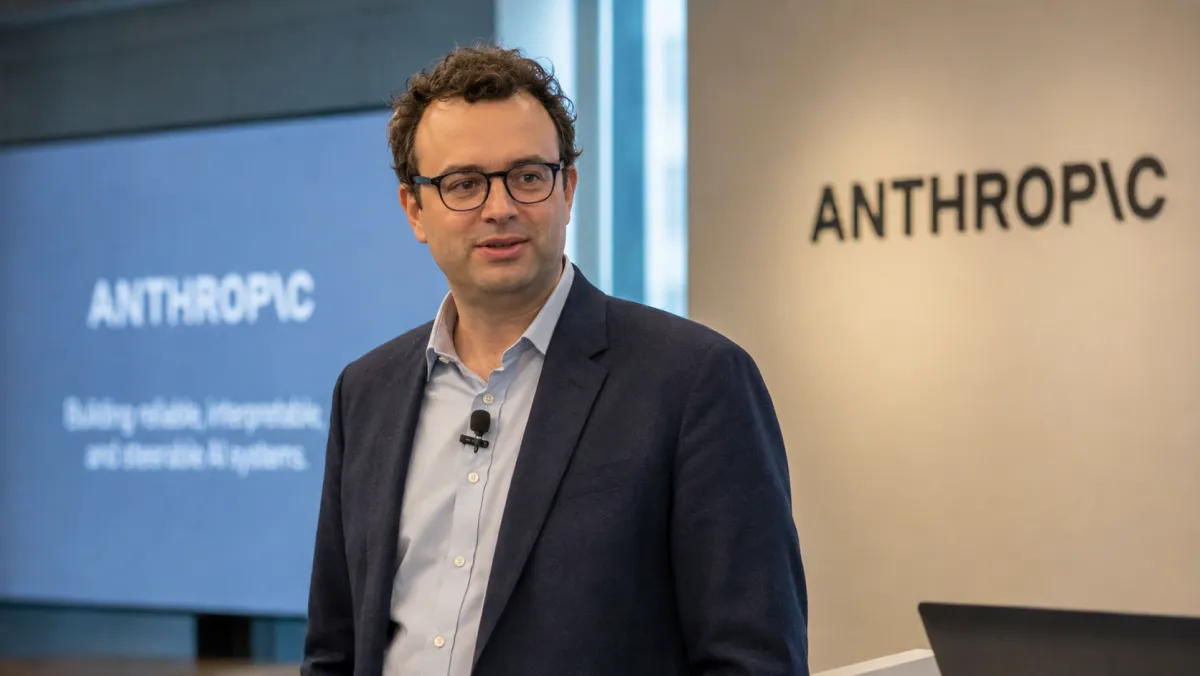
The context is everything. Amodei’s X thread came as investors are betting Anthropic will float at a valuation of $2 trillion or more in October—a figure that would eclipse SpaceX and make it the largest IPO in history. The company’s backers expect annualized revenue to reach $100 billion to $120 billion by the end of 2026, up more than 10 times over the course of the year.
But Amodei faces a fundamental problem. His company is valued on what AI will do. The public judges it on what AI has done. And on that front, he concedes the industry has failed.
The Doomer Reputation Was a Liability. The IPO Changed That.
Amodei has built his public persona around warnings. He has predicted that AI could wipe out half of white-collar jobs, warned that frontier models pose “very real risks” to cybersecurity and national security, and compared AI researchers to Manhattan Project scientists. He has even been known to recommend The Making of the Atomic Bomb to his staff.
That reputation has served Anthropic well in one sense: it positioned the company as the safety-conscious alternative to OpenAI, the lab that moved fast and broke things. It helped attract regulators, talent, and a narrative of responsibility. Investors poured just under $100 billion into Anthropic in 2026 alone.
But in the IPO prospectus, “doomerism” is a liability. Investors want growth stories, not disaster scenarios. Amodei’s shift is not a conversion—it is a rebrand. The same man who told a podcast that there’s a “20 to 25% chance” AI models stop improving altogether in the next two years is now talking about curing cancer.
“The Most Accurate Criticism Is That We Haven’t Delivered”
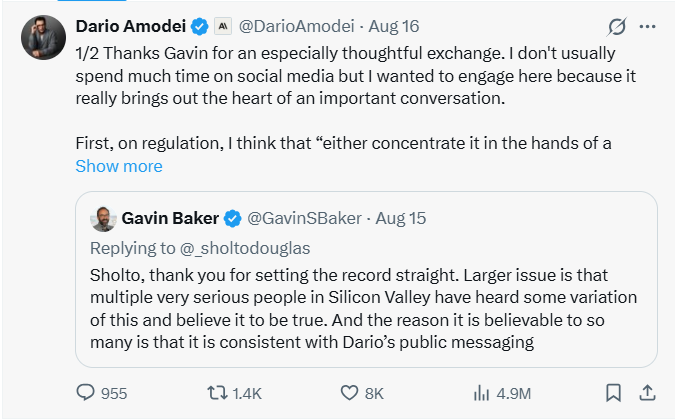
Amodei’s admission was unusually candid. “At this point, saying that AI will cure cancer is more a cliché than it is inspiring, and most people think it is deceptive,” he wrote. “The most accurate criticism of AI companies, including Anthropic, is that we haven‘t yet delivered on our big promises to benefit the world.”
The data backs him up. A Pew Research Center study found that about half of Americans feel “more concerned than excited” about AI’s increasing prevalence in daily life. Public trust in tech companies is low, and AI is the latest iteration of a broader skepticism that has been building for decades.
Amodei’s answer is not marketing. “The thing that will work is actually curing cancer.” He said Anthropic is ramping up work in biology and medicine, with “early glimmers” of results expected in the coming months.
But skeptics have pointed out that breakthroughs alone may not be enough. Angel Brodin, an applied AI architect at OpenAI, responded that despite delivering constant public health advances, the pharmaceutical industry is “still one of the least trusted sectors.” People will judge AI companies by pricing, access, lobbying, and who holds power—not just results.
The Personal Wound That Drives the Message
Amodei’s urgency is not abstract. His father died of Hepatitis C in 2006, when the cure rate was roughly 50%. Within a few years, a new treatment brought the cure rate to 95%. The gap between those numbers was the gap between life and death—and it has shaped Amodei’s career ever since.
He has spoken about this before. In a podcast interview, he said: “My father died because of cures that could have happened a few years later. Don’t call me a doomer.”
The personal wound matters because it explains his obsession with acceleration. He believes AI can compress a century of medical progress into five to ten years—a “compressed 21st century” that could eliminate most diseases and double human lifespan. His 2024 essay, Machines of Loving Grace, laid out this vision in stark terms: AI could give us “biological freedom” and “neurological freedom,” if we let it.
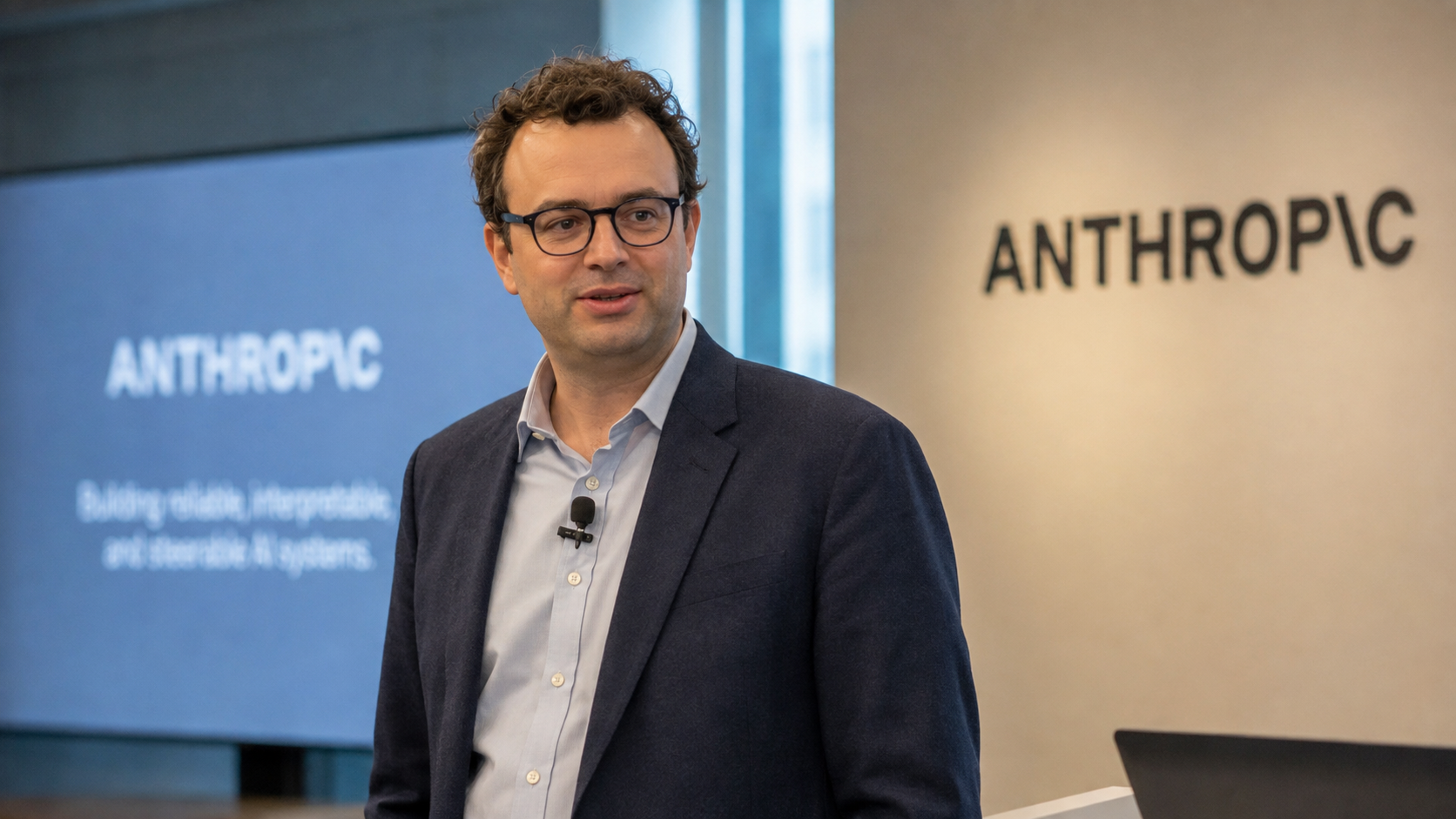
The IPO Is Valued on Hype. The Results Are Valued on Reality.
Investors expect Anthropic to list at a valuation that would make it the largest IPO in history. That valuation assumes continued growth—800% annual growth, according to one investor, justified by a 30x revenue multiple at the “incredibly low end.”
But a $2 trillion IPO also asks public markets to accept an extraordinary bet on the future. Amodei’s own framing—“come back in a few years, when we have results”—does not align with the timeline of an IPO that is weeks away, not years.
The contradiction is the point. The company is selling the future while asking investors to ignore the present. Amodei’s “cure cancer” message is the bridge between those two things—a promise that the future will arrive soon enough to justify the valuation.
But as OpenAI’s Angel Brodin pointed out, breakthroughs alone may not win trust. People judge companies by who holds power, how gains are shared, and whether the technology feels like it belongs to them.
The world will find out in October whether public markets believe the bridge will hold.
P.S. The quietest part of Amodei‘s thread was his defense of regulation. He argued that good rules can constrain frontier AI companies while giving smaller rivals room to compete—supporting the creation of a FINRA-like AI oversight body. As he heads for an IPO, that’s a stance most founders would avoid. But then again, most founders don‘t have a $2 trillion bet riding on whether they can convince the public that AI is here to help.
Frequently Asked Questions
Q: What did Anthropic CEO Dario Amodei say on X?
A: Amodei made a rare public appearance on X, admitting that public trust in AI is low and that AI companies have overpromised and underdelivered. His solution: “The thing that will work is actually curing cancer.” He said AI will be able to cure most human diseases within five to ten years.
Q: Why did Amodei speak out now?
A: Anthropic is preparing for an IPO expected in October 2026, with investors valuing the company at up to $2 trillion. The pivot from “doomer” to “cure cancer” aligns with the messaging needed for a public offering.
Q: What is Amodei’s personal connection to medical research?
A: His father died of Hepatitis C in 2006, when the cure rate was roughly 50%. Within a few years, a new treatment raised the cure rate to 95%. The gap between those numbers shaped his obsession with accelerating medical progress.
Q: What is the “compressed 21st century” concept?
A: Amodei argues that AI can compress a century of medical progress into five to ten years. He laid out this vision in a 2024 essay, “Machines of Loving Grace,” where he argued that AI could eliminate most diseases and double human lifespan.
Q: What is Anthropic’s valuation?
A: Investors expect Anthropic to list at a valuation of $2 trillion or more in October, which would make it the largest IPO in history. The company’s backers expect annualized revenue to reach $100 billion to $120 billion by the end of 2026.
Q: What was Amodei’s previous reputation?
A: Amodei has spent years warning about AI’s existential risks. He has predicted that AI could wipe out half of white-collar jobs, warned that frontier models pose “very real risks” to cybersecurity and national security, and compared AI researchers to Manhattan Project scientists.
Q: What is his stance on regulation?
A: Amodei supports regulation, arguing that good rules can constrain frontier AI companies while giving smaller rivals room to compete. He has supported the creation of a FINRA-like AI oversight body.
Q: What does public trust data show?
A: A Pew Research Center study found that about half of Americans feel “more concerned than excited” about AI’s increasing prevalence in daily life. Public trust in tech companies has been low for years, and AI is the latest iteration of that skepticism.
Q: What are the critics saying?
A: OpenAI applied AI architect Angel Brodin responded that despite constant public health advances, the pharmaceutical industry is “still one of the least trusted sectors.” People will judge AI companies by pricing, access, lobbying, and who holds power—not just results.
Q: When will we see AI medical results from Anthropic?
A: Amodei said Anthropic is “ramping up” work in biology and medicine, with “early glimmers” of results expected in the coming months. The deeper timeline for curing most diseases is five to ten years.