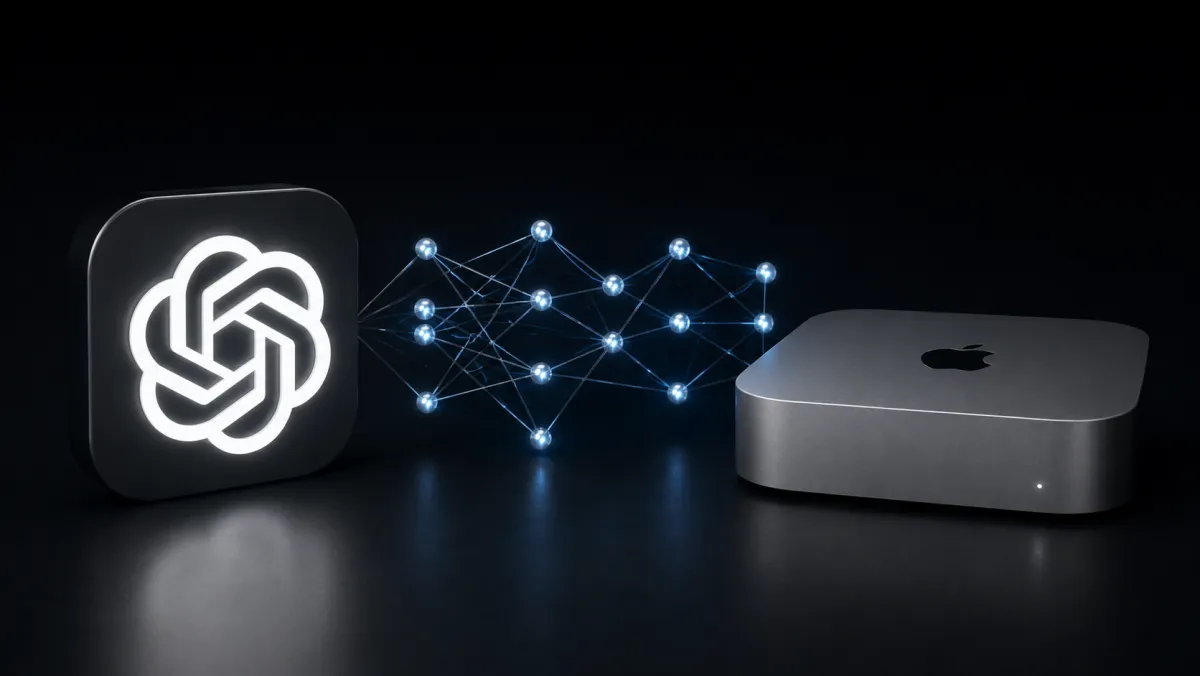
On August 30, The Information reported that OpenAI has purchased tens of thousands of Mac mini and Mac Studio units, with the company actively pressing Apple for faster delivery. These machines are not used for training frontier models like GPT-6. They are used for reinforcement learning—training AI agents to operate computers by clicking buttons, opening apps, and navigating real macOS environments.
Anthropic is pursuing a similar strategy, renting Mac capacity through AWS rather than buying outright. Startups have even begun building Mac-only cloud services to meet rising demand.
Unified Memory Beats Separate VRAM for Agent Training
OpenAI and Anthropic do not lack GPU clusters. They have some of the largest Nvidia installations in the world. But training computer-use agents presents a unique challenge that GPUs alone cannot solve.
The macOS constraint: Apple's licensing terms require macOS virtual machines to run on Apple hardware. Each Mac can run at most two virtual machines concurrently. AWS's EC2 Mac instances are still "dedicated host" offerings, billed by the full physical machine with a 24-hour minimum. To get 10,000 macOS environments, you need thousands of physical Macs.
Unified memory architecture: Nvidia GPUs separate system memory from video memory, creating a bottleneck when models repeatedly move between CPU and GPU. Apple's M-series chips share a single memory pool across CPU, GPU, and Neural Engine. M5 Ultra supports up to 512GB of unified memory at 1.2TB/s bandwidth. For loading large models, capacity often matters more than raw speed.
Sustained thermal performance: Agent training runs for days or weeks, not minutes. MacBooks throttle after tens of minutes. Mac mini and Mac Studio have active cooling systems that maintain performance indefinitely.
Apple's Mac Business Just Got an AI Boost It Didn't Plan For
Apple's Mac business is already feeling the impact. In its latest quarter, Mac revenue hit $10.4 billion, up 29% year-over-year—the fastest-growing hardware segment. Apple CEO Tim Cook acknowledged that "very strong demand" for Mac has created supply constraints. Some high-memory configurations have been back-ordered for months.
But Apple appears to have been caught off guard. Todd Dailey, Apple's former enterprise AI product marketing manager, told The Information that Mac's popularity in enterprise AI is "highly accidental," and Apple had not built the enterprise engineering support or developer relations infrastructure around this market.
In June, Apple held a rare closed-door event at Apple Park, with Anthropic co-founder Jared Kaplan in attendance. Mac mini was the centerpiece. By August 25, Apple released new M6 Mac mini and M5 Ultra Mac Studio models with marketing explicitly focused on local AI inference, large-model deployment, and multi-device clustering.
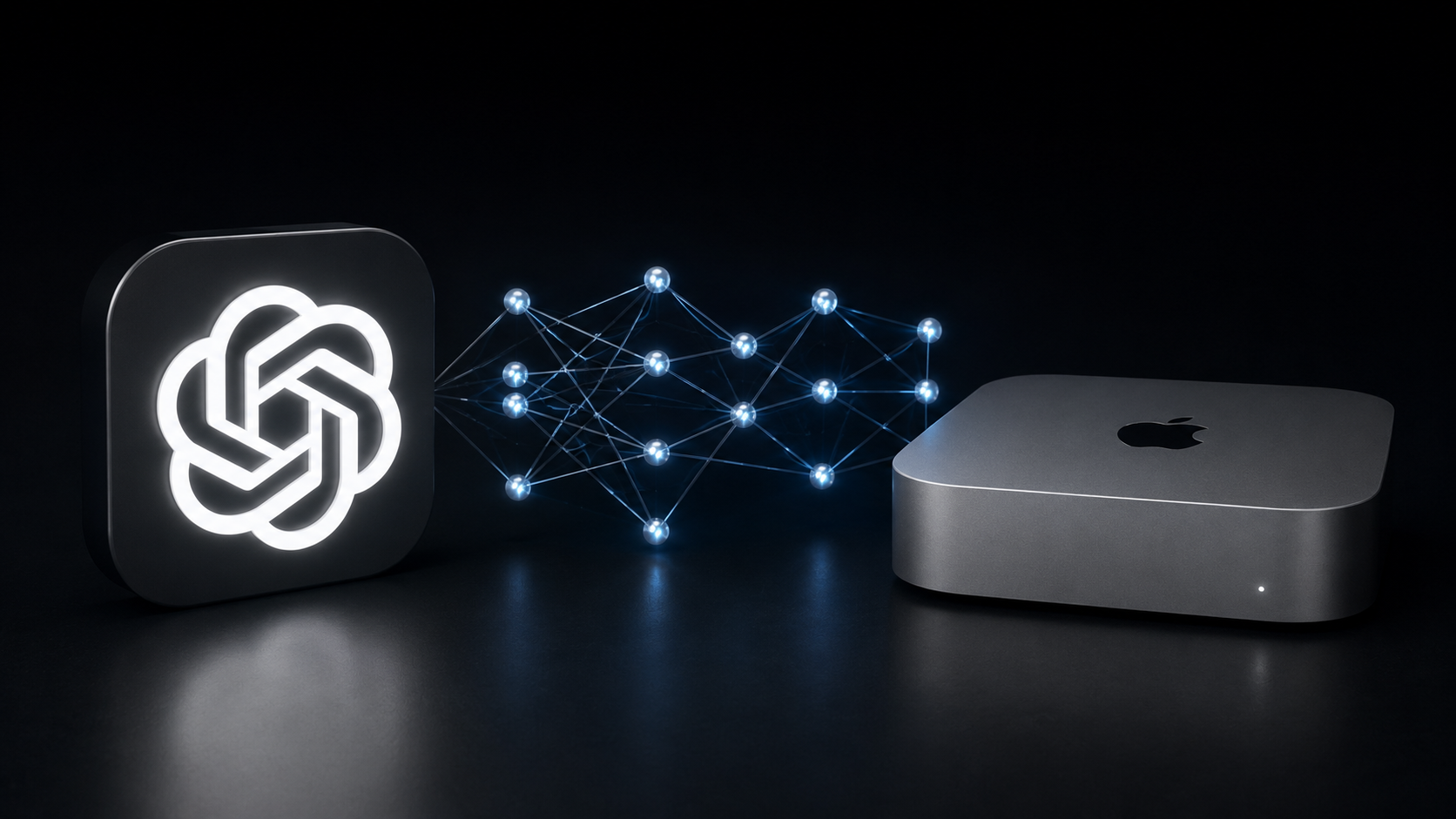
OpenAI's Mac Pile Is Not About Replacing GPUs—It's About Agent Training
Nvidia reportedly views Apple as a major competitor in local AI. Its DGX Spark targets developers seeking compact systems with Nvidia's software ecosystem. But Nvidia's strength remains in data center training—not in hardware optimized for sustained, memory-heavy, OS-native agent workflows.
OpenAI's Mac procurement does not mean Nvidia's GPU dominance is threatened. Frontier model training still happens on Nvidia clusters. But the hardware that trains the next generation of autonomous agents—agents that interact with software the way humans do—may not be Nvidia's to own.
The Mac is no longer just a consumer device. It is becoming AI infrastructure. And Apple is only beginning to realize what it has built.
P.S. One detail from The Information's report: OpenAI is pressing Apple for faster delivery, and some Mac configurations have been out of stock for months. The demand is real—and Apple is not yet set up to supply it at scale. In the AI hardware market, that's both an opportunity and a vulnerability.
Frequently Asked Questions
Q: Why is OpenAI buying so many Macs?
A: OpenAI purchased tens of thousands of Mac mini and Mac Studio units to train AI agents that can control computers—a process called reinforcement learning. The agents learn by clicking buttons, opening apps, and navigating real macOS environments.
Q: Why not just use more Nvidia GPUs?
A: Apple's licensing terms require macOS to run on Apple hardware. Each Mac can run at most two virtual machines. To get 10,000 macOS environments for agent training, you need thousands of physical Macs. GPUs alone cannot solve this constraint.
Q: What makes Macs better for this specific task?
A: Three factors: unified memory (CPU and GPU share the same memory pool), sustained thermal performance (Mac mini and Mac Studio can run days without throttling), and the macOS constraint (agent training requires native macOS environments).
Q: How much memory does the M5 Ultra support?
A: The M5 Ultra supports up to 512GB of unified memory at 1.2TB/s bandwidth. For loading large models, capacity often matters more than raw speed.
Q: Is OpenAI replacing Nvidia with Apple?
A: No. Frontier model training still happens on Nvidia clusters. The Macs are for a specific use case—training computer-use agents through reinforcement learning. This is a parallel infrastructure, not a replacement.
Q: Is Anthropic doing the same thing?
A: Yes. Anthropic is pursuing a similar strategy, but it is renting Mac capacity through AWS rather than buying outright.
Q: What does this mean for Apple?
A: Mac revenue hit $10.4 billion in the latest quarter, up 29% year-over-year. Some high-memory Mac configurations have been out of stock for months. But Apple appears to have been caught off guard—its enterprise AI support infrastructure is still catching up.
Q: What is the "unified memory" advantage?
A: Nvidia GPUs separate system memory from video memory, creating a bottleneck when models repeatedly move between CPU and GPU. Apple's M-series chips share a single memory pool across CPU, GPU, and Neural Engine, eliminating that bottleneck for agent training workflows.
Q: Does Nvidia see Apple as a competitor?
A: Yes. Nvidia reportedly views Apple as a major competitor in local AI. Its DGX Spark targets developers seeking compact systems with Nvidia's software ecosystem.
Q: What is the significance of this trend?
A: The Mac is no longer just a consumer device—it is becoming AI infrastructure. OpenAI and Anthropic are turning Apple hardware into AI training infrastructure, and Apple is only beginning to realize what it has built.