
On September 9, Hangzhou opened the AI Show 2026, featuring 300+ exhibitors and showcasing humanoid robots that now account for 97% of global shipments. Chinese vendors shipped over 19,000 humanoid robots in H1 2026—up 274% year-over-year—while US rivals combined for a fraction of that total. The show isn't just a tech exhibition. It's a display of industrial scale that the rest of the world is struggling to match.
The numbers frame the event. Global humanoid robot shipments hit 19,100 units in H1 2026, up 274% year-over-year. Chinese vendors captured 97% of that total. AgiBot led with 44% market share—about 8,400 units—followed by Unitree at 30.9%.
The top five vendors are all Chinese: AgiBot, Unitree, Galbot, UBtech, and Leju Robotics. Combined, they control over 86% of the global market. For context, Tesla, Figure AI, and Agility Robotics—the most prominent US humanoid efforts—together shipped only a fraction of that volume.
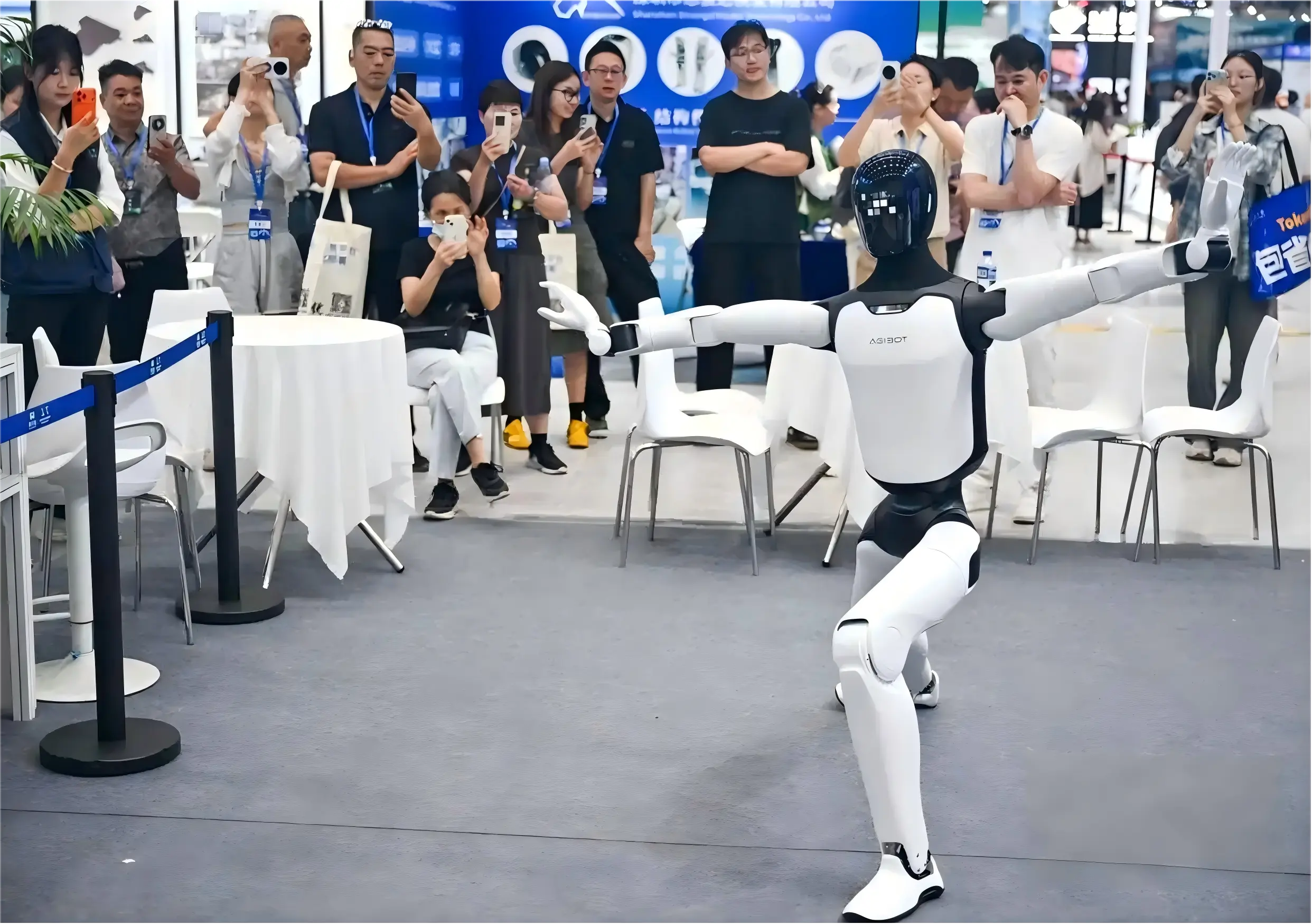
300 Exhibitors. 97% of Global Shipments.
AI Show 2026 brings together about 300 exhibitors covering the full chain: motors, actuators, sensors, software, and complete robots. The event features humanoid robots demonstrating dynamic balance, complex scene interaction, and multi-task coordination.
But the deeper signal is deployment. Industrial and commercial applications now account for more than 70% of humanoid robot shipments, up from roughly 50% a year ago. These robots are no longer showpieces. They are entering factories, warehouses, and commercial venues.
Hangzhou alone has over 700 robotics-related companies, with more than 200 focused on complete robots and key components. The city accounts for over 50% of China's humanoid robot market share and over 80% of its quadruped robot market share. In 2025, the local robotics industry cluster generated 106.8 billion yuan in industrial output.
Hangzhou's AI Industry Hit 106.8B Yuan in 2025
The scale is not accidental. Hangzhou is a dual-designated national AI innovation pilot zone and a new-generation AI experimental zone. In May 2026, China's first local regulation on embodied intelligence robotics—the "Hangzhou Regulations on Promoting the Development of the Embodied Intelligence Robotics Industry"—took effect. The city has set a 2026 AI core industry revenue target of 550 billion yuan, with over 20% annual growth.
The national picture is equally striking. China's AI core industry exceeded 1.2 trillion yuan in 2025 with over 6,200 AI enterprises. Smart computing capacity reached 2,185 EFLOPS. More than 140 humanoid robot companies operate in China, offering over 400 product models. Over 30% of large industrial enterprises have deployed AI applications.
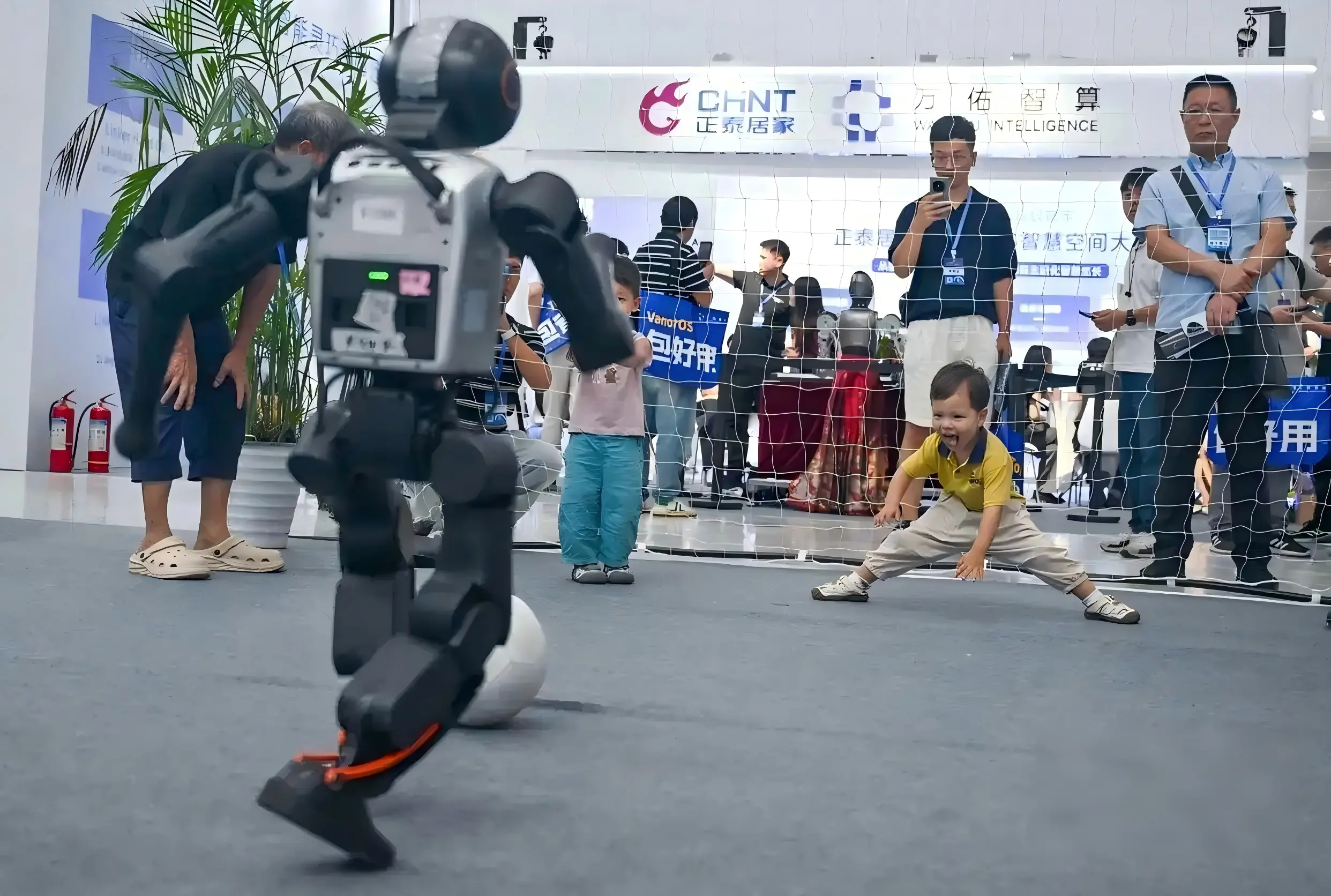
The US Ban Won't Stop What's Already Here
The US imposed a ban on Chinese-made humanoid robot imports in late July 2026, citing national security risks to AI infrastructure. The immediate impact is limited—major Chinese exporters don't currently ship to US end customers at scale. But the ban signals a structural divide that is only widening.
Smart Analytics Global projects global humanoid robot shipments to reach 60,000 units in 2026 and cross 500,000 units by 2030. If that projection holds, the gap between China and the rest of the world will grow faster than any new policy can close.
P.S. The show runs September 9-11 at the Hangzhou International Expo Center. The robots on display demonstrate balance, interaction, and coordination. But the real demonstration is already visible in the data: China isn't just building better robots. It's building more of them than everyone else combined. And the gap is growing, not shrinking.
Frequently Asked Questions
Q: What is AI Show 2026?
A: AI Show 2026 is an AI application and robotics expo held in Hangzhou from September 9-11, 2026, featuring over 300 exhibitors and showcasing China's robotics and AI industry.
Q: How many humanoid robots shipped globally in H1 2026?
A: Global humanoid robot shipments reached 19,100 units in H1 2026, up 274% year-over-year.
Q: What is China's share of global humanoid robot shipments?
A: Chinese vendors captured 97% of global humanoid robot shipments in H1 2026.
Q: Which companies lead the humanoid robot market?
A: The top five vendors are all Chinese: AgiBot (44% market share), Unitree (30.9%), Galbot, UBtech, and Leju Robotics. Combined, they control over 86% of the global market.
Q: How many robotics companies are in Hangzhou?
A: Hangzhou has over 700 robotics-related companies, with more than 200 focused on complete robots and key components.
Q: What is Hangzhou's AI industry revenue target?
A: Hangzhou has set a 2026 AI core industry revenue target of 550 billion yuan, with over 20% annual growth.
Q: What was China's AI core industry size in 2025?
A: China's AI core industry exceeded 1.2 trillion yuan in 2025 with over 6,200 AI enterprises.
Q: What is the US ban on Chinese humanoid robots?
A: The US imposed a ban on Chinese-made humanoid robot imports in late July 2026, citing national security risks. The immediate impact is limited, but it signals a widening structural divide.
Q: What are the projected shipments for humanoid robots?
A: Smart Analytics Global projects global humanoid robot shipments to reach 60,000 units in 2026 and cross 500,000 units by 2030.
Q: What is the significance of AI Show 2026?
A: The show is not just a tech exhibition—it's a display of China's industrial scale in robotics, demonstrating that China isn't just building better robots, but building more of them than the rest of the world combined.