Start with the numbers. The headline figure from China's National Information Center is 118.4% growth across AI and humanoid robotics. Impressive — but narrow. The full embodied AI sector tells a different story: $13.2 billion. 428% year-over-year. Over 200 deals closed in six months. That's roughly $73 million deployed every single day.
Foreign capital is rerouting. Goldman Sachs called international investors "significantly underweight" on Chinese AI stocks — especially in power infrastructure and physical AI, where Chinese firms arguably hold structural advantages. Citigroup upgraded China to "overweight." Standard Chartered held its overweight rating. Morgan Stanley said money is slowly rotating back in. Overseas holdings of A-shares broke a record 4 trillion yuan ($550 billion). Korean net buying of A-shares jumped 130% year-over-year.
This isn't 2017. Foreign money isn't buying slideshows.
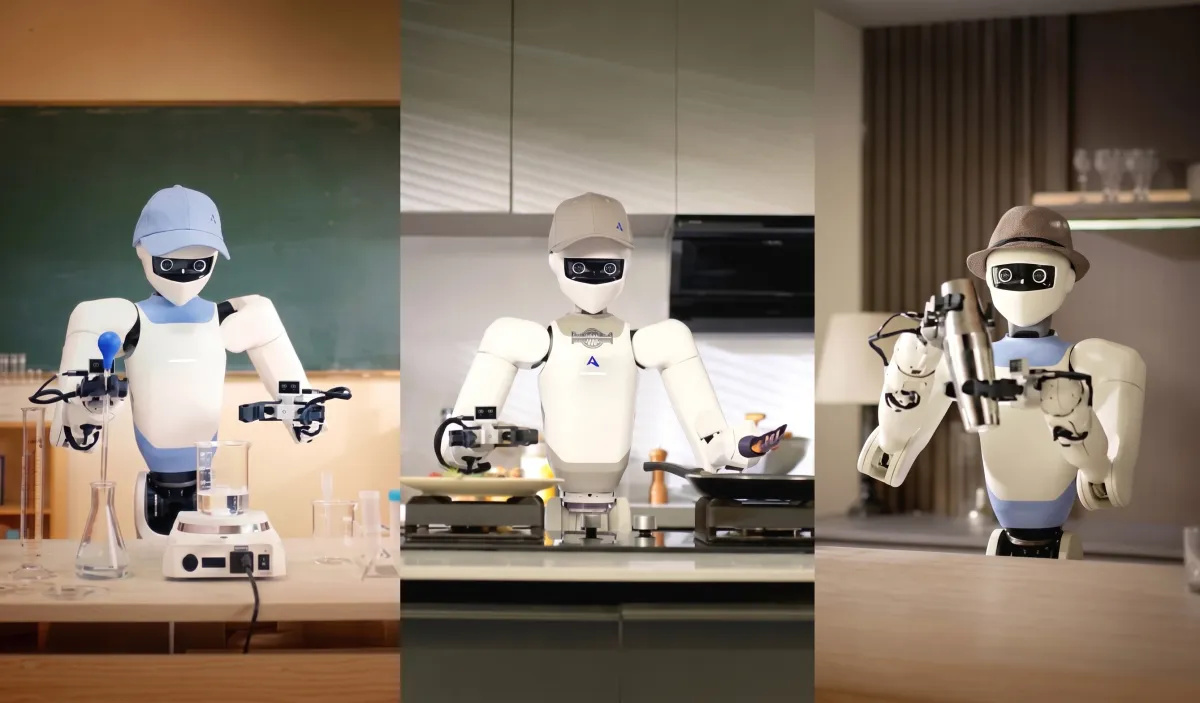
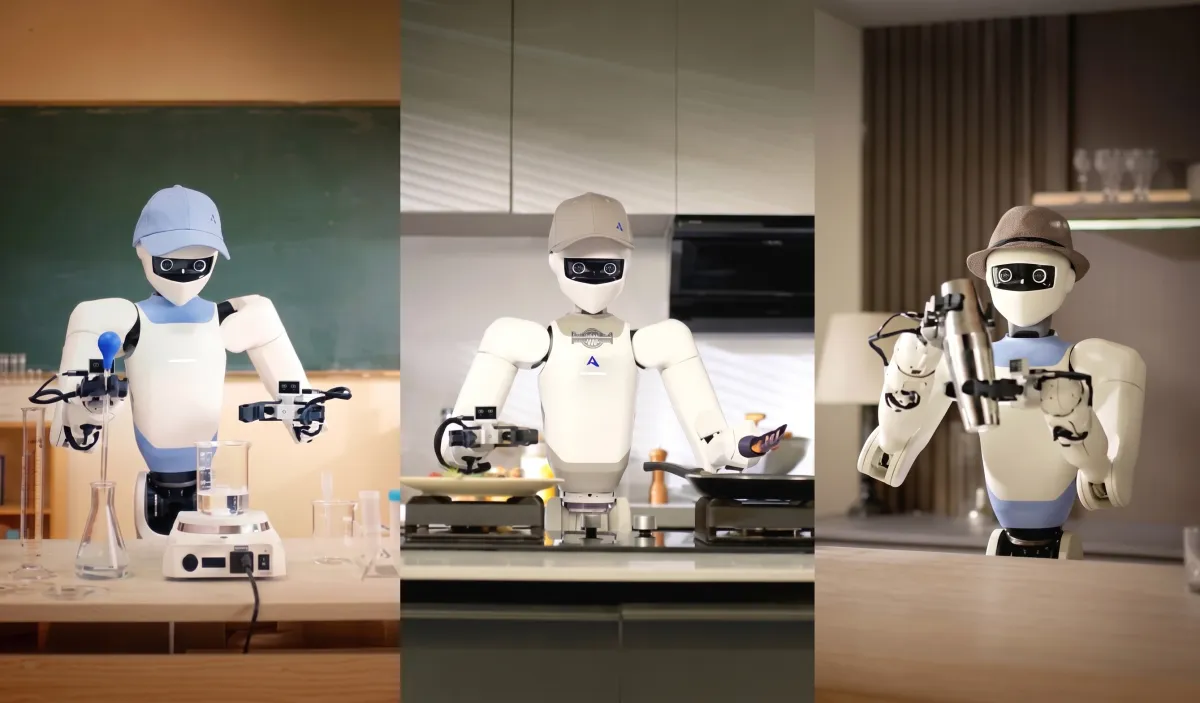
The headline is AI. The story is supply chain. China now accounts for 84.7% of global humanoid robot shipments. The world's top six vendors by volume are all Chinese. In Q1 2026 alone, humanoid robot exports hit 113.2 billion yuan ($15.6 billion), up 210% year-over-year, reaching 148 countries.
The playbook mirrors EVs: cost advantage → performance → global market depth. Morgan Stanley expects China to ship 28,000 humanoid units in 2026 — double 2025's figure and more than the rest of the world combined.
Supply chain localization is the real driver. China has the world's most complete robotics parts ecosystem — servo motors, reducers, controllers, final assembly — with 90%+ domestic sourcing. Prices dropped from seven figures to five figures. That unlocks industrial deployment at scale.
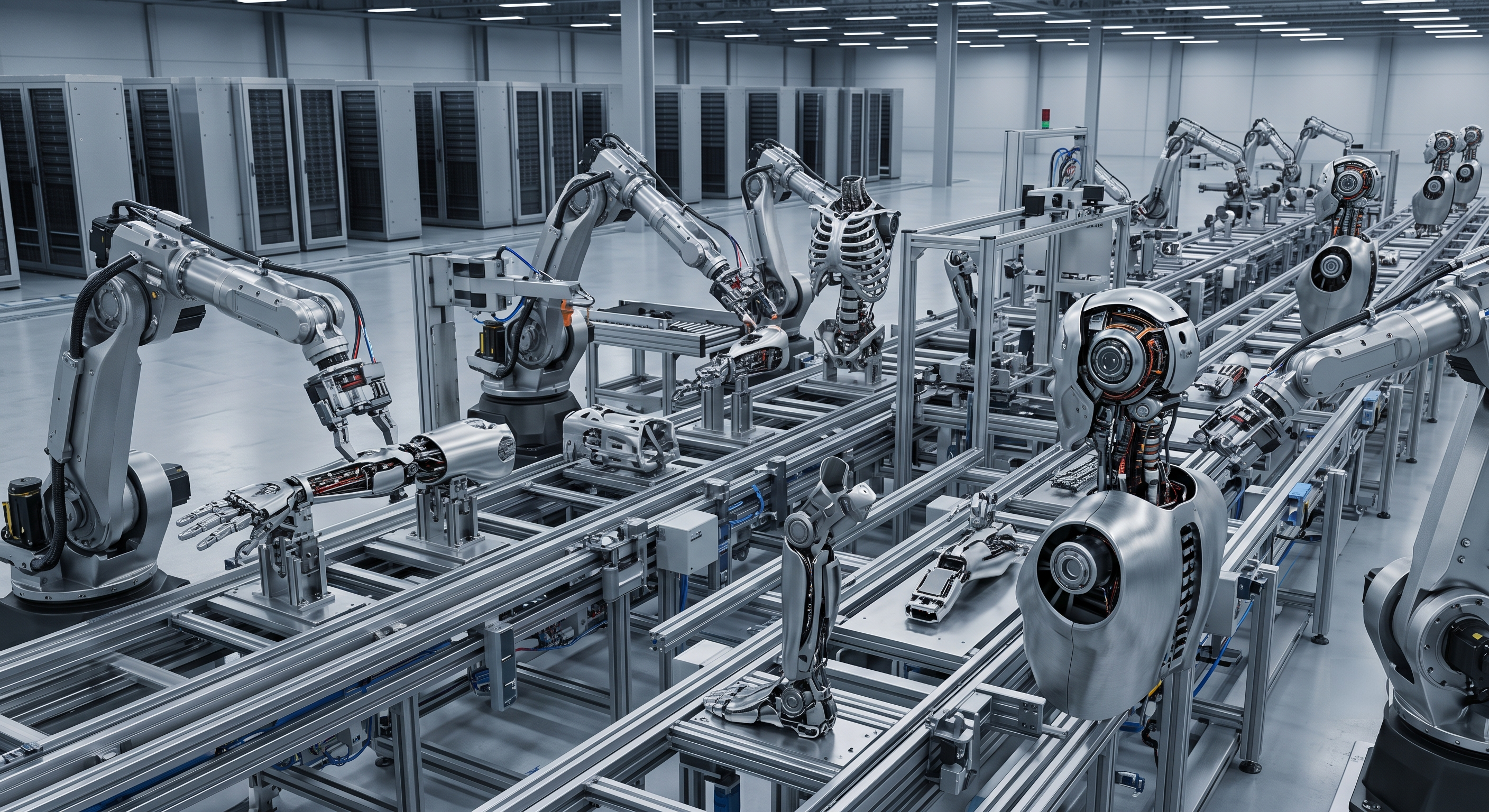
One data point that captures the shift: 23 robotics unicorns valued over $1.4 billion now operate in China. For every 10 humanoid robots built globally, 8 are assembled on Chinese lines. The "brain" is still largely U.S. → the "body" is now overwhelmingly Chinese.
Morgan Stanley called it directly in a July note: China is "replicating the EV miracle at a pace even faster than the EV upstarts did a decade ago."
The investor base changed. It's not just state capital anymore. Middle Eastern sovereign funds are placing concentrated bets on early-stage "embodied brain" startups — Qianxun Intelligence, Qiongche Intelligence. U.S. venture arms are taking pre-IPO positions. European industrial groups are building strategic stakes.
LimX Dynamics, a Shenzhen-based humanoid maker, closed a $200 million pre-IPO round in July — 70% of it from European, Middle Eastern, and North American investors — at a $2 billion valuation. Unitree, the Hangzhou-based vendor, just got Beijing's approval for a $580 million Shanghai IPO. For the first time, foreign capital is leading the round, not following.
The logic: Chinese robotics has a manufacturing moat that can't be replicated quickly elsewhere. The supply chain is too deep, too fast, too cheap. Labor costs are rising but automation is offsetting it. And the domestic market is massive enough to absorb initial production runs while export channels scale.
Goldman put a number on it: the potential economic gain from Chinese AI is 50% to 100% above what current stock prices reflect. That's the gap foreign capital is trying to close.
Not all boats rise. The top 20 companies took 70% of all funding. The top five took 37% — roughly $4.9 billion across just five firms. Domestic unicorn valuation thresholds are compressing. Nine robotics firms now sit in the "over $1.4 billion" club. The question isn't whether the sector is hot — it's whether the heat is sustainable.
Goldman also warned that semiconductor subsectors are flashing overheat signals — valuations, concentration risk, leverage. China's AI penetration sits around 16% to 19%, approaching the 20%–25% threshold where emerging sector "main wave" rallies historically peaked. Not bubble territory yet, but the easy money has already been made.
CICC noted that Chinese AI firms look healthier than U.S. peers because state support cushions capital cycles — but B2B AI exposure still lags the U.S., and Hong Kong-listed tech names are weighted toward B2C consumer apps that haven't captured the AI capex wave.
Morgan Stanley's China equity strategist said the next two months are critical: Q2 e-commerce earnings will show whether price-war damage is fading, and AI commercialization progress will be tested. The advice: buy quality names on dips, but don't chase hype.
Not a single foreign analyst report failed to mention geopolitics. Export controls on high-end chips remain a ceiling. The U.S. has not signaled any easing. Chinese robotics firms are designing around the constraint — pushing domestic alternatives for AI training chips and using hybrid cloud-edge architectures to bypass the compute bottleneck. But alternative supply chains take time. And the U.S.-China decoupling narrative hasn't disappeared — it's just been temporarily overshadowed by the sheer velocity of capital movement.
The foreign funds deploying today know this. That's why they're concentrating on assembly and deployment — the parts of the value chain that don't require cutting-edge fab capacity.
The numbers are real. The manufacturing base is real. The capital is real. But fundraising isn't survival. And the overseas investors doing 4,000-plus research trips this year — 580 foreign institutions conducting over 3,900 site visits — know that better than anyone. They're not betting on PowerPoints. They're kicking tires on assembly lines.
P.S. What's different this time isn't the hype — it's that 84.7% of global humanoid output rolls off Chinese lines, and foreign capital is finally pricing that in, not the demo day pitch. The 2017 story was a slide deck; the 2026 story is a shipping container.