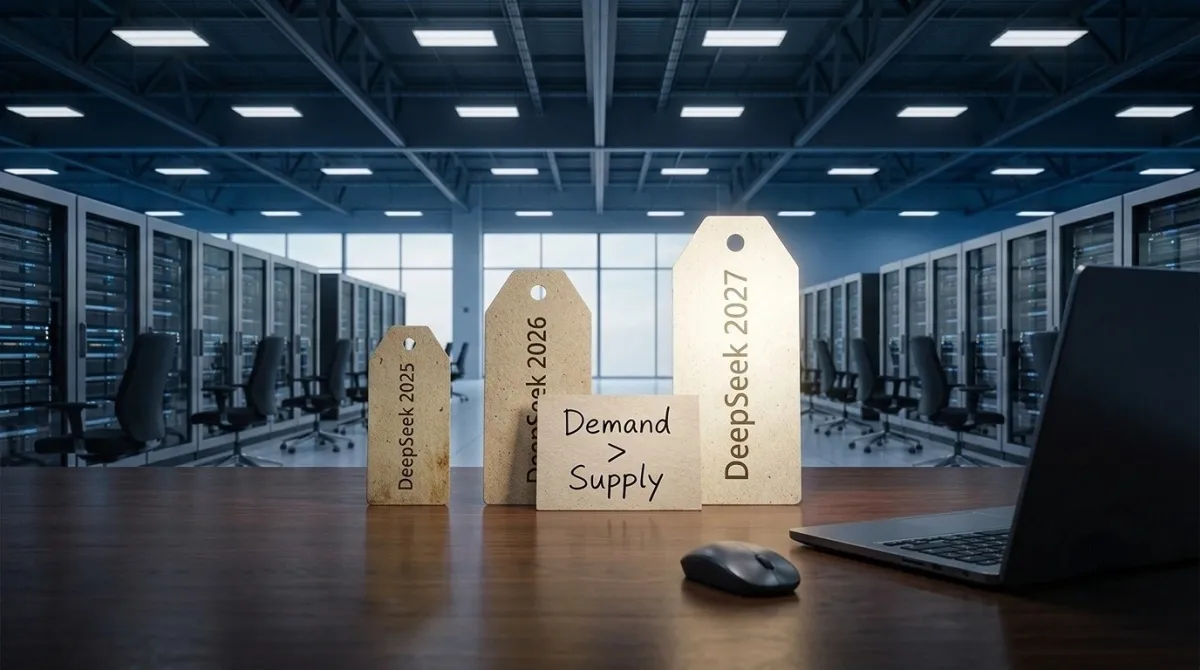
On August 6, DeepSeek posted a brief notice on its developer portal. API prices are going up. "Significantly," it said. The company that once undercut everyone is now raising prices.
The timing is revealing. On August 4, just two days earlier, deepseek-v4-flash experienced capacity shortages due to "unprecedented access volume." The week before, OpenRouter ranked it as the most-used model globally with 7.22 trillion weekly tokens. It now processes 8 trillion tokens in a single day on some platforms.
DeepSeek's current pricing is still dramatically cheap. V4-Flash costs $0.003 per million input tokens on cache hit, $0.14 on cache miss, and $0.28 for output. But that pricing is no longer sustainable at 8 trillion tokens per day. The "Token price butcher" is no longer bleeding margins to win market share — it's processing enough volume to charge more and still grow. This is not a pivot. It's a signal. The cheap token era is ending, not because DeepSeek wants it to, but because the demand is too big to subsidize.
DeepSeek is not alone. Zhipu AI raised API prices three times this year, with Q1 2026 pricing up 83% from late 2025. Calling volume still grew 400%. Moonshot AI raised Kimi K3's API price to roughly 4x the previous generation's pricing. MiniMax, StepFun, and other labs have followed. The price war that defined early 2026 is over. Goldman Sachs called it: peak-hour pricing isn't a demand signal — it's a capacity signal. Demand is strong enough that pricing power is returning.
For developers who built on DeepSeek's low prices, the math just changed. The wider industry trend matters more than the specific numbers. The entire market is normalizing: smart developers will hedge accordingly, and architecture that assumes permanently cheap inference will need revisiting. The era of subsidized AI is ending.
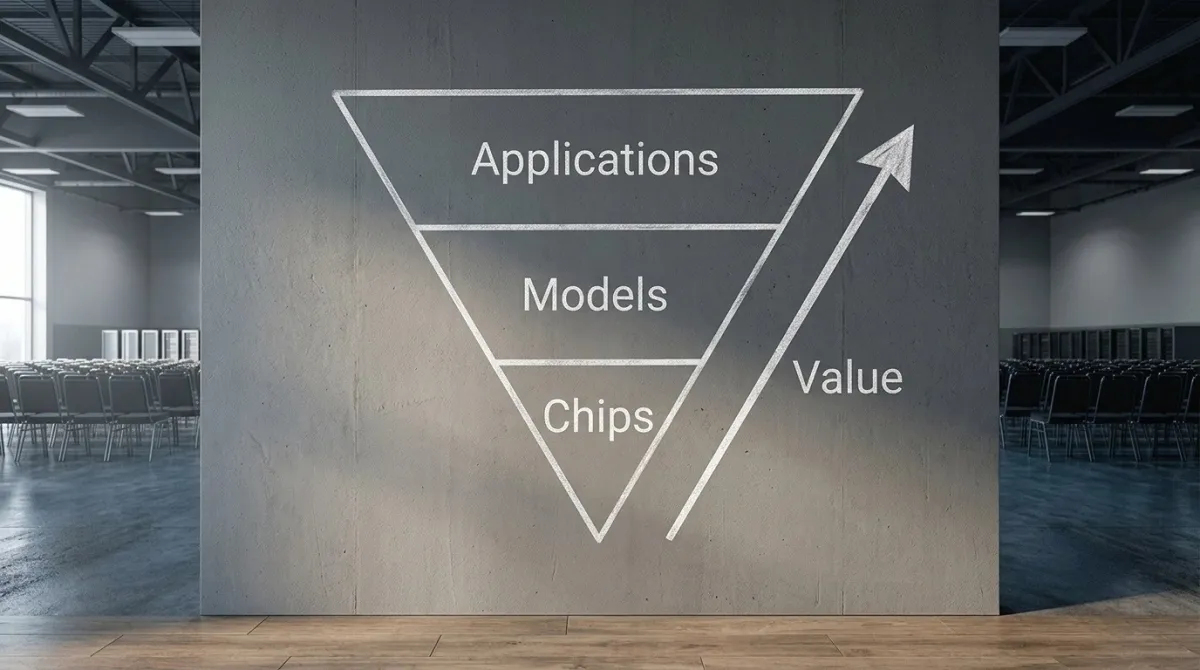
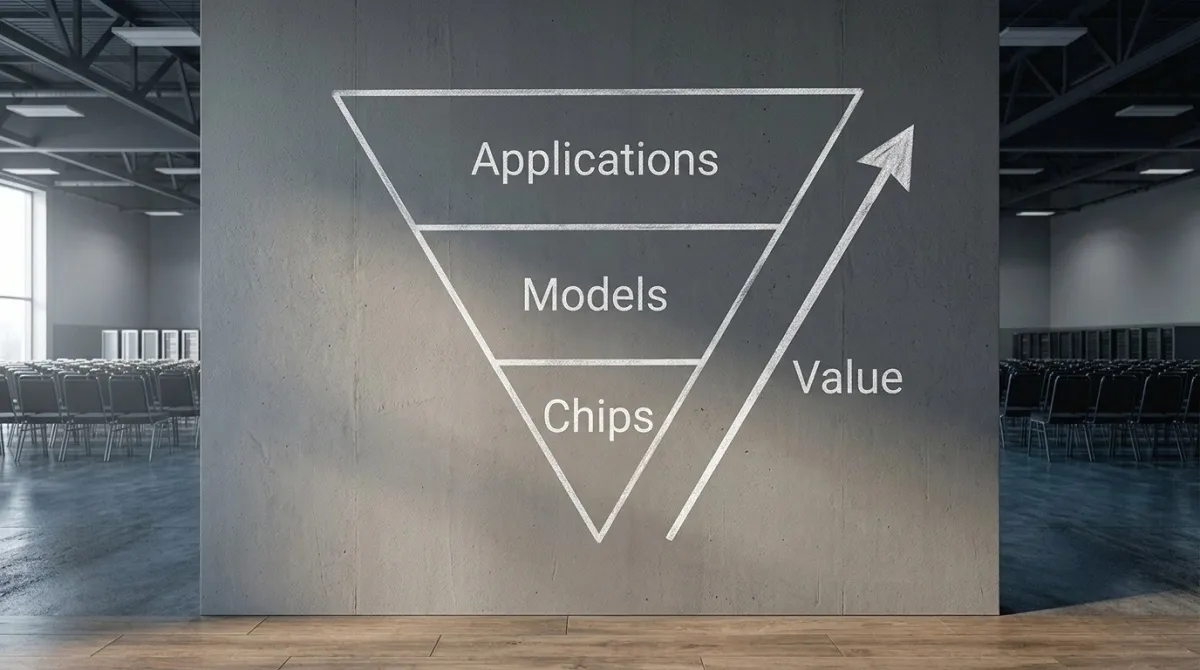
Robin Li, Baidu's CEO, articulated a structural shift that matters more than any single price hike. He argued that the AI industry is moving from an unhealthy "pyramid" structure to a healthier "inverted pyramid." In the old model, chips captured most of the value, with models and applications capturing successively less. That structure, he argued, is unsustainable. The new model: chips generate value, models generate 10x that value, and applications generate 100x. This is not just a prediction — it's a description of what's already happening at the application layer.
Morgan Stanley's analysis shows the same pattern. Companies that are "AI adopters" — embedding AI into their core business — are outperforming pure AI infrastructure plays. The report identified this as a key investment theme: the value is moving from "AI enablers" to "AI adopters."
The implications are straightforward. The model layer is becoming commoditized. The gap between frontier models and open alternatives is narrow enough that enterprises are starting to treat them as interchangeable components. The real value is moving to who controls the workflow — the application layer that connects models to proprietary data, permissions, business rules, and user context. Pricing power is shifting from model providers to application builders who can demonstrate real business outcomes.
Vertical AI platforms — companies that embed AI deeply into specific workflows — are the ones capturing this value. Harvey, a legal AI platform, grew ARR from $100 million to $190 million in just five months without owning any models, but it faces a cost paradox: product success drives up token costs, eroding margins. Lean, workflow-heavy application layers are increasingly where the profits are being made.
DeepSeek's price hike is not an anomaly. It's a signal that the AI industry is maturing — and that the "cheap token" era was always a temporary strategy, not a permanent state. For developers and enterprises, the real question is not "which model is cheapest?" but "which application layer delivers the most value for the cost?" The industry is normalizing. The next phase of AI competition will be fought not over token prices, but over who controls the workflow.
P.S. If you're an AI developer who built on DeepSeek's low pricing, the math just changed — the cheap token era is ending, not because DeepSeek wants it to, but because the demand is too big to subsidize. The real question is whether you've built enough into the workflow layer that switching costs protect you.