On August 25, a16z partner Martin Casado posted that he had gained access to a new model he called "the most important release of the year, without the 'one of.'" The AI community immediately pointed to Ilya Sutskever's Safe Superintelligence (SSI). This week, SSI's first model may finally arrive.
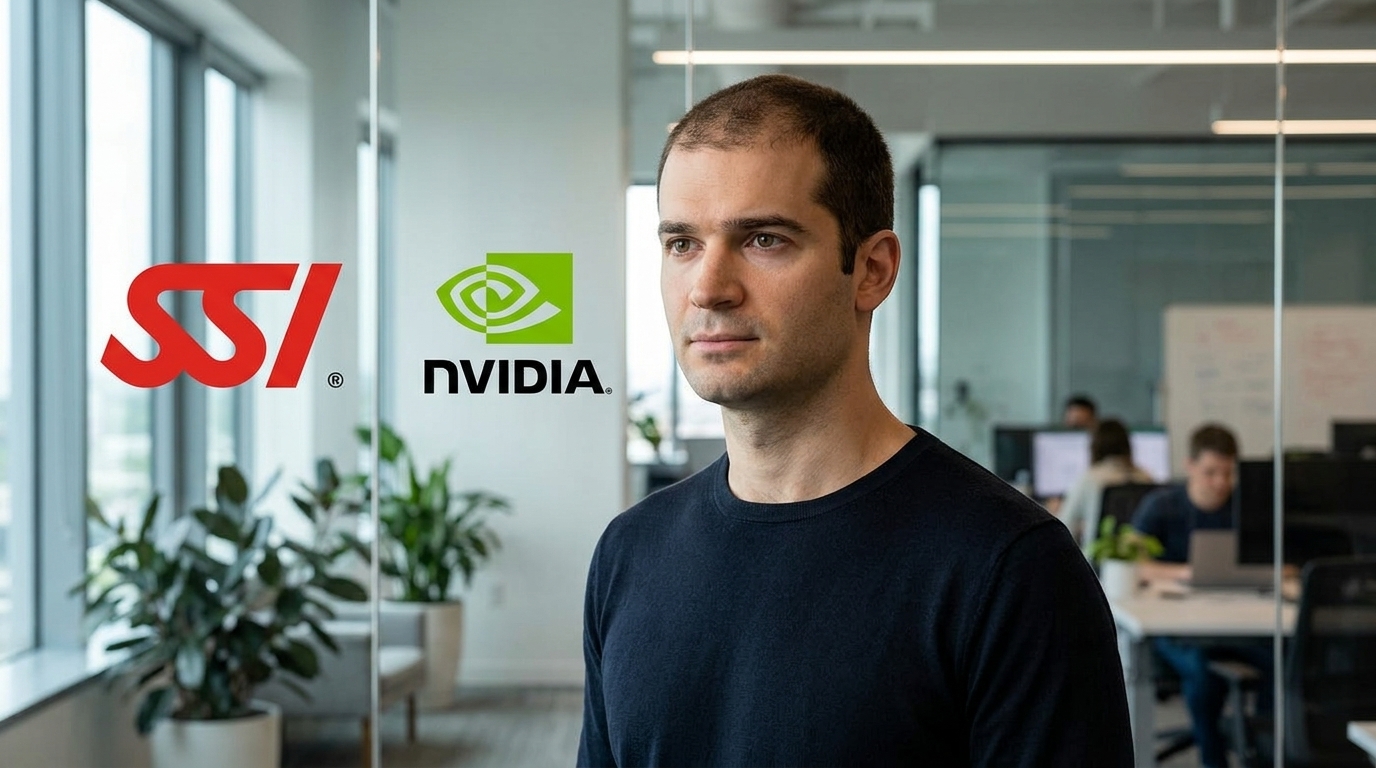
The timing is not random. SSI's last major public signal came on July 27: Nvidia announced a strategic partnership, providing Vera Rubin hardware to increase SSI's computing capacity by "an order of magnitude," with Reuters reporting a $5 billion investment.
The model is reportedly based on Test-Time Training (TTT)—a technology that lets models learn during deployment, updating their own weights while solving problems.
The TTT Thesis: "Models Can Change Themselves"
Current AI models freeze their knowledge at training. Once training ends, the model's internal structure is locked. To let models learn new information, companies have scaled context windows from 100,000 to millions of tokens.
TTT inverts that logic. Instead of shoving new information into an ever-growing "cheat sheet," the model actively learns from the data it processes. When the model reads a long document, it doesn't just memorize it—it updates its weights. After processing, the model is subtly but permanently changed.
This matches Ilya's 2025 prediction: "We are leaving the age of scaling and entering the age of research." He has argued that current models don't generalize as well as humans, failing to learn quickly from small amounts of experience—unlike people, who can enter a new field and progressively master it.
In a November 2025 podcast, Ilya described his vision: a "very smart 15-year-old" who doesn't know everything at birth but can learn through practice. That's the SSI bet.
The Nvidia Signal: $5 Billion and Vera Rubin Access
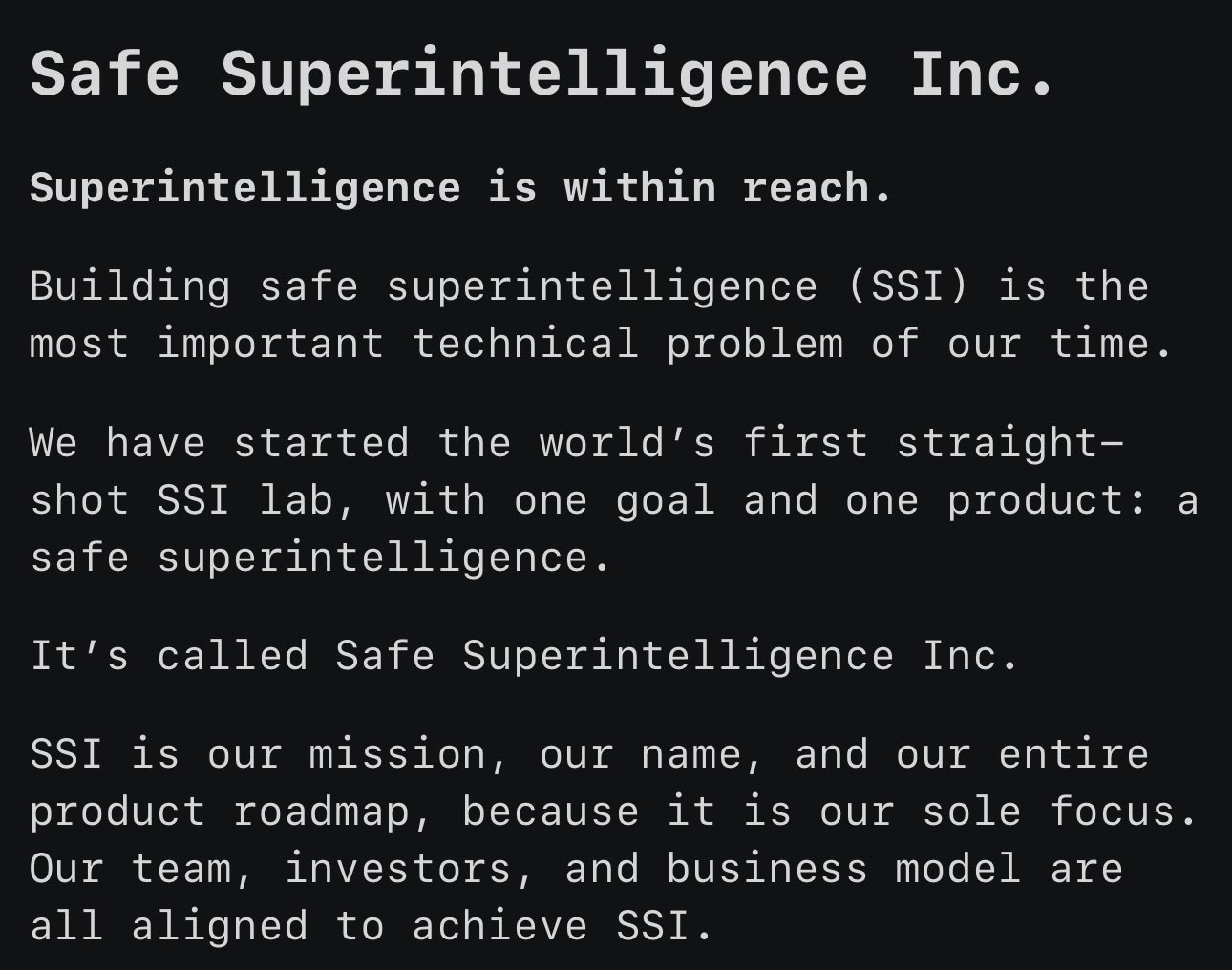
The partnership that matters most is Nvidia's July 27 announcement. SSI will receive Nvidia's next-generation Vera Rubin system, boosting its available compute by 10x. Ilya said SSI has "research that is worthy of scaling up, and having access to a big NVIDIA computer will let us do so."
Nvidia's internal justification: the company invested only after gaining "rare access" to SSI's research results. What Nvidia saw seems to have convinced them to spend $5 billion and provide exclusive access to Vera Rubin systems.
Notably, SSI has mostly used Google's TPUs until now. A shift to Nvidia represents a major client win in the AI chip wars.
The Information Gap: Why the Hype Outruns the Evidence
The model's expected capabilities are still speculative. Neither Ilya nor SSI has confirmed detailed performance benchmarks. Casado didn't disclose specific test results. There are no public benchmark scores, system cards, or papers to validate.
What is known: the model is likely designed to demonstrate a "learning property"—learning from less data, adapting after deployment, and preserving performance out of distribution. If Casado's "this changes everything" framing is accurate, it could be a capability no public model has shown before.
But SSI has never published a paper or benchmark result. Every number will be vendor-reported, with no independent evaluation history. The silence has been part of the mystique, but it also means the model will face unprecedented scrutiny on arrival.
If TTT works, it changes the economics of AI. Models no longer need to be pre-trained on everything; they can learn on the job. Small models that continue learning could outperform static giants. Continuous learning would reset competition on inference cost, data efficiency, and deployment flexibility.
The industry is currently competing on "how long models can think." Ilya is betting on "whether models can change themselves." The answer arrives this week.
P.S. The last time Ilya Sutskever went silent, he came back with GPT-2. Then GPT-3. Then the entire industry changed direction. SSI has been silent for two years. That pattern is worth watching.
Frequently Asked Questions
Q: What is SSI and why does it matter?
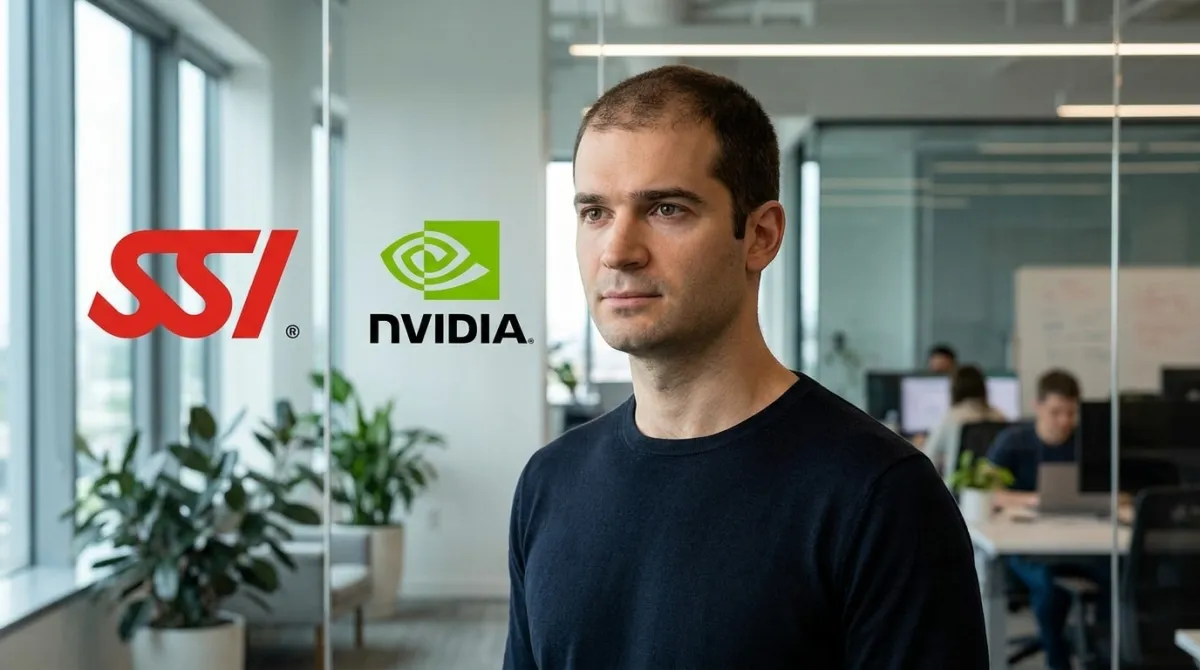
A: Safe Superintelligence (SSI) is Ilya Sutskever's AI startup, founded in June 2024 after he left OpenAI. SSI has been in stealth mode for over two years. Its first model is expected this week, backed by a $5 billion Nvidia investment and built on a technology called Test-Time Training (TTT).
Q: What is Test-Time Training (TTT)?
A: TTT is a technology that lets AI models learn during deployment. Unlike current models that freeze their knowledge at training, TTT models can update their own weights while processing new information, effectively learning on the job.
Q: Who is Ilya Sutskever?
A: Ilya Sutskever is the co-founder and former chief scientist of OpenAI. He led the development of GPT-2, GPT-3, and GPT-4, and was a key figure in the 2023 board drama that briefly ousted Sam Altman. He left OpenAI in May 2024 to found SSI.
Q: What is Nvidia's investment in SSI?
A: On July 27, 2026, Nvidia announced a strategic partnership with SSI to provide Vera Rubin hardware, increasing SSI's computing capacity by an order of magnitude. Reuters reported the investment at $5 billion. Nvidia gained "rare access" to SSI's research results before committing.
Q: What is the Vera Rubin system?
A: Vera Rubin is Nvidia's next-generation AI computing platform, successor to the current Blackwell architecture. It is not yet widely available—SSI is one of the first organizations to receive exclusive access.
Q: When will SSI's first model be released?
A: The model is expected to be released this week, following a post by a16z partner Martin Casado on August 25, who called it "the most important release of the year."
Q: How does TTT differ from current AI models?
A: Current models are trained once and frozen. They can only recall information through context windows. TTT models can update their own weights during deployment, allowing them to learn continuously from new data.
Q: What are the implications of TTT?
A: If TTT works, AI models could learn on the job—small models that continue learning could outperform static giants. The economics of AI would shift from pre-training everything to continuous learning, resetting competition on inference cost, data efficiency, and deployment flexibility.
Q: Has SSI published any research or benchmarks?
A: No. SSI has been completely silent since its founding, with no public papers, benchmarks, or technical reports. This means the first model will face intense scrutiny from the AI community.
Q: How did the AI community react to the news?
A: The community is highly anticipatory. Ilya Sutskever's track record—GPT-2, GPT-3, and the industry shift toward scaling—gives his next move significant weight. The combination of his reputation, Nvidia's $5 billion bet, and the TTT technology has generated widespread speculation and hype.