On August 5, Anthropic confirmed what had been rumored for months. It is building an in-house silicon team to design custom chips for Claude. A spokesperson told Business Insider the company will co-design hardware and models, allowing Claude to run faster and more efficiently "at the scale our customers need."
The company is hiring. The job listing seeks engineers with chip design and verification experience. The salary range: $320,000 to $485,000. Candidates must demonstrate "direct personal contribution" to the finalization and shipping of semiconductor designs. The listing says: "This is a role for someone who has shipped silicon, has a realistic relationship with schedules, and is comfortable making consequential calls without a large organization behind them."
Anthropic is not abandoning its existing suppliers. The company said it will continue a "multi-chip approach," with AWS, Google, Nvidia, and AMD hardware remaining central to its scaling. But the message is clear: Anthropic wants a fifth option — one it controls entirely.
Anthropic's revenue growth has forced this decision. In April, Reuters reported that Claude's annualized run-rate revenue had surged past $30 billion. At that scale, the economics of custom silicon start to make sense. Industry sources estimate the cost of designing an AI chip at roughly $500 million. That is a significant upfront investment. But for a company spending billions annually on compute, the payback period is short enough to justify. The logic is simple: if you are spending billions to rent chips from others, at some point it becomes cheaper to own your own. Anthropic has reached that point.
Anthropic currently runs Claude across four hardware platforms: Google TPUs, Amazon Trainium, Nvidia GPUs, and AMD hardware. Adding its own silicon would give it a fifth option — one it controls entirely. This is not a shift away from partners. It is a shift toward optionality. Anthropic has seen what happens when a single supplier has leverage. It is building leverage of its own.
The confirmation follows months of signals. Reuters reported in April that Anthropic was exploring custom chips. The Information reported last month that Anthropic had held talks with Samsung as a potential manufacturing partner. The hire of Clive Chan, who previously helped build OpenAI's chip program, signaled the company was moving from exploration to active development.
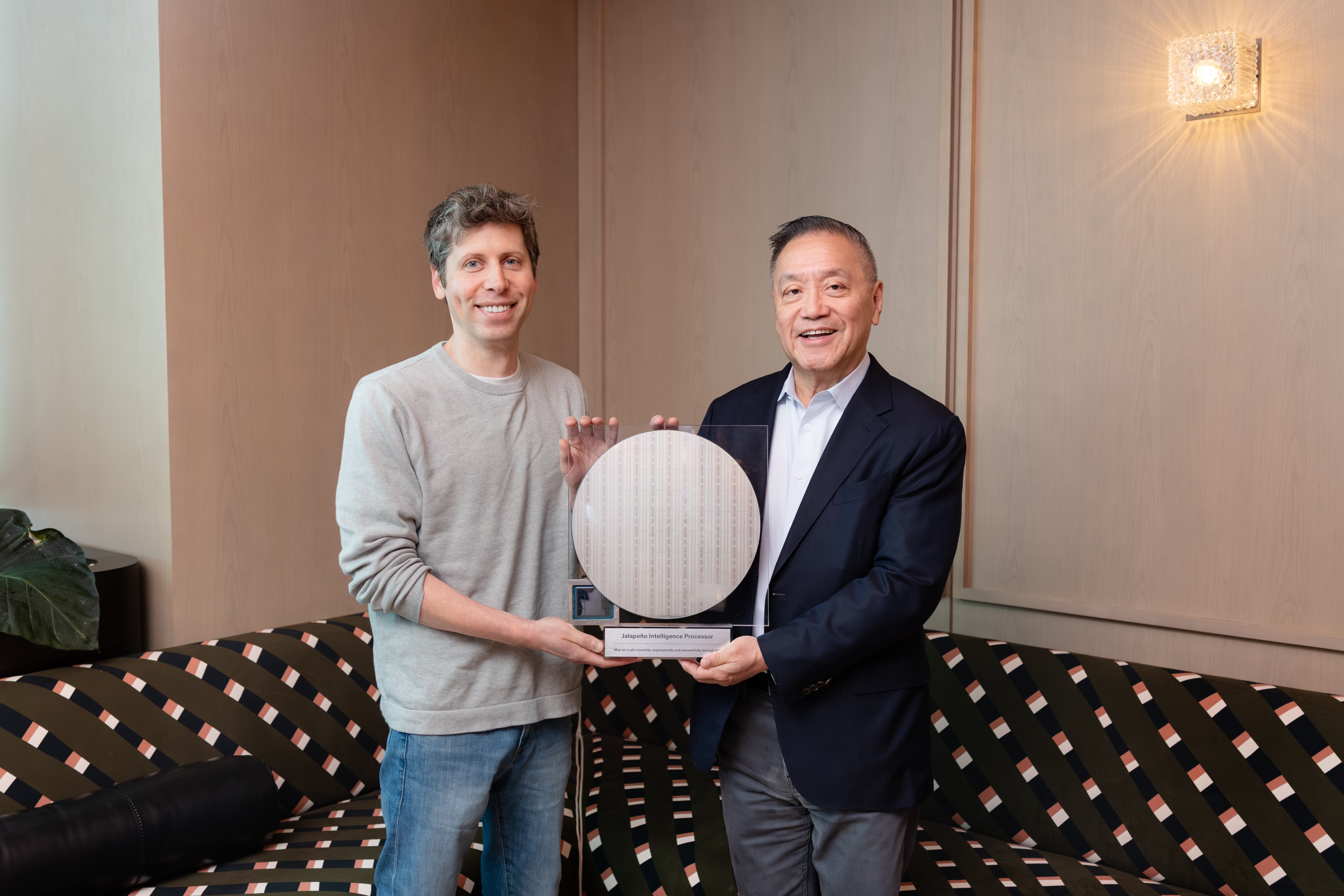
Anthropic joins a growing list of AI companies investing in custom silicon. OpenAI unveiled Jalapeño in June, a custom inference chip developed with Broadcom targeting late 2026 deployment. Meta plans to put its Iris chip into production in September. Mistral's CEO has said the company is considering building its own chips. The trend is clear: AI model companies are becoming hardware companies. The line between "software lab" and "semiconductor company" is blurring. The market is reacting accordingly. AI chip design is now one of the most expensive and technically demanding areas in technology. But the companies that succeed will have a structural advantage over those that don't.
Nvidia still dominates the AI accelerator market. Bank of America analysts note that ASICs typically serve specific cloud vendors and specific workloads, while Nvidia offers a broadly available, mature ecosystem with integrated software and hardware. But the competitive landscape is shifting. Every major AI lab and cloud provider is now developing custom silicon. Each new entrant reduces Nvidia's pricing power. Each successful chip design validates the thesis that general-purpose GPUs are not the optimal solution for every workload. Nvidia's dominance is not ending. But it is being challenged from multiple directions. The question is how much market share it can hold as its largest customers become its competitors.
P.S. If you are an AI startup founder, Anthropic's move is a signal: at a certain scale, renting compute becomes more expensive than owning it, and the threshold is lower than you think. The question is whether you will reach it before the incumbents build moats you cannot cross.