

On August 22, Tiangong Ultra ran 100 meters in 9.39 seconds—0.19 seconds faster than Usain Bolt's world record. By August 25, it had run 8.86 seconds. Three days, three records. The first number was the headline. The second number is the signal.
The numbers tell the story of a system that is not just fast—it is getting faster at an accelerating rate.
On the opening day of the World Humanoid Robot Games, Tiangong Ultra ran 9.39 seconds, breaking Bolt's 9.58-second human record. In the preliminaries, it improved to 9.34 and 9.32 seconds. On August 25, in the 100m semifinals, it ran 8.86 seconds. Three days, three records.
The contrast with last year makes the scale of the shift clear. In the first Games in 2025, the best 100m time was 21.50 seconds. One year later, Tiangong Ultra has cut that time by more than half—from 21.50 to 8.86 seconds.

More Torque, Better Cooling, Smarter Control
The speed gains are not accidental. They come from synchronous hardware and software iteration.
On the hardware side, Tiangong Ultra's joint motors have received a critical upgrade—higher torque and speed, providing the power for high-speed sprinting and explosive jumping. The cooling system has been redesigned for sustained high-intensity operation. The chassis has been optimized for aerodynamics.
On the software side, the team has optimized the algorithm framework for high-speed running. For the 100m, they focused on acceleration and straight-line speed. For the 400m and 1500m, they prioritized cornering and rhythm control. Tiangong Ultra can now navigate at speed without relying on track markings—a sign that its autonomous navigation and route-planning capabilities have matured significantly from last year.
One engineer described the improvement in stark terms: just a month ago, Tiangong Ultra's speed was 7 meters per second. One month later, it had pushed past 10 meters per second. If you give the team another month, it will be faster still.
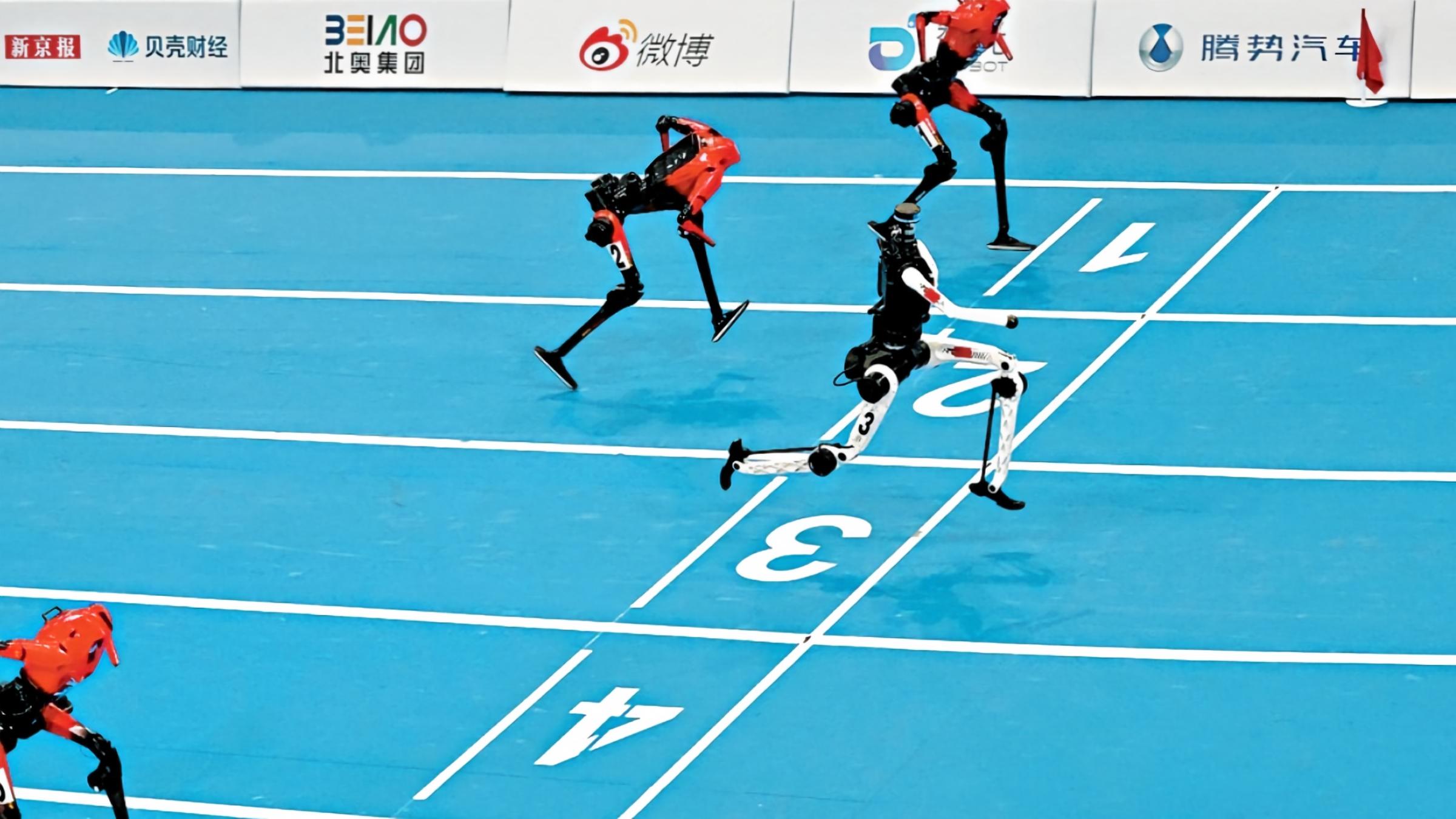
Last Year Robots Just Finished. Now They Win.
Last year, the industry standard was simple: robots just needed to finish the race. This year, the standard is different. The machine must be stable, reliable, and optimized for peak performance.
Tiangong Ultra's 400m race demonstrated this shift. The team prepared multiple speed settings: conservative in the preliminaries, a validation run in the semifinals, and a full push in the final. After crossing the finish line, the robot decelerated sharply and held its balance—a testament to the sophistication of its motion control algorithms.
The high jump competition told a similar story. Tiangong Ultra jumped 2.8843 meters, surpassing the human world record of 2.45 meters—nearly three times last year's winning height of 95.6 centimeters.
With robots from 16 countries and over 2,000 machines competing, the event has moved beyond demonstration. It has become a proving ground for engineering capability.
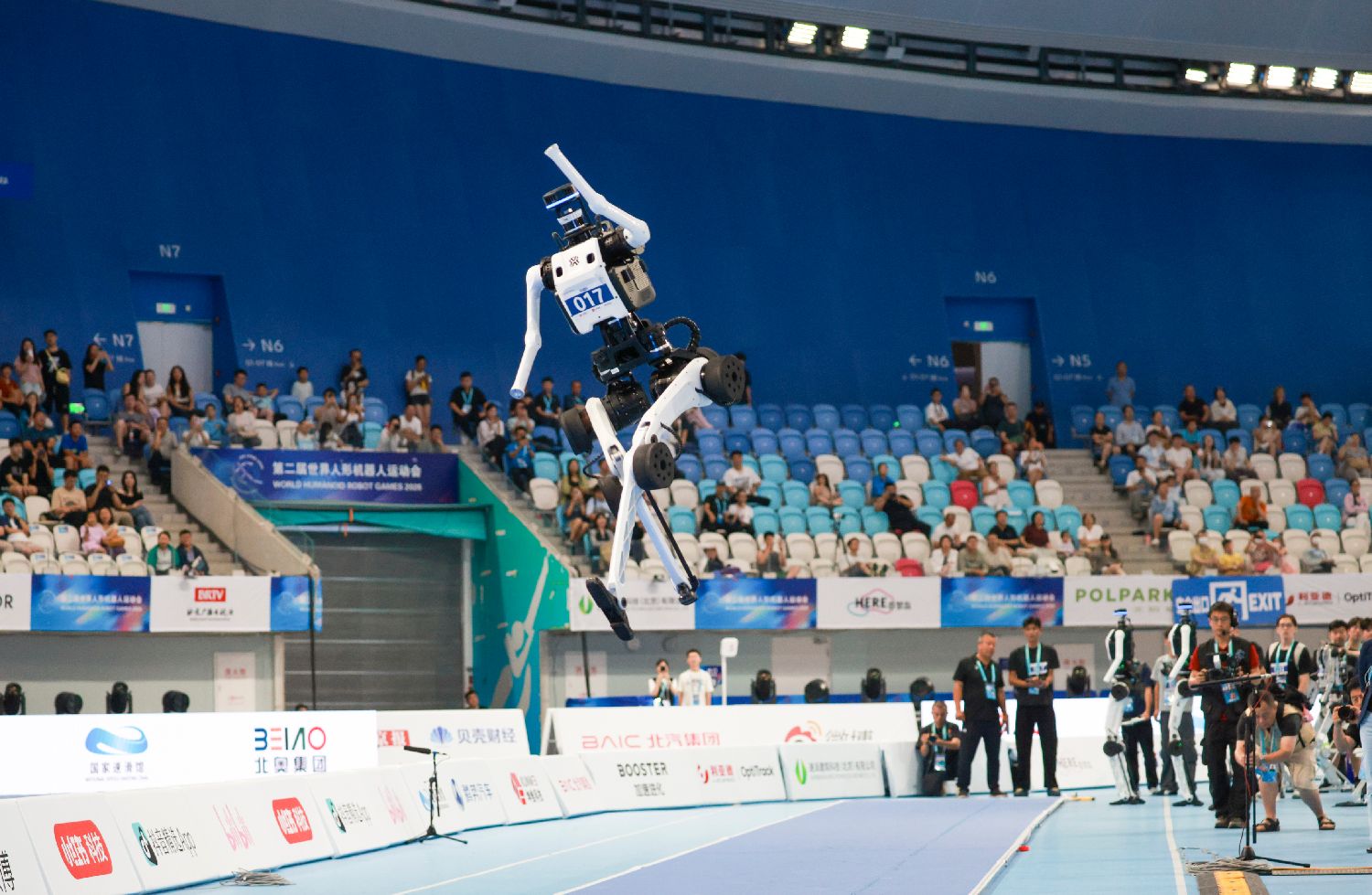
The Race Isn't Against Humans Anymore
The 8.86-second record is not a one-off stunt. It is evidence that the engineering challenges of high-speed robotics—joint torque, thermal management, structural fatigue, and motion control—are being solved at an accelerating rate.
The team has already demonstrated that they can iterate faster than the competition. The question is no longer whether humanoid robots can outrun humans. It is how fast they can run when the engineers are given another month, another year, and another generation of hardware.
P.S. The quiet detail in the 400m result: Last year's winning time was 88 seconds. This year's was 38 seconds. A 50-second improvement in one year means the learning curve for embodied intelligence has entered its steep phase—and the race is no longer against human athletes, but against physics and engineering limits.
Frequently Asked Questions
Q: How fast did Tiangong Ultra run the 100m?
A: Tiangong Ultra ran 8.86 seconds in the 100m semifinals on August 25, 2026, at the World Humanoid Robot Games. It had previously run 9.39 seconds on opening day—breaking Usain Bolt's human world record of 9.58 seconds—and 9.34 and 9.32 seconds in preliminary rounds.
Q: How much did the 100m time improve from last year?
A: Last year's winning 100m time was 21.50 seconds. This year's time of 8.86 seconds represents a 12.64-second improvement in one year—more than halving the previous time.
Q: What hardware improvements enabled the speed gain?
A: The team upgraded the joint motors with higher torque and speed, redesigned the cooling system for sustained high-intensity operation, optimized the chassis for aerodynamics, and improved the structural frame for better power-to-weight ratio.
Q: What software improvements enabled the speed gain?
A: The team optimized the algorithm framework for high-speed running with different strategies for different events—acceleration and straight-line speed for the 100m, cornering and rhythm control for the 400m and 1500m. The robot can now navigate at speed without relying on track markings.
Q: How does Tiangong Ultra compare to human world records?
A: Tiangong Ultra has now beaten the human 100m record (9.58 seconds) and high jump record (2.45 meters). Its 400m time of 38.15 seconds also beat the human record of 43.03 seconds.
Q: What was the 400m improvement from last year?
A: Last year's winning 400m time was 88 seconds. This year's winning time was 38.15 seconds—a 50-second improvement in one year.
Q: What does the 8.86-second record mean?
A: It is not a one-off stunt. It signals that the engineering challenges of high-speed robotics—joint torque, thermal management, structural fatigue, and motion control—are being solved at an accelerating rate.
Q: What is the next milestone for Tiangong?
A: The team has demonstrated they can iterate faster than the competition. The next question is how fast they can run when given another month, another year, and another generation of hardware.
Q: How many robots competed in the Games?
A: Over 2,000 robots from 16 countries competed in the second World Humanoid Robot Games in Beijing. The event has moved beyond demonstration into a proving ground for engineering capability.
Q: What is the significance of three records in three days?
A: It demonstrates that the improvement is not a one-off "breakthrough" but a pattern of continuous optimization. The system is getting faster at an accelerating rate, suggesting that embodied intelligence has entered a steep learning curve.