
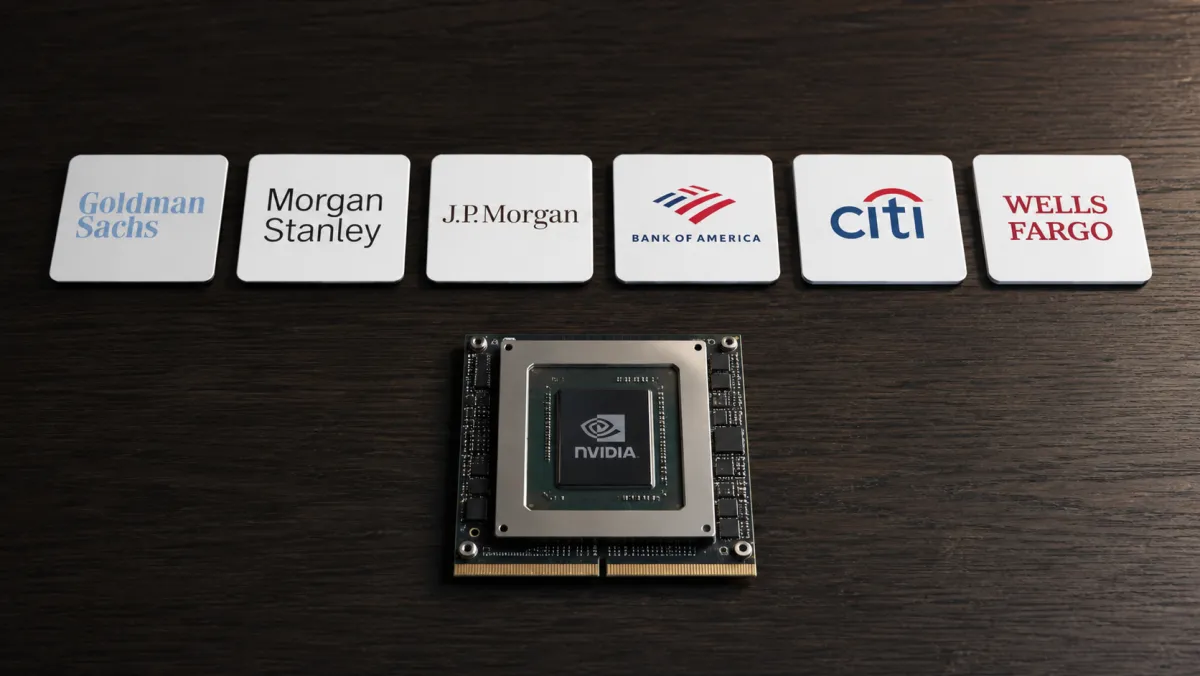
This isn’t a chip deal. It’s an asset-class creation event.
On August 10, Nvidia announced it had signed memorandums of understanding with Apollo, BlackRock, Blackstone, Brookfield, Goldman Sachs, and KKR to establish independent compute financing platforms . The target: mobilize over $500 billion in third-party capital over time for customers — frontier AI labs, enterprises, and AI clouds — to build data centers and acquire Nvidia hardware .
The money is not Nvidia’s. It’s not a single fund. It’s not a commitment to any one customer. It’s a financing platform designed to do what financing platforms do: channel institutional credit, insurance capital, and private funds into a new asset class .
The core claim is simple. Nvidia’s GPUs are no longer rapidly depreciating hardware. They are “revenue-generating assets” — productive, long-lived, fungible across customers and workloads, and continuously improved by CUDA software . Huang’s argument: if you can underwrite a toll road or a power plant based on long-term cash flows, you can underwrite an AI factory the same way .
The asset managers agree. Apollo President Jim Zelter called modern compute “a scarce, mission-critical asset class with compelling investment characteristics” . BlackRock CEO Larry Fink said this is the start of the “next future for financial engineering,” comparing it to the creation of mortgage-backed securities in the 1970s . Goldman Sachs CEO David Solomon said they’re creating “a market for credit backed by NVIDIA compute” .
This language is not accidental. The partnership is designed to solve a structural problem: tech companies’ capital expenditures are on track to exceed $730 billion in 2026, squeezing free cash flow and forcing balance sheets into heavier debt loads . By offloading hardware financing to third-party capital, Nvidia’s customers can scale without taking the full hit to their own books .
Huang cited A100 as evidence of the asset’s longevity. Launched in 2020, the A100 is still in active commercial use six years later, with customers signing multi-year capacity contracts . H100 lease pricing has been rising, and compute remains supply-constrained . This is not the depreciation curve of consumer GPUs.
But the scale of the ambition is also drawing scrutiny. Short-seller Jim Chanos, who famously predicted the Enron and subprime mortgage crises, posted a sarcastic comparison to the financial engineering that preceded 2008 . The criticism is circularity: Nvidia invests in AI companies, those companies use the money to buy Nvidia chips, and Nvidia books the revenue. Does a $500 billion third-party financing platform break that circle, or just widen it?
Huang has an answer. “This plan is precisely to address concerns about circular financing,” he wrote, “by bringing independent institutional capital into the AI infrastructure market” . The third-party investors will underwrite each project independently. The demand, he insists, is real — from AI labs, startups, enterprises, and cloud providers .
The partnerships remain subject to final agreements. But the implications are already visible. Nvidia’s share price fell about 3% on the announcement, while its five-year credit default swap rose to a two-week high — a sign that the market is still processing the credit risk implications of a chipmaker becoming a financial intermediary .
If Huang is right, this is the moment AI compute became bankable infrastructure, not speculative hardware. If Chanos is right, this is the moment the AI boom began financing itself with borrowed money. Both readings are on the table.
P.S. One of the more telling details from CNBC’s joint interview: Huang approached the six firms with the idea himself . None said no . That’s the kind of signal the market will be parsing for a while.
Frequently Asked Questions
Q: What exactly did Nvidia and Wall Street announce on August 10?
A: Nvidia signed memorandums of understanding with Apollo, BlackRock, Blackstone, Brookfield, Goldman Sachs, and KKR to establish independent compute financing platforms. The target is to mobilize over $500 billion in third-party capital over time for customers to build data centers and acquire Nvidia hardware.
Q: Is this $500 billion of Nvidia's own money?
A: No. Nvidia is not committing its own balance sheet. The money comes from third-party institutional capital — pension funds, insurance companies, sovereign wealth funds, and private credit. Nvidia is facilitating the financing, not funding it.
Q: Why does Nvidia need Wall Street to do this?
A: AI companies face a structural financing problem: capital expenditures are on track to exceed $730 billion in 2026, squeezing free cash flow and forcing balance sheets into heavy debt loads. By offloading hardware financing to third-party capital, Nvidia's customers can scale without taking the full hit to their own books.
Q: What does Jensen Huang mean by "chips as an investable asset class"?
A: Huang argues that Nvidia's GPUs are no longer rapidly depreciating hardware. They are "revenue-generating assets" — productive, long-lived, fungible across customers and workloads, and continuously improved by CUDA software. He points to the A100, launched in 2020, still in active commercial use six years later with multi-year capacity contracts.
Q: Who is financing this, and how do they make money?
A: The asset managers will underwrite individual projects — data centers and GPU clusters — based on projected cash flows from long-term compute leases. They earn returns through interest payments, equity stakes in the infrastructure, or both. The capital comes from their institutional funds.
Q: What is the "circular financing" criticism?
A: Critics like short-seller Jim Chanos argue that Nvidia invests in AI companies, those companies use the money to buy Nvidia chips, and Nvidia books the revenue. They question whether this is real demand or self-financing. Huang responds that third-party investors will independently underwrite each project, breaking the circularity.
Q: Who is Jim Chanos, and why does his opinion matter?
A: Jim Chanos is a well-known short-seller who famously predicted the Enron and subprime mortgage crises. He posted a sarcastic comparison to the financial engineering that preceded 2008, saying he's been "in the business of buying puts on people confusing balance sheets and income statements for 40 years."
Q: What are the asset managers saying about this?
A: Apollo President Jim Zelter called modern compute "a scarce, mission-critical asset class with compelling investment characteristics." BlackRock CEO Larry Fink compared it to the creation of mortgage-backed securities in the 1970s. Goldman Sachs CEO David Solomon said they're creating "a market for credit backed by NVIDIA compute."
Q: How did the market react?
A: Nvidia's share price fell about 3% on the announcement, while its five-year credit default swap rose to a two-week high — a sign that the market is still processing the credit risk implications of a chipmaker becoming a financial intermediary. The CDS spread is a market instrument that measures credit risk, so its rise indicates investors are paying more to insure against Nvidia's debt default.
Q: What happens next?
A: The partnerships remain subject to final agreements. Individual financing deals will be negotiated with customers on a case-by-case basis. The structure is still being finalized, and the partnerships are non-exclusive, meaning customers can still use their own capital or other financing sources.