The Financial Times reported on July 1 that the White House is in advanced talks with AI companies to establish voluntary standards governing the release of new frontier models. The framework is expected to set benchmarks for advanced models, define timelines for release, and clarify who can access them in the United States and abroad. The announcement could come as early as next week .
This framework is the implementation of President Trump’s June 2 executive order, which directed agencies to work with leading AI developers to test advanced models before release and draft standards for their deployment. The order established a voluntary 30-day pre-release review window and explicitly stated that it should not be interpreted as creating mandatory licensing or pre-approval requirements .
But the word“voluntary” now looks different than it did on June 2. In the weeks since, the government has shown it can and will intervene. What started as a“you may” has become a“you will.”
Three Weeks. Three Interventions.
Three events in three weeks tell the real story.
On June 12, the Commerce Department imposed export controls on Anthropic‘s Fable 5 and Mythos 5, effectively shutting them down globally . Anthropic took both models offline for all users because it couldn’t verify user nationality in real time.
On June 26, OpenAI released GPT-5.6 Sol in a limited preview. The company said it had coordinated with the U.S. government and was releasing to a small group of trusted partners . A Commerce Department official had called OpenAI CEO Sam Altman directly to emphasize the need for the staged release.
On June 30, the Commerce Department lifted the export controls on Anthropic‘s models . The restrictions were removed after Anthropic agreed to government conditions.
Anthropic had to negotiate to get its model back. OpenAI complied with a staged release. The pattern is clear:“voluntary” means you can say no — as long as you’re ready for what happens next.
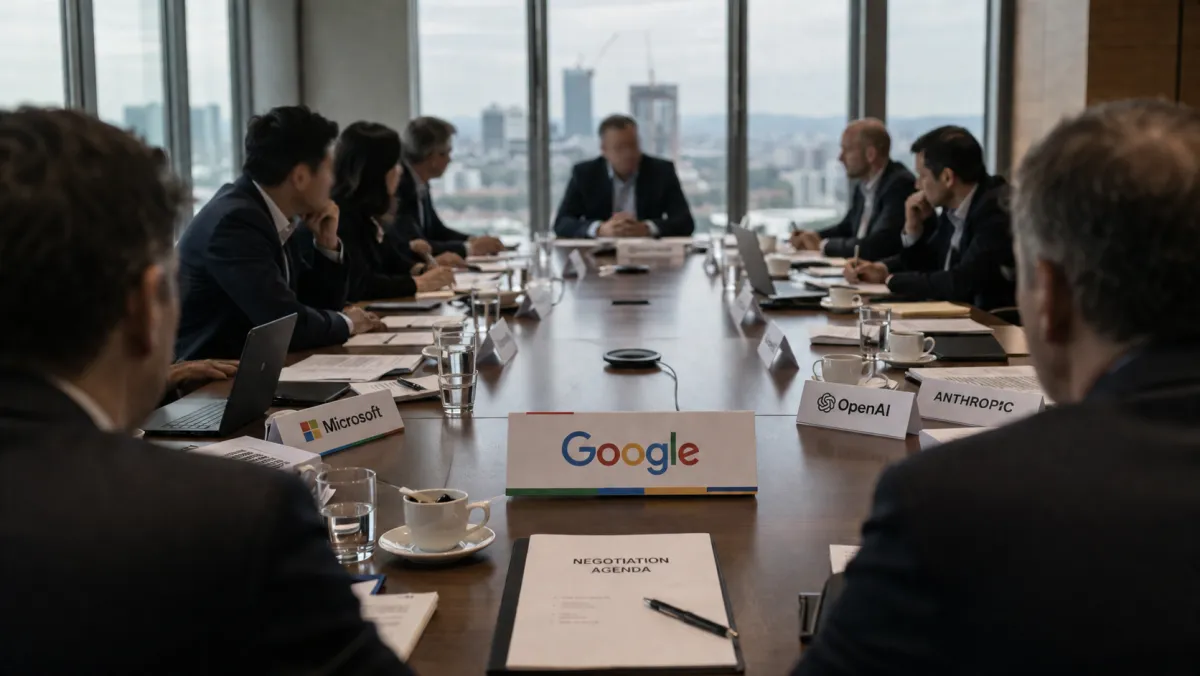
Google Is Already at the Table
While Anthropic and OpenAI were dealing with the fallout, Google was doing something else.
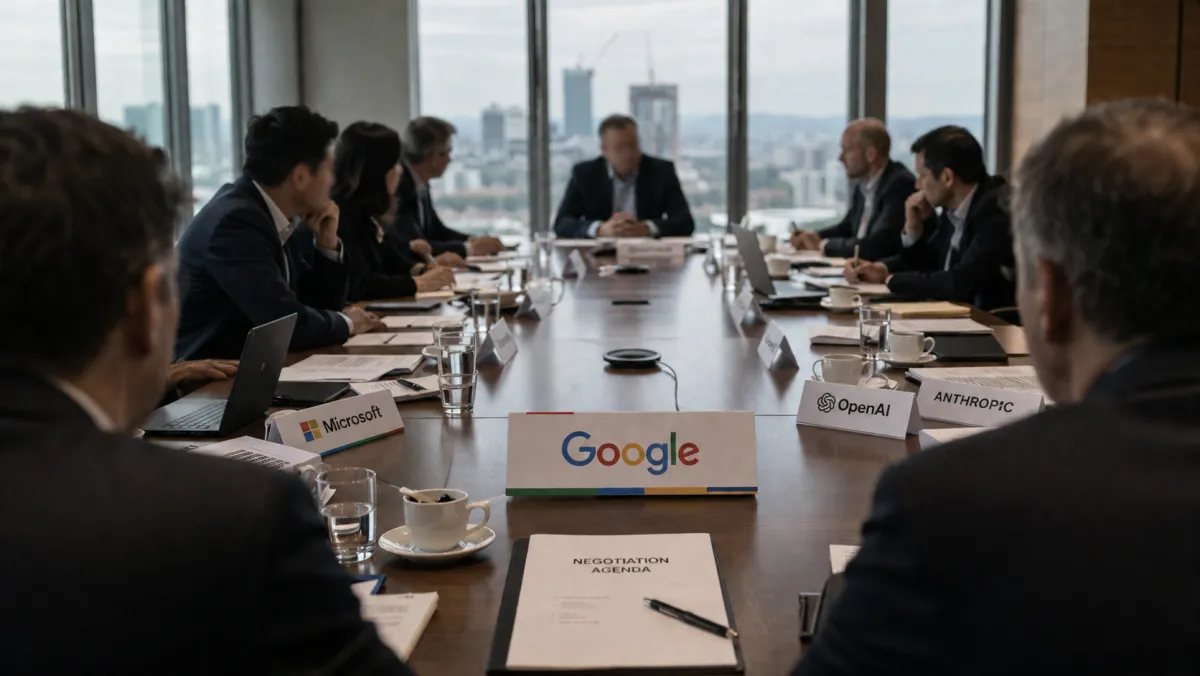
According to Reuters, Google has been in discussions with the government ahead of the release of its own advanced coding models with more sophisticated capabilities . The company is also participating in the broader industry-wide talks on AI standards.
The difference is critical. Anthropic and OpenAI were reacting to government decisions made about their models. Google is participating in the decisions before they are made. When you‘re at the table when the standards are written, compliance is a feature, not a burden.
The“voluntary” framework is being built by the companies that show up to write it. Google showed up early. Anthropic and OpenAI are now negotiating the terms.
The NSA Is Writing the Rules in Secret
The executive order designates the National Security Agency to run the classified benchmarking process that determines which models qualify as“covered frontier models.” The NSA director makes the final designation.
This is an unusual choice. The NSA is an intelligence agency, not a civilian standards body like NIST. The criteria for the“covered frontier model” designation will be classified. No one outside the government can see the standard that determines whether your model is subject to review or restriction.
Law firms that analyzed the order have already warned that“voluntary today” could become“baseline tomorrow.” The framework may effectively create a tiered system where certain companies receive preferential early access to the most capable models. If the government designates a model as“covered,” it can mediate early access to it and help select which partners get to use it first.
That’s not a neutral standard. It‘s a competitive advantage that the government hands out.
P.S. The “voluntary” framework is voluntary in the same way that getting in line early for a limited release is voluntary. You can wait. You can watch others participate. But when the rules are written without you, you don’t get to complain about what they say. The window is still open. It won‘t be for long. Google is already inside. The rest are still at the door.