

On July 1, Meta did something that split the market in two. The company confirmed plans to sell excess AI compute to external customers, effectively becoming a cloud provider — and a direct competitor to AWS, Azure, and CoreWeave.
The market‘s reaction was not subtle. Meta’s stock surged nearly 9% — the market rewarding a company finally showing financial discipline on its massive AI infrastructure spending. But the chip sector cratered. The Philadelphia Semiconductor Index tumbled over 6%. Nvidia fell, AMD dropped nearly 7%, Intel was down 4%, and memory makers SanDisk and Micron each fell more than 10%.
At the same time, other tech stocks that have spent less on AI hardware rallied. The Magnificent 7 index outperformed the SOX by 8 percentage points — the widest gap since 2015. This was not a market breakdown. It was a market realignment.

The ‘Compute Is Scarce’ Playbook Just Broke
For two years, the AI hardware trade rested on a single assumption: compute is scarce, demand is infinite, and spending is always justified. Nvidia‘s $3.4 trillion market cap and the explosive growth of CoreWeave were built on that foundation.
Meta just challenged that foundation. The company spent massively on AI infrastructure and is now selling the spare capacity. The market read that as a signal that even the most aggressive spender is beginning to ask: will we actually use all this?
CoreWeave and Nebius — companies built entirely on GPU scarcity — were hit hardest, with shares falling more than 13% each . Their entire business model depends on the assumption that compute remains scarce and expensive. Meta’s move to sell spare capacity directly undermines that assumption.
This Isn‘t About Surplus. It’s About Maturity.
But there‘s a more nuanced read. Meta isn’t dumping surplus GPUs because it has too many. It‘s sorting its compute by generation and purpose.
The older H100 and H200 chips are being redirected to inference, fine-tuning, and smaller workloads. The newer Blackwell and Rubin clusters remain reserved for the company’s most demanding frontier model training. Meta is not slowing down its next-generation compute procurement. It‘s recycling older capacity into a new revenue stream.
That’s not a signal of AI obsolescence. It‘s a signal of maturity. The company is treating compute as an asset class — one that can be allocated, optimized, and monetized across different time horizons.
Where the Real Risk Lives
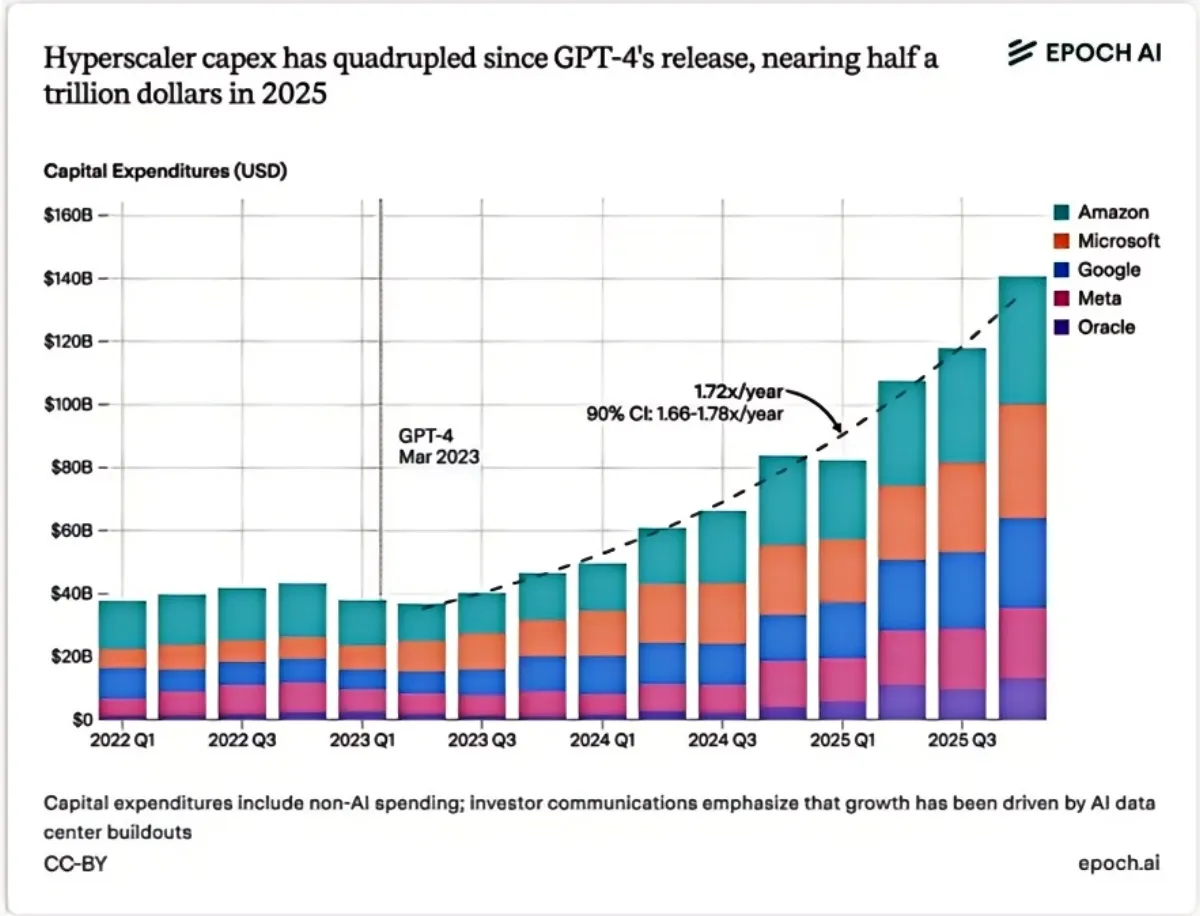
The real shift isn’t about Meta. It‘s about what Meta’s move signals for the broader AI hardware cycle. The capital expenditure boom that has driven the chip sector for two years is starting to slow. The era of “spend anything” is giving way to an era of “spend smarter.”
Investors are already shifting from hardware to software and from infrastructure to applications. The reallocation is dramatic — software stocks posted their best relative performance versus semiconductors in a year on July 1.
The software sector is benefiting from the same realization that is hurting chips: if compute is becoming cheaper, the companies that build on top of it will capture more value than the companies that build the hardware underneath it.
P.S. Meta‘s move is not the death of AI infrastructure. It’s the beginning of its differentiation. The first phase was defined by one rule: buy everything, build everything, spend everything. That phase is ending. The second phase will be defined by a new rule: spend only where it works, monetize wherever you can, and treat compute as a resource to be managed, not a race to be won. The semiconductor sector has not been priced for that transition. The market is just beginning to realize it.