When the World Artificial Intelligence Conference opens in Shanghai on July 17, the hardware density will be overwhelming. Huawei is showing a compute cluster that scales to 8,192 cards. A Shanghai chip startup is claiming 520 TFLOPS on a 14nm process. Two companies are launching phones that promise to replace apps with agents.
It's not CES. It's not Mobile World Congress. It's WAIC — and it's becoming the most important hardware event in AI this year.
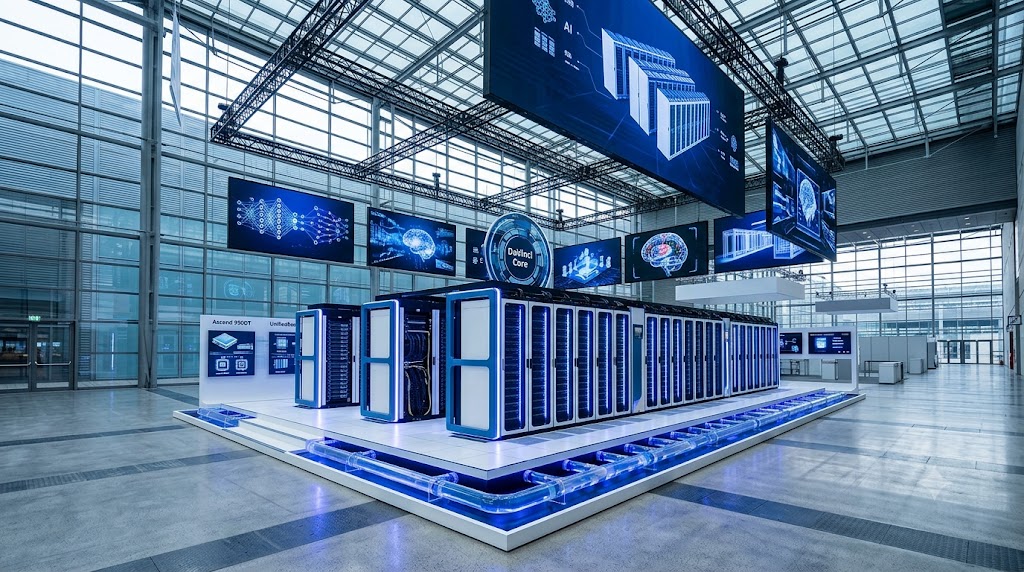
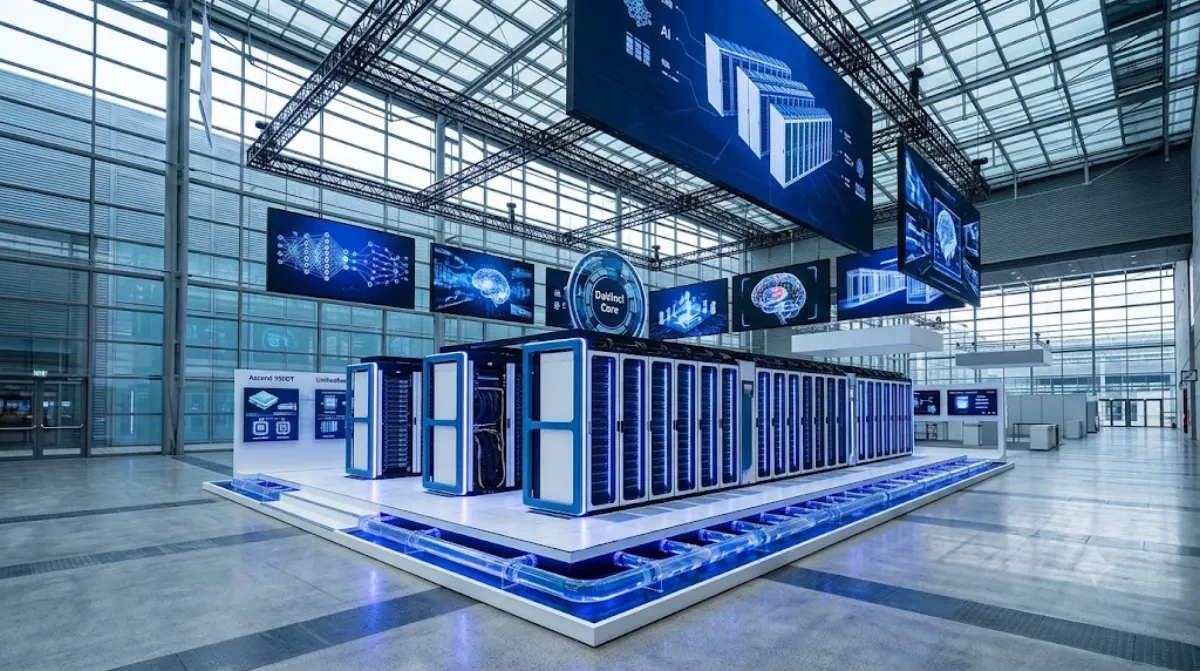
Huawei's Atlas 950 SuperPoD is the main attraction. Announced in September 2025, this is the first time anyone outside Huawei has seen the actual hardware. The numbers are staggering. A single rack starts at 64 Ascend 950DT cards. The full system scales to 8,192 cards interconnected — that's 57 times Nvidia's NVL144 design. Total FP8 compute: 8 EFLOPS. Memory: 1,152 terabytes. Interconnect bandwidth: 16.3 petabytes per second.
Huawei claims the 950 SuperPoD delivers 17x the training performance of its predecessor, the Atlas 900. The interconnect technology, a proprietary protocol called Lingqu 2.0, cuts single-hop latency from 2 microseconds to 200 nanoseconds — a 10x improvement. The system is already in demand. Multiple cloud providers, telecom operators, and local AI compute centers have placed orders. DeepSeek and other major Chinese AI labs have fully adapted their models to the platform.
Here's the context: the US restricts China's access to advanced chips. Huawei is trying to build a competitive AI infrastructure stack using domestic silicon. The Atlas 950 is the proof point — not a slide deck, a shipping product. That matters more than any benchmark score.
Meanwhile, a Shanghai startup called Oriental Computing Core is taking a different route. Instead of chasing advanced nodes, they're trying to bypass them. Their DF1000 chip, announced on July 13, uses a 14nm process. But it achieves 520 TFLOPS at BF16 precision through two architectural bets: a software-defined architecture that reconfigures hardware on the fly, and 3D stacking that puts memory directly on top of compute logic.
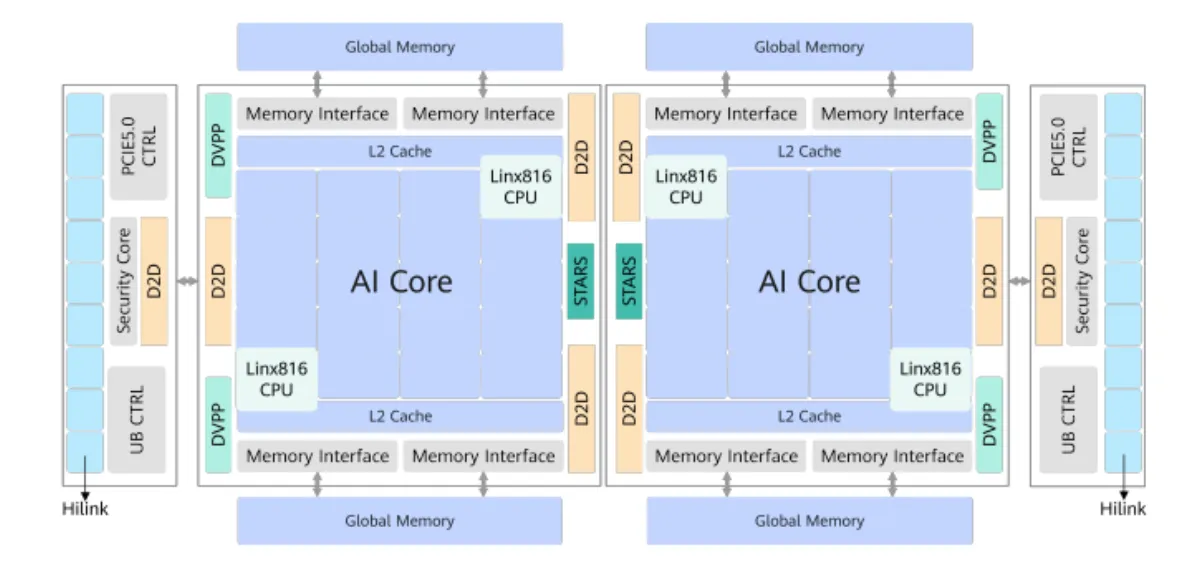
The 3D stacking is the more eye-catching claim. The chip uses wafer-level hybrid bonding to stack logic and DRAM layers vertically — not through HBM modules, but directly integrated at the wafer level. Interconnect spacing drops to sub-micron levels, delivering 6.4 TB/s memory bandwidth. That's several times higher than HBM-based designs, according to the company.
But the company's chairman, Wei Shaojun, a Tsinghua University professor, says the real breakthrough is the software-defined architecture. The hardware can reconfigure itself dynamically for different workloads — a concept Wei has been working on for two decades. It's a bet that architecture can compensate for process node disadvantages. The company has already completed a 128-card cluster validation. They claim a next-generation chip, DF2000, will arrive in Q4 2026.
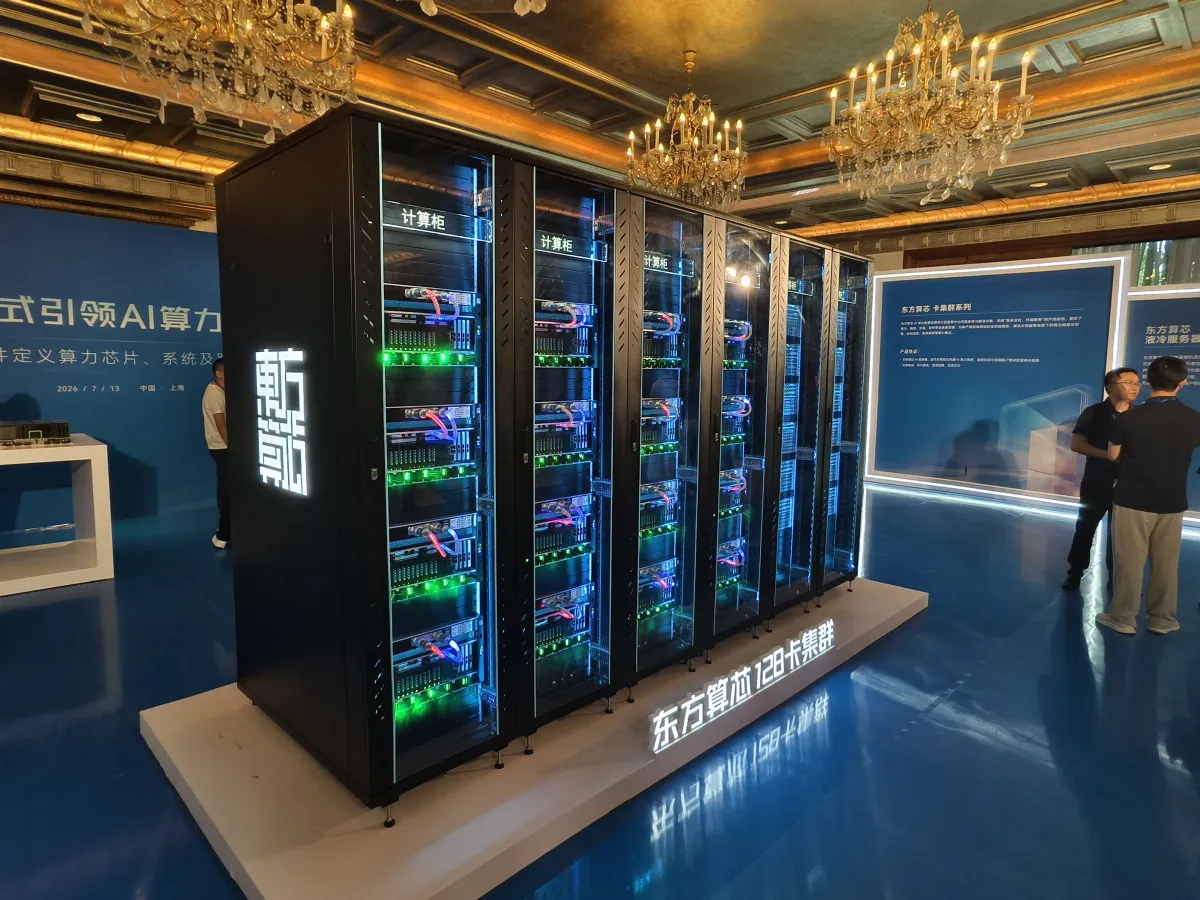
Here's the skeptical question: can a 14nm chip running at 520 TFLOPS compete with Nvidia's latest GPUs on real workloads? The answer depends on whether software-defined hardware can deliver on its promise of higher utilization. The company says yes. The market will decide.
And then there are the phones. Two companies are launching "AI agentic phones" at WAIC. Nubia, working with ByteDance's Doubao AI, will show its second-generation agentic phone — a mass-market flagship with a dedicated orange AI button and a 7,000 mAh battery.
StepFun, a Shanghai AI lab, beat them to the punch by one day. Their STEPX Neo runs an operating system built from scratch for agents — not Android with an AI assistant bolted on. The founder's framing is deliberate: "Our approach is different."
Both claim to be "world's first." Both are right, depending on how you define "AI native." Nubia's phone is "Android plus an AI agent." StepFun's phone is "AI is the OS." The first generation of Nubia's Doubao phone sold 30,000 units in December 2025 and promptly got blocked by WeChat, Taobao, and Alipay for simulating taps. The second generation is moving to protocol-based integration — apps voluntarily expose capabilities rather than being operated through system-level taps.
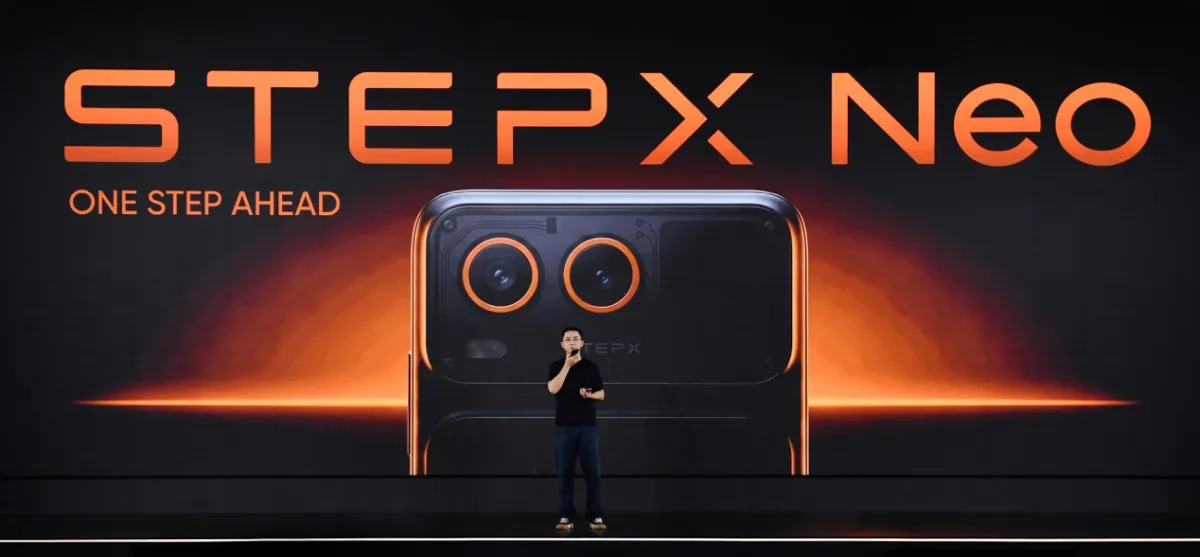
StepFun's approach bypasses that problem by building the agent into the OS itself. But the same ecosystem challenge remains: without WeChat, can any AI phone in China actually work?
The three stories connect through a single thread: China is trying to build an AI hardware stack from chips to phones, independent of US supply chains and US platforms. Huawei's compute cluster, Oriental Computing Core's 3D-stacked chip, and the agentic phones are all part of the same thesis — that AI requires a full stack, and China needs to build its own. Whether that stack can compete globally is still an open question. But this week in Shanghai, the stack is no longer theoretical.
P.S. If you're an Nvidia or Apple product planner, this week's WAIC announcements are worth a look — not because any single product is a threat, but because the ecosystem is moving faster than expected. The real question isn't whether Huawei's cluster works; it's whether customers believe it can.