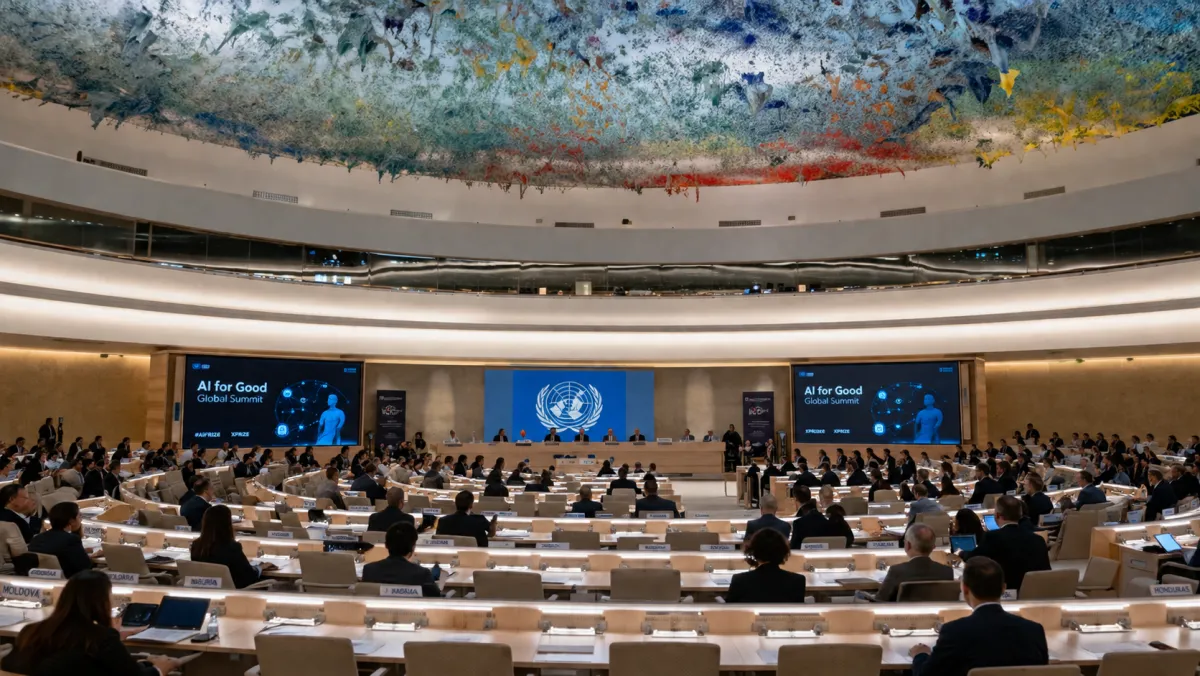
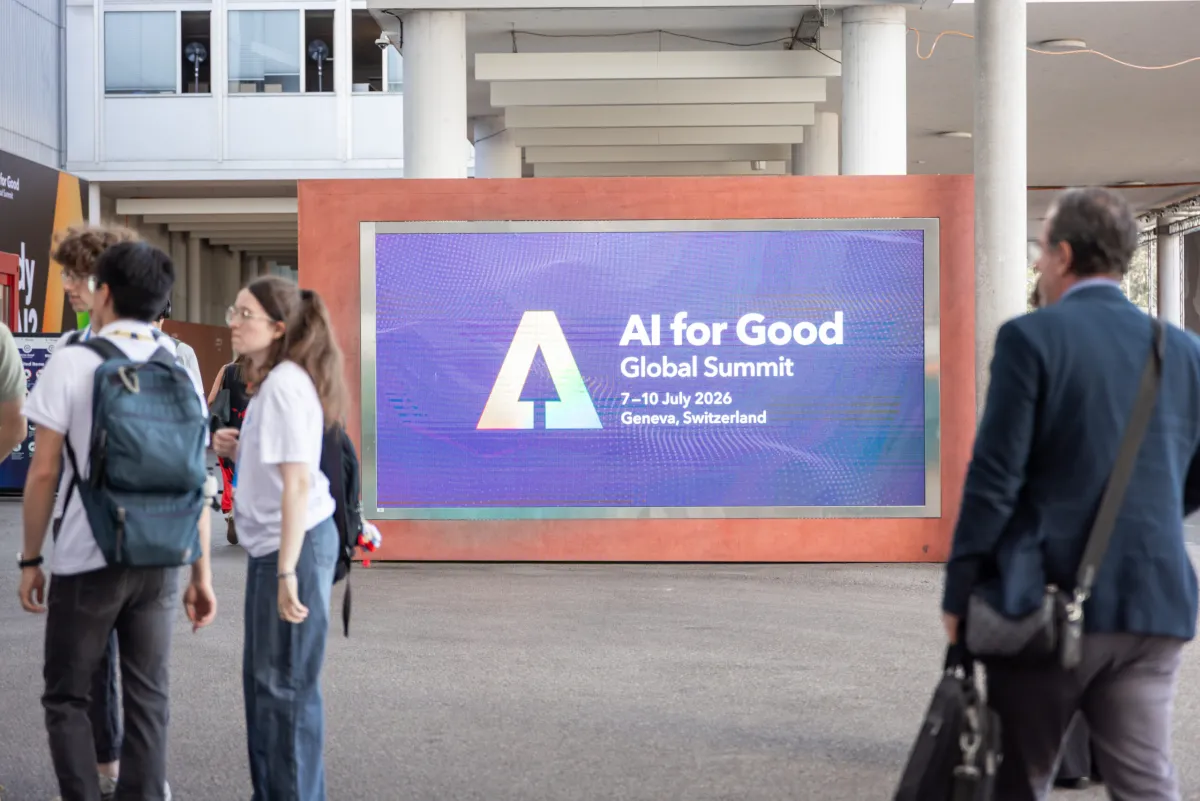
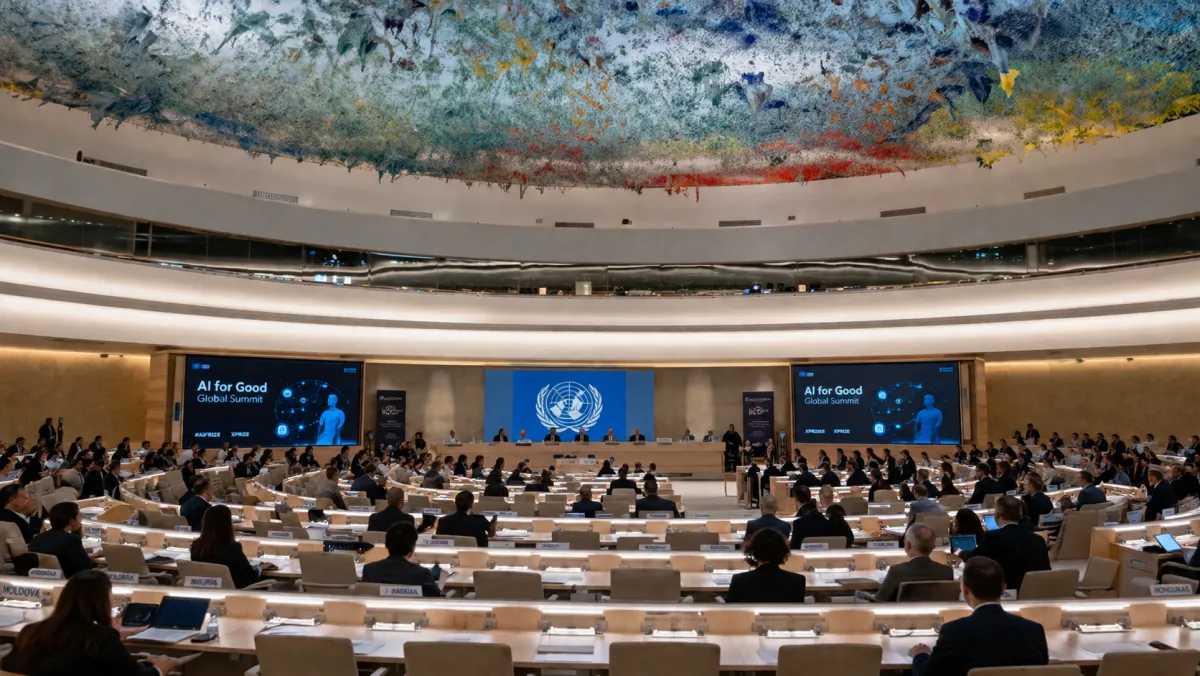
The AI for Good Global Summit is underway in Geneva. Four days. 50+ UN agencies. Thousands of participants. And for once, no one is talking about model parameters.
The Vatican just showed up. So did 250 students from 50 countries. The question everyone is wrestling with isn't "how do we make AI smarter?" It's "who gets to decide what smart means?"
That's a different conversation. And it might matter more than any model release this week.
The Vatican Just Entered the AI Governance Chat
Pope Leo XIV sent an official message to the summit. Signed by Cardinal Secretary of State Pietro Parolin. Released July 8, the second day of the conference.
The Holy See wants a seat at the table. Not on technical standards. On moral ones.
The message references the Pope's recent encyclical, Magnifica Humanitas, dedicated to "safeguarding the human person in the age of AI." The document was born from listening to scientists, engineers, political leaders, and teachers.
But also from "troubling accounts of the potential misuses of algorithms and the loss of human agency in critical areas." This isn't a blessing on AI. It's a warning.
The Pope's message assured participants of the Holy See's "presence and openness to dialogue." The goal: "to identify new paths for the common good and for promoting a dignified life for all." That's a different framing than Silicon Valley uses.
No mention of disruption. No talk of moving fast and breaking things. Instead: dignity. Agency. The common good.
The Vatican is inserting itself into the AI governance debate on the grounds that this technology affects "some of the major questions of our time regarding the future of humanity." That's not a peripheral concern. It's the whole point.
AI governance has been a conversation among technologists, policymakers, and executives. Now it's becoming a conversation among ethicists, religious leaders, and moral philosophers. That changes the tone. And it changes the stakes.
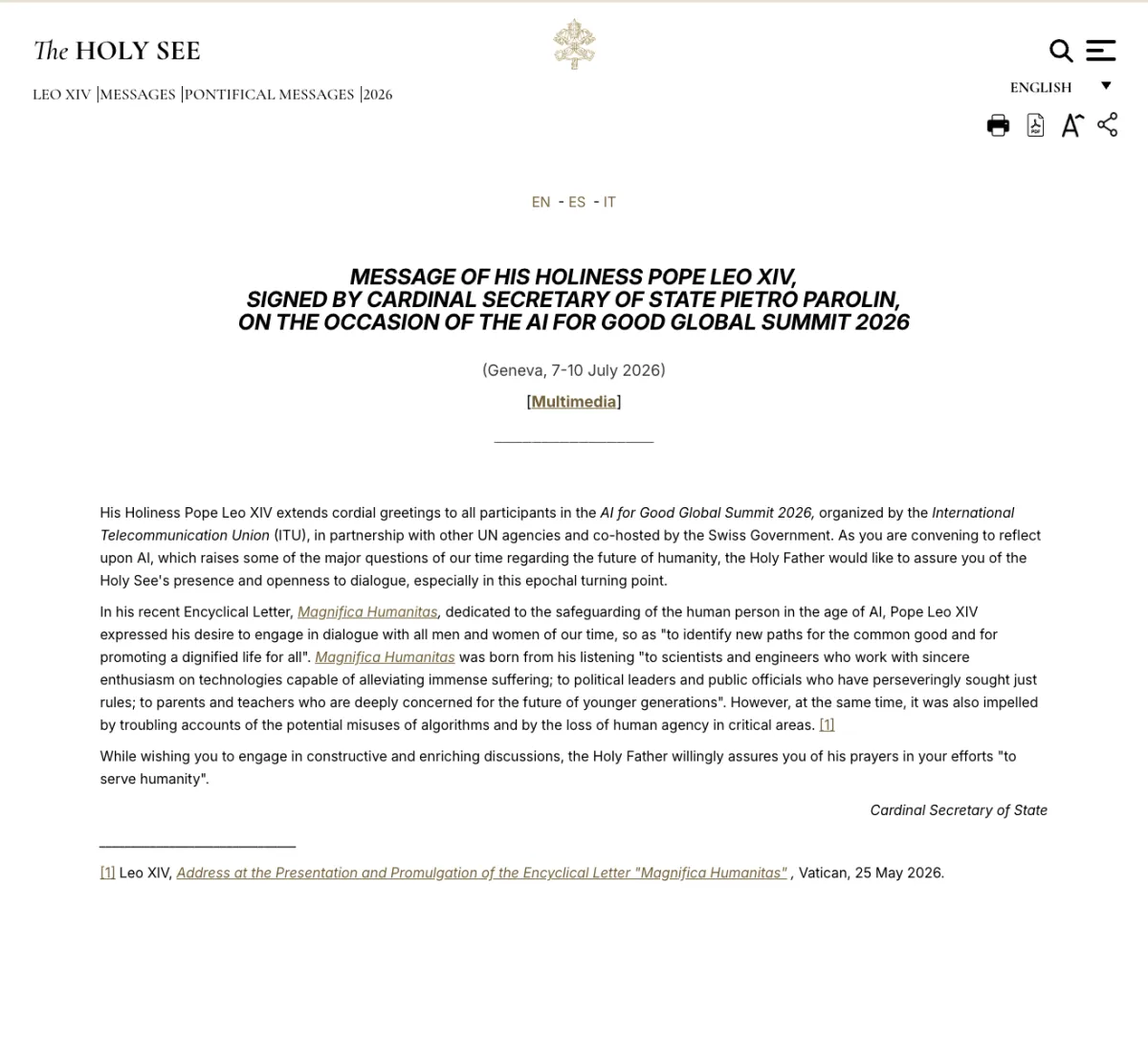
SIGNED BY CARDINAL SECRETARY OF STATE PIETRO PAROLIN,
ON THE OCCASION OF THE AI FOR GOOD GLOBAL SUMMIT 2026
250 Kids, 50 Countries, One Robot Competition
While the Vatican was making headlines, something else was happening in the Youth Zone. The Robotics for Good Youth Challenge Grand Finale. 250 students from 50 countries. Teams building robots to solve real-world problems.
Food security. Agriculture. Environmental sustainability. The format is deliberate. No one-size-fits-all kits. Teams can source components locally and design solutions for their own context.
The UN isn't teaching kids to use one tool. It's teaching them to think like problem-solvers. Participants range from age six to young adults. Workshops cover supervised learning, reinforcement learning, neural networks, computer vision.
One session literally turns smartphones into AI-driven robots. Another uses the micro:bit platform to prototype community-impact projects. The closing ceremony is tomorrow, July 10.
But the real story isn't the competition itself. It's what it represents. The UN is betting that AI literacy needs to start early, and it needs to be global.
While the adults debate governance frameworks, these kids are learning how to build the actual systems. They're also learning how to think about what those systems should do. That's a long-term play. And it might be the most important thing happening at the summit.
From Principles to Practice: The Hard Part Starts Now
The summit's theme this year: "from principles to practice." That's the gap. We've had plenty of principles.
The UN's Global Dialogue on AI Governance brought together representatives from more than 160 countries. The Independent Scientific Panel on AI just presented its preliminary findings. Everyone agrees on the broad strokes: AI should be inclusive, trustworthy, and aligned with human needs.
The hard part is making that happen. ITU Secretary-General Doreen Bogdan-Martin put it bluntly: "As we move from the Dialogue to the AI for Good Summit and WSIS Forum, we are moving from conversation to people-centered action."
The summit is trying to answer a specific question: how do you take high-level principles and turn them into things that actually work? Healthcare systems that use AI without excluding patients. Education tools that don't widen the digital divide.
Agricultural AI that helps small farmers, not just agribusiness. That's the real work. And it's messy. It's not as exciting as a new model release. But it might be more important.
The AI Skills Coalition is meeting today, July 9 — a closed-door session bringing together international organizations, industry, academia, and the public sector. The goal: coordinate on AI education and workforce development. That's a concrete step toward "from principles to practice."
What This Actually Means
The AI for Good Summit isn't the sexy part of the AI news cycle. No product launches. No billion-dollar funding rounds. No tweets from Elon Musk.
But it's where the future of AI governance is being shaped. And this year, two things stand out. First, the Vatican's entry into the conversation signals that AI ethics is no longer a niche concern for tech companies. It's becoming a mainstream moral question.
Religious institutions, human rights organizations, and civil society are claiming a stake in how this technology develops. Second, the youth robotics competition is a bet on the long game. The UN is trying to shape the next generation of AI builders — not just the current generation of policymakers.
That's a different time horizon than Silicon Valley operates on. The adults are arguing about governance frameworks. The kids are building robots. Both are necessary.
But only one of them is thinking about what happens in 2030, not just what happens tomorrow. AI's future won't be decided by any single actor. It will be shaped by governments, companies, international organizations, religious institutions, and the next generation of builders.
That's messy. It's slow. It's not a product launch. But it's real.
P.S. The summit continues through July 10. If you're waiting for a breakthrough announcement, you'll be disappointed. If you're watching who's showing up to the conversation, pay attention. The Vatican doesn't attend product launches. It attends things that matter.