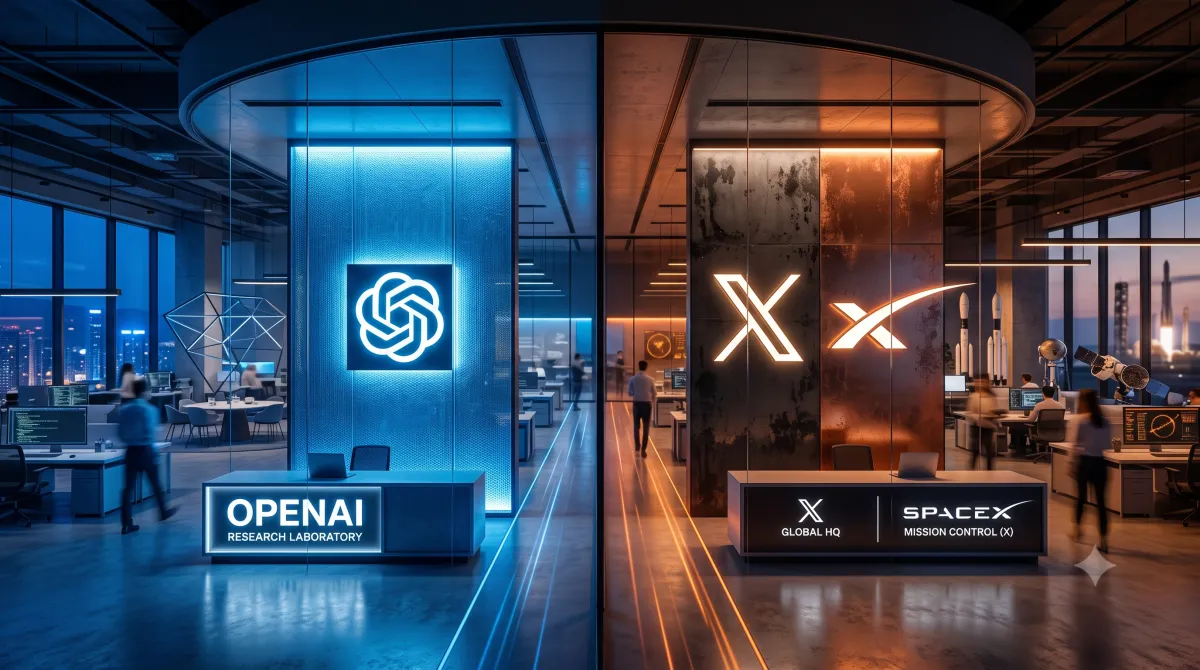
OpenAI released GPT-5.6 today. Three models. Sol, Terra, Luna. Finally approved after the US Commerce Department spent weeks testing it. Hours later, Elon Musk's SpaceXAI dropped Grok 4.5. The timing wasn't an accident.
This isn't just competition. It's personal. Musk co-founded OpenAI in 2015. He left. He sued them. He lost. Now he's trying to beat them in the market. The legal battle ended earlier this year. A jury ruled Musk waited too long to sue. But the grudge didn't end.
Today, both sides showed their hands. And they're playing very different games.
OpenAI's Matrix Defense
OpenAI came with three models. A full lineup. Sol is the flagship. The one that scared the US government enough to delay its release. It's built for coding, biology research, and cybersecurity. The kind of model that could find software vulnerabilities before hackers do.
Price: $5 per million input tokens. $30 per million output tokens. Terra is the enterprise workhorse. Performance close to GPT-5.5. Cost half as much. For companies that need AI for daily operations, this is the sweet spot.
Luna is the cheap one. $1 per million input. $6 per million output. Fast. Lean. For high-volume tasks where cost matters more than reasoning depth. OpenAI's strategy is clear: cover every price point, every use case. Don't let customers have a reason to leave.
Musk's Sniper Shot
SpaceXAI didn't play that game. They released one model. Grok 4.5. And they aimed it at a specific target: developers and knowledge workers. The model was trained with Cursor, the AI coding tool SpaceX just bought for $60 billion.
It absorbed trillions of tokens from real developer sessions — not just code, but how engineers actually debug, refactor, and use tools. That training data is the difference. Most models learn from static code repositories. Grok 4.5 learned from how developers work.
Pricing is aggressive: $2 per million input tokens. $6 per million output tokens. Sol costs five times more on the output side. Musk didn't claim it's the best. He said it's "roughly comparable to Opus 4.7, but much faster."
That's Anthropic's previous flagship. Not the current one. Not Fable 5. But his framing is different: "Fable is indeed much better than Grok 4.5, but most tasks don't need Fable-level capability." "Most tasks" is doing a lot of work there.
Where the Numbers Actually Land
Grok 4.5 scores 54 on Artificial Analysis's intelligence index. That's fourth globally. Behind Claude Fable 5, GPT-5.5, and Claude Opus 4.8.
On SWE Bench Pro, a coding benchmark, Grok 4.5 hit 64.7% — enough to beat GPT-5.5's 58.6% on that test. But Opus 4.8 leads at 69.2%, and Fable 5 sits at 80.4%. The real advantage isn't raw performance. It's efficiency.
Grok 4.5 uses an average of 15,954 output tokens per SWE Bench Pro task. Opus 4.8 burns 67,020 tokens — 4.2 times more. Cheaper tokens and fewer tokens compound into real savings. At 80 tokens per second, it's fast. And for high-volume coding work, speed plus token efficiency changes the math. A developer can iterate more often without blowing the budget.
The Grudge Behind the Numbers
The personal history matters here. Musk helped create OpenAI. He believed in open-source, non-profit AI. When the company pivoted to commercial models, he left. Then he sued. He lost. The jury said he waited too long to file.
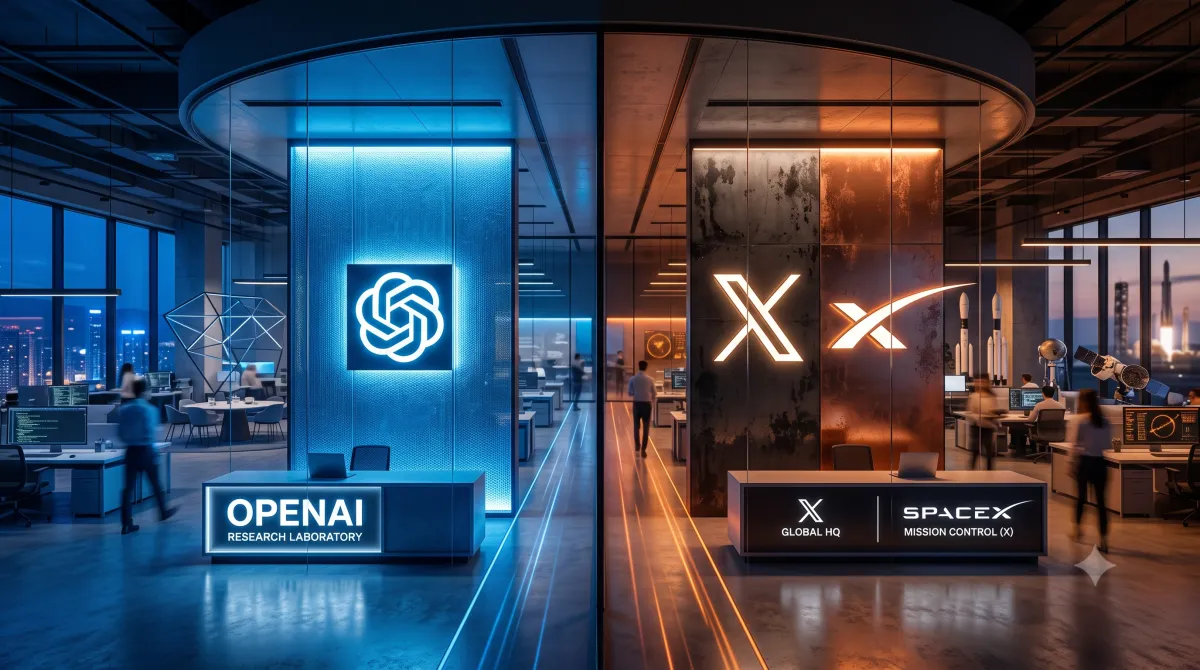
But this release is a different kind of argument. Not in court. In the market. The contrast between their releases tells the story. OpenAI's three-model lineup says: "We can serve everyone." Grok 4.5 says: "We serve the most valuable users, better and cheaper."
Musk is also running a different business. SpaceXAI is part of SpaceX. It's not a standalone AI lab trying to win benchmarks. It's a business unit that needs to show real value to real engineers. Tesla engineers. SpaceX engineers. The kind of users who make procurement decisions based on cost-per-task, not leaderboard position.
When Musk says "we care about real-world usefulness, not benchmarks," it's a critique of how OpenAI and Anthropic operate. It's also a sales pitch to people like him.
The Bigger Shift
This release day reveals something deeper. The AI industry is splitting into two paths. One path is about pushing the frontier — building the smartest model possible, regardless of cost. That's OpenAI's Sol. That's Anthropic's Fable.
The other path is about efficiency — getting 95% of the capability at a fraction of the cost. That's Grok 4.5. It's also a bet that most users don't need the frontier. They need something that works well enough for their actual workload.
There's room for both. But the efficiency path has a bigger addressable market. Enterprises don't buy the most powerful model. They buy the most cost-effective one that does the job. Musk knows this. He's selling to cost-conscious engineers, not AI researchers.
What This Actually Means
GPT-5.6 Sol is the smarter model. Grok 4.5 is the smarter business proposition. OpenAI's "matrix defense" protects its turf. But Musk's "sniper shot" aims at the most profitable part of the market — developers, enterprises, and knowledge workers who actually pay for AI.
The rivalry is real. The strategies are different. The winner depends on who you ask. If you need the best possible reasoning for complex tasks, Sol is your answer. If you're a developer hitting API rate limits and watching your monthly bill climb, Grok 4.5 is worth a close look.
Either way, July 9, 2026 is the day OpenAI and Elon Musk drew lines in the sand.
P.S. Musk lost the lawsuit. But lawsuits don't matter if you win the market. That's what today was about. Not the courtroom. The checkout page.